

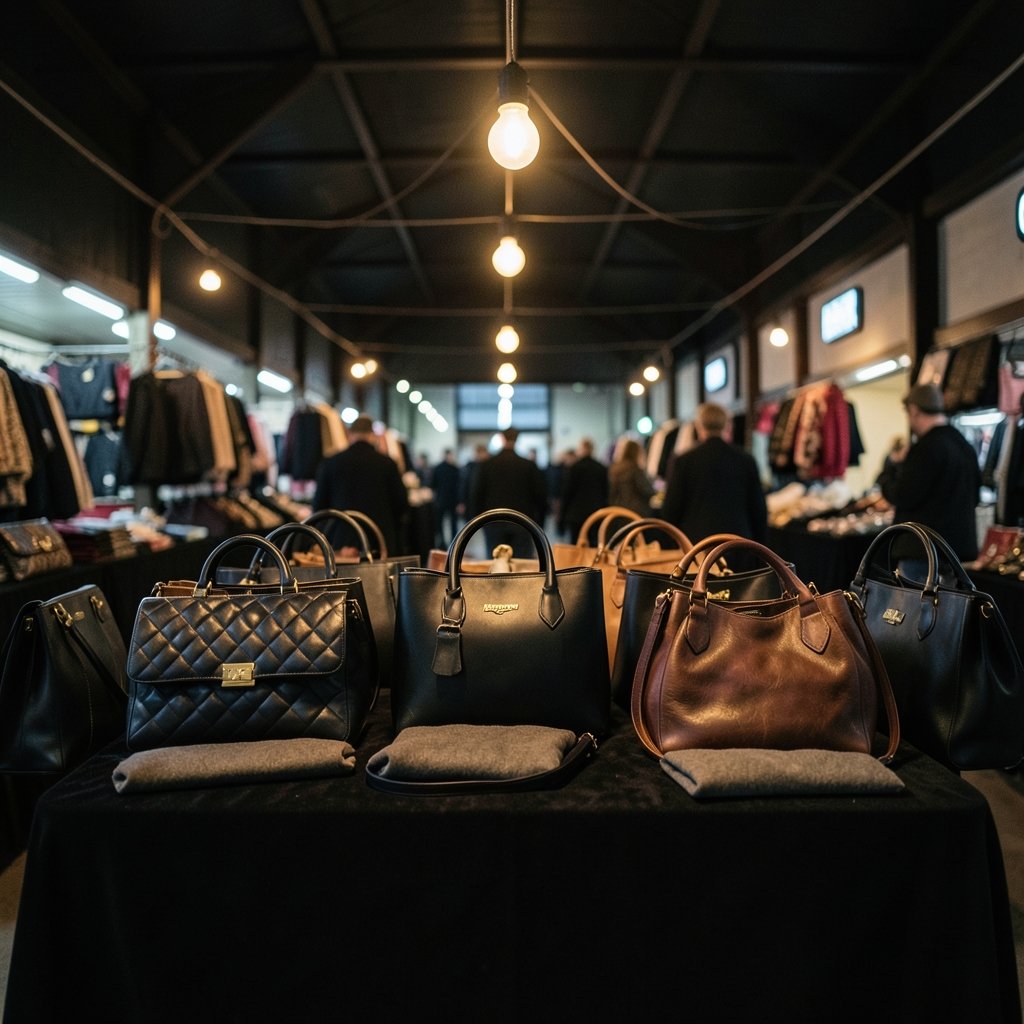
Quick Answer: Why Some Luxury Brands Hold Value and Others Don’t?
Luxury brands hold value when scarcity, heritage, and controlled distribution keep demand ahead of supply, and they lose value when growth is chased through volume, discounts, and trend-driven products. The difference shows up in resale prices, waiting lists, and profit margins.
The split is not really about leather quality or logo design. It is about business model: brands that protect desirability for decades behave very differently from brands that rent it for a season. Two handbags can cost the same at retail and behave nothing alike on the secondary market.
Before buying anything as a “store of value,” check resale depth, production scarcity, brand ownership structure, pricing discipline, category durability, and the brand’s history of discounting.
Value Is a Decision, Not an Accident

Ever wondered why a Birkin bag can sell for more than a car while a logo-covered tote from a famous house barely recovers half its price a year later? The answer is not luck, and it is not marketing magic. It is a set of deliberate choices repeated for decades.
Luxury companies are among the world’s best businesses for pricing power, and that power comes from combining marketing, pricing strategy, and careful management of the customer experience. Emotional attachment to a brand attracts new buyers and keeps old ones for decades. But emotion alone does not protect value. Structure does.
The luxury sector has also stopped growing in a single straight line. Recent earnings seasons have shown an end to uniform growth across the industry, with extreme polarisation between companies: some groups struggle with negative growth while others, notably Hermès and Richemont, keep growing steadily. That gap is the whole story of value retention in one sentence.
Scarcity: The Engine Behind Resale Prices
The single strongest predictor of whether a luxury item holds value is how hard it is to buy. Hermès sells scarcity itself. Its Birkin and Kelly bags are not ordinary products but social proof, and buyers are paying for access to a circle as much as for leather and hardware. When demand outpaces supply year after year, secondary prices can even rise above retail.
Compare that with brands that produce in volume to meet quarterly targets. Once a bag is available in every boutique and every airport terminal, the resale premium evaporates. The moment an item is used, its value starts to decline, and even untouched pieces are exposed to shifting fashion trends, consumer preferences, and the state of the economy. The secondary market for luxury bags is speculative and prone to swings.
Practical tip: before assuming a bag is “investment grade,” check how long the waitlist actually is, whether the model appears in outlet channels, and how many units flood resale platforms. Depth of supply is the quiet killer of value.
Heritage and Craft as an Indestructible Moat
It takes time for a luxury brand to gain credibility, and the most successful houses have spent generations building it. Heritage works as an indestructible moat because it cannot be bought or rushed. A new label can hire the same factories and run the same campaigns, but it cannot manufacture a century of continuity.
Craft reinforces heritage. Small-scale artisan production limits output, raises perceived quality, and justifies price increases without discounting. That combination explains why some houses sustain operating margins above 40% while spending comparatively little on advertising. Their non-financial capital, meaning timeless value, anti-marketing instinct, and artisanal small-batch production, does the work that paid media cannot.
This is also where the quiet luxury brands conversation becomes practical rather than aesthetic. Understated labels that refuse loud logos often protect value better because their appeal is not tied to a trend cycle. The same logic appears across categories, from fashion to home, where the luxury furniture brands that endure tend to be the ones with deep archives and controlled distribution rather than the fastest expansion.
Growth vs. Desirability: The Trade-Off That Breaks Brands
Here is the uncomfortable truth: the playbook that made luxury successful is becoming its handicap. Three decades of extraordinary growth taught big houses to chase volume, open stores everywhere, and lean on heritage icons instead of inventing the next desirable object. That is an innovation recession dressed as expansion.
The market has started to price this in. Shares in several luxury giants have lost momentum, with steep declines at some of the most famous names, while groups with tighter supply discipline have held up better. The downturn has exposed differences between luxury businesses, particularly in how they balance growth with protecting a brand’s desirability. Companies capable of sustaining growth across generations tend to be the ones that preserve the qualities that make them special.
A useful contrast is the shift in consumer spending from trend-sensitive “soft luxury” toward “hard luxury” such as jewellery and watches, which carries stronger asset-preservation appeal. Brands anchored in the softer, trend-driven end are more exposed to macro swings and see their resale premiums narrow faster.
A Simple Comparison of Two Brand Types
| Factor | Value-holding brand | Value-eroding brand |
|---|---|---|
| Supply | Deliberately limited, waitlists | Mass production, broad availability |
| Pricing | Raises prices, rarely discounts | Frequent markdowns and outlet channels |
| Product focus | Timeless icons, small evolution | Trend cycles, seasonal churn |
| Distribution | Owned boutiques, tight control | Wholesale, airports, discounters |
| Customer base | Ultra-high-net-worth core | Aspirational middle-income buyers |
| Resale behaviour | Stable or above retail | Falls quickly after purchase |
The middle row matters more than most buyers realise. Aspirational shoppers are the first to pull back when living costs rise, and brands that depend on them feel it immediately. Ultra-wealthy buyers keep spending through cycles, which is why the target customer base directly shapes financial results.
Why the Investment Story Cuts Both Ways
Luxury has long been treated as a defensive asset in portfolios: high pricing power, resilient customers, premium valuations. That narrative has cracked. When growth merely slows rather than falls, high-multiple names can still sell off hard, because the valuation model assumed perpetual growth. A brand can remain extremely profitable and still disappoint investors.
The same caution applies to physical goods. As a general rule, handbags and watches are poor investments if the goal is to resell at a profit. There are exceptions: some classic Chanel styles have risen sharply in value over long periods. But exceptions are exactly that. Treating a purchase as an asset because one model outperformed is how people lose money.
If you want the analytical view of how the major houses stack up on specifications, pricing power, and positioning, the luxury car brands compared breakdown shows the same dynamics at work in a different category, where limited production and brand control separate the resilient from the fragile. The best luxury car brands 2026 roundup is a useful reality check on how quickly rankings move when a brand chases volume.
The Categories That Behave Differently
Not all luxury holds value the same way, and mixing categories is a common mistake.
Handbags
Iconic, scarce models hold best. Trend-led shapes and logo-heavy seasonal pieces fade fastest. Condition matters enormously, and authenticity paperwork is non-negotiable for resale.
Watches and Jewellery
Hard luxury benefits from material value and mechanical collectability. Brand archives, service records, and limited editions drive secondary pricing. This is where the luxury car brands principle of limited supply meets tangible craftsmanship.
Cars
Depreciation is brutal, but limited-run models from disciplined marques can appreciate. Mass-produced variants of the same badge rarely do. Buyers watching the electric shift should also track the luxury EV brands 2026 landscape, where technology cycles add a second layer of value risk.
Home and Furniture
Furniture rarely resells well, but brand equity still matters for insurance and longevity. The luxury furniture brands guide shows how construction quality and archive design separate lasting pieces from disposable trend items.
Common Mistakes Buyers Make
The first mistake is buying at retail and assuming resale will follow. Retail price includes marketing, store costs, and brand premium, none of which transfers to a secondary buyer.
The second is confusing popularity with scarcity. A bag everyone recognises is not the same as a bag everyone wants and nobody can get.
The third is ignoring condition and completeness. Boxes, receipts, authenticity cards, and original dust bags affect resale more than most owners expect.
The fourth is chasing hype cycles. When a model trends on social platforms, supply usually catches up within a season or two.
The fifth is treating one strong resale result as a rule. Outliers exist in every market, and they are not a strategy.
What Actually Works in Practice
Buy the icon, not the season. Icons have decades of pricing history behind them; seasonal pieces have a marketing budget.
Check the discount trail. If a brand’s products appear in outlet malls or on discount platforms, its full-price resale premium is already compromised.
Watch the ownership structure. Family-controlled houses with long time horizons behave differently from conglomerates under quarterly pressure. Both can succeed, but the incentives differ.
Look at how the brand handled past downturns. Houses that raised prices and tightened supply during weak demand protected value. Houses that discounted trained customers to wait for sales.
Finally, separate pleasure from portfolio. A bag you love and use has value in use, even if it never appreciates. That is not a failure; it is a different kind of return.
Conclusion
Luxury value retention comes down to discipline. Brands that limit supply, protect pricing, invest in craft, and resist the temptation to sell to everyone keep their desirability intact for decades. Brands that trade scarcity for growth can look unstoppable for years and then discover that their resale premium, their pricing power, and their investor premium were all the same fragile thing.
For buyers, the practical rule is simple: judge the business model, not the logo. Check supply, pricing history, distribution control, customer base, and category durability before you spend. For the wider picture on how these dynamics play out across product categories, the luxury car brands comparison and the quiet luxury brands tag both reward a closer look. Value, in the end, is what a brand refuses to do.
FAQ
Do luxury bags generally hold their value?
Most do not. The second an item is used, its value begins to decline, and even untouched pieces are exposed to fashion shifts, changing preferences, and economic conditions. A small number of scarce, iconic models from disciplined houses are the exception rather than the rule.
What makes one luxury brand more resilient than another?
Supply control, pricing discipline, heritage, and a wealthy core customer base. Brands that depend on aspirational middle-income shoppers are far more sensitive to cost-of-living pressure than houses serving ultra-high-net-worth clients.
Is hard luxury a safer store of value than soft luxury?
It has been more resilient recently. Spending has shifted toward jewellery and watches, which carry stronger asset-preservation appeal, while trend-sensitive soft luxury has seen resale premiums narrow faster during weaker demand.
Why do luxury stocks fall even when sales are still growing?
Because valuations price in perpetual growth. When growth merely slows below expectations, high-multiple stocks can drop sharply. A company can remain highly profitable and still disappoint investors who paid for perfection.
Does a higher retail price mean better resale value?
No. Retail price bundles in marketing, store costs, and brand premium that do not transfer to a secondary buyer. Resale depends on scarcity, condition, completeness, and ongoing demand for that specific model.
How can a buyer tell if a brand protects its value?
Look for waitlists, owned boutiques, minimal discounting, no outlet presence, and a long history of icon products. If the brand discounts heavily or sells everywhere, its resale premium is already under pressure.











