

What if the reason your expensive serum stopped working has nothing to do with the serum at all? That is the uncomfortable question more and more beauty lovers are asking, and it leads straight to one answer: the skin barrier. For years, skincare marketing pushed transformation. Stronger acids, higher percentages, faster results. Now the conversation has flipped toward something quieter but far more important, which is keeping skin in a condition where it can actually defend itself and function properly. If your routine has become a long list of actives and your skin keeps protesting, this guide explains what is happening and how to fix it without throwing away your favorite products.
What the Skin Barrier Actually Is
The technical name is the stratum corneum, the outermost layer of the skin. It works like a brick wall. Skin cells act as the bricks, and a mix of lipids, namely ceramides, cholesterol and fatty acids, acts as the mortar holding everything together. That wall does two jobs at once. It keeps water inside the skin and keeps irritants, bacteria and pollution outside.
When the wall is intact, skin feels comfortable, bouncy and resilient. When it is compromised, the same face suddenly feels tight by midday, stings when you apply products you used to love, and looks red or flaky despite your best efforts. A dull, ashy appearance can also show up, caused by light bouncing off uneven, dehydrated skin. Small, itchy bumps rather than classic pimples are another common sign.
Here is the part luxury shoppers tend to miss. A compromised barrier does more than look bad. It makes every product layered on top of it less effective and more likely to irritate. That is why a cream that felt luxurious in January can feel like sandpaper in March. The formula did not change. The wall did.
Why Barrier Damage Has Become So Common
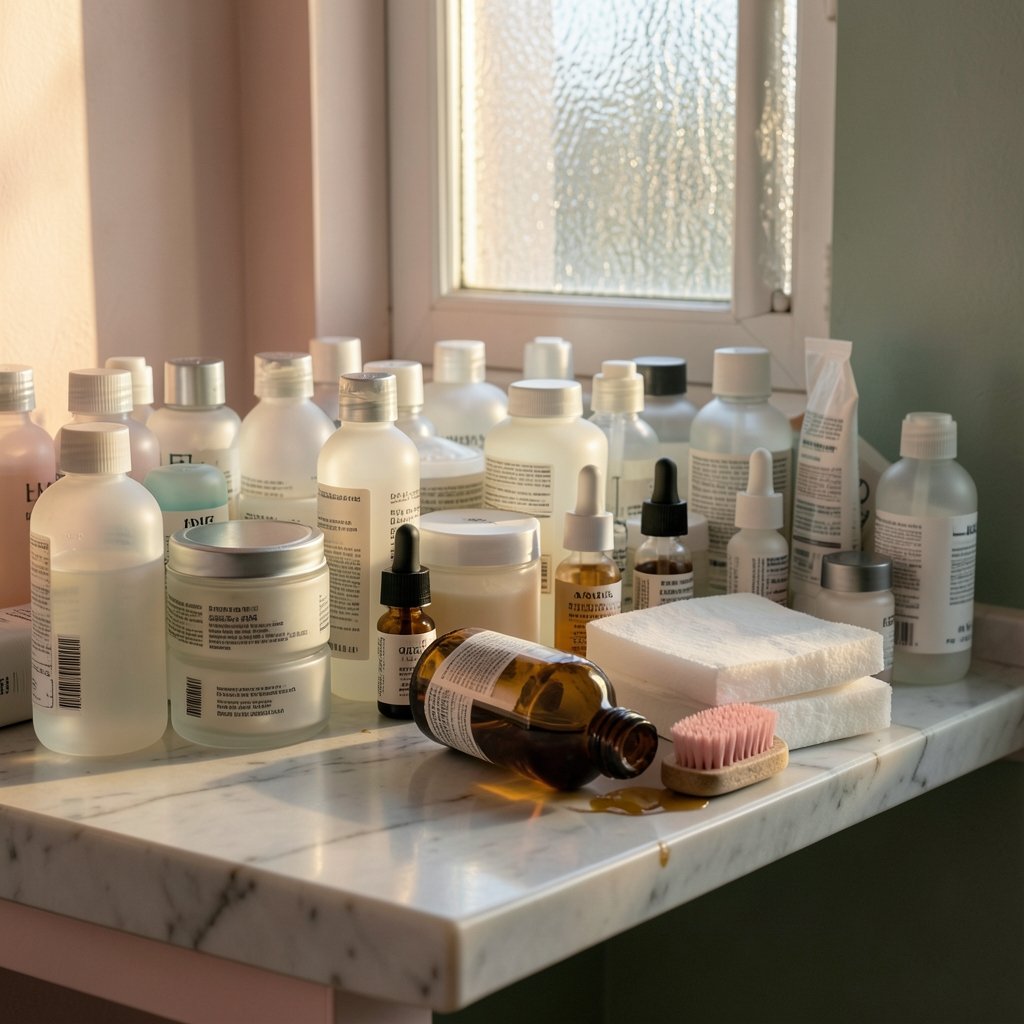
The rise of multi-step routines, daily exfoliation and active stacking has created a steady stream of compromised barriers, and most people never connect their routine to their symptoms. Chemical exfoliants dissolve the bonds holding dead cells together, but they do not distinguish between dead cells and the healthy lipids nearby. Daily use of AHAs, BHAs or retinoids, or layering several of them in one evening, slowly wears down the mortar.
Consultant dermatologist Dr Anjali Mahto has been blunt about the root cause, noting that even now, product overuse is a huge issue. The pattern is familiar. A 12-step routine built on acids, scrubs and retinoids produces dryness, fine lines and clusters of breakouts that look suspiciously like teenage skin. The instinct is to add more products to fix the new problems. That is exactly backwards.
There is also a seasonal and environmental layer. Cold air, dry indoor heating, hot showers and long flights all pull water from the skin. None of these damage the barrier permanently, but stacked together with an aggressive routine, they tip a borderline barrier over the edge.
The Signs Your Barrier Is Asking for a Reset
Barrier damage rarely announces itself with one dramatic symptom. It accumulates. Watch for a cluster rather than a single complaint:
- Stinging or burning when applying products that were previously comfortable
- Tightness that appears within an hour or two of cleansing
- Redness and flushing that lingers longer than it used to
- Flaking in patches, especially around the nose and mouth
- Breakouts that behave oddly, with small itchy bumps instead of classic pustules
- A dull, uneven look that no amount of highlighter disguises
If three or more of these sound familiar, treat the barrier as the priority rather than chasing each symptom with a separate product. This is the single most useful triage rule in skincare, and it costs nothing to apply.
What Actually Wears the Barrier Down
| Culprit | What It Does | Smarter Move |
|---|---|---|
| Daily acid exfoliation | Dissolves lipids along with dead cells | Reduce to two or three times a week |
| Active stacking | Layers retinoids, acids and vitamin C in one routine | Alternate nights, one active per evening |
| Harsh cleansing | Strips lipids and natural moisturizing factors | Use a gentle, low-foam cleanser |
| Over-washing | Removes the skin’s own protection repeatedly | Cleanse morning and night, no more |
| Hot water and long showers | Increases water loss from the surface | Lukewarm water, shorter showers |
| Skipping sunscreen | Leaves skin exposed to UV damage daily | Broad-spectrum SPF every morning |
That last row deserves extra attention, because sun protection is where good intentions most often collapse. People with deeper skin tones frequently skip daily SPF on the assumption that melanin makes it unnecessary. It does not. The case for daily protection on darker skin is well documented, and skipping it undermines every repair step that follows.
How to Rebuild a Compromised Barrier
Repair is less glamorous than prevention, and that is fine. The goal is to stop the damage, then give skin the raw materials it needs to rebuild.
- Strip the routine back. For two to four weeks, pause exfoliating acids, retinoids and any product that stings. Keep a gentle cleanser, a barrier-supporting moisturizer and sunscreen. That is the entire routine.
- Reintroduce lipids. Look for ceramides, cholesterol and fatty acids, ideally in a formula that includes all three. Niacinamide and glycerin are useful supporting ingredients. Panthenol and squalane help with comfort.
- Apply moisturizer to slightly damp skin. This locks in water rather than just sealing a dry surface, and it makes a noticeable difference within days.
- Protect during the day. Broad-spectrum sunscreen every morning, reapplied when you are outside for long stretches.
- Reintroduce actives slowly. One product at a time, two or three nights a week, and stop if stinging returns. Patience here saves months of backtracking.
How long does it take? Expect the tightness and stinging to ease within a week or two, with texture and tone following over roughly four to six weeks. Skin turnover is not instant, and no luxury price tag speeds up biology.
Nutrition and Lifestyle Support the Barrier Too
Topicals do most of the visible work, but the barrier is built from the inside as well. Adequate protein, healthy fats and enough water support the lipids and structural proteins skin needs. Diets heavy in processed food and low in fatty acids the body requires tend to show up as dryness and dullness. The connection between what you eat and how well skin holds moisture is real, and the practical version is simple: fatty fish, nuts, seeds, olive oil, colorful vegetables and consistent hydration. The full picture of how food choices affect dryness and barrier strength is worth reading if you want to go deeper. (Food reduce dry skin eat softer stronger barrier)
Sleep and stress matter more than most people admit. Cortisol surges and short nights both show up on the face, often as inflammation and increased water loss. A luxury beauty lover’s routine should include eight hours of sleep, because no cream replicates it.
Building a Luxury Routine That Respects the Barrier
High-end formulas are not the problem. Layering too many of them at once is. The most elegant approach is a short routine of excellent products used consistently.
Morning: gentle cleanser or just water, a hydrating serum, a barrier cream, sunscreen. Evening: cleanser, treatment if your barrier is stable, moisturizer. That is it. A ten-step routine is not a sign of commitment. It is a sign of confusion.
When choosing products, read the ingredient list before the marketing copy. Ceramides near the top of the list, fragrance lower or absent, and a short ingredient deck are all good signs. Fragrance is not evil, but a compromised barrier reacts to it more readily, so save heavily fragranced products for healthy-skin periods.
Texture matters for consistency. If a rich cream feels heavy under makeup, you will skip it, and the best formula is the one you actually use. Many people do well with a lighter lotion in the morning and a richer balm at night.
Where Luxury Gifting and Barrier Care Meet
Barrier care has become one of the most giftable categories in beauty, because it suits nearly everyone. A thoughtful set built around a gentle cleanser, a ceramide moisturizer and a sunscreen works for a teenager, a frequent flyer and a retinol veteran alike. If you are assembling something meaningful, curated luxury gift boxes take the guesswork out of pairing products, and elegant luxury gift wrap finishes the gesture properly. (Byredo makeup luxury beauty line actually offers)
There is a practical angle too. Gifting a friend who has been over-exfoliating is genuinely useful rather than purely decorative. The same logic applies to scent-led gifts. A home fragrance or candle creates calm without touching the skin, which makes it a safe choice for anyone mid-repair. If you want ideas, these luxury home scents work for nearly every room, and the broader edit of luxury home fragrances covers options for bedrooms, bathrooms and entryways. (Luxury Gift Wrap: Elegant Packaging for Every Occasion)
For the person who already owns everything, consider a gift that supports the recovery mindset rather than adding another active to the shelf. A soft cleansing balm, a thick overnight cream, a silk pillowcase. Small, considered, and used every single day.
Common Mistakes That Undo Progress
The most frequent error is quitting too early. People pause actives for four days, feel better, and immediately return to nightly retinol. The barrier never finished rebuilding, and the cycle restarts.
The second is over-cleansing. Foaming cleansers that leave skin squeaky-clean are stripping it. If your face feels tight before you have applied anything, your cleanser is too strong.
The third is treating barrier repair as a temporary cleanse. It is not a detox you finish. It is a baseline you maintain, with actives used strategically rather than constantly. Once you internalize that, your skin becomes far more forgiving of the occasional experiment.
Finally, do not confuse hydration with moisture. A hydrating serum adds water; a moisturizer seals it in. You usually need both, and skipping the seal is why some people feel dry even after layers of watery products.
Conclusion
The skin barrier is not a trend to chase, it is the foundation everything else stands on. When the wall of cells and lipids is intact, your serums work better, your makeup sits smoother and your skin looks calmer with far less effort. When it is compromised, no price point rescues you. The fix is refreshingly unglamorous: fewer actives, gentler cleansing, consistent moisturizer, daily sunscreen and enough patience to let biology do its job. Luxury beauty is at its best when it supports skin rather than overwhelms it. Start with the barrier, and the rest of your routine finally earns its keep.
Frequently Asked Questions
How long does it take to repair a damaged skin barrier?
Most people notice less stinging and tightness within one to two weeks of simplifying their routine. Texture, tone and overall comfort typically improve over four to six weeks, since that reflects the skin’s natural renewal cycle. Severe damage from months of over-exfoliation can take longer. Consistency matters more than any single product.
Can I still use retinol while repairing my barrier?
It is best to pause retinoids for two to four weeks, then reintroduce them slowly, starting with two nights a week. If stinging or flaking returns, pull back again. Some people can use a low-strength retinoid alongside a rich barrier cream, but only once the basics feel comfortable.
Is a damaged skin barrier the same as dry skin?
No, though they overlap. Dry skin lacks water and oil on the surface. A damaged barrier is a structural problem in the outermost layer, which then causes dryness, sensitivity and reactivity. You can have oily skin and a compromised barrier at the same time, which is why breakouts and flaking often appear together.
Do expensive products repair the barrier better than affordable ones?
Not automatically. What matters is the formula, specifically the presence of ceramides, cholesterol, fatty acids and humectants like glycerin, plus a low irritation risk. Plenty of affordable creams do this well. Price tends to buy texture, scent and packaging rather than superior repair.
Should I exfoliate at all if my barrier is sensitive?
Yes, but gently and less often. Once your skin feels stable, one exfoliating session per week is usually enough for most people. Choose a single acid rather than a blend, and never combine it with retinoids on the same night. If your skin stings afterward, you are still exfoliating too much.
Does diet really affect the skin barrier?
It plays a supporting role rather than a leading one. Adequate protein, healthy fats and hydration give skin the raw materials to build and maintain its lipid barrier. A diet low in fatty acids the body requires can show up as dryness and dullness. Topical care still does most of the visible work, but nutrition makes the foundation stronger.











