You are standing at a bar, or staring at a supermarket shelf, and the choice in front of you is absurd: twenty lagers, a dozen pale ales, stouts, wheat beers and sours. Beer should be the simplest pleasure in the world, yet choosing one can feel like an exam you never revised for.
So how do you choose the right beer? Start with the flavour you enjoy rather than the label: if you like something light and crisp, order a lager or a pilsner; if you want fruit and spice, pick a wheat beer or a pale ale; and if you want something rich and dark, a stout is the one to ask for. This guide explains the main styles, how beer is made, and how to match a beer to the moment, so the next round is an easy decision.
Key takeaways:
- Beer is made from four ingredients — water, malted barley, hops and yeast — and the yeast and fermentation temperature decide whether a beer is an ale or a lager.
- Lagers are light, crisp and cold-fermented; ales are fruitier and fuller, and include pale ales, IPAs, wheat beers and stouts.
- Most lagers sit around 4 to 5% alcohol by volume, most ales around 4 to 6%, and stronger IPAs and stouts can reach 7% or more.
- Serve lager cold, ale a little warmer, pour with a gentle head, and store beer upright in a cool, dark place.
How is beer made?
Beer is made from four ingredients: water, malted barley, hops and yeast. The barley is malted, which means it is soaked and allowed to sprout before being dried, then mashed in hot water to release its sugars. That sweet liquid, called wort, is boiled with hops, cooled, and fermented with yeast, which turns the sugars into alcohol and carbon dioxide.
The yeast splits beer into its two great families. Ale yeast ferments at warmer temperatures, near the top of the vessel, and produces fruity, spicy flavours. Lager yeast ferments at cooler temperatures, near the bottom, and produces a cleaner, crisper taste. Lagers are then stored cold for weeks, a process called lagering, from the German word for storage, which smooths the flavour further.
Hops do more than add bitterness. They balance the sweetness of the malt, add aromas that range from citrus and pine to flowers and herbs, and help preserve the beer. The balance between malt sweetness and hop bitterness is the first thing to notice in any beer you taste.
What are the main beer styles?
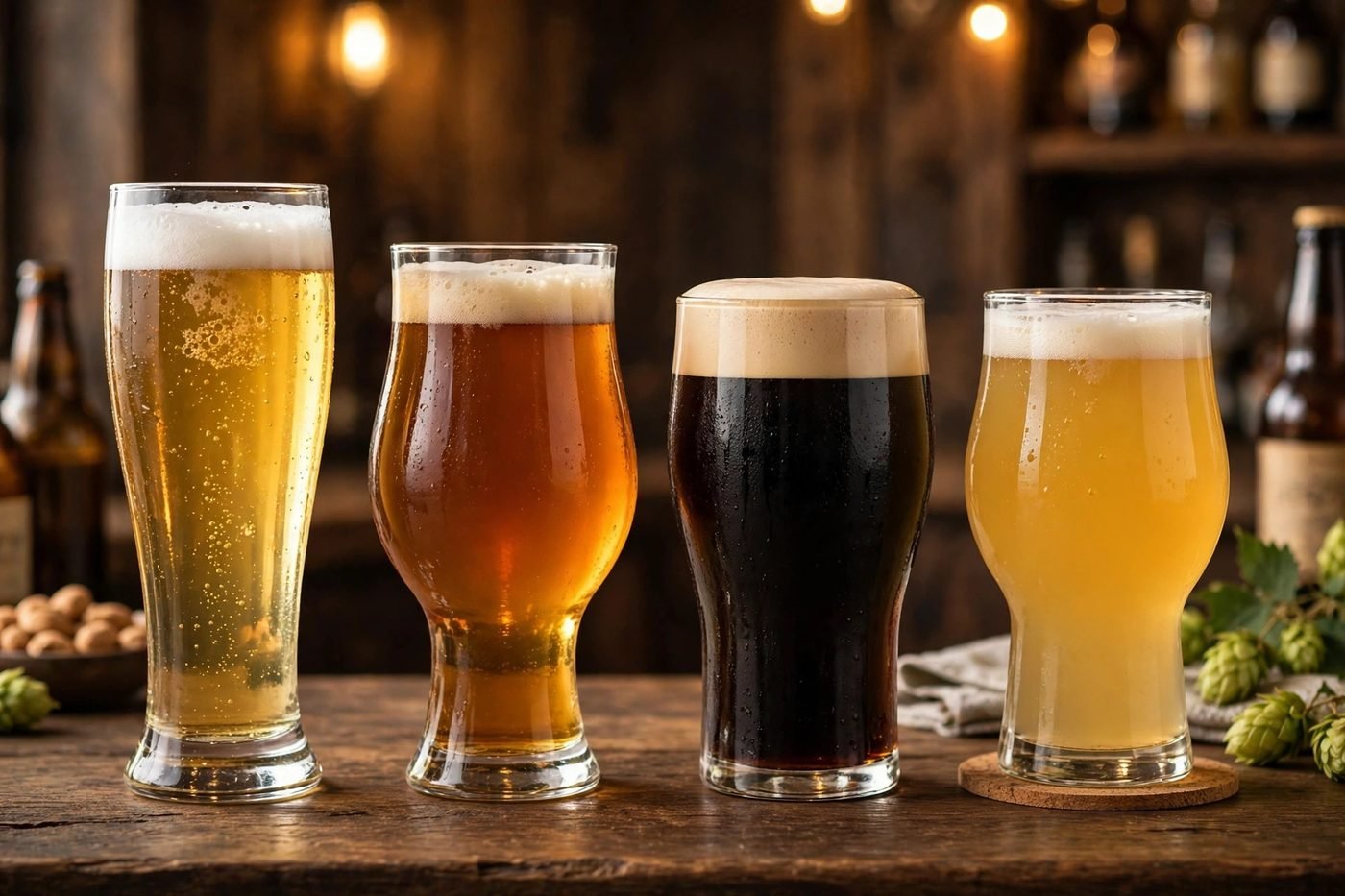
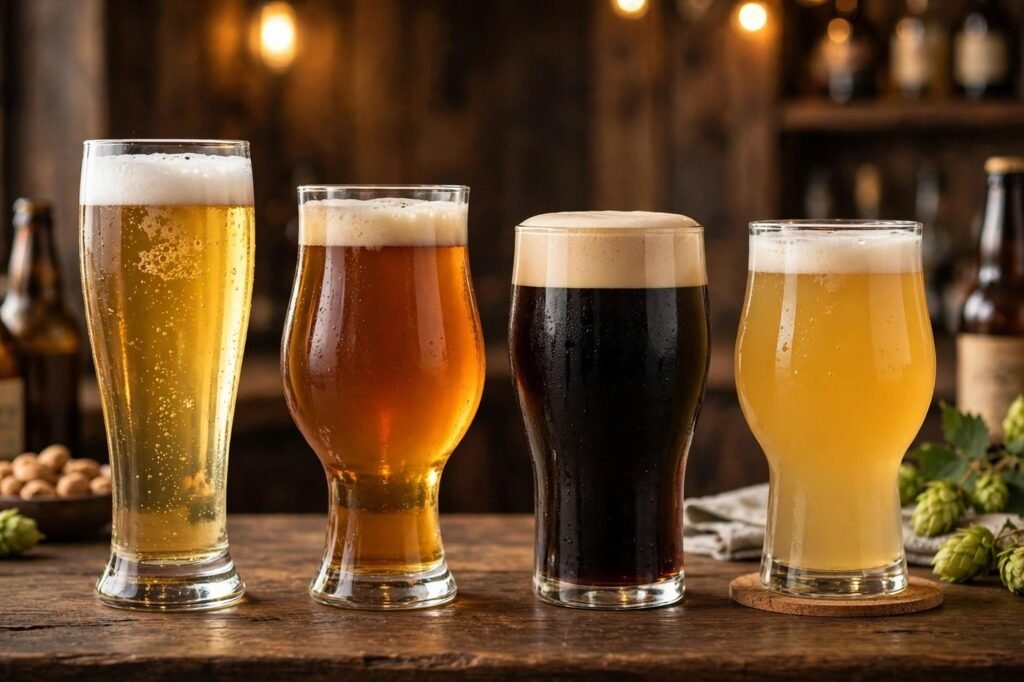
Most beers you will meet fall into a handful of styles, and knowing them is the fastest way to order with confidence. A lager is the world’s most popular style: pale gold, light and crisp, with a clean finish and gentle bitterness. A pilsner is a lager with a little more hop character and a slightly bitter, floral edge.
A pale ale is fruitier and more aromatic than a lager, with citrus and floral notes from the hops and a fuller body. An IPA, or India pale ale, takes that further: more hops, more bitterness, and aromas of grapefruit, pine and tropical fruit. Wheat beers are soft, cloudy and refreshing, with notes of banana and clove, and they suit warm weather and light food.
Stouts and porters are the dark beers, brewed with roasted malt that gives them flavours of coffee, chocolate and toast. Sour beers are tart and refreshing, with a sharpness that comes from wild yeasts and bacteria, and they are an acquired taste many drinkers come to love.
| Style | Colour and flavour | Typical strength | Best for |
|---|---|---|---|
| Lager | Pale gold, light, crisp, clean finish | 4 to 5% ABV | Everyday drinking, hot weather |
| Pilsner | Pale gold, floral, a little more bitter | 4.5 to 5% ABV | With light food, as an aperitif |
| Pale ale | Golden to amber, fruity, aromatic hops | 4 to 6% ABV | With burgers, pizza and grilled food |
| IPA | Golden to amber, bold hops, citrus and pine | 5 to 7% ABV | With spicy food and strong cheese |
| Wheat beer | Cloudy gold, soft, banana and clove | 4.5 to 5.5% ABV | Summer afternoons, salads and seafood |
| Stout | Near black, coffee, chocolate, roasted malt | 4 to 6% ABV | With desserts, oysters and winter evenings |
| Porter | Dark brown, chocolate, caramel, toast | 4 to 5.5% ABV | With roast meats and chocolate cake |
| Sour beer | Varies, tart, sharp, fruity | 3.5 to 6% ABV | As an aperitif, with rich or fatty food |
How do you choose a beer for the occasion?
The occasion should narrow the choice before the menu does. On a hot afternoon, reach for something light and cold: a lager, a pilsner or a wheat beer, all of which refresh rather than fill you up. In the evening, with food on the table, a pale ale or an IPA has the flavour to stand up to grilled meat, spice and strong cheese.
Food pairing follows a simple rule: match strength with strength. A delicate dish, such as grilled fish or a salad, suits a light lager or wheat beer. A rich dish, such as a curry or a burger, suits a hoppy IPA, whose bitterness cuts through fat and spice. A chocolate dessert finds its best partner in a stout, whose roasted malt echoes the cocoa.
If you are hosting, buy a small range rather than a single case: a lager, a pale ale and a stout will cover most tastes. Keep the beers cold before serving, and offer water alongside them.
How should you serve beer?
Temperature matters more than most drinkers realise. Serve lager cold, at around 3 to 7°C, straight from the fridge. Serve ales a little warmer, at around 7 to 13°C, so their fruit and hop aromas have room to open up. A stout benefits from being warmer still, near cellar temperature, which lets its coffee and chocolate notes come through.
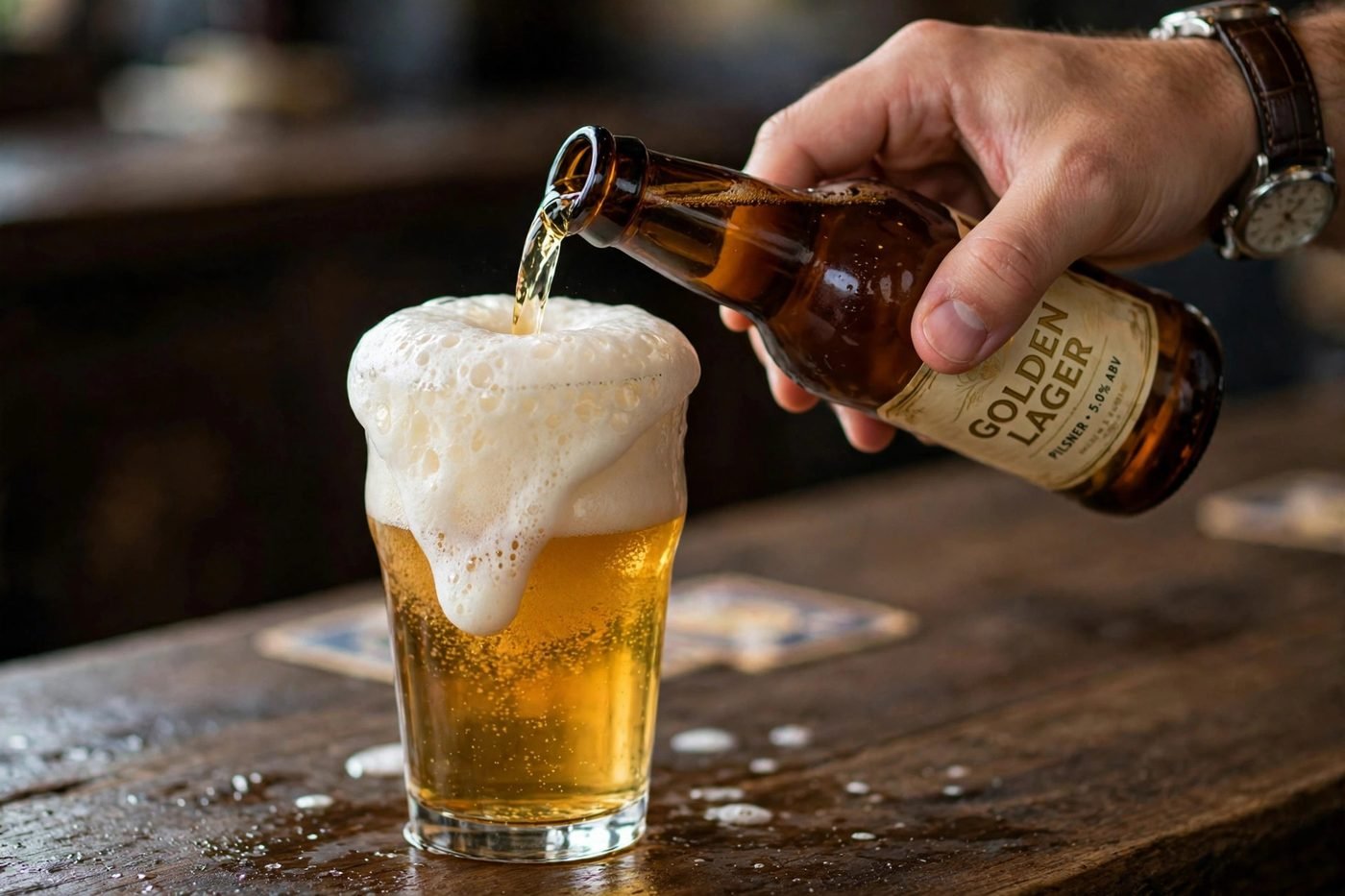
Pouring is simple once you know the trick. Hold the glass at an angle and pour down the side, then straighten it for the last third so a head of foam forms, about two fingers deep. The foam traps the aroma and keeps the beer fresh, and a beer that will not hold a head is often served in a glass with traces of grease.
Use the right glass when you can: a tall, narrow glass suits a lager, while a tulip or goblet concentrates the aroma of an ale or a stout.
How should you store beer?
Beer keeps best in a cool, dark place, away from heat and sunlight. Light is beer’s enemy: it reacts with the hops and produces the stale, skunky flavour that ruins a good lager, which is why so much beer is sold in brown bottles and cans. Store bottles upright rather than on their side, so the beer spends as little time as possible touching the cap.
Most beer is best drunk fresh, within a few months of brewing, and hoppy styles such as IPAs lose their aroma fastest. Stronger beers, such as imperial stouts and barley wines, can age gracefully for a year or more, developing deeper, rounder flavours. Check the date on the bottle or can, and drink the freshest beer first.
Once opened, beer does not keep: drink it the same day. If you are buying for a party, keep the beer in the fridge until guests arrive, and put the bottles back between rounds rather than leaving them in the sun.
How much alcohol is in beer?
Most beers you will meet sit between 4 and 6% alcohol by volume, or ABV. Lagers are usually around 4 to 5%, ales around 4 to 6%, and IPAs and stouts often reach 6 or 7%. Stronger craft beers can reach 10% or more, which is worth knowing before you order a second pint of something that tastes deceptively smooth.
A pint of 4% beer contains a little over two UK alcohol units, and a pint of 5% beer close to three. UK health guidance suggests adults keep to no more than 14 units a week, spread over several days, with some alcohol-free days. Lower-alcohol and alcohol-free beers have improved enormously, and they are a good choice when you want the flavour without the alcohol.
Pace yourself, eat while you drink, and alternate each beer with a glass of water. If you are driving, the only safe choice is not to drink at all. A good evening is one you remember the next day.
Your beer checklist
Use this list the next time you are choosing, serving or hosting with beer.
- Start with flavour: light and crisp means lager, fruity and aromatic means pale ale, rich and dark means stout.
- Check the strength: read the ABV before you order a second pint of anything unfamiliar.
- Match the food: light dishes with light beer, rich and spicy dishes with hoppy or dark beer.
- Serve at the right temperature: lager cold from the fridge, ales a little warmer, stout near cellar temperature.
- Pour with a head: tilt the glass, then straighten it, aiming for about two fingers of foam.
- Store it well: upright, cool and dark, away from sunlight, and drink hoppy beers fresh.
- Pace yourself: eat, drink water between rounds, and keep within the weekly guidance.
Frequently asked questions
What is the difference between an ale and a lager?
Ales are fermented with top-fermenting yeast at warmer temperatures, which gives them fruity, fuller flavours. Lagers are fermented with bottom-fermenting yeast at cooler temperatures and stored cold, which gives them a cleaner, crisper taste.
What does IPA stand for?
IPA stands for India pale ale, a hoppy style originally brewed with extra hops to survive long sea voyages. Modern IPAs are known for bold citrus, pine and tropical fruit aromas.
What is the best beer for beginners?
A lager or a pilsner is the easiest place to start: light, crisp and refreshing, with gentle bitterness. A wheat beer is another friendly first choice, soft and cloudy with notes of banana and clove.
Should beer be served ice cold?
Lager should be served cold, at around 3 to 7°C. Ales and stouts taste better a little warmer, at around 7 to 13°C, because the cold hides their aromas. Very cold beer is refreshing, but it mutes flavour.
How long does beer last?
Most beer is best drunk within a few months of brewing, and hoppy beers such as IPAs lose their aroma fastest. Stronger dark beers can age for a year or more. Once opened, beer should be finished the same day.
What food goes best with beer?
Match strength with strength: light lagers with salads and seafood, pale ales and IPAs with burgers, pizza and spicy food, and stouts with chocolate desserts, oysters and roast meats. Our guide to the best bourbon covers the stronger end of the drinks cabinet, and our guide to cider is the lighter alternative for a summer afternoon.
Sources
Style and brewing details in this guide reflect standard brewing knowledge as published by the Campaign for Real Ale and the Brewers Association, including their guides to ale and lager fermentation and beer styles. Alcohol guidance follows the UK Chief Medical Officers’ low-risk drinking guidelines.
The bottom line
Beer stops being confusing the moment you stop reading the label and start trusting your own taste. A lager refreshes, a pale ale excites, a stout comforts, and the right beer suits the moment, the food and your mood.
Your next step is simple: the next time you order, try a style you have never tried before, and pay attention to what you actually taste. That is how a wall of bottles becomes a shortlist of favourites.
Please drink responsibly. Never drink and drive.