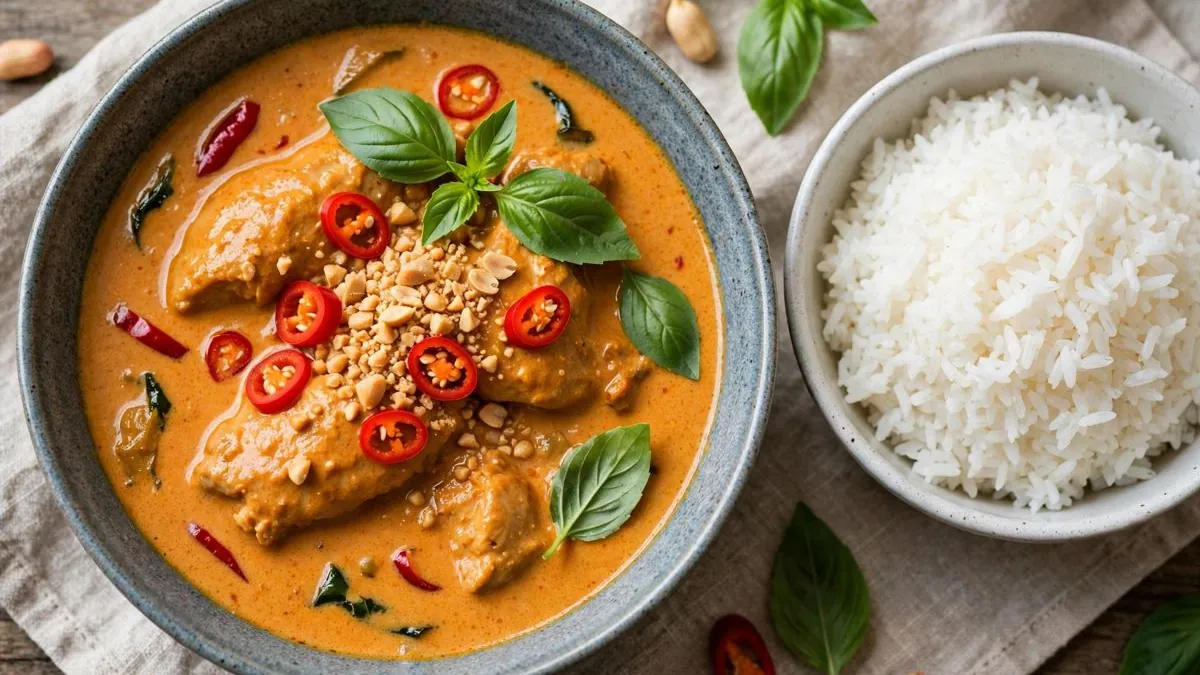
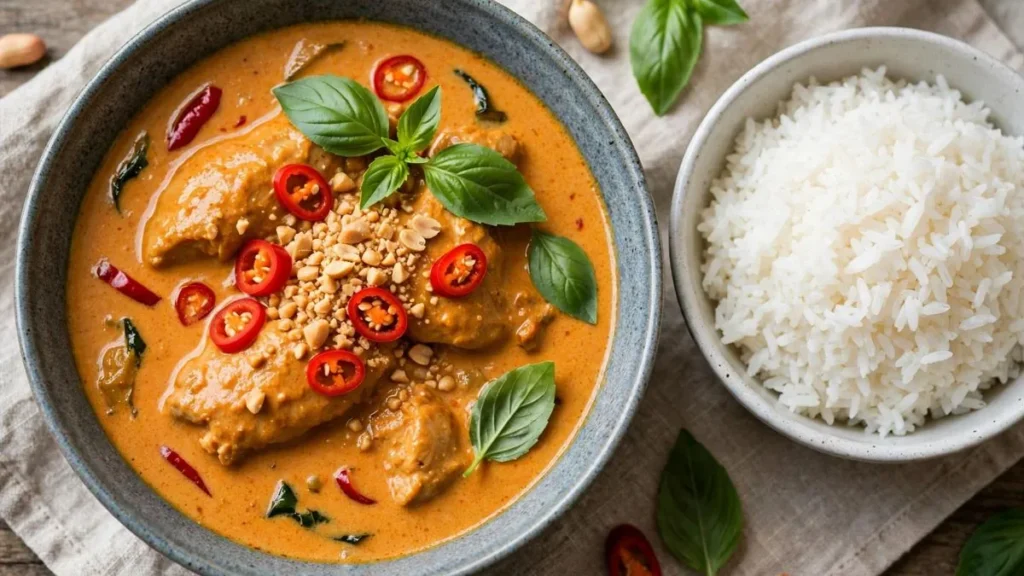
Panang curry is a thick, sweet and nutty Thai curry made with coconut milk, panang curry paste and ground roasted peanuts, richer and less soupy than the Thai curries most people know.
So what exactly is panang curry, and how do you make it at home? It is a central Thai curry, known in Thai as gaeng panang, served as a small amount of thick, glossy sauce over thinly sliced meat rather than as a bowl of broth.
Key takeaways:
- Panang curry is thick and saucy, not soupy: a little rich sauce clings to the meat rather than flooding the plate.
- Ground roasted peanuts plus nutmeg are what set panang paste apart from red curry paste.
- Chicken and pork are the most common proteins, sliced thinly so they cook quickly in the sauce.
- Serve it with steamed jasmine rice, and keep leftovers in the fridge up to four days.
What is panang curry?
Panang curry is a Thai curry from central Thailand, and one of the oldest documented Thai curries, with a written recipe dating back to the late nineteenth century. Its name is widely linked to Penang Island in Malaysia, and its character has stayed steady: rich, gently sweet and nutty.
The texture is the first thing to understand. In Thai, panang is described as kluk klik, which means saucy without being soupy. A green or red curry arrives with plenty of liquid, but a panang arrives as a modest pool of thick sauce.
The flavour is the second thing. Panang is sweeter and milder than a red curry, with warmth rather than heat doing most of the work. The peanuts give it nutty richness, the palm sugar sweetness, and the makrut lime leaves a bright citrus scent.
What goes into panang curry?
The list is short, so the quality of each item matters. At its heart, panang curry needs five things: panang curry paste, full-fat coconut milk, a protein, fish sauce and sugar.
Panang curry paste is a variation on red curry paste — dried chillies, lemongrass, galangal, shallot, garlic, coriander root, makrut lime zest and shrimp paste — with roasted peanuts and nutmeg added. Those two are the signature: the peanuts give nutty depth, the nutmeg a warm, faintly sweet note.
Coconut milk is the second pillar, so buy the best you can find. Full-fat milk gives the sauce its silk, and a good tin has a thick layer of cream on top. Do not shake the tin: spoon the cream off the top to fry the paste in, and add the thinner milk later.
Fish sauce brings salt and savoury depth, and palm sugar the sweetness that balances chilli and lime. If you cannot find palm sugar, light brown sugar works well. Makrut lime leaves are torn in for a citrus perfume, and Thai basil, sliced chilli and crushed peanuts finish the dish.
For the protein, thinly sliced pork is the most common choice in Thailand: tenderloin for a leaner version, shoulder for a richer one. Chicken is the most popular choice outside Thailand, and beef works well sliced thinly against the grain. Tofu and aubergine make a good meat-free version. Our guide to baked chicken breast covers the same cut from a different angle.
Panang paste: shop-bought or homemade?
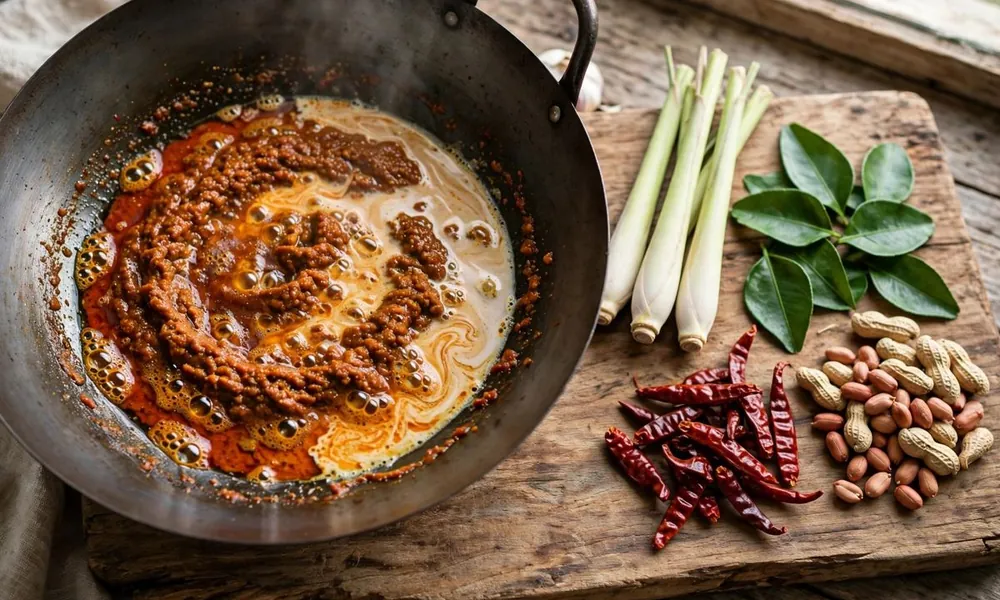
Your curry hangs on your paste. A good shop-bought panang paste is the sensible choice for most cooks: consistent, long-keeping, and made with the same aromatics you would pound yourself. Look for a short ingredient list and a deep red colour.
If you cannot find panang paste, red curry paste makes a good stand-in. Pound two tablespoons of roasted peanuts and a little grated nutmeg into a paste, then mix it in. The result is close, and far better than red curry paste alone.
Making the paste from scratch is a project for a free afternoon. Dried chillies, lemongrass, galangal, shallot, garlic, coriander root, makrut lime zest, shrimp paste, peanuts and nutmeg are pounded in stages until smooth and fragrant. It keeps in the fridge for a week, and tastes noticeably brighter than any jar.
Whichever route you take, fry the paste first. A minute or two in hot oil or coconut cream wakes up the aromatics as stirring it into liquid never will. If it catches, turn the heat down: burnt paste makes the whole curry bitter.
How to make panang curry step by step
This method makes four servings in about half an hour, and works with chicken, pork or beef. Have everything sliced and measured first.
- Prepare the protein and aromatics. Slice 600 grams of chicken thigh, pork tenderloin or beef thinly. Tear four makrut lime leaves, slice one red chilli, crush two tablespoons of roasted peanuts, and pick a few Thai basil leaves.
- Spoon off the coconut cream. Open a 400-millilitre tin of full-fat coconut milk without shaking it, and spoon the thick cream into a wok. Keep the thinner milk for later.
- Fry the paste in the cream. Warm the cream over a medium heat until it glistens and a little oil separates. Add three tablespoons of panang curry paste and fry, stirring, for one to two minutes until fragrant.
- Add the protein. Tip in the sliced meat and stir-fry for two to three minutes until coated and sealed. The simmer will finish cooking it.
- Add the coconut milk and seasonings. Pour in the rest of the coconut milk, add one tablespoon of fish sauce and one teaspoon of palm or light brown sugar, and drop in most of the lime leaves.
- Simmer gently. Simmer gently for ten to fifteen minutes, until the meat is cooked through and the sauce is thick and glossy. Add water only if it gets too thick.
- Taste and balance. Taste and adjust: more fish sauce for salt, more sugar for sweetness, or lime juice for brightness. A good panang tastes sweet first, then salty, with gentle warmth.
- Finish and serve. Turn off the heat, stir in the basil until it wilts, and spoon the curry into a dish. Top with the chilli, remaining lime leaves, crushed peanuts and a drizzle of coconut cream.
The most common mistake is rushing the paste or drowning the sauce. Give the paste its minute in the hot cream, and reduce the sauce until it coats a spoon. A little separated oil is normal. For a second chicken dish, our how to roast a chicken guide is a good companion.
Panang curry variations
The classic panang is made with meat, but the sauce is flexible. Beef panang suits a slightly longer simmer so the meat turns tender. A prawn panang cooks in minutes: add the prawns in the last three minutes and take the pan off the heat as soon as they turn pink.
A vegetarian panang works beautifully with tofu or aubergine. Fry pressed tofu cubes until golden before they go in, or roast aubergine chunks until soft and fold them in near the end. Use a vegetarian fish sauce or soy sauce, and check your paste is free of shrimp paste.
Heat is easy to adjust. For a milder curry, use less paste and more coconut cream. For a hotter one, add a sliced fresh chilli rather than more paste. Red pepper adds colour and sweetness, and peanut butter stirred in at the end deepens the nutty flavour.
What to serve with panang curry
Steamed jasmine rice is the classic partner: it soaks up the thick sauce, and its gentle fragrance suits the curry’s sweetness. Cook it plain, with no butter or oil.
A simple vegetable side balances the plate: steamed broccoli or pak choi with a little garlic, or a crisp cucumber salad with rice vinegar and sugar. The freshness cuts through the richness.
To drink, keep it simple: cold water, a light lager or iced tea all suit the curry’s sweetness. Panang with rice and one green vegetable is a complete dinner. For another takeaway classic, our guide to the best Chinese restaurant dishes covers a different side of the same tradition.
How to store and reheat panang curry
Panang curry keeps well, and many cooks find it tastes better the next day. Cool it quickly and refrigerate in a sealed container within two hours. It keeps for up to four days.
Reheat it gently over a low heat until piping hot, adding water or coconut milk if the sauce has thickened. Avoid boiling it hard, which splits the sauce and toughens the meat.
Freezing is not recommended, because the sauce tends to split when it thaws. If you must freeze it, freeze the sauce without the meat. Never reheat the same portion more than once.
Panang curry at a glance
| Element | Panang curry | Red curry | Green curry |
|---|---|---|---|
| Sauce | Thick, small amount | Moderate, soupy | Thin, plenty of liquid |
| Sweetness | Noticeably sweet | Mildly sweet | Least sweet |
| Signature ingredient | Ground peanuts, nutmeg | Red chillies | Green chillies, basil |
| Heat | Gentle warmth | Medium | Often hottest |
| Usual protein | Pork or chicken | Chicken or beef | Chicken or fish |
| Best with | Jasmine rice | Jasmine rice | Jasmine rice |
Your panang curry checklist
- Choose a good paste: buy the best you can find, or add pounded peanuts and nutmeg to red curry paste.
- Do not shake the coconut milk: spoon the thick cream off the top to fry the paste in.
- Fry the paste first: one to two minutes in hot cream until fragrant.
- Slice the meat thinly: it cooks quickly and stays tender.
- Simmer, do not boil: ten to fifteen minutes on a gentle heat.
- Taste before serving: balance sweet, salty and bright.
- Refrigerate within two hours: cool leftovers quickly and keep them sealed for up to four days.
Frequently asked questions
What is panang curry?
Panang curry is a thick, sweet and nutty Thai curry of coconut milk, panang paste and ground peanuts. It is saucy rather than soupy, and milder than a red or green curry.
Is panang curry the same as red curry?
No, although the two share a base. Panang paste is a variation on red curry paste with roasted peanuts and nutmeg added, and the finished curry is thicker, sweeter and less soupy.
Is panang curry spicy?
It is mildly spiced rather than hot. The coconut milk, sugar and peanuts soften the chilli heat, so most people find it gentle. Add a fresh chilli if you want more heat.
What do you serve with panang curry?
Steamed jasmine rice is the classic partner, with a simple green vegetable such as broccoli or pak choi on the side. The rice soaks up the thick sauce, and the vegetables cut through its richness.
How long does panang curry keep?
It keeps in a sealed container in the fridge for up to four days. Reheat gently until piping hot, and do not freeze it: coconut milk sauces split when thawed.
The bottom line
Panang curry is the Thai curry for cooks who want richness without fire: a thick, glossy coconut sauce, the warmth of peanuts and nutmeg, and a method that takes half an hour. Once you have made it with a good paste and good coconut milk, the takeaway version feels like a pale copy.
Your next step is simple. Buy a jar of panang paste and a tin of full-fat coconut milk, slice some chicken thighs, and cook the method above tonight. Serve it with jasmine rice and make it your own.
Food-safety note: cook chicken and other meat until piping hot all the way through, with no pink meat, and refrigerate leftovers within two hours. Reheat leftovers until piping hot, and do not reheat the same portion more than once.