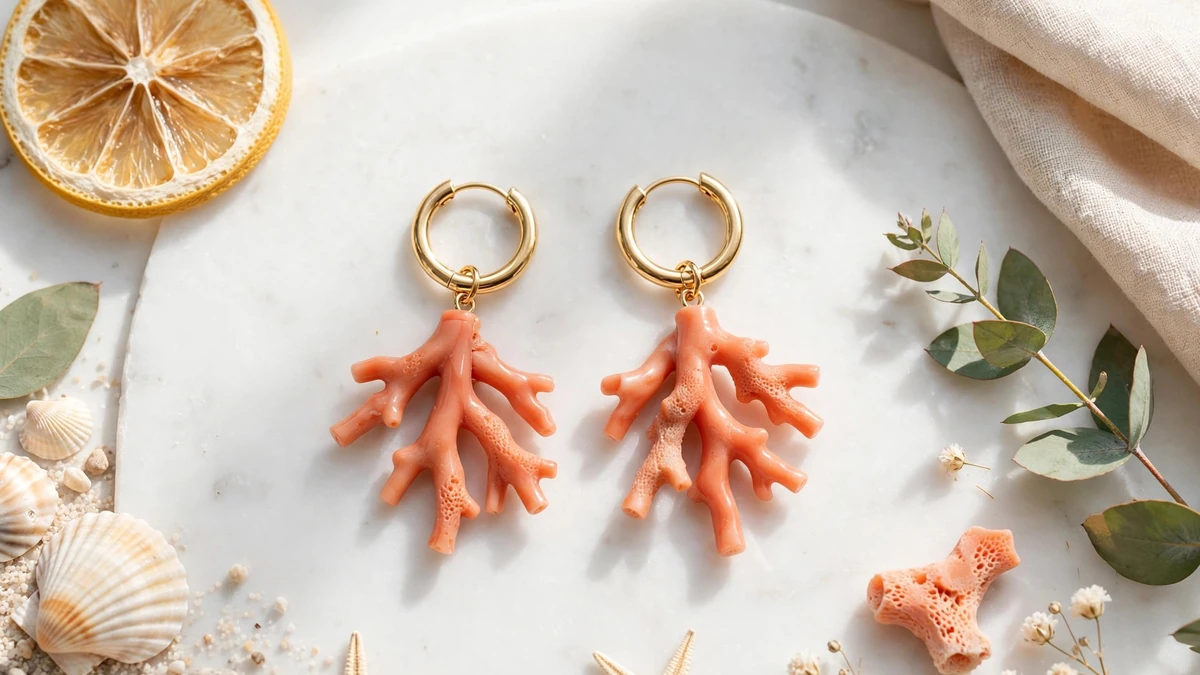

Coral is the colour of summer in jewellery form. Warm, soft, and instantly cheerful, coral earrings can lift a plain white shirt, a linen dress or a swimsuit cover-up without any effort at all. The stone, or rather the material, has been worn for centuries, and in 2027 it is back in a big way, from pale peach cabochons to deep red drops that read as a statement on their own.
The challenge with coral is knowing what you are actually buying. Genuine coral is the skeleton of a marine organism, made mostly of calcium carbonate, and it is soft, at Mohs 3 to 3.5, which means it scratches easily and needs gentle care. Much of what is sold as coral today is dyed white coral, sponge coral, bamboo coral, or resin and glass imitations, and the finest deep red coral is rare, expensive and protected by trade rules. None of that makes coral a bad choice. It makes honest descriptions important.
Below are nine coral earrings worth considering for summer 2027, from pale peach studs to deep red drops, with honest notes on what each pair does well and what to check before you buy. Each one is described by what it is good at, what to watch for, and who it suits best, so you can choose with your ears and your budget in mind, not just a bestseller list.
Key takeaways
- Coral is calcium carbonate, Mohs 3 to 3.5, which makes it soft, warm to the touch, and easy to scratch, so it needs gentle care.
- Much of what is sold as coral is dyed white coral, sponge coral or bamboo coral; genuine deep red coral is rare, expensive and protected.
- Resin and glass imitations are common, so buy from a seller who names the material and offers returns.
- A bezel setting protects the soft edges of a coral cabochon best, and a secure back matters in summer heat.
- Coral has no proven healing properties and is not an investment stone; buy it because you love the colour, not for value or health claims.
What coral actually is
Coral is not a mineral in the usual sense. It is the calcium carbonate skeleton of tiny marine animals, built up over years on reefs and in deep water. That organic origin is why coral feels warm to the touch, why it has a soft, slightly waxy lustre rather than a glassy sparkle, and why it is so much softer than quartz stones such as agate or amethyst. On the Mohs scale it sits at 3 to 3.5, which is softer than a copper coin, so it can be scratched by a fingernail, a zip, or another piece of jewellery in the same box.
The most prized coral is deep red, often called oxblood or Sardinian coral, and it is rare and expensive. Most coral jewellery today uses pink, peach or salmon-coloured material, often sponge coral or bamboo coral, or white coral that has been dyed pink or red. Dyeing is common and stable, but it should be disclosed. Resin and glass imitations are also widespread, especially at low prices, and they are usually perfectly uniform in colour, which is a clue, because real coral always shows some variation, grain or tiny natural pits.
Because coral is so soft, most coral earrings use cabochons, smooth domed stones, rather than facets. A cabochon shows the colour and the soft lustre at their best, and it is more forgiving of the small surface marks that coral picks up over time. For summer, the cabochon is also the most comfortable shape, because it sits flat against the ear and does not catch on hair.
How we chose these earrings and what to look for
Look first at the material. Ask what kind of coral it is, whether the colour is natural or dyed, and whether the listing names the material at all. A seller who writes “genuine red coral” for a $60 pair is almost certainly selling dyed coral or an imitation, because real deep red coral costs far more. A seller who writes “dyed coral” or “sponge coral” is being honest, and that honesty is worth more than a grand claim. Our guide to the best diamond earrings makes the same point about buying stones online: the listing should tell you what you are actually getting.
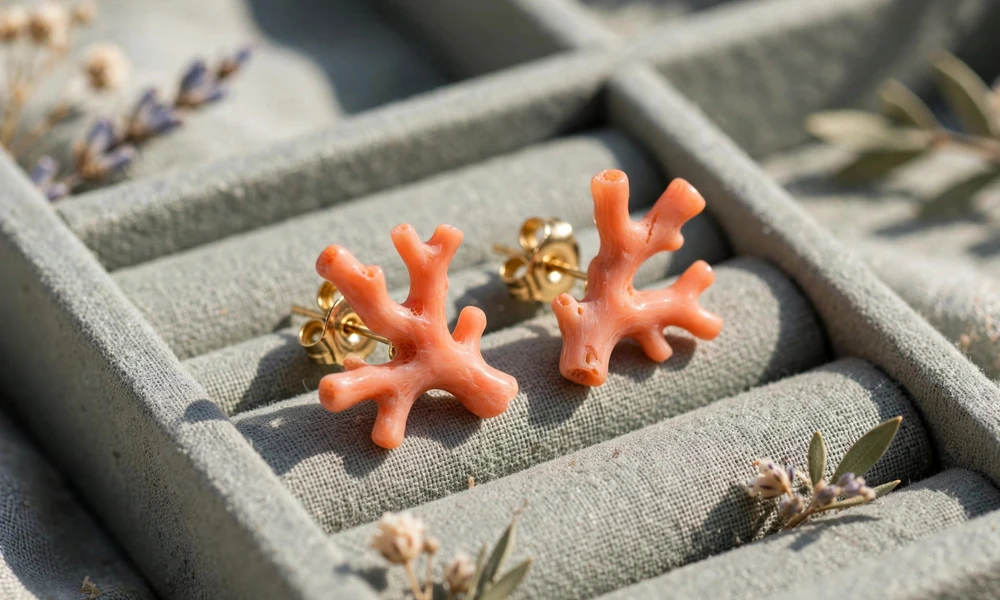
Look next at the setting. A bezel setting, a rim of metal that wraps the edge of the stone, is the safest choice for coral, because it protects the soft rim from chips and knocks and holds the stone firmly. Prong settings can work for small studs, but they leave the edges exposed, so check that the prongs are even and the stone does not wobble. For drops, check the hook or post, because a secure fitting matters more in summer, when heat and movement can loosen a poor back.
Finally, look at the metal and the colour. Sterling silver and gold vermeil are the most common choices, and warm gold tones suit coral particularly well, because they pick up the warmth of the stone. Pale peach coral suits cool skin tones and fair hair, while deep red and salmon coral suit warm skin tones and darker hair. In summer, a mid-tone salmon or peach is the most versatile, because it reads as a colour accent rather than a skin-tone match.
The 9 best coral earrings of summer 2027
Tiffany & Co. Studs
What we like: A clean, classic stud in a polished bezel, with carefully matched coral cabochons in a soft, even peach and a secure post and butterfly back. What to consider: Premium price for a soft, semi-precious material, and the colour range is restrained. Stone: Coral cabochon. Setting: Sterling silver or 18k gold bezel. Best for: Everyday wear and quiet, polished outfits. Price range: $400 to $900.
Cartier Studs
What we like: Precise craftsmanship, a slim bezel that lets the colour show, and a comfortable, balanced weight on the ear. What to consider: The price reflects the name as much as the material, and coral is soft, so it needs care. Stone: Coral cabochon. Setting: 18k gold bezel. Best for: Dressier days and gifts that need to feel special. Price range: $900 to $2,500.
David Yurman Studs
What we like: The signature cable detail around the bezel gives a plain coral cabochon real character, and the stones are well chosen for colour. What to consider: The cable motif is distinctive, so it will not suit everyone, and the price is higher than a plain stud. Stone: Coral cabochon. Setting: Sterling silver with 18k gold cable detail. Best for: People who want a recognisable design with a warm, natural material. Price range: $350 to $800.
Mejuri Stud Earrings
What we like: A straightforward, well-priced stud in gold vermeil, with an honest description of the material and a comfortable, light feel. What to consider: Vermeil will fade over time with daily wear, and coral is soft, so store the pair separately. Stone: Coral cabochon. Setting: Gold vermeil bezel. Best for: Everyday summer wear on a sensible budget. Price range: $80 to $180.
Monica Vinader Studs
What we like: Clean, modern lines, a good range of coral colours from pale peach to salmon, and a setting that protects the stone well. What to consider: Some colours are dyed, which should be stated clearly in the listing, and vermeil needs occasional care. Stone: Coral cabochon, some colours dyed. Setting: Gold vermeil bezel. Best for: Adding a warm pop of colour to a simple summer outfit. Price range: $100 to $220.
Missoma Stud Earrings
What we like: A relaxed, slightly bohemian feel, with soft peach coral that looks natural rather than polished to perfection. What to consider: The colour varies between pairs, so what you receive may look different from the photo. Stone: Coral cabochon. Setting: Gold vermeil bezel. Best for: Casual summer days and layered, relaxed jewellery. Price range: $90 to $200.
The charm here is the material itself. Coral is never perfectly uniform, and no two pairs are alike, which is the point, as long as you are happy with a little variation.
Maria Black Studs
What we like: A sharper, more architectural setting that suits the soft colour, with a modern feel that works well with tailored clothes. What to consider: The design is bolder than a classic stud, and the price reflects the design-led brand. Stone: Coral cabochon. Setting: Sterling silver or gold-plated bezel. Best for: Modern outfits and people who like jewellery with an edge. Price range: $150 to $350.
This pair suits anyone who finds classic studs a little dull. The setting gives the stone a frame with attitude, and the warm colour keeps it from looking severe.
Astrid & Miyu Drops
What we like: A longer drop that shows off the coral colour as the stone moves, with a secure hook and a light, comfortable weight. What to consider: Drops catch on hair and clothing more than studs, and the soft stone is exposed, so handle them gently. Stone: Coral cabochon drop. Setting: Gold vermeil bezel with hook. Best for: Evenings, holidays and outfits that need movement. Price range: $120 to $250.
Drops are the best way to show coral, because the stone moves and the light changes across its surface. This pair does that well without feeling heavy.
Thomas Sabo Drops
What we like: A generous drop with a well-finished setting, available in several coral colours, and a sturdy hook that stays put. What to consider: The larger stone is heavier than a stud, and some colours are dyed. Stone: Coral cabochon drop. Setting: Sterling silver bezel with hook. Best for: Statement summer evenings and holiday dinners. Price range: $130 to $280.
If you want one pair of coral drops for the whole summer, this is a solid choice. The setting is secure, the colours are cheerful, and the price is fair for the size of the stone.
Which coral earrings are right for you
Start with how you will wear them. If you want a pair for every day, choose a stud in a bezel setting, in a mid-tone salmon or peach, because it will go with everything and the bezel will protect the soft stone. If you want a statement, choose a deeper red drop, but wear it for evenings rather than all day, because coral scratches easily and a large stone is more exposed. Our guide to gold jewellery for everyday wear is useful here, because the metal you choose matters as much as the stone when a pair is worn daily.
Think about your skin tone and your hair. Pale peach coral suits cool skin tones and fair hair, because the soft colour does not overpower a light complexion. Deep red and salmon coral suit warm skin tones and darker hair, because the warmth echoes the skin. In summer, a mid-tone salmon is the most versatile, because it reads as a colour accent rather than a skin-tone match, which is why it appears in so many holiday collections.
Finally, think about size. A small cabochon, around 6 to 8 millimetres, is the most versatile stud size and the most comfortable for all-day wear. A larger stone, 10 millimetres and above, makes more of a statement but feels heavier and is more vulnerable to knocks, especially in a drop. If you have sensitive ears, choose a lightweight stud with a hypoallergenic post, and avoid heavy drops for long days.
The caveats that matter
Coral is beautiful, but it is soft and it needs care. It can be scratched by a zip, a fingernail or another piece of jewellery in the same box, and a scratch on a polished cabochon is hard to remove without re-polishing. It should never go in an ultrasonic or steam cleaner, and it should be kept away from perfume, hairspray, sunscreen and household chemicals, all of which can dull the surface or damage the colour.
| Detail | What is known |
|---|---|
| What it is | Calcium carbonate skeleton of a marine organism, not a mineral |
| Hardness | Mohs 3 to 3.5, soft and easy to scratch, needs gentle care |
| Natural colours | White, pale pink, peach, salmon, and rare deep red |
| Dyed and imitation material | White coral is often dyed pink or red; resin and glass imitations are common |
| Best setting | Bezel for cabochons, to protect the soft rim; prongs only for small studs |
| Cleaning | Wipe with a soft, dry cloth; avoid water, chemicals, perfume and ultrasonic cleaners |
| What to check before buying | Whether the coral is natural or dyed, whether the photo shows the exact pair, and the returns policy |
| What it is not | It has no proven healing properties and is not an investment stone |
Be wary of listings that call a cheap pair “genuine red coral” with no detail, or that use the same stock photo for every pair when the material is famously variable. Genuine deep red coral is rare and expensive, so a low price is a clue, not a bargain. A good seller will name the material, say whether it is dyed, and offer returns. That is not a luxury. It is the minimum for a soft, variable material.
Checklist: choosing coral earrings honestly
Use these checks before you buy, and again when the pair arrives.
- Check the material: ask what kind of coral it is, and whether the colour is natural or dyed.
- Check the price: genuine deep red coral is rare and expensive, so a very low price means dyed coral or an imitation.
- Check the photo: ask to see the exact pair you will receive, because no two coral stones look alike.
- Check the setting: a bezel protects a soft cabochon best; check that prongs are even and the stone does not wobble.
- Check the fit: a secure back matters in summer; try the pair on and move your head before you commit.
- Check the care: store coral separately in a soft pouch, away from other jewellery, perfume and sunscreen.
Frequently asked questions
Is coral durable enough for everyday wear?
Only with care. At Mohs 3 to 3.5 it scratches easily, so a bezel-set stud worn carefully can last for years, but a large drop worn daily will show marks. Treat coral as a gentle-wear material, not a hard-wearing stone.
Is red coral natural?
Genuine deep red coral exists, but it is rare and expensive. Most red coral jewellery is dyed white coral, which is a standard treatment, but it should be disclosed. If a pair is cheap and described as “genuine red coral” with no detail, be sceptical.
Why do two pairs of coral earrings look different?
Because coral is organic, and every piece has its own colour variation, grain and tiny natural pits. That is normal and part of the appeal. If you want a matched pair, buy from a seller who photographs the exact pair you will receive.
Can I wear coral earrings in water?
Try not to. Water, chlorine, salt and soap can dull the polish over time, and coral should be kept dry. If the pair does get wet, rinse with fresh water, dry it gently, and store it in a soft pouch.
How do I clean coral earrings?
Wipe with a soft, dry cloth. Do not use water, soap, ultrasonic cleaners or steam cleaners, and keep coral away from perfume, hairspray and sunscreen. A jeweller can re-polish a scratched cabochon, but prevention is easier.
Is coral a good investment?
No. Coral does not hold resale value the way diamonds or fine sapphires can, and trade in some coral is restricted. Buy it because you love the colour. Our guide to the best summer dresses is a better place to spend summer money if your goal is a fresh look rather than a collectible stone.
The bottom line
The best coral earrings for summer 2027 are the ones where the material is honestly described, the setting protects it, and the colour is the one you actually wanted. A small bezel-set stud in salmon or peach is the most versatile choice, and it will lift almost any summer outfit. A deeper red drop is just as good for evenings, as long as you buy it knowing what it is and wear it with care.
Choose the pair whose colour you love, check the material and the returns policy before you buy, and store them separately in a soft pouch. Coral is not a hard stone, and that is its charm: it is warm, soft and alive with colour, and it rewards gentle handling.