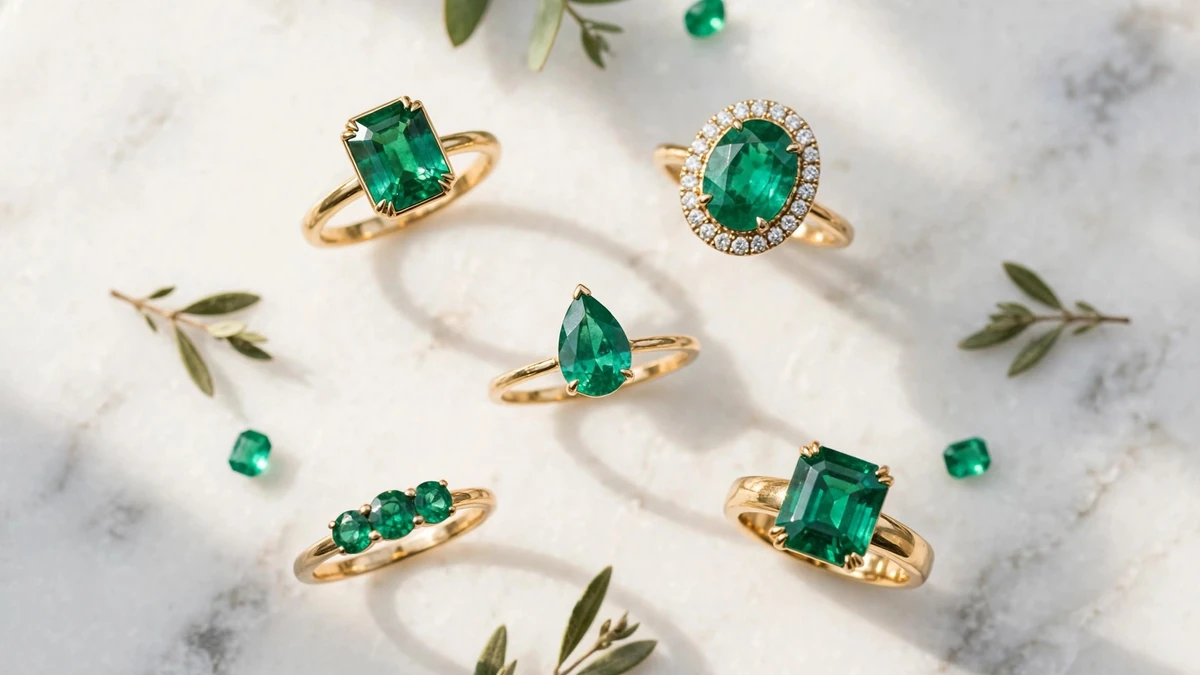

Emerald is the one green stone that has never gone out of fashion. It is the birthstone of May, the centrepiece of some of the most famous royal jewels ever made, and the one coloured gemstone that can hold its own against a diamond in a fine ring. The problem is not finding an emerald ring. It is finding one that is genuinely good: a stone with a rich, even green, a cut that lets light move through it, and a setting that protects a stone which is far softer and more fragile than most people realise.
That is why this guide is organised by what actually matters, not just by brand name. A vivid Colombian emerald in a simple gold solitaire can be a better buy than a larger, paler stone in an elaborate halo. A treated stone can be perfectly fine, as long as the treatment is disclosed and the price reflects it. And a ring you wear every day needs a very different setting from a ring you save for evenings out.
Below are nine emerald rings worth considering in 2027, from a classic solitaire to a bold cocktail ring, from fine jewellery houses to more accessible names. Each one is described by what it is good at, what to watch for, and who it suits best, so you can choose with your eyes open, not just your heart.
Key takeaways
- Emerald is beryl coloured green by chromium or vanadium. The finest stones are a rich, slightly bluish green with good saturation, and a little natural texture inside the stone is normal.
- Almost all emeralds are oiled to fill tiny surface-reaching fissures. Ask how much oil was used and whether it is disclosed, because heavy treatment lowers the price.
- Emerald measures 7.5 to 8 on the Mohs scale but is brittle, so a protective setting such as a bezel or halo matters more than it does for sapphire or diamond.
- Never put an emerald ring in an ultrasonic cleaner or a steam cleaner, and keep it away from harsh chemicals, perfumes and household cleaners.
- No emerald ring is an investment. Buy the stone you love, at a price you are comfortable wearing, and be honest with yourself about how often you will actually wear it.
What an emerald ring actually is
Emerald is the green variety of the mineral beryl, the same family that gives us aquamarine and morganite. Its green comes from traces of chromium, vanadium or iron, and the finest emeralds, historically from Colombia, show a rich, velvety green that looks almost alive in daylight. Zambian emeralds tend to be a slightly cooler, bluish green, while Brazilian stones are often a little lighter. None of these is automatically better than the others. Origin matters less than the colour in front of you.
What makes emerald different from most gemstones is what gemmologists call its jardin, French for garden. Almost every emerald contains tiny inclusions, little fractures and veils that look like moss or mist inside the stone. A completely clean emerald is so rare that it is either extraordinarily expensive or, more likely, synthetic. A little jardin is not a flaw. It is part of what proves the stone is natural, and it is what gives fine emerald its soft, glowing character rather than the glassy look of a synthetic.
The trade-off is fragility. Emerald is hard enough to resist scratching, at 7.5 to 8 on the Mohs scale, but it is brittle. Those same tiny fissures that create the jardin can make the stone chip if it is knocked against a hard surface. That is why the setting matters so much, and why an emerald ring is a different proposition from an emerald necklace or a pair of earrings, which are rarely knocked about. A ring lives on your hand, and your hand bumps into things all day.
How we chose these rings and what to look for
Look first at the colour. Hold the ring in daylight if you can, not just under shop lights. A good emerald is a medium to medium-dark green with strong saturation, neither so dark that it looks black indoors nor so pale that it reads as green glass. A slightly bluish green is generally the most prized, but a pure, vivid green is beautiful too. What you want to avoid is a stone that looks grey, yellowish or washed out, because that usually means a lower-grade stone priced as though it were fine.
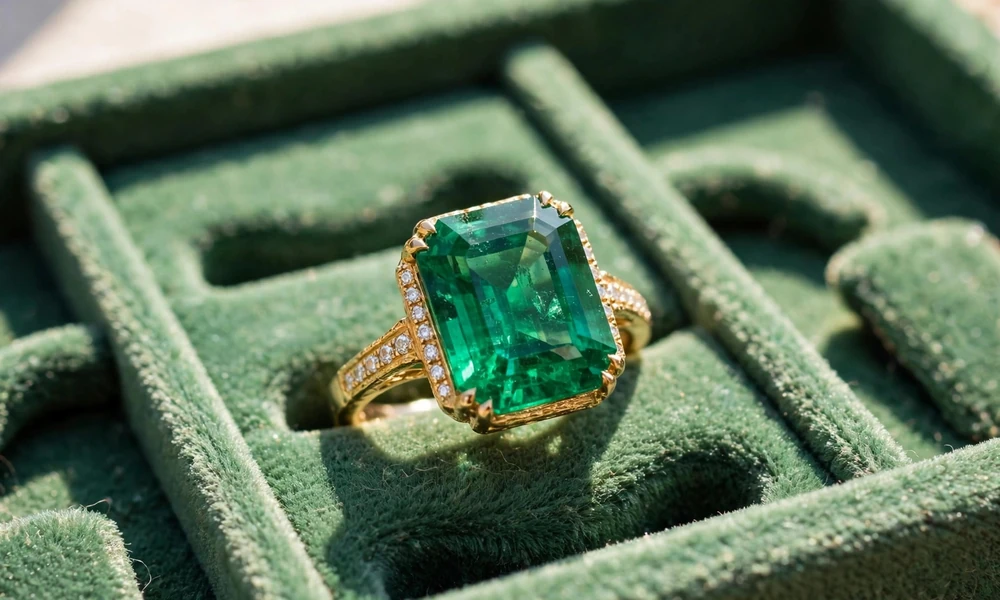
Look next at the treatment. Almost every emerald on the market has been oiled, a traditional process in which a clear oil is used to fill tiny surface-reaching fissures and improve the stone’s clarity and appearance. Minor oiling is standard and accepted. Moderate or heavy oiling, or the use of resin instead of oil, should be disclosed and should bring the price down considerably. Always ask for the treatment level in writing, and if a seller cannot tell you, treat that as a warning sign. Our guide to the best emerald bracelets explains the same oiling question in more detail, because it applies to every piece of emerald jewellery you will ever buy.
Finally, look at the setting and the metal. A bezel setting, where a rim of metal wraps around the stone, protects the girdle and corners better than tall prongs. A halo of small diamonds adds protection and sparkle, and it can make a smaller centre stone look larger. Yellow gold warms up emerald’s green beautifully, while white gold and platinum give a cooler, more modern look. Avoid very thin bands and very high settings for a ring you plan to wear daily, because both catch on things and put the stone at risk.
The 9 best emerald rings of 2027
Tiffany & Co. Emerald Solitaire
What we like: A classic six-prong solitaire in platinum with a vivid, well-matched emerald, finished to Tiffany’s usual high standard, with full disclosure of treatment and origin. What to consider: Premium price, and the solitaire setting leaves the stone more exposed than a bezel. Stone: Natural emerald, approximately 1.5 carats. Setting: Platinum solitaire. Best for: An engagement ring or a milestone gift. Price range: High.
Cartier Emerald and Diamond Ring
What we like: An emerald-cut emerald flanked by tapered baguette diamonds in 18-karat yellow gold, with Cartier’s unmistakable sense of proportion and polish. What to consider: A formal, dressy design that suits evenings better than everyday wear. Stone: Natural emerald, approximately 2 carats. Setting: 18-karat yellow gold with diamond shoulders. Best for: Evening wear and collectors. Price range: High.
David Yurman Emerald Cable Ring
What we like: A cushion-cut emerald set in 18-karat yellow gold with Yurman’s signature cable detailing and a pavé diamond halo, comfortable to wear and instantly recognisable. What to consider: The halo adds sparkle but also adds small stones that need occasional checking. Stone: Natural emerald, approximately 1.2 carats. Setting: 18-karat yellow gold cable with pavé halo. Best for: Everyday luxury with a designer signature. Price range: High.
Mejuri Emerald Bezel Ring
What we like: A clean, modern bezel setting in 14-karat gold with a bright emerald, at a price that makes fine emerald accessible, with transparent sourcing information. What to consider: A smaller centre stone than the fine jewellery houses offer, and a simpler design. Stone: Natural emerald, approximately 0.5 carats. Setting: 14-karat gold bezel. Best for: A first emerald ring or daily wear. Price range: Mid-range.
Monica Vinader Emerald Signet Ring
What we like: A bold signet-style ring with a flat-cut emerald in 18-karat gold vermeil over sterling silver, modern and wearable, with a strong fashion edge. What to consider: Vermeil is a gold layer over silver, so it will wear over time and need re-plating eventually. Stone: Natural emerald, approximately 0.8 carats. Setting: 18-karat gold vermeil signet. Best for: Fashion-led everyday wear. Price range: Accessible.
Missoma Emerald Cocktail Ring
What we like: A large, cushion-cut emerald in a gold cocktail setting with a pavé band, dramatic without being unwieldy, and priced for real life rather than a vault. What to consider: A cocktail ring is a statement piece, not an everyday ring, and the large stone needs care. Stone: Natural emerald, approximately 2.5 carats. Setting: Gold cocktail setting with pavé band. Best for: Evenings, parties and special occasions. Price range: Mid-range.
Maria Black Emerald Sculptural Ring
What we like: An architectural, sculptural setting in sterling silver with a raw-cut emerald, for people who want jewellery with an edge rather than a classic look. What to consider: Sterling silver tarnishes and needs regular cleaning, and the sculptural setting is a strong style choice that will not suit everyone. Stone: Natural emerald, approximately 1 carat. Setting: Sterling silver sculptural. Best for: Contemporary, artistic styling. Price range: Mid-range.
Astrid & Miyu Emerald Stacking Ring
What we like: A slim, delicate band with a small oval emerald in gold vermeil, designed for stacking, lightweight and easy to wear every day. What to consider: A small stone, so the colour impact is subtle, and vermeil will need re-plating over time. Stone: Natural emerald, approximately 0.3 carats. Setting: Gold vermeil slim band. Best for: Stacking and everyday wear. Price range: Accessible.
Thomas Sabo Emerald Charm Ring
What we like: A playful emerald ring with a pavé-set band and a small charm detail, in sterling silver with a warm gold tone, fun without feeling cheap. What to consider: A fashion ring rather than a fine jewellery piece, and the small pavé stones need occasional cleaning. Stone: Natural emerald, approximately 0.6 carats. Setting: Sterling silver with pavé band. Best for: Younger wearers and casual styling. Price range: Accessible.
Which emerald ring is right for you
For an engagement ring or a major milestone, choose a solitaire or a three-stone ring in platinum or 18-karat gold, with a stone of at least one carat and a certificate from a recognised laboratory. A pair of emerald earrings can be a useful comparison, because earrings show you what the stone looks like without the pressure of a ring purchase.
For everyday wear, choose a bezel or a low halo setting, in 14-karat or 18-karat gold, with a stone under two carats. The lower the setting sits on the finger, the less it catches on things, and the longer the stone survives daily life. A bezel also hides small chips at the girdle, which is where emerald most often takes damage. Avoid tall prong settings and very thin bands for a daily ring, however beautiful they look in the box.
For evenings and occasions, a cocktail ring or a larger emerald in a dramatic setting is the right call. These rings are not meant to survive a day at the office, and that is fine. Wear them for a few hours, enjoy the attention, and put them away safely. A large emerald in a cocktail ring can look extraordinary with a simple black dress, and it needs nothing else to compete with it.
The caveats that matter
Emerald is a beautiful stone, but it is not a forgiving one. It chips more easily than sapphire, ruby or diamond, and it cannot be cleaned the way those stones can. An ultrasonic cleaner, a steam cleaner, or a harsh chemical can force oil out of the fissures, making the stone look cloudy, or worse, crack it. It means you need to treat it like the delicate luxury it is, and choose a setting that does some of the protecting for you.
| Detail | What is known |
|---|---|
| Stone | Beryl coloured green by chromium or vanadium, Mohs 7.5 to 8, naturally included |
| Best colour | Rich, slightly bluish green with strong saturation, neither too dark nor too pale |
| Standard treatment | Oiling is normal and accepted; ask for the treatment level in writing |
| Most protective setting | Bezel or low halo; avoid tall prongs and very thin bands for daily wear |
| Cleaning | Lukewarm water, mild soap and a soft brush only; never ultrasonic or steam |
| What to avoid | Knocks, harsh chemicals, perfumes, household cleaners and hot water |
| Certification | Ask for a laboratory certificate for stones over one carat, recording treatment and origin |
| What it is not | Not an investment, and not a stone for rough daily wear without a protective setting |
If you are buying an emerald ring as an engagement ring, be honest about how the wearer actually lives. Someone who works with their hands, gardens, or plays sport will be happier with a bezel-set stone, or with a harder stone altogether. There is no shame in choosing sapphire for daily wear and saving emerald for occasions. A ring that stays in a box because you are afraid of damaging it is not a good purchase, however beautiful the stone.
Checklist: choosing an emerald ring honestly
Use these checks before you buy, and again when the ring arrives.
- Check the colour in daylight: rich, even green, with no grey, yellow or washed-out patches.
- Check the treatment: ask for the oiling level in writing, and expect a lower price for moderate or heavy treatment.
- Check the setting: a bezel or low halo protects the stone; tall prongs and thin bands do not.
- Check the certificate: for stones over one carat, ask for a laboratory report recording treatment and origin.
- Check the fit: the ring should sit comfortably and not spin, because a spinning ring knocks the stone more often.
- Check the care: lukewarm water and mild soap only, no ultrasonic or steam cleaning, and store it separately from harder stones.
Frequently asked questions
Is an emerald ring a good choice for an engagement ring?
It can be, if you go in with your eyes open. Emerald is softer and more brittle than diamond or sapphire, so it needs a protective setting such as a bezel or a halo, and it needs more careful wear. Many people choose it because of its colour and history, and because it is a birthstone. If the wearer is rough with their hands, a sapphire may be the more practical choice.
Why are most emeralds oiled?
Almost all emeralds have tiny surface-reaching fissures, and oiling fills them so the stone looks clearer and more beautiful. It is a traditional, accepted treatment. What matters is disclosure: minor oiling is standard, while moderate or heavy oiling, or the use of resin, should be stated and reflected in the price.
Can I wear an emerald ring every day?
Yes, with a protective setting and a little care. Choose a bezel or low halo, take the ring off for cleaning, gardening, sport and manual work, and clean it only with lukewarm water and mild soap. A tall solitaire worn every day without care will chip sooner than most people expect.
How do I clean an emerald ring?
Soak it briefly in lukewarm water with a drop of mild soap, brush gently with a soft toothbrush, rinse and pat dry. Never use an ultrasonic cleaner, a steam cleaner, or a harsh chemical, and never use hot water, because heat can force the oil out of the stone.
What is the difference between Colombian and Zambian emeralds?
Colombian emeralds are famous for a rich, warm, slightly yellowish green and are often the most expensive. Zambian emeralds tend to be a cooler, bluish green and are often cleaner, with fewer inclusions. Neither is automatically better. Judge the stone in front of you, not the label on the origin.
Are emerald rings a good investment?
No. Fine emeralds hold their value better than most coloured stones, but jewellery is a poor investment in general, and retail mark-ups mean you will rarely recover what you paid. Our guide to the best diamond necklaces makes the same point about diamonds. Buy an emerald ring because you love wearing it, not because you expect it to make money.
The bottom line
The best emerald ring in 2027 is not the largest stone or the most famous name. It is the one with a rich, even green, an honest treatment disclosure, and a setting that protects a stone which is beautiful precisely because it is delicate. For a milestone, a solitaire or three-stone ring in platinum or 18-karat gold is a strong choice. For everyday wear, a bezel in 14-karat gold is the smarter buy, and it will still give you that flash of green every time you look at your hand.
Choose one ring, check the colour in daylight, ask for the treatment level in writing, and wear it with the care it deserves. That is the honest way to enjoy emerald, without the chip, the cloudiness or the regret that comes from buying a stone you did not really understand.