Curly hair is not one hair type. It ranges from loose waves that barely hold a bend to tight coils that shrink to half their length when dry, and each pattern needs different products, different amounts, and a different routine. That is why so many curly-haired people have a bathroom full of half-used creams and gels. The product was not necessarily bad. It was wrong for their curl pattern, their porosity, or the weather.
The goal of a good curly hair product is simple: defined, moisturised curls that hold their shape without frizz, crunch, or weight. Getting there takes the right combination of moisture, hold, and technique. A cream gives softness and definition. A gel gives hold and frizz control. A leave-in adds moisture that lasts between washes. Most curly routines need at least two of the three, applied in the right order, on soaking wet hair.
Below are nine curly hair products worth considering in 2027, from leave-in creams and defining gels to custards and styling creams. Each one is described by what it is good at, what to watch for, and who it suits best, so you can choose with your curls in mind, not just a bestseller list.
Key takeaways
- Curly hair needs moisture, hold, and technique together, and most routines need at least two products, applied on soaking wet hair.
- Cream gives softness and definition, gel gives hold and frizz control, and a leave-in adds moisture that lasts between washes.
- Match the weight to your curl pattern: light gels for waves, richer creams for tight curls and coils.
- Porosity matters as much as curl type, because low-porosity hair rejects heavy butters while high-porosity hair drinks them up.
- No product fixes curls damaged by heat or bleach on its own, and a single product rarely works for every curl pattern.
What curly hair products actually do
Curly hair is naturally drier than straight hair, because the oils from the scalp have further to travel along a curved strand. It is also more fragile, because each bend is a weak point where the hair can snap. A good curly product does two things: it adds and seals in moisture, and it holds the curl in its natural shape while it dries, so the curls clump together instead of separating into frizz.
That is why technique matters as much as the product. Applying a cream or gel to soaking wet hair, scrunching upward, and letting the curls dry without touching them gives a very different result from applying the same product to damp hair and brushing it through. The product forms a cast as it dries, a light, slightly stiff shell around each curl, and once the hair is fully dry, you scrunch that cast out to reveal soft, defined curls. The cast is not a flaw. It is the hold working.
It also matters to know what curly products cannot do. They cannot change your curl pattern, they cannot repair hair that has been broken by heat or bleach, and they cannot make curls hold in high humidity if the formula has no hold at all. What they can do is give your natural pattern its best chance, and protect the hair you have while it grows.
How we chose these curly hair products and what to look for
Look first at your curl pattern and porosity. Loose waves need light products, a gel or a light cream, because anything heavy will pull the wave out. Tight curls and coils need richer creams and butters, because they need more moisture and more hold to keep their shape. Porosity is the second test. Put a clean strand in a glass of water. If it floats for a long time, your hair is low porosity and needs light, water-based products. If it sinks quickly, your hair is high porosity and will welcome richer formulas.
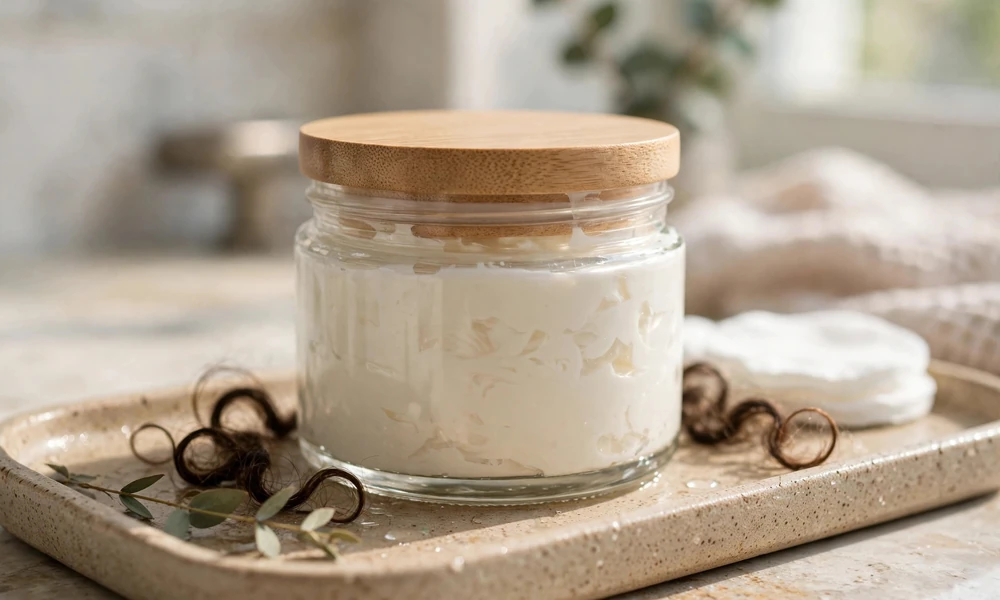
Look next at the ingredient list. Glycerin, aloe, and hyaluronic acid attract moisture. Shea butter, coconut oil, and avocado oil seal it in. Proteins, such as hydrolysed wheat or rice amino acids, add strength and structure, but too much protein can make hair feel stiff and straw-like, so balance matters. If your hair feels dry and rough after a product, it may need more moisture. If it feels limp and mushy, it may need protein. A hair serum for frizz can help smooth the surface, but it is a finisher, not a replacement for a cream or gel.
Finally, look at the hold. A soft cream gives light hold and a natural finish, while a strong gel gives lasting definition and frizz control, at the cost of a cast that needs scrunching out. Most people do best with a cream first, then a gel on top, a combination often called the cream-gel sandwich, which gives both moisture and hold in one routine.
The 9 best curly hair products of 2027
DevaCurl SuperCream
What we like: A rich, coconut-scented styling cream that gives soft, defined curls with light hold, and works well as a one-product routine for medium to thick curls. What to consider: It can be too heavy for fine waves, and a little goes a long way, so start with less than you think you need. Key ingredients: Coconut oil, jojoba protein, corn starch. Hair type: Medium to thick, wavy to curly. Size: 150 ml. Cruelty-free: Yes.
Apply it to soaking wet hair in sections, scrunch upward, and let it dry untouched. It is a good first curly cream if you want definition without a hard cast.
Ouidad Advanced Climate Control Gel
What we like: A strong-hold gel designed for humidity, with a flexible finish that keeps curls defined and frizz-free even on damp days. What to consider: It forms a firm cast that needs scrunching out, and it is best over a leave-in or cream. Key ingredients: Wheat protein, ceramides, shea butter. Hair type: Curly, frizz-prone, all porosities. Size: 250 ml. Cruelty-free: Yes.
This is the gel to reach for when the weather is against you. Use it over a cream, let it dry completely, then scrunch out the crunch for soft, held curls.
SheaMoisture Coconut & Hibiscus Curl Enhancing Smoothie
What we like: A thick, buttery smoothie that defines and moisturises thick, dry curls, with a sweet coconut scent and a very affordable price. What to consider: It is heavy, so fine hair will be weighed down, and it works best on very wet hair. Key ingredients: Shea butter, coconut oil, hibiscus, silk protein. Hair type: Thick, dry, curly to coily. Size: 340 g. Cruelty-free: Yes.
Use a generous amount on soaking wet hair, working it through in sections. It is a good choice for thick curls that drink up moisture and still feel dry by midday.
Cantu Shea Butter Leave-In Conditioning Repair Cream
What we like: A rich leave-in that detangles, moisturises, and softens, with shea butter at its heart and a price that makes it easy to use generously. What to consider: It is very rich, so it suits thick and coily hair best, and it can build up if used daily without clarifying. Key ingredients: Shea butter, argan oil, olive oil. Hair type: Thick, dry, curly to coily. Size: 453 g. Cruelty-free: Yes.
Apply it after washing, before your styling cream or gel. It makes detangling easier and gives the curls a moisturised base that holds definition longer.
Pattern Beauty Styling Cream
What we like: A smooth, medium-weight cream that defines curls and coils without stiffness, with a clean scent and a formula made for textured hair. What to consider: It gives medium hold, so very frizz-prone hair may need a gel on top. Key ingredients: Shea butter, jojoba oil, sweet almond oil. Hair type: Curly to coily, medium to thick. Size: 289 ml. Cruelty-free: Yes.
Work it through wet hair in sections, then scrunch. It is a reliable everyday cream for curls and coils that want definition without a heavy, greasy feel.
Bounce Curl Light Creme Gel
What we like: A light cream-gel that gives definition and hold without weight, with a soft finish that suits fine curls and waves. What to consider: It is light, so very thick or tight curls may need a stronger gel for lasting hold. Key ingredients: Aloe, avocado oil, black seed oil. Hair type: Fine to medium, wavy to curly. Size: 238 ml. Cruelty-free: Yes.
This is a good bridge product for wavy hair moving into a curly routine. It gives more hold than a cream, without the weight of a heavy gel.
Moroccanoil Curl Defining Cream
What we like: A smooth, argan-oil cream that defines curls, tames frizz, and adds shine, with a light hold and a polished finish. What to consider: It is best for medium curls, and very tight coils may need a stronger hold product on top. Key ingredients: Argan oil, hydrolysed vegetable protein. Hair type: Wavy to curly, medium. Size: 250 ml. Cruelty-free: No.
Apply it to damp hair, scrunch, and either air-dry or diffuse. It is a good choice when you want curls that look polished rather than crunchy, with a healthy shine.
Kinky-Curly Curling Custard
What we like: A botanical custard that gives strong, lasting definition and shine, with a natural, plant-based formula and a loyal following among tight curls and coils. What to consider: It needs a leave-in underneath, and it can feel sticky if you use too much. Key ingredients: Aloe, agave nectar, marshmallow root. Hair type: Tight curly to coily. Size: 236 ml. Cruelty-free: Yes.
Use it over a leave-in on very wet hair, smoothing it through in sections. The definition lasts for days, which is why it has such a devoted following.
Briogeo Curl Charisma Rice Amino + Avocado Leave-In Defining Crème
What we like: A lightweight leave-in that defines and moisturises without weight, with rice amino acids for strength and avocado for softness. What to consider: It is a leave-in, not a styler, so it works best under a gel or cream. Key ingredients: Rice amino acids, avocado oil, tomato fruit ferment. Hair type: Wavy to curly, fine to medium. Size: 177 ml. Cruelty-free: Yes.
Apply it first, on wet hair, then layer your styler on top. It is a good base product for fine curls that need moisture but cannot carry heavy creams.
Which curly hair product is right for your curl type
Loose waves need the lightest products. A light cream-gel or a mousse will define the wave without pulling it out, and a strong gel will only work if you use a small amount. Avoid heavy butters and thick creams, which straighten waves as they dry. A guide to air-drying hair is useful here, because waves hold best when they dry slowly and untouched, and a diffuser on low heat can help set the pattern without frizz.
Medium curls have the most choice. A cream followed by a gel is the classic combination, and it gives both moisture and hold. If your curls fall flat by the afternoon, try a stronger gel, or apply your products to wetter hair. If they feel dry and rough, add a leave-in underneath, or switch to a richer cream.
Tight curls and coils need the richest products and the most moisture. A leave-in, a cream, and a gel, in that order, is a common routine, and it works because each layer does a different job. Butters and oils are useful here, but they should go on wet hair, where they can seal in water, not on dry hair, where they mostly sit on the surface and attract dust.
The caveats that matter
Curly hair products work best as part of a routine, not as a single magic bottle. A shampoo that strips the hair, a towel that roughs up the cuticle, and a brush used on dry curls will undo what the best cream can do. Wash gently, use a microfibre towel or an old cotton T-shirt to squeeze out water, and detangle only when the hair is wet and coated with conditioner.
| Detail | What is known |
|---|---|
| What they do | Add moisture, define the curl pattern, and hold curls while they dry |
| Best for waves | Light cream-gels and mousses; avoid heavy butters that pull waves out |
| Best for tight curls | Leave-in, cream, then gel; richer formulas with butters and oils |
| The cast | A light stiffness while drying is normal; scrunch it out once hair is fully dry |
| Porosity test | Floating strand means low porosity and light products; sinking means high porosity and richer ones |
| Protein balance | Too much protein feels stiff and straw-like; too little feels limp and mushy |
| What to avoid | Brushing dry curls, rough towels, and applying product to damp rather than wet hair |
| What they do not do | They do not change your curl pattern or repair heat and bleach damage on their own |
Humidity is the other honest caveat. No product makes curls completely humidity-proof. A strong gel helps, and a styling gel for wavy hair can give extra hold on damp days, but some frizz in high humidity is normal, and fighting it with more and more product usually makes it worse. A light refresh with water and a little leave-in on day two or three is often kinder than starting over.
Checklist: choosing a curly hair product honestly
Use these checks before you buy, and again after a month of use.
- Match the weight to your pattern: light gels for waves, richer creams for tight curls and coils.
- Test your porosity: a floating strand needs light, water-based products; a sinking one welcomes richer formulas.
- Apply on soaking wet hair, in sections, and do not touch the curls until they are fully dry.
- Layer in order: leave-in first, then cream, then gel, and let each layer do its job.
- Scrunch out the cast only when the hair is completely dry, or you will create frizz.
- Refresh with water and a little leave-in on day two, rather than washing and starting over every day.
Frequently asked questions
Why do my curls look good wet but fall flat when dry?
Wet curls are weighed down by water, which makes them look defined. As they dry, they need hold to keep that shape. A gel or a cream-gel, applied on soaking wet hair and left to dry untouched, usually fixes this.
Should I brush my curly hair?
Only when it is wet and coated with conditioner, using a wide-tooth comb or your fingers. Brushing dry curls breaks the curl pattern apart and creates frizz, which makes hair look thinner and messier.
What is the crunch, and should I worry about it?
The crunch, or cast, is the gel drying into a light shell around each curl. It is normal and it means the hold is working. Once the hair is fully dry, scrunch it gently with your hands, or with a drop of oil, and the cast breaks away to reveal soft curls.
How often should I wash curly hair?
Most curly hair does best washed two or three times a week, with a gentle, sulphate-free shampoo. Washing daily strips the natural oils that curls need, while going too long between washes lets build-up flatten the pattern.
Can I use the same product for waves and tight curls?
Usually not. Waves need light products that will not pull the pattern out, while tight curls need richer creams and stronger hold. A light cream-gel is the closest thing to a middle ground, but it will be a compromise for both.
Does curly hair need protein?
It needs a balance. Protein adds strength and structure, which helps curls hold their shape, but too much makes hair feel stiff and straw-like. If your hair feels rough and brittle, use less protein. If it feels limp and mushy, add a little more.
The bottom line
The best curly hair product in 2027 is the one that matches your curl pattern, your porosity, and your patience. For most people, that means a leave-in for moisture, a cream for definition, and a gel for hold, applied on soaking wet hair and left to dry untouched. It takes a few washes to learn the amounts and the order, but once the routine clicks, the results are consistent.
Start with one or two products, give them a month, and judge them on how your curls look on day two, not just on wash day. And if your curls have gone limp after heat or colour damage, be patient. No product restores a damaged pattern overnight, but gentle care, regular trims, and the right moisture will bring it back over time.