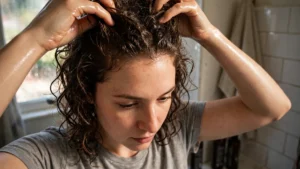
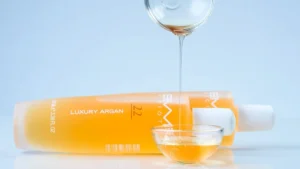
Hair oil can be the best thing that ever happened to fine hair, or the reason it looks flat and greasy by midday. The difference is rarely the product. It is the method. Fine hair needs far less oil than thick hair, applied in a different place, and washed out more carefully. Get those three things right, and a light oil adds shine, calms frizz, and makes fine hair easier to style. Get them wrong, and the same bottle will leave your hair limp and dull.
The reason is simple. Fine hair has a smaller diameter, so each strand carries less weight before it collapses. Oil adds weight. A drop that disappears into thick hair can coat fine hair completely, and oil near the roots flattens the very lift that fine hair needs most.
This guide explains how to use hair oil for fine hair step by step, from choosing the right formula to washing it out properly. It covers how much to use, where to put it, when to apply it, and the mistakes that make fine hair look worse instead of better.
Key takeaways
- Fine hair needs one or two drops of a light oil, applied to the mid-lengths and ends only, never at the roots.
- Warm the oil between your palms first, so it spreads thinly and evenly instead of sitting in one spot.
- Use oil on damp hair before styling for smoothing, and on dry hair as a finishing step for shine.
- Pre-wash and overnight treatments work for fine hair only if the oil is light and washed out thoroughly.
- No oiling method thickens fine hair or speeds growth, and heavy or poorly rinsed oil can make fine hair look thinner.
What using hair oil on fine hair actually involves
Using hair oil on fine hair is a light-touch routine. The oil is a finishing and smoothing product, not a deep treatment. You apply a tiny amount to the lengths and ends, where the hair is oldest and driest, and you keep it away from the scalp, where it would flatten the roots and cause build-up. The aim is shine and manageability, not saturation.
That is different from the heavy oiling routines often described online, where oil is massaged into the scalp, combed through the whole head, and left in for hours. Those routines suit thick, dry, or curly hair. Fine hair does better with less product, less time, and more careful washing.
The routine also changes with the season and with styling. In humid weather, a drop of oil on damp hair before blow-drying keeps frizz down. In dry winter air, a drop on dry ends stops static and split-looking tips. Before heat styling, an oil with heat protection does two jobs at once. The method stays the same; only the timing changes.
How to choose an oil and what to look for
Choose a light oil first. Dry oils, silicone-based oils, and very light plant oils such as camellia, squalane, or moringa are the best match for fine hair. Avoid thick, heavy oils such as castor oil or unrefined coconut oil as leave-ins, because they are almost impossible to use sparingly enough on fine hair. A pump or dropper bottle is worth choosing, because it lets you control the amount, and for fine hair, control is the whole game.

Look for heat protection if you blow-dry or use hot tools, and look for a light or no fragrance if your scalp is sensitive. Price matters less than texture here, because you use so little each time that even a premium bottle lasts months. Our guide to how to use hair oil covers the general technique, and the steps below adapt it specifically for fine hair, with smaller amounts and stricter placement.
Finally, check the label for silicones if your hair is very fine. Some people avoid silicones, but for fine hair they are often the lightest option, because they coat the hair thinly and evenly without adding weight.
The 9 steps to using hair oil on fine hair
Start with clean, towel-dried hair
What to do: Wash your hair as usual, then gently squeeze out water with a towel until it is damp, not dripping. What to avoid: Applying oil to soaking wet hair, where it slides off, or to dirty hair, where it seals in residue. Best for: Every fine-hair oiling routine, as the starting point. Time needed: Five minutes. Standout tip: Damp hair absorbs oil more evenly than dry hair, so this is the best time for smoothing.
Oil works best on hair that is clean and slightly damp. The cuticle is slightly open, the oil spreads easily, and you need less of it to get an even result.
Warm one or two drops between your palms
What to do: Dispense one or two drops into your palm, rub your hands together for a few seconds, and spread the oil into a thin, even layer. What to avoid: Pouring oil straight onto your hair, where it lands in one heavy spot. Best for: Fine hair, where even distribution matters more than amount. Time needed: Ten seconds. Standout tip: If you can see oil on your palms, you have too much; wipe the excess on a towel before touching your hair.
Warming the oil is the single most useful habit for fine hair. It thins the oil, spreads it evenly, and stops it from concentrating in one place.
Apply to the mid-lengths and ends only
What to do: Press your palms over the lengths and ends, starting a few inches below the ears, and glide down to the tips. What to avoid: Touching the roots, the crown, or the hair around your face. Best for: Fine hair that needs shine and smoothness without losing volume. Time needed: Thirty seconds. Standout tip: If you are unsure where the ends begin, hold your hair in a low ponytail and oil only the tail.
The ends are the oldest part of your hair and the part that needs oil most. The roots are the newest and oiliest part, and they need none at all.
Keep oil away from the roots
What to do: Wash your hands after applying oil, and avoid touching the top of your head for the rest of the day. What to avoid: Running oiled hands through the crown to smooth flyaways, which transfers oil straight to the roots. Best for: Fine hair that goes flat easily. Time needed: No extra time. Standout tip: For flyaways at the crown, use a clean spoolie brush or a tiny amount of hairspray instead of oil.
Oil at the roots is the most common reason fine hair looks greasy after oiling. It is also the hardest mistake to fix without washing, so prevention is the whole strategy.
Comb through with a wide-tooth comb
What to do: Gently comb from the ends upward with a wide-tooth comb, spreading the oil evenly and detangling at the same time. What to avoid: Yanking a fine-tooth comb through oiled hair, which can snap fine strands. Best for: Fine hair that tangles easily after washing. Time needed: One minute. Standout tip: Comb the ends first, then work upward, so you never drag a knot through the whole length.
Let it absorb before styling
What to do: Wait one or two minutes after applying oil, then style as usual. What to avoid: Blow-drying on the highest heat immediately after oiling, which can fry the oil onto the hair. Best for: Fine hair that is blow-dried or heat-styled. Time needed: One to two minutes. Standout tip: Use a medium heat setting and a nozzle, and keep the dryer moving so no section overheats.
Oil needs a moment to settle into the hair. Styling too soon pushes it around and can leave some sections greasy and others dry. A short wait gives a much more even result.
Use a pea-sized amount for a pre-wash treatment
What to do: Before washing, apply a pea-sized amount of light oil to the ends, leave it for twenty to thirty minutes, then shampoo twice. What to avoid: Leaving a heavy oil on for hours, or using so much that two shampoos cannot remove it. Best for: Fine hair with very dry ends that need extra conditioning. Time needed: Twenty to thirty minutes. Standout tip: A pre-wash treatment is the one time a slightly richer oil is acceptable, because you are going to wash it all out.
A pre-wash treatment protects the ends from the drying effect of shampoo, which is useful if your ends are dry and your roots are fine. Keep the amount small and the time short.
Try an overnight treatment once a week
What to do: Once a week, apply a light oil to the ends, braid your hair loosely, sleep on a silk pillowcase, and wash thoroughly in the morning. What to avoid: Oiling the scalp overnight, or using a heavy oil that will not wash out in one wash. Best for: Fine hair that is dry at the ends and needs a weekly reset. Time needed: Overnight, plus a morning wash. Standout tip: Protecting your hair while you sleep matters as much as the oil itself, and our guide to how to protect hair while sleeping explains the full routine.
An overnight treatment is the heaviest oiling fine hair should ever get, and it should still be light. The braid keeps the oil on the ends, the silk pillowcase reduces friction, and a thorough morning wash removes the residue.
Wash out properly and reset
What to do: Shampoo twice after any treatment, and use a clarifying shampoo once a month to remove build-up. What to avoid: Stretching washes to make the oil last, which lets residue accumulate and flatten fine hair. Best for: Every fine-hair oiling routine, as the closing step. Time needed: Five minutes. Standout tip: If your hair still feels coated after two shampoos, use a clarifying wash and then use less oil next time.
Washing out is part of the routine, not an afterthought. Fine hair shows build-up faster than thick hair, so a clean reset is what keeps oiling working week after week.
Which method is right for your fine hair
Fine hair that is also oily needs the lightest method of all: one drop on damp ends before styling, and nothing else. No pre-wash treatments, no overnight oiling, and no oil on dry hair during the day. The aim is to smooth the ends without adding anything the scalp does not need.
Fine hair that is dry at the ends can handle more. A pre-wash treatment once a week, an overnight treatment on the ends, and a drop of finishing oil on dry hair all help, as long as each one is washed out properly. The difference is not the products, it is the frequency and the washing.
Fine, colour-treated hair benefits most from oiling before heat styling, because colour and heat together dry the ends faster than either alone. A light oil with heat protection, applied to damp hair and allowed to absorb, protects the ends and keeps colour looking brighter for longer. Our roundup of hair oils for dry hair covers heavier formulas, which suit thick or very dry hair better than fine hair, but the method there is the same: ends only, small amounts, and a proper wash.
The caveats that matter
The biggest risk with hair oil on fine hair is build-up. Oil that is not washed out properly accumulates, and accumulated oil makes fine hair look dull, flat, and dirty, even when it has just been washed. If your hair starts looking worse after a week of oiling, the answer is usually less oil and a better wash, not a different product.
| Detail | What is known |
|---|---|
| How much to use | One or two drops for a leave-in; a pea-sized amount for a pre-wash treatment |
| Where to apply it | Mid-lengths and ends only; never on the roots or scalp as a leave-in |
| Best oil texture | Light, fast-absorbing dry oils and silicone-based oils |
| When to apply it | On damp hair before styling, or on dry hair as a finishing step |
| Pre-wash treatments | Twenty to thirty minutes, light oil, shampoo twice afterwards |
| Overnight treatments | Once a week at most, ends only, loose braid, wash thoroughly in the morning |
| How to remove it | Shampoo twice; use a clarifying shampoo once a month for build-up |
| What it does not do | It does not thicken hair, speed growth, or repair split ends |
If your scalp becomes itchy, sore, or flaky after oiling, stop and wash your hair thoroughly. Some people react to fragrance or to a particular plant oil, and a reaction at the scalp is a reason to change products, not to push through. If hair loss, scalp pain, or persistent irritation continues, speak to a dermatologist rather than trying more products.
Checklist: using hair oil on fine hair honestly
Use these checks before you oil, and again after two weeks of use.
- Start with one drop: warm it between your palms and press it over the ends only.
- Keep oil off the roots: do not touch the crown with oiled hands, and do not oil the scalp as a leave-in.
- Wait a minute: let the oil absorb before you decide whether you need more.
- Comb gently: use a wide-tooth comb from the ends upward to spread the oil evenly.
- Wash thoroughly: shampoo twice after treatments, and use a clarifying wash once a month.
- Judge it after two weeks: look at how your hair behaves at the end of the day, not in the first five minutes.
Frequently asked questions
How often should I use hair oil on fine hair?
Once a day is fine if you use one or two drops on the ends. Pre-wash treatments can be done once or twice a week, and overnight treatments once a week at most. If your hair starts looking flat, use less oil and wash more thoroughly.
Can I use hair oil on fine hair every day?
Yes, as long as the amount is tiny and it stays on the ends. A single drop of a light oil is a daily finishing step, not a treatment. If you notice build-up, skip a day and use a clarifying shampoo.
Should I apply hair oil to wet or dry fine hair?
Both work, for different jobs. Damp hair is best for smoothing before styling, because the oil spreads evenly. Dry hair is best for finishing, because you can see exactly where the shine is needed and add a tiny amount to the ends.
Why does hair oil make my fine hair look greasy?
Almost always because of amount or placement. Too much oil, or oil near the roots, will make fine hair look greasy. Use one drop, keep it on the ends, and wait a minute before adding more. If it still looks greasy, try a lighter formula.
Can I use coconut oil on fine hair?
As a pre-wash treatment that you rinse out fully, yes, in a small amount. As a leave-in, usually no. Coconut oil is heavy for fine hair and very hard to use sparingly enough, so a lighter oil is a better daily choice.
Does hair oil help fine hair grow thicker?
No. Oil does not change the thickness of your hair or speed up growth. It can reduce breakage by smoothing the cuticle and reducing friction, which helps fine hair keep its length, but it does not make individual strands thicker.
The bottom line
Using hair oil on fine hair is a matter of restraint. One or two drops of a light oil, warmed between your palms and pressed over the ends, gives fine hair shine, softness, and frizz control without the weight that makes it look flat. The method is more important than the product, and the most common mistake is simply using too much, or putting it in the wrong place.
Start small, keep the oil on the ends, and wash it out properly. Give the routine two weeks, and judge it on how your hair looks at the end of the day. If it stays shiny and moves freely, you have the method right. If it looks flat or greasy, use less before you blame the oil.