You spend roughly a third of your life asleep, and your hair spends all of it pressed against a pillow, twisted under your head, or caught in a tangle you will have to brush out in the morning. Most hair damage does not happen in the shower or under a straightener. It happens quietly, overnight, when friction, dryness, and pressure work on the hair shaft for hours at a stretch.
The good news is that protecting hair while you sleep does not need expensive products or a complicated routine. It needs a few habits, done in the right order: detangle gently before bed, keep the hair contained, use a smooth surface under your head, and add a little moisture where your hair needs it most. Done consistently, these steps mean less frizz, fewer tangles, less breakage, and hair that holds its style longer.
Below are nine steps that work together as a nightly routine, from the two minutes of detangling before bed to the way you take your hair down in the morning. Each step explains what to do, what to avoid, who it suits, and how long it takes.
Key takeaways
- Most overnight hair damage comes from friction, dryness, and pressure, not from a single bad habit.
- Detangle gently before bed, keep hair contained in a loose braid, bun, or pineapple, and sleep on silk or satin.
- A little leave-in product or oil on the ends before bed protects hair far better than a heavy treatment once a week.
- Never sleep with wet hair tied tightly, and never brush dry hair aggressively in the morning.
- A sleep routine reduces breakage and frizz, but it does not repair split ends or undo heat and chemical damage.
Why hair suffers overnight
Hair is a fibre, and like any fibre it wears down with repeated friction. Every time you turn your head in your sleep, your hair rubs against the pillowcase, itself, and the collar of your nightclothes. On cotton, that rubbing catches the cuticle, the overlapping scales that protect the hair shaft, and lifts them. Lifted cuticles mean frizz, tangles, and a rough surface that catches even more, and over time the same friction snaps the weakest hairs, usually at the crown and the nape.
Dryness makes the problem worse. Hair loses moisture overnight, especially in heated bedrooms and dry winter air, and dry hair is brittle hair. A cotton pillowcase makes this worse by drawing moisture away from the shaft, while silk or satin takes far less. That is why the same hair can look smooth one morning and frizzy the next, depending on the room and the pillowcase.
Pressure is the third cause. Sleeping with hair spread loose under your head traps it between your head and the pillow, so every movement pulls at the roots. Tying it too tightly is just as bad, because a tight elastic concentrates all that pulling force on one line of hair. The answer is containment without tension: hair held together loosely, in a shape that moves with you rather than against you.
How we chose these steps and what to look for
Look first at your hair type. Curly and coily hair needs the most protection overnight, since the curl pattern is easily disturbed and the hair is usually drier. Fine hair needs the lightest touch, because it tangles easily and shows oil quickly. Long hair needs containment most of all, and colour-treated hair needs moisture protection, because dryness lifts colour from the shaft.
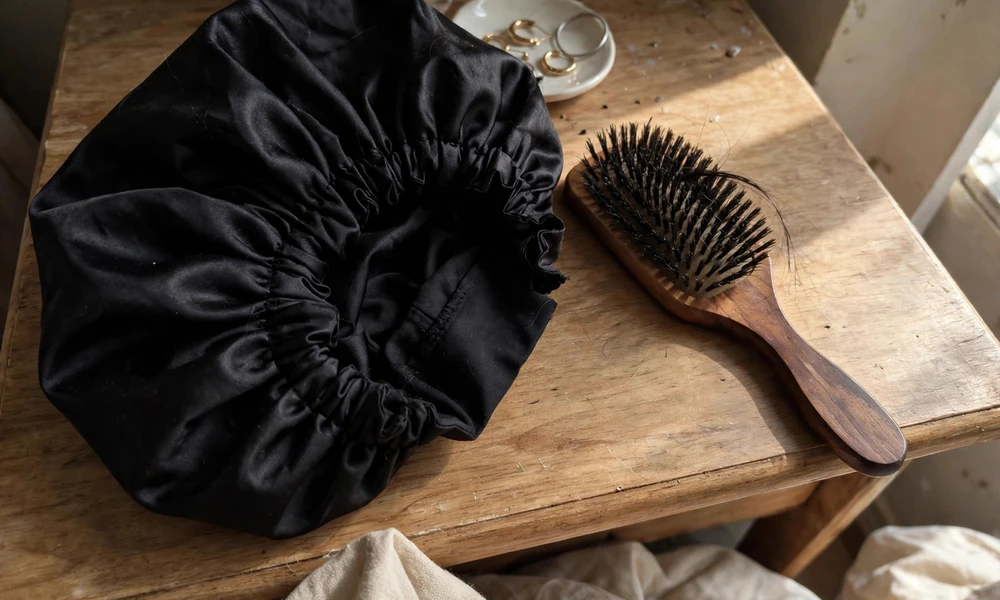
Look next at the products you already own. A wide-tooth comb, a silk or satin pillowcase, a couple of soft scrunchies, and a leave-in conditioner or a light oil are enough for most hair. Our guide to repairing damaged hair explains how to tell whether your hair needs moisture, protein, or simply less friction, the right place to start if your hair feels weak or straw-like.
Finally, look at the time you actually have. A twenty-minute routine will not survive a busy week. The steps below are ordered so that the first three, detangling, containing, and the pillowcase, do most of the work in under five minutes. The rest are small additions you can layer in when you have the time, not obligations.
The 9 steps to protect hair while sleeping
Detangle gently before bed
What to do: Work through your hair with a wide-tooth comb, starting at the ends and moving up, a few minutes before bed. What to avoid: Do not brush dry hair hard from root to tip, or use a fine-tooth comb on tangles. Best for: All hair types, especially long and curly hair. Time needed: 2 to 3 minutes. Standout tip: Detangling at night means you wake up with hair that is already half-managed.
Going to bed with tangled hair guarantees worse tangles by morning, because the knots tighten as you move in your sleep.
Apply a little leave-in product to the ends
What to do: Smooth a pea-sized amount of leave-in conditioner or a few drops of light oil over the mid-lengths and ends, where hair is oldest. What to avoid: Do not load product onto the roots, or use a heavy mask every night. Best for: Dry, colour-treated, and curly hair. Time needed: 1 minute. Standout tip: Less is more: the ends need moisture, the roots do not.
The ends are the oldest part of your hair, and they lose moisture fastest. A little leave-in seals in moisture and gives the hair slip, so it slides rather than catches overnight.
Contain your hair loosely
What to do: Gather your hair into a loose braid, low bun, or high pineapple, secured with a soft scrunchie or silk tie. What to avoid: Do not tie hair tightly, and do not use a thin elastic with a metal join. Best for: Long, thick, and curly hair. Time needed: 1 to 2 minutes. Standout tip: If you can feel the tie pulling, it is too tight.
Loose containment is the single most effective step in this routine. It keeps hair from spreading under your head, where it gets trapped and pulled, and a loose braid gives you soft waves in the morning.
Sleep on silk or satin
What to do: Use a silk or satin pillowcase, or wrap your hair in a silk scarf, so the surface under your head is smooth. What to avoid: Do not use a rough cotton pillowcase if your hair is fragile, and do not expect a polyester satin case to match real silk. Best for: All hair types, especially curly and colour-treated hair. Time needed: No extra time, once the case is on the pillow. Standout tip: A silk scarf over the hair works just as well as a silk pillowcase.
The pillowcase is the surface your hair spends the whole night on, so it matters more than any single product. Silk and satin let hair glide instead of catching, which means less frizz and fewer tangles.
Never sleep with wet hair tied up
What to do: If you wash your hair at night, let it dry at least mostly before bed, or sleep with it loose on silk. What to avoid: Do not tie wet hair into a tight bun or braid, and do not go to bed with soaking hair. Best for: Everyone, especially fine and fragile hair. Time needed: 10 to 20 minutes of drying time. Standout tip: Damp is fine; soaking wet and tied up is not.
Wet hair is weaker than dry hair: the shaft swells, the cuticle lifts, and the hair stretches and snaps more easily. Tying wet hair up concentrates all of that weakness in one place. Our guide to air-drying hair explains how to get a good finish without heat, which pairs well with a night wash.
Protect the ends with a silk wrap or bonnet
What to do: For curly or coily hair, gather the hair into a pineapple and cover it with a silk bonnet or scarf. What to avoid: Do not use a tight bonnet that flattens the curls, or a cotton scarf, which absorbs moisture. Best for: Curly, coily, and textured hair. Time needed: 1 minute. Standout tip: A bonnet keeps the curl pattern intact until morning.
A bonnet does for curly hair what a pillowcase does for straight hair, only more so: it holds the curls together, stops them rubbing against the pillow, and keeps the moisture in. Keep it loose, or it flattens the curls.
Keep the bedroom air from drying your hair
What to do: Run a humidifier in a dry bedroom, or leave a bowl of water near the radiator. What to avoid: Do not sleep with the heating on high and the air dry, or point a fan at your head. Best for: Dry, curly, and colour-treated hair in winter. Time needed: No nightly time, once set up. Standout tip: If your skin feels dry in the morning, your hair does too.
Heated, dry air pulls moisture from hair all night, worst in winter, when indoor heating runs for hours. A humidifier is a simple fix that helps your skin as well as your hair.
Refresh, do not re-wash, in the morning
What to do: In the morning, take the hair down gently and refresh it with a little water, leave-in spray, or dry shampoo at the roots. What to avoid: Do not brush dry hair hard from root to tip, or re-wash hair that is simply flat. Best for: All hair types, especially fine and curly hair. Time needed: 2 to 3 minutes. Standout tip: Most mornings, water and your fingers are enough.
The morning is where a good night routine pays off, and also where it can be undone. Hair that has been contained and protected overnight needs only a gentle refresh, not a full wash and restyle.
Give your hair a rest day from heat and tight styles
What to do: Once or twice a week, let your hair air-dry, wear it loose or in a soft braid, and skip the straightener. What to avoid: Do not follow a heat-styled day with another and blame the pillowcase for the breakage. Best for: Heat-damaged, colour-treated, and fragile hair. Time needed: No extra time; it is time you do not spend styling. Standout tip: Rest days do more for hair than any overnight product.
Overnight protection works best when the rest of the routine is not working against it. Hair that is straightened every morning and tied tightly every day will break no matter what pillowcase you use. A simple overnight beauty routine that treats hair gently is the frame this all sits inside.
Which routine suits your hair type
Curly and coily hair needs the full routine: detangle gently, add leave-in product to the ends, gather the hair into a pineapple, cover it with a silk bonnet, and sleep on silk. The curl pattern is the thing to protect, and every step here keeps it intact until morning. Skipping the bonnet is the most common mistake, because the pillowcase alone cannot hold curls together.
Fine and straight hair needs a lighter version. Detangle, use a little leave-in spray on the ends, contain the hair in a loose braid, and sleep on silk. Skip the bonnet, skip heavy oils, and wash the pillowcase often, because fine hair shows oil quickly and a dirty pillowcase undoes the benefit.
Long, thick, or colour-treated hair needs containment and moisture above all. A loose braid is usually the best shape, because it keeps the lengths together without pulling at the roots, and a little leave-in product protects the oldest, driest ends. Colour-treated hair should also be kept out of direct sun and heat, because silk helps colour last longer by reducing friction, but it cannot protect colour from sun and hot water alone.
The caveats that matter
A sleep routine is a support, not a treatment. It reduces the wear your hair suffers every night, but it cannot repair hair that is already damaged, or protect it from the heat of a straightener or the chemistry of bleach. It also has limits: if your hair is breaking badly, shedding in clumps, or your scalp is sore or flaking, the cause is probably not your pillowcase, and a dermatologist or trichologist is the right person to ask.
| Detail | What is known |
|---|---|
| Main causes of overnight damage | Friction against the pillow, dryness, and pressure from loose or tight hair |
| Most effective step | Loose containment in a braid, bun, or pineapple, on silk or satin |
| Best surface to sleep on | Silk or satin pillowcase, or a silk scarf or bonnet |
| What to avoid | Wet hair tied tightly, tight elastics, and rough cotton pillowcases |
| Leave-in product | A small amount on the ends only |
| Morning routine | Take hair down gently, refresh with water or spray |
| When to seek advice | Heavy breakage, shedding in clumps, or a sore or flaking scalp |
| What it does not do | It does not repair split ends or undo heat and chemical damage |
If you use prescription scalp treatments, check with your clinician or dermatologist before changing your night routine, because some treatments need to stay on the scalp overnight and should not be covered, and some can stain silk. That quick check avoids ruining an expensive pillowcase or interfering with a treatment that is working.
Checklist: protecting hair while sleeping
Use these checks tonight, and again in two weeks.
- Detangle gently before bed with a wide-tooth comb, working from the ends up.
- Smooth a little leave-in product or oil over the ends only, keeping it off the roots.
- Contain your hair loosely in a braid, bun, or pineapple, with a soft scrunchie, not a tight elastic.
- Sleep on silk or satin, or cover your hair with a silk scarf or bonnet.
- Never sleep with wet hair tied tightly; let it dry mostly first, or keep it loose.
- In the morning, take your hair down gently and refresh it, rather than brushing hard or re-washing.
Frequently asked questions
Is it bad to sleep with wet hair?
It is not ideal. Wet hair is weaker than dry hair, so it stretches and snaps more easily, and tying wet hair up concentrates that weakness. If you wash at night, let your hair dry at least mostly before bed, or sleep with it loose on silk.
Should I braid my hair before bed?
A loose braid is one of the best things you can do: it keeps the hair contained, prevents tangles, and gives you soft waves in the morning. Keep it loose, though: a tight braid pulls at the roots and can cause breakage.
Does a silk pillowcase really protect hair?
Yes. Silk’s smooth surface lets hair glide instead of catching, which means less frizz, fewer tangles, and less breakage over time. It also absorbs less moisture than cotton. A silk scarf gives a similar benefit.
What is the best hairstyle for sleeping?
It depends on your hair. A loose braid suits most hair, a high pineapple suits curly hair, and a low bun suits long hair. The rule is the same for all of them: loose enough that you cannot feel it pulling, secured with a soft scrunchie, never a tight elastic.
Can I sleep with my hair down?
You can, especially if your hair is short, but it is not ideal for long hair. Loose hair spreads under your head and gets trapped as you move. If you prefer sleeping with your hair down, a silk pillowcase helps, and keeping the hair to one side reduces the pull.
How do I stop my hair getting frizzy overnight?
Detangle before bed, add a little leave-in product to the ends, contain the hair loosely, and sleep on silk. Frizz is mostly friction and dryness, and those four steps address both. If your hair is still frizzy, the bedroom air may be too dry.
The bottom line
Protecting hair while you sleep is not complicated. Detangle gently, add a little product to the ends, contain the hair loosely, and sleep on a smooth surface. Those four habits, done every night, do more for your hair than any single product, because they remove the friction, dryness, and pressure behind most damage.
Start with the first three steps tonight, add the rest as they become habit, and judge the routine after two weeks: less frizz in the morning, fewer tangles to brush out, and hair that holds its style longer between washes. That is the honest test.