A leather jacket only gets better with age if you look after it. The leather softens, the colour deepens, and the scuffs turn into character. But a jacket that is never cleaned builds up a film of dirt, sweat and city grime, and that film dries the leather out.
The good news is that cleaning a leather jacket is not difficult, and it does not need expensive equipment. Most of the work is gentle wiping, a little conditioning, and knowing what not to do. The mistakes people make are almost always the same: too much water, the wrong soap, a washing machine, or a radiator to dry it. Each of those can damage leather in ways that are hard to reverse.
Below are nine steps that take a leather jacket from dusty and dull back to clean and supple, using simple tools and products you can buy anywhere. The steps work for smooth leather jackets, including bikers, racers and bombers, and they include the differences for suede, so you can clean the right way for the jacket you own.
Key takeaways
- Most leather jackets only need a gentle wipe and occasional conditioning, not a deep wash, to stay in good shape.
- Always test any cleaner on a hidden spot first, because leather reacts differently by type, dye and finish.
- Use as little water as possible, and never soak a leather jacket, put it in a washing machine, or dry it on a radiator.
- Suede needs a completely different approach from smooth leather, with a brush and an eraser, not water and soap.
- No cleaning method restores cracked, peeling or badly sun-faded leather, and a badly damaged jacket is a job for a specialist.
What cleaning actually does for a leather jacket
Leather is skin, and like skin it dries out. Every time you wear a jacket, it picks up dust, pollution, sweat and body oils. The dust sits on the surface and dulls the colour. The oils sink in and, over time, break down the finish. The sweat salts left around the collar and cuffs are the worst, because they dry the leather from the inside and leave stiff, pale patches that are hard to fix once they set.
Cleaning removes that build-up before it causes damage. A gentle wipe takes the dust off, a mild cleaner lifts the grime without stripping the natural oils, and a conditioner replaces the moisture the leather loses through wear and weather. The result is leather that stays supple, keeps its colour, and resists cracking.
It is worth knowing what cleaning cannot do. It cannot fix leather that has already cracked, it cannot re-dye a jacket that has faded badly in the sun, and it cannot repair peeling bonded leather. Those are jobs for a leather specialist, or a sign that the jacket has reached the end of its life. Regular, gentle cleaning is prevention, not repair, and it works best when it starts early.
How to clean a leather jacket, step by step
Before you start, gather what you need: a soft, dry cloth, a second soft cloth for damp wiping, a mild leather cleaner or a drop of gentle soap, a leather conditioner, a soft brush for suede, and a wide hanger. Work in a well-lit room so you can see what you are doing, and lay the jacket flat or hang it up so you can reach every part of it.

Read the care label inside your jacket before you touch it. Some jackets have a specific finish, a waxed coating, or a delicate dye that changes what you can safely use. If the label says dry clean only, take it seriously, especially for suede or for jackets with a special finish. Our guide to buying a leather jacket explains the different leather types, and knowing whether yours is lambskin, cowhide or suede makes every step below easier to get right.
The most important rule is to use as little water as possible. Leather and water are not friends. A damp cloth is fine. A wet cloth is not. Never run a jacket under a tap, never soak it, and never put it in a washing machine. If you remember only one thing from this guide, remember that.
The 9 steps to a clean leather jacket
Hang the jacket and empty the pockets
What to do: Put the jacket on a wide, sturdy hanger, undo the zip, and empty every pocket, including the inside ones. What to avoid: Do not clean a jacket lying in a heap, and do not leave keys or coins in the pockets, because they scratch the lining. Best for: Every jacket, every time. Time needed: Two minutes. Standout tip: A wide hanger keeps the shoulders in shape while you work, which a wire hanger will not.
Brush off loose dust with a dry cloth
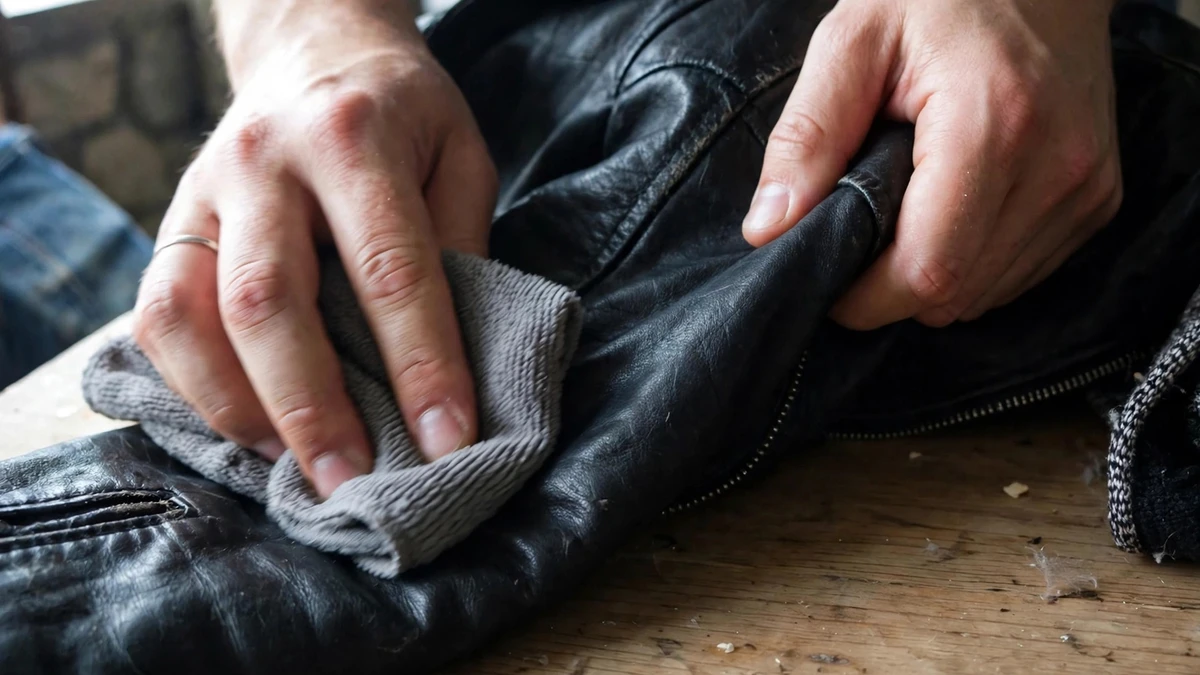
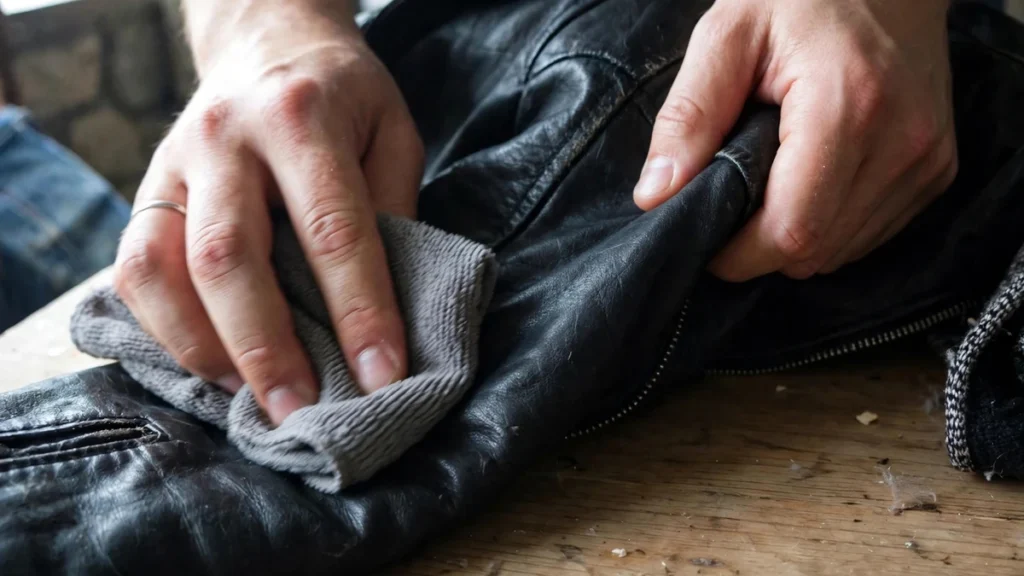
What to do: Wipe the whole jacket with a soft, dry cloth, working from the shoulders down, and use a soft brush on the seams and around the pockets. What to avoid: Do not use a rough cloth or a stiff brush, which can scratch the surface, and do not press hard. Best for: Smooth leather jackets after regular wear. Time needed: Five minutes. Standout tip: Most of the visible dirt on a jacket is loose dust, and this step alone often makes it look noticeably cleaner.
This dry wipe is the step people skip, and it is the one that matters most. Wiping a dusty jacket with a damp cloth just turns the dust into mud and pushes it into the grain.
Test any cleaner on a hidden spot first
What to do: Put a small amount of your cleaner on a cloth, dab it on a hidden area such as the inside of a pocket flap or under the collar, and wait ten minutes. What to avoid: Do not test on the front, the sleeves or the back, and do not use a cleaner you have not tested. Best for: Any new cleaner, and any jacket you have not cleaned before. Time needed: Ten minutes. Standout tip: If the test spot darkens, feels sticky, or changes colour, stop and use a different product.
Leather varies more than people expect. The same cleaner can be fine on one jacket and leave a mark on another, because the dye and the finish are different. Ten minutes of testing saves a ruined jacket.
Wipe the jacket with a barely damp cloth
What to do: Dampen a soft cloth, wring it out until it is almost dry, and wipe the jacket in small sections, then wipe each section again with a dry cloth. What to avoid: Do not use a wet cloth, do not rub hard, and do not let water sit on the leather. Best for: Smooth leather jackets with light dirt. Time needed: Ten minutes. Standout tip: If the cloth is dripping at all, it is too wet. Wring it again.
Clean the collar and cuffs properly
What to do: Put a small amount of mild leather cleaner on a soft cloth and work it gently over the collar and cuffs, where sweat and oils build up most. What to avoid: Do not use household soap, dish soap or baby wipes, which strip the leather and leave residue. Best for: Jackets worn often, or worn in warm weather. Time needed: Ten minutes. Standout tip: The collar is usually the dirtiest part of a jacket, so spend most of your time there.
The collar and cuffs take the most contact with skin, so they collect the most sweat and oils. They are also the parts that show neglect first, going stiff and pale while the rest of the jacket still looks fine.
Deal with stains one at a time
What to do: Blot a fresh stain gently with a dry cloth, then dab it with a barely damp cloth, and let it dry naturally. What to avoid: Do not scrub a stain, do not use stain removers or solvents, and do not use heat to dry it. Best for: Rain spots, food marks, and light scuffs. Time needed: Five to fifteen minutes per stain. Standout tip: A scuff on smooth leather often fades if you rub it gently with a dry finger, because the heat of your hand softens the wax in the finish.
Stains are where people cause the most damage, usually by scrubbing. Gentle blotting and patience remove most marks. A stain that will not shift after gentle treatment is a job for a leather specialist, not a stronger chemical.
Let the jacket air-dry naturally
What to do: Hang the jacket on a wide hanger in a ventilated room, away from radiators, heaters and direct sunlight, and leave it until it feels completely dry. What to avoid: Never use a hairdryer, a radiator, or direct sun to dry leather, because heat makes it stiff and cracked. Best for: Every jacket after any damp cleaning. Time needed: Several hours, or overnight. Standout tip: If the jacket feels cool to the touch, it is still damp inside. Wait longer.
Condition the leather while it is clean
What to do: Put a small amount of leather conditioner on a soft cloth, rub it in with small circles, leave it for ten minutes, then buff off the excess with a clean cloth. What to avoid: Do not use too much conditioner, and do not use shoe polish, furniture polish, or olive oil, which clog the pores and go rancid. Best for: Smooth leather jackets, two to four times a year. Time needed: Fifteen minutes. Standout tip: Less is more. A thin, even coat conditions better than a thick one, and the excess just sits on the surface.
Conditioning is what keeps leather supple. It replaces the oils that cleaning and wear remove, and it is the step that makes the difference between a jacket that lasts five years and one that lasts fifteen. If you only do one thing after cleaning, do this.
Store the jacket properly after cleaning
What to do: Hang the clean, dry jacket on a wide hanger in a cool, ventilated wardrobe, with space around it so air can move. What to avoid: Do not store leather in plastic bags or covers, which trap moisture, and do not fold it. Best for: Every jacket, especially between seasons. Time needed: Five minutes. Standout tip: A cotton garment bag breathes, which is what leather needs, while plastic does the opposite.
How to clean suede, which is different
Suede is not smooth leather, and none of the wet steps above apply to it. Water marks suede, soap stains it, and conditioner ruins the nap. To clean suede, let any mud dry completely, then brush it off with a suede brush, working in one direction. For marks, rub gently with a suede eraser, then brush again to restore the texture.
For a suede jacket, a protective spray applied before you wear it is worth more than any cleaning afterwards. Spray it outside, let it dry fully, and reapply every few months. If a suede jacket gets soaked or badly stained, take it to a specialist who works with suede, because home cleaning usually makes it worse. Our guide to caring for leather handbags covers the same suede principles for bags, and the rules are identical for jackets.
The simplest test is this: if you are not sure whether your jacket is smooth leather or suede, run a finger across it. If the surface is smooth and slightly shiny, it is smooth leather. If it feels soft and velvety and the colour changes as you brush it, it is suede, and you should put the damp cloth away.
The caveats that matter
The most important caveat is that not every jacket can be cleaned at home. Jackets with a waxed or oiled finish, jackets with delicate dyes, and jackets with bonded or faux leather all need different care, and the wrong cleaner can strip the finish or dissolve the surface. If your jacket is expensive, unusual, or has a care label that says dry clean only, take it to a leather specialist rather than experimenting. If you are not sure what kind of leather your jacket is, our guide to what a leather jacket is explains the different types and why good leather rewards proper care.
| Detail | What is known |
|---|---|
| How often to clean | A dry wipe after wear, a proper clean two to four times a year |
| Water to use | As little as possible, a barely damp cloth, never soaking or a washing machine |
| Cleaner to use | A mild leather cleaner, or a drop of gentle soap, always tested first |
| What never to use | Household soap, dish soap, solvents, shoe polish, or a radiator to dry |
| Drying | Air-dry on a wide hanger, away from heat and direct sun |
| Conditioning | A thin coat of leather conditioner, two to four times a year, buffed off |
| Suede | Brush and eraser only, no water, no soap, no conditioner, protective spray first |
| When to see a specialist | Bad stains, cracked leather, waxed finishes, or a dry-clean-only label |
If you are unsure about a product, buy a small bottle of a dedicated leather cleaner rather than improvising with something from the kitchen. Leather cleaners are made for this job, they are not expensive, and one bottle lasts years. The money you save by using the wrong product is lost the first time it leaves a mark.
Checklist: cleaning a leather jacket honestly
Use these checks before you clean, and again when you finish.
- Check the care label: know whether your jacket is smooth leather, suede, or a special finish before you start.
- Check your tools: soft cloths, a mild leather cleaner, conditioner, and a wide hanger, nothing harsh.
- Check a hidden spot: test any cleaner on the inside of a pocket flap and wait ten minutes.
- Check the water: your cloth should be barely damp, never dripping, and never soak the jacket.
- Check the drying: air-dry only, away from radiators, heaters and direct sunlight, until completely dry.
- Check the storage: wide hanger, cool ventilated wardrobe, no plastic covers, no folding.
Frequently asked questions
Can I wash a leather jacket in a washing machine?
No, never. A washing machine soaks the leather, strips its oils, and tumbles it in a way that cracks and distorts the shape. A jacket that has been machine-washed is very hard to rescue.
How often should I clean my leather jacket?
Wipe it with a dry cloth after wear, and give it a proper clean and condition two to four times a year. Jackets worn daily in a city need cleaning more often than ones worn occasionally.
Can I use baby wipes on a leather jacket?
No. Baby wipes contain chemicals that strip leather and leave a residue, and they can lighten the colour over time. Use a soft cloth with a mild leather cleaner instead.
How do I remove a stain from a leather jacket?
Blot it gently with a dry cloth, then dab with a barely damp cloth, and let it dry naturally. Do not scrub, and do not use stain removers or solvents. A stubborn stain is a job for a leather specialist.
Can I clean a suede leather jacket at home?
Yes, but differently. Let mud dry, brush it off with a suede brush, and use a suede eraser for marks. Never use water, soap or conditioner on suede, and use a protective spray before wearing it.
How do I stop my leather jacket from cracking?
Clean it gently, condition it two to four times a year, keep it away from radiators and direct sun, and store it on a wide hanger with room to breathe. Cracking comes from dryness, and conditioning is what prevents it.
The bottom line
Cleaning a leather jacket is mostly about restraint. A dry wipe after wear, a gentle damp clean a few times a year, and a thin coat of conditioner will keep a good jacket supple and good-looking for a decade or more. The damage almost always comes from doing too much, too much water, too much soap, too much heat, rather than too little.
Start with the dry cloth, test anything new on a hidden spot, dry the jacket slowly in the air, and condition it while it is clean. Do that, and your leather jacket will age the way a good one should, softer, deeper in colour, and more yours with every year you wear it.