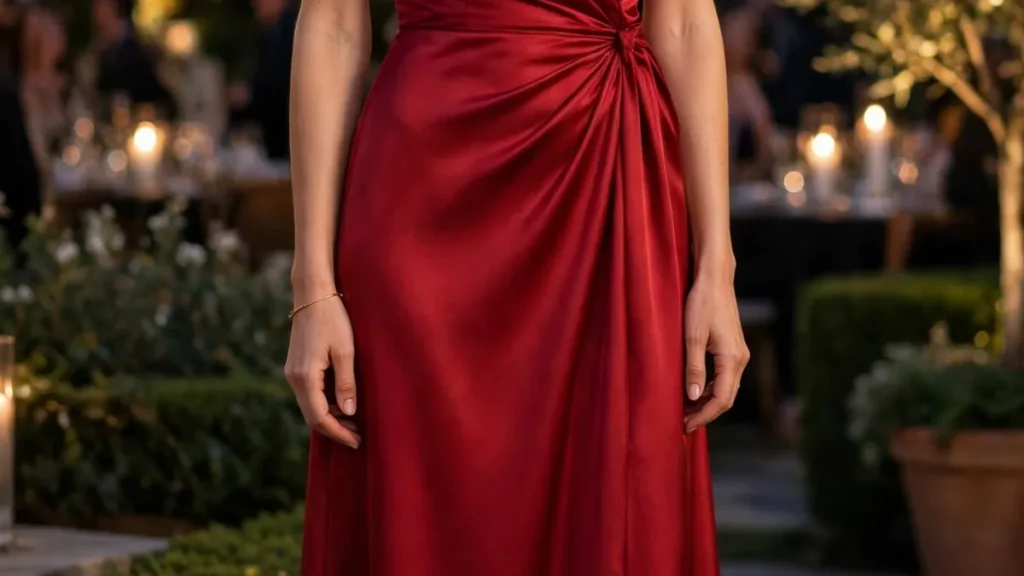
A red dress does not need much help to be noticed. It is one of the few pieces in a wardrobe that arrives with its own presence, and that is exactly why it can feel harder to style than a neutral dress. The colour is doing so much of the work that every other choice — shoes, bag, makeup, jewellery — either supports it or starts to compete with it, and the difference between the two is often smaller than it looks.
The good news is that styling a red dress is less about rules and more about balance. A clear silhouette, one or two considered accessories, and a makeup look that suits your own colouring will carry almost any red dress, from a simple daytime shift to a full-length evening gown. You do not need a new wardrobe to make it work, and you do not need to dress it up to the point where the outfit feels like a costume.
This guide walks through the choices that matter most, in the order you are likely to make them: the shade of red and the shape of the dress, the shoes and layers, the makeup and hair, and the occasions where a red dress shines. Each section offers a practical approach, what works well about it, and what to watch out for, so you can build an outfit that feels like you, only a little braver.
Key takeaways
- Let the dress lead: choose one focal point, the dress itself, and keep shoes, bag and jewellery quieter so nothing competes with the colour.
- Match the styling to the occasion first, then to the shade of red — daytime calls for softer textures and simpler accessories, evening allows more polish and shine.
- Nude, metallic, black and white are the most reliable partners for red, while a second strong colour needs to be used sparingly and with intent.
- Makeup works best when it is balanced: a bold red lip suits a softer eye, and a stronger eye suits a nude or soft pink lip.
- No single formula suits every red dress, every skin tone and every occasion, so try the full outfit on together, in daylight if you can, before the day itself.
What this guide covers
Red is not one colour. A blue-red, a true cherry red, a warm tomato red, a deep burgundy and a soft coral red all behave differently against skin, and they pair differently with metals, neutrals and other colours. The first step in styling a red dress is simply to look at the shade you own. Cooler, blue-based reds tend to sit well with silver, black and cool neutrals, while warmer, orange-based reds sit well with gold, cream and tan. Burgundy and wine shades lean formal and autumnal, while brighter reds feel livelier and more suited to spring and summer days.
Shape matters just as much as shade. A fitted sheath, a flowing midi, a slip dress, a shirt dress and a ball gown all ask for different shoes and layers, and a styling idea that is perfect for one can look wrong on another. Before choosing accessories, stand in the dress alone and notice where the eye goes: to the neckline, the waist, the hem, or the fabric itself. That is where your styling should begin.
This guide covers nine areas of styling, from makeup and shoes to layers and occasions, so you can dip into the sections that apply to your dress and skip the rest. It is written for real wardrobes, not a single ideal outfit, and it assumes you may already own most of what you need.
How to build a red-dress outfit and what to look for
Start with the dress and build outwards. Choose the shoes next, because they set the formality of the whole outfit, then the bag, then jewellery, then makeup and hair. Working in that order stops the common problem of choosing a beautiful bag or earring first and then finding it fights with the dress. If you change one element, check the others again: a heel that looked elegant with a midi dress may feel too formal with a short summer dress.
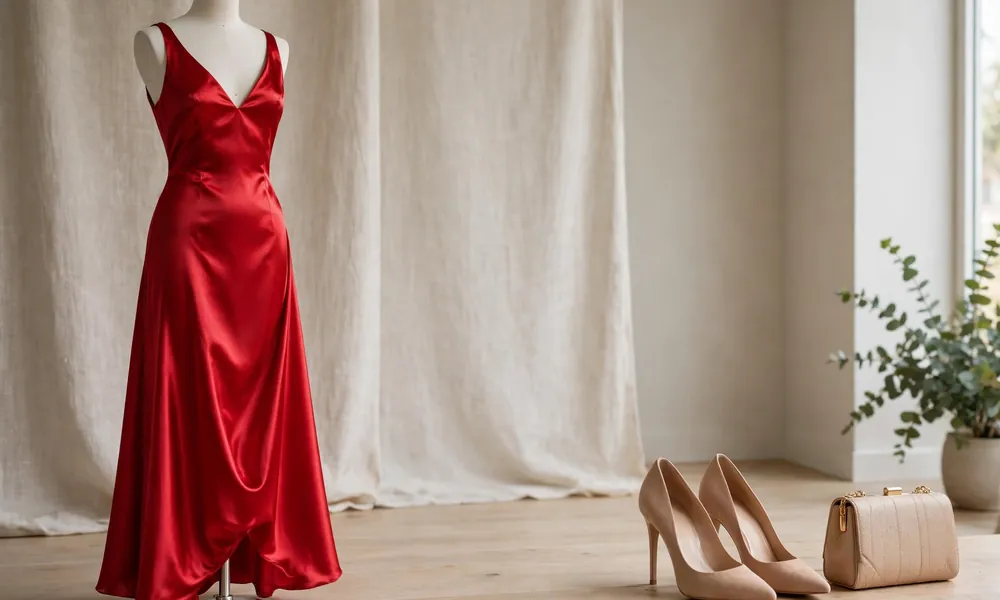
Look for balance in texture as well as colour. A matte crepe dress pairs well with a little shine in a shoe or a bag, while a satin or sequinned dress usually needs matte, quieter accessories to keep the outfit from feeling overdone. A finishing touch such as a light fragrance can complete the feeling of the outfit, and our guide to the best perfumes for women is a useful place to start if you want a scent that feels polished without overpowering the room.
Finally, look at the whole outfit in a mirror from a distance, and in daylight if possible. Red can look different under warm indoor light and in photographs, and a combination that seems subtle at close range can read as much stronger from across a room. If something feels slightly too much, it usually is, and removing one accessory is almost always the right fix.
Makeup that lets the dress lead
What we like: A balanced face, with either a defined lip or a defined eye, never both at full strength, keeps the dress as the focal point while still looking polished. What to consider: A red lip in the same shade family as the dress can look striking, but a lip that clashes with the dress, or a heavy eye and a heavy lip together, can overwhelm the face.
Shoes that set the tone
What we like: Nude, metallic, black or white shoes are the most reliable partners for red, because they support the dress without adding a second strong colour. What to consider: Red shoes with a red dress can work, but the shades must match closely, and a near miss looks accidental rather than intentional.
Accessories without competing
What we like: One considered piece, such as a simple gold chain, a pair of pearl studs or a slim bracelet, adds polish without pulling attention from the dress. What to consider: A statement necklace, large earrings, a bold bracelet and a patterned bag worn together will crowd the neckline and the colour.
Layers for cooler weather
What we like: A tailored blazer, a soft cashmere wrap or a cropped leather jacket adds warmth and structure, and gives a red dress a second life in cooler months. What to consider: A long, heavy coat can hide the dress entirely, and a layer in another bright colour can split the outfit in two.
Styling for daytime occasions
What we like: A simpler red dress, with flat or low-heeled shoes, minimal jewellery and soft makeup, feels fresh and confident in daylight rather than overdressed. What to consider: Heavy fabrics, full evening makeup and glittering accessories can look out of place before evening, even when each piece is lovely on its own.
Styling for evening occasions
What we like: Evening is where a red dress can be at its most polished, with a heel, a little shine in a clutch or shoe, and a more defined lip or eye. What to consider: Adding shine everywhere — sequins, metallic shoes, a glittering bag and bold jewellery — can make the outfit feel busy rather than glamorous.
Styling for weddings and formal guests
What we like: A red dress in a modest cut, with elegant shoes and a small clutch, is a confident and appropriate choice for many formal celebrations. What to consider: Check the dress code first, because some weddings and formal events ask guests to avoid certain colours, and a very bright or very revealing red dress may draw more attention than the occasion calls for.
For a formal guest look, choose a midi or full-length dress, a heel you can wear for hours, and jewellery that is refined rather than dramatic. A soft updo or polished waves, a nude or soft pink lip, and a small structured bag complete the look.
Colour pairings that work with red
What we like: Black, white, cream, nude, gold and silver are the easiest partners for red, because they frame the colour without arguing with it. What to consider: A second strong colour, such as bright pink, royal blue or vivid green, can work, but only in a small amount, such as a shoe or a bag, and only when the two colours feel deliberate together.
Animal print, in a small amount such as a shoe or a clutch, can add interest to a plain red dress, but a large print worn close to the dress can overwhelm it. A patterned layer or bag should use red as one of its colours, or stay neutral, so the outfit feels connected.
Hair and finishing touches
What we like: Hair that is neat and intentional, whether worn down in soft waves, swept into a low bun, or tied back simply, frames the face and lets the dress speak. What to consider: Hair that is constantly being pushed back, or a style that collapses within an hour, will distract from even the best outfit.
Choose a style you have worn before and know will last, and finish with a touch that feels personal: a simple hairpin, a favourite lip colour, or a light scent. The final check is comfort — can you sit, walk, eat and dance in this outfit without adjusting it? If the answer is yes, the styling is right.
Which styling approach is right for you
If you love a classic, polished look, build the outfit around neutrals: black or nude shoes, a small neutral bag, gold or silver jewellery, and a defined lip or a soft eye. This approach suits almost every red dress and every occasion, and it is the safest starting point if you are styling a red dress for the first time.
If you prefer a softer, more relaxed look, keep the styling light: flat shoes or sandals, minimal jewellery, soft makeup and hair worn naturally. This works especially well for daytime, for summer, and for dresses in lighter fabrics, where a formal shoe or a heavy makeup look would feel out of place. For occasion dressing more broadly, our guide to the best wedding guest dresses shows how the same principles — a clear silhouette, a considered shoe and quiet accessories — apply when the event itself is formal.
If you love drama, you can lean into it, but choose one dramatic element only. That might be a bold red lip, a sweeping hairstyle, a pair of statement earrings, or a metallic shoe, but not all of them at once. A single bold choice reads as confident, while several together read as effortful. Whichever approach you choose, try the full outfit on together, walk around in it, and sit down in it before the day.
The caveats that matter
A red dress is forgiving in many ways, but it is not forgiving of an outfit that has not been tried on as a whole. Colours that looked fine separately can clash when worn together, a shoe that felt comfortable for five minutes can hurt after an hour, and a lip colour that looked perfect in the shop can look different against the dress in daylight. The most common styling mistake is not the dress itself, but a combination that was never tested together before the event.
| Detail | What is known |
|---|---|
| Most reliable shoe colours | Nude, black, white, gold and silver, chosen to suit the shade of red and the occasion |
| Best jewellery metals | Gold with warm reds and burgundy, silver with cool, blue-based reds, and either with a true red |
| Makeup balance | A bold lip with a soft eye, or a stronger eye with a nude or soft pink lip, not both at full strength |
| Day versus evening | Simpler shoes, lighter makeup and minimal shine by day; more polish and one element of shine in the evening |
| Layers that work | A tailored blazer, a soft wrap or a cropped jacket in black, cream, navy or camel |
| Colours to use sparingly | A second strong colour, a large print, or a bright layer, used in a small amount only |
| Formal occasions | Check the dress code first, choose a modest cut, and keep accessories refined rather than dramatic |
| Final check | Try the full outfit on together, in daylight if possible, and walk and sit in it before the day |
Red also photographs strongly, so take a test photo in similar light before the event if photographs matter.
Checklist: styling a red dress honestly
Use these checks when you put the outfit together, and again on the day itself.
- Check the shade: notice whether your red is warm, cool or burgundy, and let that guide your metals and neutrals.
- Check the shoes: choose a colour and heel you can walk in comfortably for the whole occasion.
- Check the balance: keep either the lip or the eye defined, not both at full strength.
- Check the accessories: remove one piece if the outfit feels crowded, and keep the bag small and simple.
- Check the layer: make sure a jacket, blazer or wrap ends at a flattering point and does not hide the dress.
- Check the whole outfit: try everything on together, in daylight if you can, and take a test photo.
Frequently asked questions
What colour shoes go best with a red dress?
Nude, black, white, gold and silver are the most reliable choices, because they support the dress without adding a second strong colour. Nude lengthens the leg and suits most occasions, black feels classic and formal, and metallics add a little evening polish. Red shoes can work, but only when the shade matches the dress closely.
Should I wear a red lip with a red dress?
You can, and it can look striking, but keep the rest of the makeup soft so the lip and the dress do not compete with each other. A neutral eye, a little mascara and a fresh base are usually enough. If you prefer a stronger eye, choose a nude or soft pink lip instead.
What jewellery should I wear with a red dress?
Keep it simple: one considered piece, such as a fine chain, pearl studs or a slim bracelet, is usually enough. Gold tends to suit warm reds, silver tends to suit cool reds, and either works with a true red. If the dress has detail at the neckline, skip the necklace and choose earrings.
Can I wear a red dress to a wedding?
Often, yes, but check the dress code and the formality of the event first. Choose a modest cut in a midi or full-length style, keep the accessories refined, and avoid anything very bright or revealing that might draw attention from the celebration. A soft updo, a nude lip and a small clutch will keep the look appropriate.
What makeup colours work with a red dress besides a red lip?
Soft neutrals on the eyes, a warm blush, and a nude, rose or soft pink lip are the easiest alternatives, and they suit almost every shade of red. A little shimmer on the lid or a soft brown liner can add definition without competing with the dress. Our guide to the best eyeshadow palettes can help if you want neutral shades that blend well and last through an evening.
How do I style a red dress in winter?
Add a layer in a neutral colour, such as a tailored black blazer, a camel coat worn open, or a soft cream wrap, and choose closed shoes in black or nude. Keep the makeup a little warmer, with a soft blush and a defined lip, and choose tights in black or nude if the dress is short. The layer should flatter the dress rather than hide it.
The bottom line
Styling a red dress in 2027 is not about following a strict set of rules. It is about letting the dress lead, choosing shoes and accessories that support it rather than compete with it, and balancing makeup so that either the lip or the eye is defined, not both. Start with the shade and the shape of the dress, build outwards in order, and try the full outfit on together before the day itself.
When the balance is right, a red dress is one of the easiest outfits to wear well, because the colour does so much of the work. Keep the rest calm, choose comfort alongside polish, and let the outfit feel like you.
Note: This guide is general styling information, not personal advice. Shades, fits and dress codes vary, so try the full outfit on together, check the dress code for formal occasions, and choose the version that feels comfortable and right for you.