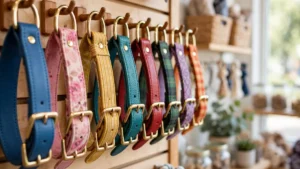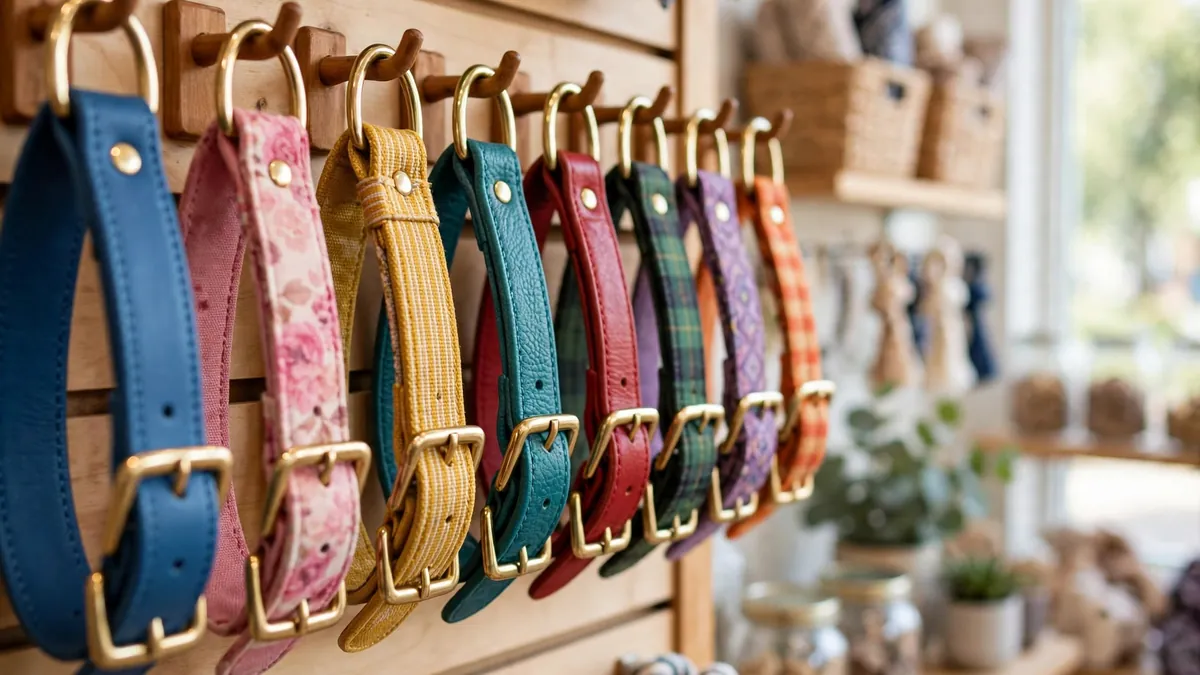

The best dog collars in 2027 are the ones that fit well, feel soft against the neck and hold up to daily walks. A collar is the one piece of kit your dog wears every day.
So which collar suits your dog? The answer depends on coat, size, habits and how your dog walks. This guide compares ten collar types, from simple flat collars to safety designs, so you can choose with confidence, and our guide to the best dog breeds in 2027 shows how size and coat shape the choice.
Key takeaways
- Fit comes first: two fingers should slide snugly between collar and neck.
- Padded and rolled designs suit sensitive necks and long coats.
- Reflective and waterproof collars earn their place on dark, wet walks.
- Check the fit monthly and replace a collar that frays.
How to Choose the Best Dog Collar
Start with fit, not fashion. A collar that is too loose can slip over the ears, while one that is too tight can rub and irritate the skin. Measure around the neck with a soft tape, then add a little room for comfort.
Think about your dog’s coat and habits too. Long hair tangles in wide, flat straps, strong pullers need sturdy hardware, and swimmers need a collar that dries fast and will not hold a smell.
Finally, look at the buckle and the ring. A solid buckle should close with a clear click and open without a struggle, and the D-ring should be welded rather than merely bent.
The 10 Best Dog Collars in 2027
Flat Everyday Collar
Best for: daily walks, garden time and trips to the vet.
The flat collar is the standard choice for most dogs, and for good reason. It is simple, light and easy to fit, with a buckle or clip that fastens in seconds.
Look for smooth edges and a lining that will not chafe. A flat collar holds an ID tag and a lead without fuss, and it washes well after muddy walks. It is the collar to buy first, and the one many dogs wear for life.
Padded Comfort Collar
Best for: dogs with sensitive skin or a tender neck.
A padded collar adds a soft layer, often neoprene or fleece, between the strap and the skin. Makers say the padding spreads pressure across the neck, which can help dogs that cough or pull when the lead tightens. It feels noticeably kinder on the hand as well as on the dog.
These collars suit older dogs, small breeds and any dog that has rubbed raw in the past. A padded collar is a small comfort that a dog wears all day.
Leather Collar
Best for: owners who want a classic collar that ages well.
Leather has been the traditional collar material for generations, and it still earns its place. A well-made leather collar softens with wear, moulds gently to the neck and looks better with age. Makers describe full-grain leather as the strongest choice, built to last for years.
Keep leather dry where you can, and condition it now and then to stop it cracking. A leather collar is a quiet investment rather than a quick buy.
Rolled Leather Collar
Best for: long-haired dogs whose coats tangle easily.
A rolled collar is made from a round strip of leather rather than a flat band. The narrow, rounded shape slides through fur instead of catching it, which makers say helps prevent matting and breakage in long coats. Spaniels, setters and doodles often wear them for this reason.
The design is light and neat, and it suits dogs with thick or silky coats. For a long-haired dog, the difference is easy to see.
Martingale Collar
Best for: dogs that slip out of a standard collar.
A martingale collar has a loop that tightens gently when the dog pulls back, then relaxes when the lead slackens. It was first made for sighthounds, whose narrow heads slip free of ordinary collars, but it suits any dog with a head slimmer than its neck. Makers stress that it should never be used to choke or punish.
Fit matters even more here, since a martingale that is too loose will not work. It is a practical answer to a real escape problem.
Breakaway Safety Collar
Best for: dogs that play off lead or explore fences and branches.
A breakaway collar is designed to release if it catches on something, so a dog cannot become trapped. The clasp opens under a firm tug, which makers say can prevent a serious accident when a dog jumps a fence or scrambles through undergrowth. It is a safety feature, not a weakness.
These collars suit dogs that spend time unsupervised in a garden or on a farm. Use one for free play, and swap to a standard collar for the lead.
Reflective Collar
Best for: early morning and evening walks in low light.
A reflective collar carries strips or stitching that catch headlights and street lamps, making a dog visible from a distance. It does not replace a light, but it adds a layer of safety on dark lanes and pavements. Many makers now weave the reflective thread through the whole strap.
Choose a collar where the reflective parts wrap right around, so the dog shows up from every angle. For winter walks, it is hard to beat.
Waterproof Collar
Best for: swimmers and dogs that love mud and rain.
A waterproof collar is made from coated webbing or a rubber-like material that sheds water instead of soaking it up. Makers say it dries in minutes, resists smells and will not stiffen after a swim. That makes it a favourite for spaniels, retrievers and any dog that finds every puddle.
It cleans with a quick rinse and keeps its colour after repeated soaking. If your dog swims weekly, a waterproof collar saves a lot of bother.
Adjustable Puppy Collar
Best for: growing puppies that change size fast.
A puppy collar adjusts across a wide range, so it can grow with a young dog for several months. It is light, soft and easy to fasten, which matters when a puppy is still learning to accept a collar. Makers usually suggest checking the fit every week while the puppy grows.
Start with the smallest size that fits, and loosen it as the puppy fills out. Expect to replace it once or twice before adulthood.
Collar with a Tracker Loop
Best for: owners who use an ID tag or a tracker.
Some collars include a small loop or holder made to carry an ID tag or a tracker securely. The loop keeps the device flat against the collar, so it does not swing, snag or bang against the dog’s chest.
This design suits owners who want a tracker close at hand without adding a separate mount. It does not include GPS on its own, so check what your tracker needs before you buy. A tidy loop keeps everything in place on the walk.
What a Good Collar Feels Like
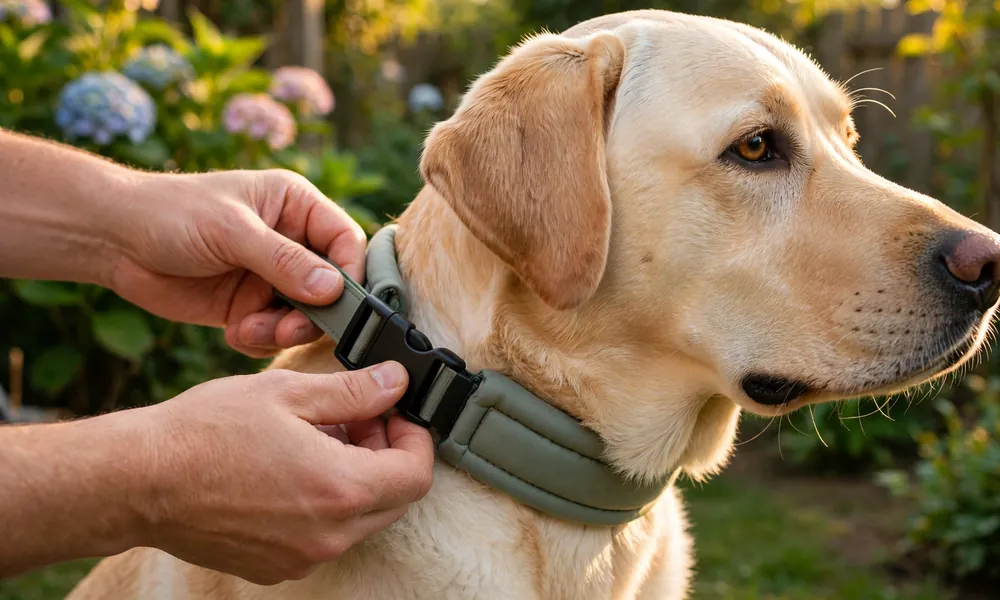
A good collar feels like nothing at all to the dog wearing it. It sits flat, moves with the neck and never digs in when the lead tightens. You can tell at once when a collar is right, because the dog forgets it is there.
The test is simple: slide two fingers under the strap. They should fit snugly without forcing, and the collar should turn a little without sliding over the ears.
Watch your dog on the first few walks with a new collar. A comfortable dog walks, sniffs and plays as usual, while a bothered dog paws at the neck or holds its head stiffly. Trust what you see, and swap the collar if the dog keeps telling you something is wrong.
Dog Collars Compared
| Collar | Best for | Material | Key feature |
|---|---|---|---|
| Flat everyday collar | Daily walks | Nylon or leather | Simple and light |
| Padded comfort collar | Sensitive necks | Neoprene or fleece | Soft, pressure-spreading padding |
| Leather collar | Classic style | Full-grain leather | Softens and ages well |
| Rolled leather collar | Long coats | Rolled leather | Slides through fur |
| Martingale collar | Escape artists | Nylon or leather | Gentle tightening loop |
| Breakaway safety collar | Off-lead play | Nylon with release clasp | Releases if caught |
| Reflective collar | Low-light walks | Reflective webbing | Visible in headlights |
| Waterproof collar | Swimmers | Coated webbing | Dries fast, resists smells |
| Adjustable puppy collar | Growing puppies | Soft nylon | Wide size range |
| Collar with a tracker loop | Tags and trackers | Nylon or leather | Secure device holder |
What to Check Before You Buy
Measure the neck properly before you order, and check the maker’s size chart rather than guessing. Sizes vary between brands, so a medium in one range may be a large in another. A tape measure takes a minute and saves a return.
Look at the stitching and the hardware next. Stitching should be tight and even, the buckle should feel solid, and the D-ring should be welded shut. Cheap hardware is the most common reason a collar fails, so it is worth a close look.
Finally, think about washing and wear. A collar that cannot be washed will soon smell, and one that fades in the sun will look tired within weeks.
Your Dog Collar Checklist
- Measure the neck with a soft tape before ordering.
- Check that two fingers fit snugly under the collar.
- Look for smooth edges and even stitching.
- Choose a buckle and D-ring that feel solid.
- Match the material to your dog’s coat and habits.
- Inspect the collar monthly and replace it when it frays.
Frequently Asked Questions
How tight should a dog collar be?
A collar should be snug enough to stay in place, with room for two fingers between the strap and the neck. If you can fit three fingers easily, it is too loose, and if you cannot fit two, it is too tight.
Should my dog wear a collar all the time?
Many owners keep a collar on all day so the ID tag is always with the dog. At home, though, some dogs are safer without one, especially if they play roughly or sleep in a crate.
How often should I replace a dog collar?
Replace a collar when the strap frays, the stitching loosens or the buckle stops clicking firmly. For most dogs that means a new collar every year or two, and sooner for puppies or strong chewers.
Are martingale collars safe?
A martingale collar is safe when it is fitted well and used on a lead, not left on an unsupervised dog. The loop tightens only enough to stop the collar slipping off, and it relaxes as soon as the lead slackens. It should never be used as a punishment or pulled hard.
Can a collar damage my dog’s coat?
A wide, flat collar can rub and break the coat on long-haired dogs, leaving a worn patch around the neck. A rolled collar or a smooth, padded design usually causes less damage. Feeding matters too: our guide to the best food for dogs explains what supports a healthy coat.
The Bottom Line
The best dog collar is the one that fits your dog, suits its coat and habits, and feels so comfortable that the dog forgets it is wearing it. Start with a simple flat collar, then add a specialist design when your dog’s needs call for one. Choose carefully, check the fit often, and the right collar will serve you both for years.
Once the collar is sorted, think about the rest of the daily routine. A comfortable collar, regular walks and good food all work together, and small choices add up to a happier dog. Our guide to the best canned dog food in 2027 covers feeding.