The best dog crates in 2027 are the ones that give a dog a calm, safe den of its own. A crate is a quiet corner where a dog can rest and feel secure when the house gets busy.
So which crate suits your dog and your home? The answer depends on your dog’s size, temperament and how you plan to use it. This guide compares ten crate types, from folding wire crates to furniture-style designs, so you can choose with confidence, and our guide to the best dog breeds in 2027 shows how size shapes the choice.
Key takeaways
- Size comes first: a dog should stand, turn and lie down with ease.
- A crate is a den, never a punishment, and never for long hours.
- Wire crates suit the home, soft-sided crates suit travel.
- Check latches, tray and airflow before you buy.
How to Choose the Best Dog Crate
Start with size, not style. Your dog should be able to stand up without crouching, turn around freely and stretch out on its side.
Think about where the crate will live and how it will be used. A wire crate suits a fixed spot in the living room, a soft-sided crate suits holidays and car trips, and a furniture-style crate suits a home where the crate stays on show.
Finally, look at the door, the latch and the base. The door should open smoothly and latch with a firm click, and the base tray should slide out for cleaning.
The 10 Best Dog Crates in 2027
Folding Wire Crate
Best for: everyday use at home, with easy storage between uses.
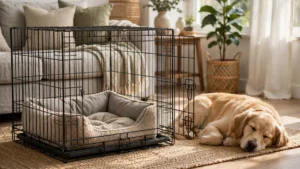
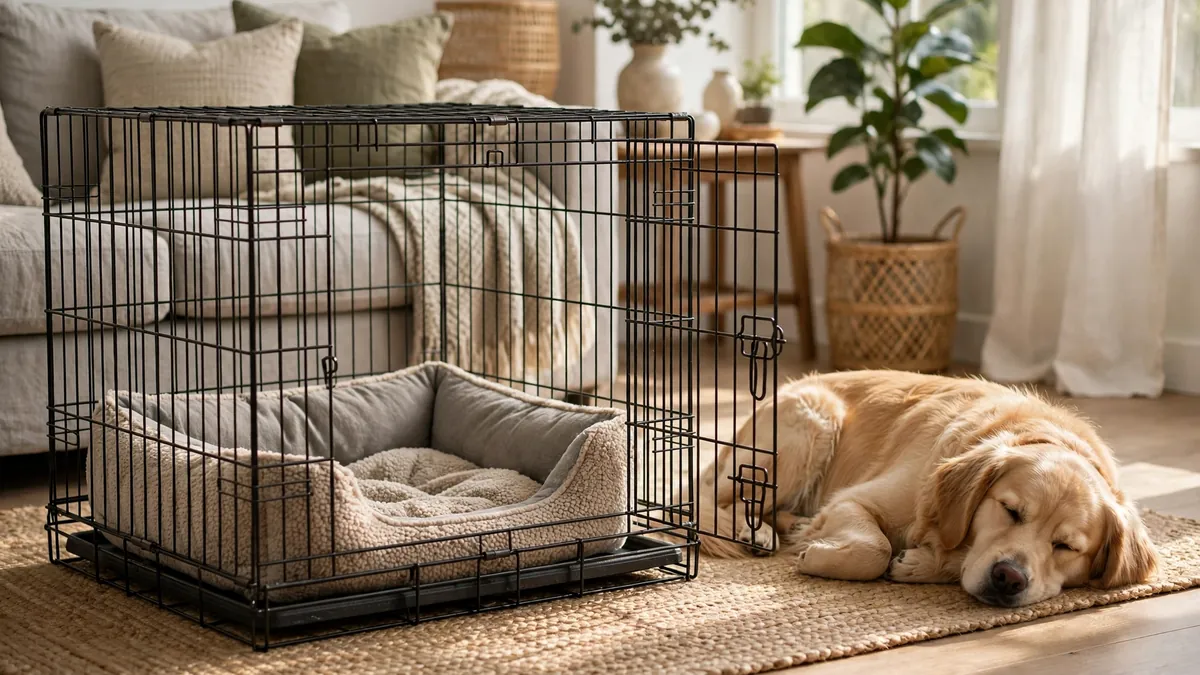
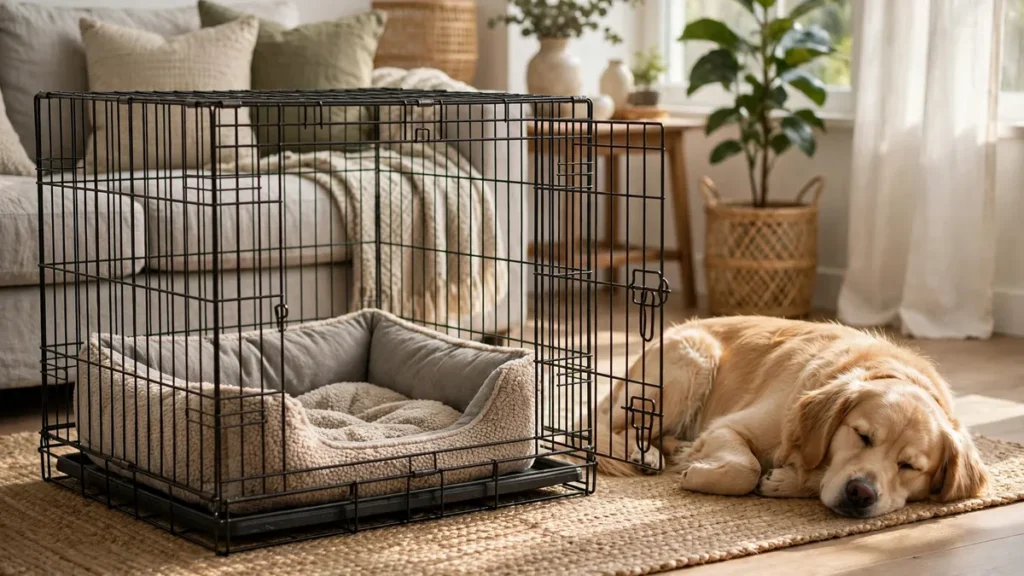
The folding wire crate is the classic choice for most homes, and for good reason. It folds flat in seconds, sets up again just as fast, and lets air flow freely through the open bars. Most makers offer it in a wide range of sizes, so finding one that fits your dog is rarely a problem.
Look for a double door, so you can place the crate against a wall either way round. It is the crate to buy first, and the one many dogs use for years.
Plastic Travel Crate
Best for: car journeys, flights and trips to the vet.
A plastic travel crate is a sturdy, enclosed box with a wire or barred door at the front. Makers say the solid walls give a nervous dog a sense of shelter, and the design meets the rules many airlines and ferry operators set for pets. It feels solid in the hand and steady in the boot.
These crates suit dogs that travel often and owners who want a hard shell around their pet. A plastic crate is a small haven that travels well.
Soft-Sided Crate
Best for: holidays, hotel stays and light travel.
A soft-sided crate is made from padded fabric over a light frame, so it weighs far less than a wire or plastic crate. It packs down small, carries easily by its handle, and sets up in a moment. Makers describe it as the easiest crate to take on a weekend away.
It suits calm dogs that settle quickly and owners who travel light. For gentle dogs, a soft crate is a cosy home from home.
Furniture-Style Crate
Best for: homes where the crate stays on show in the living room.
A furniture-style crate looks like a side table or a cabinet, with wooden panels and a barred front. It blends into a living room far better than a wire box, and the flat top gives you a place for a lamp or a book. Makers say it suits owners who want the crate to feel like part of the furniture.
The design is heavier and less portable, so it suits a fixed spot in the home. For a crate that never gets folded away, this is the handsome choice.
Heavy-Duty Crate
Best for: strong, determined dogs that test every latch.
A heavy-duty crate is built from thick steel bars and a reinforced frame, made for dogs that chew, push and rattle a standard crate. Makers say the welded joints and strong locks resist even the most determined escape artist. It feels heavy because it is built to last.
These crates suit large, powerful breeds and dogs with separation worries. For a dog that has bent a wire crate, this is the answer.
Crate with Divider Panel
Best for: puppies that will grow into a larger crate.
A crate with a divider panel lets you shrink the living space while a puppy is small, then move the panel as the puppy grows. Makers say a snug space helps a puppy feel secure and supports house training, since dogs avoid soiling their sleeping area. It is a clever way to buy one crate instead of three.
Choose a panel that locks firmly in place and cannot be nudged aside. For a growing dog, this design saves money and space.
Playpen-Style Enclosure
Best for: puppies and small dogs that need room to play safely.
A playpen-style enclosure is a low, open pen that gives a dog more floor space than a crate, with room for a bed, toys and a water bowl. It suits puppies that are learning the ropes and small dogs that like to move about. Makers describe it as a safe zone rather than a cage.
It works well in a kitchen or a spare room, where the dog can see the family while staying out of trouble. For daytime use, a playpen is a kind and practical choice.
Crate with a Removable Tray
Best for: owners who want quick, easy cleaning.
A crate with a removable tray has a smooth plastic pan that slides out from under the floor, so you can clean up without taking the whole crate apart. Makers say it makes daily life much easier, especially with puppies and older dogs. A quick wipe keeps the crate fresh.
Choose a tray that slides smoothly and sits flat, with no sharp edges or gaps. For anyone who values a clean home, this feature is worth having.
Car Travel Crate
Best for: safe, settled journeys by car.
A car travel crate is shaped to fit a boot or a back seat, with a low front and strong anchor points. Makers say a crate keeps a dog still on the road, which protects both the dog and the driver. It also keeps muddy paws off the upholstery.
Measure your boot before you buy, since car crates come in shapes that suit different models. For regular car trips, a proper travel crate is a must.
Puppy Starter Crate
Best for: first-time owners bringing a puppy home.
A puppy starter crate is a small, simple crate made for the first weeks at home, often sold with a divider and a soft mat. It gives a new puppy a safe den from the very first night, which makers say helps the puppy settle faster. It is light, easy to move and simple to clean.
Start with the size that fits your puppy now, and plan to size up as it grows. For a new puppy, it is the calmest way to begin.
What Crate Training Feels Like
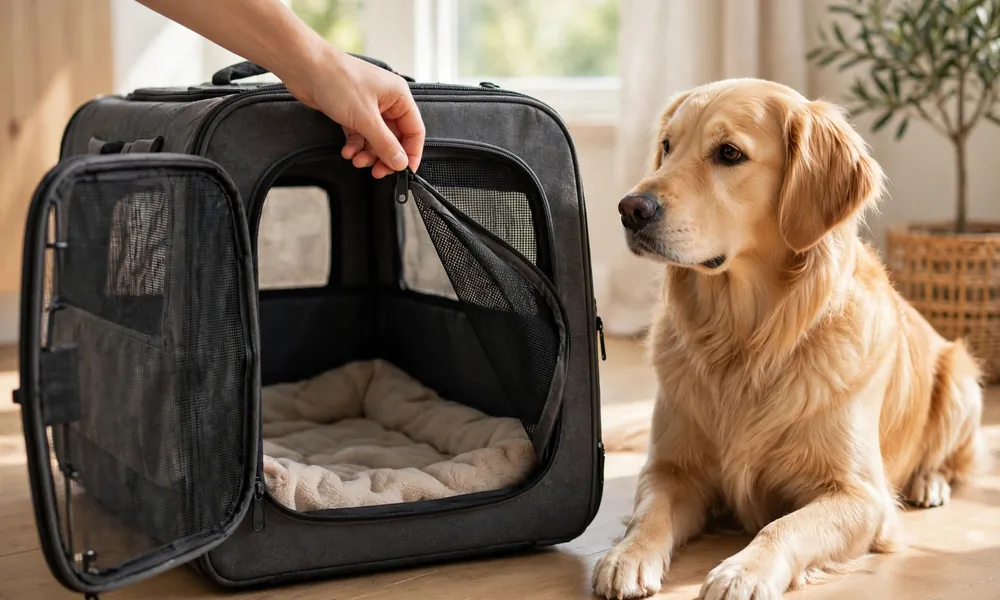
Crate training feels slow at first, and that is exactly how it should feel. A dog that walks into its crate on its own, circles once and settles down has learned that the crate is a safe place.
The test is simple: watch the dog’s body. A relaxed dog lies down with a soft gaze and a loose tail, while a worried dog pants, paces or paws at the door.
A crate is a den, never a punishment, and a dog should not be left crated for long hours. Use it for rest and short absences, and leave the door open when the dog is free to choose. A dog that loves its crate will walk in by itself.
Dog Crates Compared
| Crate | Best for | Material | Key feature |
|---|---|---|---|
| Folding wire crate | Everyday home use | Coated steel wire | Folds flat for storage |
| Plastic travel crate | Car and air travel | Hard plastic | Solid, sheltered walls |
| Soft-sided crate | Holidays and light travel | Padded fabric | Light and packable |
| Furniture-style crate | Living-room display | Wood and steel bars | Doubles as furniture |
| Heavy-duty crate | Strong escape artists | Thick steel | Reinforced frame and locks |
| Crate with divider panel | Growing puppies | Steel wire | Adjustable living space |
| Playpen-style enclosure | Puppies and small dogs | Steel or plastic panels | Extra room to play |
| Crate with a removable tray | Easy cleaning | Steel wire, plastic tray | Slides out to clean |
| Car travel crate | Safe car journeys | Steel or hard plastic | Boot-shaped, anchored |
| Puppy starter crate | First weeks at home | Steel wire | Small, simple, gentle start |
What to Check Before You Buy
Measure your dog properly before you order, and check the maker’s size chart rather than guessing. Sizes vary between brands, so a large in one range may be an extra-large in another.
Look at the latches and the joins next. Latches should click firmly and resist a nudge from inside, and the panels should join without gaps or wobble.
Finally, think about cleaning and placement. A crate that cannot be wiped down will soon smell, and one that blocks airflow will feel stuffy in summer.
Your Dog Crate Checklist
- Measure your dog standing, sitting and lying down.
- Check that the dog can turn around with ease.
- Look for firm latches and strong, even joins.
- Choose a tray that slides out for cleaning.
- Match the crate to your home and your travel plans.
- Keep crate time short, calm and always positive.
Frequently Asked Questions
What size crate does my dog need?
Your dog should be able to stand up without crouching, turn around freely and lie down stretched out. Measure your dog from nose to tail and from floor to head, then add a little room for comfort.
How long can a dog stay in a crate?
A crate is for rest and short absences, not for long hours. Most adult dogs manage a few hours at a time, while puppies need much shorter spells. A dog should never be left crated all day, and the door should stay open whenever the dog is free.
Should I put a bed inside the crate?
A soft bed or a folded blanket makes the crate far more inviting, and most dogs settle faster on something comfortable. Choose a bed that fits the floor without bunching up, and wash it regularly.
Where should I put the crate in my home?
Put the crate in a quiet corner of a room the family uses, so the dog feels part of the household without being in the middle of everything. Avoid draughty spots and direct sun, and keep it away from radiators.
Can I use a crate for a puppy?
A crate can help a puppy a great deal, as long as it is introduced gently and used for short, happy spells. Our guide to the best food for dogs also covers feeding a growing puppy well.
The Bottom Line
The best dog crate is the one that fits your dog, suits your home and feels so safe that the dog walks in by itself. Start with a simple wire crate, then add a specialist design when your dog’s needs call for one. Choose carefully, introduce it gently, and the right crate will serve you both for years.
Once the crate is sorted, think about the rest of the daily routine. A calm den, regular walks and good food all work together, and small choices add up to a happier dog. Our guide to the best canned dog food in 2027 covers feeding.