A pearl nose hoop is the quietest piece of nose jewellery you can wear, and that is exactly why it works. Where an opal flashes and a diamond sparkles, a pearl simply glows, soft and steady, in a way that suits almost every face and outfit. It is the hoop you reach for when you want jewellery to look considered rather than loud, and it looks as good at a wedding as on a Tuesday.
Pearls have been worn for centuries, and they carry a reputation for elegance that no other stone quite matches. That reputation is deserved, but it comes with a warning that matters more for a nose hoop than for a necklace. A pearl is soft, made of layers of nacre over a core, and it does not like perfume, hairspray, or hard knocks. A pearl nose hoop sits close to your face, so it meets makeup, moisturiser, and hair products every day, and it needs to be cleaned and stored with that in mind.
The nine hoops below cover the full range, from a classic white freshwater pearl to a dark Tahitian pearl, a pink pearl, and a small pearl that is barely there at all. Each one is described by what it does well, what to watch for, and who it suits best, so you can choose a pearl that will still look good in a year.
Key takeaways
- Pearl nose hoops glow softly rather than flashing, which makes them easy to wear with any outfit.
- Pearls are soft and made of layered nacre, so they scratch and dull if they meet perfume or hairspray.
- Freshwater pearls are affordable and come in many colours, while Akoya and Tahitian pearls are rounder, shinier, and more expensive.
- Hoop diameter matters: a small hoop sits close to the nostril, while a larger hoop swings and catches on clothing.
- No pearl lasts forever without care, and a scratched or dull pearl will not recover, so gentle care matters more than price.
What pearl nose hoops actually are
A nose hoop is a thin ring that passes through a nostril piercing and closes in a circle, and a pearl nose hoop carries a pearl as its focal stone. The pearl usually sits in a small mount on the front of the hoop, against the side of the nose, and catches the light softly when you move. Some hoops carry a single pearl, others a small pearl with tiny accent stones, and a few are a plain hoop with a pearl bead threaded on it.
A pearl is different from every other stone in this series, because it is not mined from rock. It is grown inside a mollusc, layer by layer, as the animal coats an irritant with nacre. That is why a pearl glows softly, and why it is so delicate. A freshwater pearl is grown in a mussel and is usually affordable, slightly irregular, and available in white, pink, and lavender. An Akoya pearl is grown in a saltwater oyster, and it is rounder, shinier, and more expensive. A Tahitian pearl is dark, with grey, green, or peacock tones.
Most pearl nose hoops are made in gold, either solid gold or gold over a sterling silver or titanium core. Gold suits pearl well because it is warm, it does not tarnish quickly, and it holds a setting securely. Titanium is the safer choice for a new or sensitive piercing, because it is light and rarely causes a reaction. Sterling silver is cheaper, but it tarnishes and can darken the skin around a fresh piercing.
How we chose these pearl nose hoops and what to look for
We looked first at the type of pearl, because that decides both the look and the price. A freshwater pearl is the best value, and its slight irregularity is part of its charm. An Akoya pearl is the classic choice, with a round shape and a sharp, bright lustre. A Tahitian pearl is the boldest, with dark colours that suit deeper skin tones. A South Sea pearl is the largest and most expensive, and usually too big for a nose hoop. Our guide to gold jewellery for everyday wear explains how to judge the metal around a stone, because a beautiful pearl in a flimsy setting will not last.
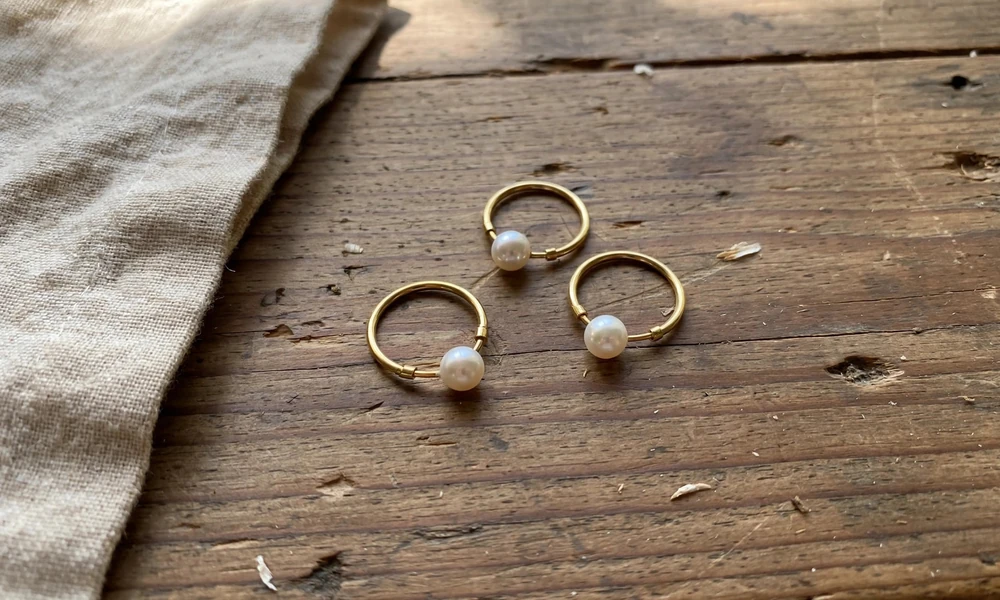
We looked next at the setting and the closure. A pearl is usually held by a small cup or a single post, because a prong can scratch the nacre, and a bezel can hide too much of the pearl. A hinged hoop clicks shut and is easy to open and close, which matters if you change your jewellery often. A seamless hoop has no visible break and looks cleaner, but it needs a small tool or a careful twist to open. A clicker, a hinged hoop with a small decorative front, is the easiest to handle.
Finally, we looked at size. A hoop of 8 millimetres sits close to the nostril and suits a small nose or a subtle look. A hoop of 10 millimetres is the most common choice, with a little swing without catching on everything. A hoop of 12 millimetres or more makes a statement, but it moves more and is more likely to snag on a scarf or a towel. Measure from your piercing to the edge of your nostril before you order, because a hoop that is too large will droop, and one that is too small will pull.
The 9 best pearl nose hoops of 2027
The Classic White Pearl Hoop
What we like: A round white freshwater pearl in a thin gold cup setting, with a soft, even glow that suits almost every skin tone. What to consider: White pearls show dirt and makeup more easily than dark ones, so they need regular wiping. Best For: Everyday wear and a first pearl hoop. Material: Freshwater pearl, 14k gold. Price Range: Lower to mid-range. Standout Feature: The classic round white pearl that goes with everything.
This is the hoop to buy if you want the classic pearl look.
The Akoya Pearl Hoop
What we like: A perfectly round Akoya pearl with a sharp, bright lustre that looks almost mirror-like in good light. What to consider: Akoya pearls are more expensive than freshwater pearls, and a good one is worth paying for. Best For: Formal occasions and anyone who wants the brightest pearl. Material: Akoya pearl, 14k gold. Price Range: Higher. Standout Feature: The sharp, reflective lustre that no freshwater pearl quite matches.
Akoya is the pearl of the classic strand, and it brings that same polish to a nose hoop.
The Pink Pearl Hoop
What we like: A soft pink freshwater pearl with a warm, romantic glow, which adds colour without being loud. What to consider: Pink pearls vary in colour, so check the exact shade before you buy. Best For: A gentle, feminine look and pairing with rose gold. Material: Freshwater pearl, rose gold. Price Range: Lower to mid-range. Standout Feature: The soft, warm pink that never looks harsh.
Pink pearl is the warmest stone here, and that is its charm.
The Tahitian Pearl Hoop
What we like: A dark Tahitian pearl with grey and green overtones, which looks dramatic and modern next to gold. What to consider: Tahitian pearls are expensive, and a dark pearl shows scratches more easily than a white one. Best For: Evening wear and anyone who wants a bolder look. Material: Tahitian pearl, 14k gold. Price Range: Higher. Standout Feature: The dark, peacock-toned body that no other pearl has.
Tahitian pearl is the most dramatic stone on this list.
The Tiny Pearl Hoop
What we like: A very small hoop with a tiny pearl, just 2 millimetres across, that reads as a glint of light rather than a statement. What to consider: The pearl is small, so its glow is subtle and easy to miss in dim light. Best For: Minimalist styling and a second piercing. Material: Freshwater pearl, 14k gold. Price Range: Lower. Standout Feature: The delicate size that suits a quiet, understated look.
This one is for people who want a hint of pearl, and it suits a second nostril piercing.
The Pearl and Diamond Accent Hoop
What we like: A small white pearl with two tiny diamonds on either side, which add sparkle and make the pearl look brighter. What to consider: The diamonds add cost and need the same gentle cleaning as the pearl. Best For: Special occasions and anyone who wants a little extra sparkle. Material: Freshwater pearl, lab-created diamonds, 14k gold. Price Range: Higher. Standout Feature: The diamond accents that frame the pearl and catch the light.
Choose this one for a wedding, a party, or any occasion when you want to be noticed.
The Baroque Pearl Hoop
What we like: An irregularly shaped baroque pearl, each one different, with a soft, organic glow that no round pearl can match. What to consider: Baroque pearls are irregular by nature, so the exact shape will vary from the photo. Best For: Anyone who wants a one-of-a-kind piece and a relaxed, artistic look. Material: Baroque freshwater pearl, 14k gold. Price Range: Mid-range. Standout Feature: The irregular, organic shape that makes every hoop unique.
A baroque pearl is the opposite of a perfect round pearl, and that is the point.
The Lavender Pearl Hoop
What we like: A pale lavender freshwater pearl with a cool, subtle colour that suits fair skin and silver-toned jewellery. What to consider: Lavender pearls are less common, so the colour can vary between sellers. Best For: Cool skin tones and pairing with white gold or silver. Material: Freshwater pearl, white gold. Price Range: Lower to mid-range. Standout Feature: The cool, pale lavender that is softer than pink and lighter than grey.
Lavender pearl is the most unusual colour on this list.
The Vintage-Inspired Pearl Hoop
What we like: A white pearl set in a milgrain-edged mount with a slightly antique finish, which gives the hoop a warm, old-fashioned feel. What to consider: The vintage detailing can trap dirt, so it needs a soft brush to clean. Best For: Vintage styling and pairing with other antique-looking jewellery. Material: Freshwater pearl, 14k gold with milgrain detail. Price Range: Mid-range. Standout Feature: The milgrain edge that makes the hoop look like a family piece.
This hoop looks like something passed down rather than bought new.
Which pearl nose hoop is right for you
Start with your piercing. If it is fully healed and you change your jewellery often, a hinged hoop or a clicker is easiest, because you can open and close it without a tool. If your piercing is new or sensitive, choose titanium and leave the hoop in place for weeks, because every change irritates a healing piercing. A necklace guide for women shows the same rule: the metal and the setting matter as much as the pearl itself.
Next, think about how you wear jewellery. If you wear one piece every day, a freshwater pearl in a cup setting is the best investment, because it is affordable, protected, and will look good for years with gentle care. If you like to swap hoops to match an outfit, a freshwater pearl is cheaper to collect in several colours. If you want a hoop for special occasions, the pearl and diamond accent hoop will be noticed.
Finally, match the pearl to your skin. White pearl suits almost everyone. Pink pearl suits fair skin and rose gold. Lavender pearl suits cool skin tones. Tahitian pearl suits deeper skin tones and dark hair. If you are unsure, hold the hoop against your face in daylight before you buy, because a shop photo can mislead you.
The caveats that matter
A pearl is a soft stone, and that is the honest centre of this guide. On the Mohs scale it sits at 2.5 to 4.5, while a diamond sits at 10 and a sapphire at 9. That means a pearl nose hoop will scratch, dull, and lose its lustre if it is treated like a harder stone. Never clean it with an ultrasonic cleaner, scrub it with a hard brush, or leave it in a drawer with harder jewellery.
| Detail | What is known |
|---|---|
| Hardness | 2.5 to 4.5 on the Mohs scale, softer than opal, diamond, and sapphire |
| What a pearl is | Layers of nacre grown inside a mollusc, which gives the soft glow |
| Best setting | A cup or post setting holds the pearl without scratching the nacre |
| Best metal for healing | Titanium is safest for a new or sensitive piercing |
| Common hoop size | 10 millimetres is most common; 8 is subtle, 12 is a statement |
| Cleaning | Warm water and a soft cloth only; no ultrasonic cleaner or harsh chemicals |
| What to avoid | Perfume, hairspray, and makeup on the pearl |
| What it does not do | A scratched or dull pearl will not recover |
Pearls also hate chemicals. Perfume, hairspray, and even some moisturisers can dull the nacre over time, and a pearl nose hoop sits close enough to your face to meet all three every day. Put your jewellery on last, after makeup and hair products, and wipe the pearl with a soft, damp cloth at the end of the day. A quick wipe is the single best habit for keeping a pearl bright.
Checklist: buying a pearl nose hoop honestly
Use these checks before you buy, and again when the hoop arrives.
- Check the type of pearl: freshwater, Akoya, Tahitian, or baroque, and ask the seller to confirm it.
- Check the setting: a cup or post setting holds the pearl securely without scratching the nacre.
- Check the metal: titanium for a new or sensitive piercing, solid gold for a healed one.
- Check the size: measure from your piercing to the edge of your nostril; 10 millimetres is the most common fit.
- Check the closure: a hinged hoop or clicker is easiest to open and close.
- Check the return policy: buy from a seller who accepts returns, because a pearl looks different in daylight.
Frequently asked questions
Can I wear a pearl nose hoop every day?
Yes, if it is a freshwater or Akoya pearl in a secure setting, and you treat it gently. Put it on after makeup and hair products, avoid knocking it, and wipe it with a soft, damp cloth at the end of the day.
Is pearl safe for a new piercing?
Pearl itself is not the problem; the metal is. A new piercing should be fitted with implant-grade titanium, and the pearl should be set securely. Wait until it is fully healed before switching to gold.
Why does my pearl look dull sometimes?
Pearl changes with the light, and a pearl that glows in sunlight can look flat indoors. Dirt, makeup, and skin oils also dull the surface, so a gentle wipe with a soft, damp cloth usually restores the glow.
Can I clean a pearl nose hoop with soap?
A little mild soap and warm water is fine, as long as you rinse it well and dry it with a soft cloth. Do not use an ultrasonic cleaner or any harsh chemical.
What is the difference between a freshwater pearl and an Akoya pearl?
A freshwater pearl is grown in a mussel, and it is usually affordable, slightly irregular, and available in many colours. An Akoya pearl is grown in a saltwater oyster, and it is rounder, shinier, and more expensive.
Does pearl go with other jewellery?
Yes, because white pearl is neutral enough to sit next to gold, silver, and diamonds. A pink pearl pairs well with rose gold, and a Tahitian pearl looks striking next to black onyx. Our guide to pearl nose rings shows how the same stone works in a different style.
The bottom line
The best pearl nose hoop in 2027 is the one that matches your piercing, your lifestyle, and your patience for gentle care. For most people, that is a round white freshwater pearl in a gold cup setting, in a 10-millimetre hoop, because it is versatile, protected, and shows the soft glow that makes pearl special. If you want something brighter, an Akoya pearl is the most polished choice, and a Tahitian pearl is the most dramatic one.
Buy the pearl you love, check the setting and the closure before you order, and clean it gently with warm water and a soft cloth. Do that, and a pearl nose hoop will reward you every time it catches the light.