
White gold nose rings have a cool, clean look that suits almost every skin tone and every outfit. The bright silver-white metal reads as modern and understated, and it pairs easily with diamonds, pearls and coloured stones. In 2027, white gold is the metal people reach for when they want a nose ring that looks polished without drawing attention to itself.
The catch is that white gold is not a single, simple metal. It is yellow gold mixed with white metals such as palladium or nickel, and it is usually coated with rhodium to give it that bright white finish. The rhodium layer wears away over time, which means a white gold nose ring needs re-plating every year or two to keep its colour. That is a small, routine job, but it is worth knowing about before you buy.
Below are nine white gold nose rings worth considering in 2027, from a classic polished hoop to a slim seamless ring and a pavé design with a row of tiny diamonds. Each one is described by what it does well, what to watch for, and who it suits best, so you can choose by fit and finish, not just by shine.
Key takeaways
- White gold is yellow gold mixed with white metals and usually coated with rhodium for a bright white finish.
- 14-karat white gold is the most practical choice for everyday wear, balancing hardness, colour and price.
- The rhodium coating wears away over time, so a white gold ring needs re-plating every one to two years.
- For a fresh piercing, choose implant-grade titanium or solid gold on your piercer’s advice, and avoid plated pieces until healing is complete.
- Nickel-based white gold can irritate sensitive skin, so palladium-based alloys are the safer choice if you are nickel-sensitive.
What white gold nose rings actually are
A white gold nose ring is a small ring, stud or hoop made from a gold alloy in which white metals replace the copper that gives yellow and rose gold their colour. The most common alloys use palladium or nickel, mixed with 14-karat gold, and the finished piece is usually plated with rhodium, a bright white metal that gives white gold its clean, mirror-like surface. Without the rhodium coating, white gold looks slightly warm and grey, rather than bright white.
The shape matters as much as the metal. A seamless hoop sits flush against the nostril and suits a healed piercing. A clicker opens and closes with a hinge, which makes it easier to put in and take out. A horseshoe, or circular barbell, has two ball ends and suits a bolder look. An L-shaped stud bends inside the nostril and stays put, which is why it is often the first style people wear after a piercing heals. Each shape fits a different piercing and a different level of comfort, so the metal alone does not decide whether a ring will work for you.
White gold also behaves differently from silver, which it resembles at a glance. Silver tarnishes and needs regular polishing, while white gold keeps its colour until the rhodium layer wears thin, at which point it can look slightly yellow. That is not damage, and it is not permanent. A jeweller can re-plate the ring in a short visit, and the cost is modest. Knowing this in advance stops the surprise of a ring that slowly changes colour after a year of wear.
How we chose these white gold nose rings and what to look for
Look first at the alloy and the karat. Solid 14-karat white gold is the benchmark for a nose ring you will wear every day. It is hard enough to hold its shape, it takes a rhodium coating well, and it is far less likely to irritate healed skin than a plated or filled piece. If you are sensitive to nickel, ask for a palladium-based alloy, which is nickel-free and widely used for white gold jewellery. Vermeil and plated white gold can look identical in a photo, but the thin surface layer wears away, and the base metal underneath is often the part that causes irritation.
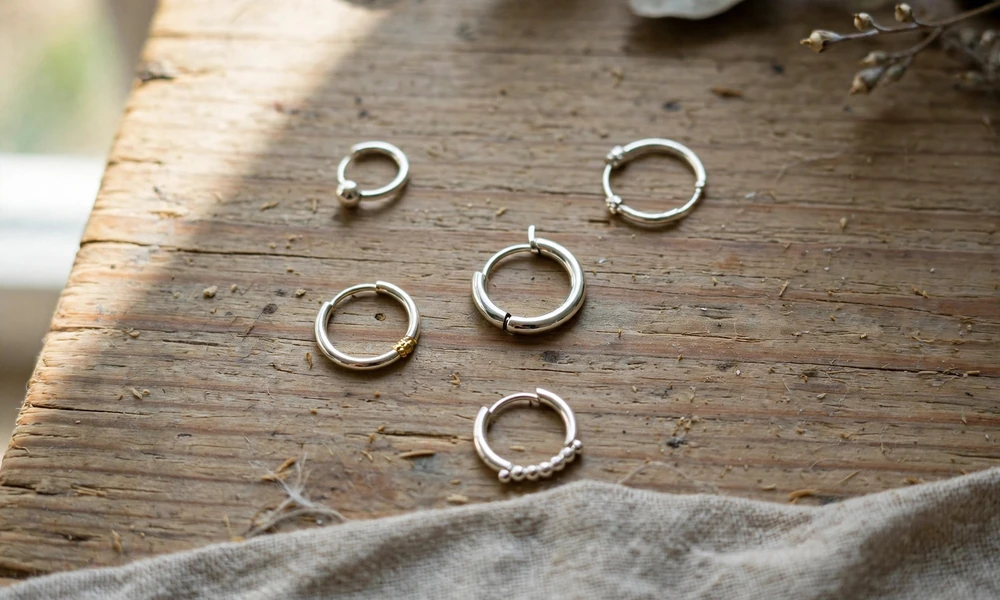
Look next at the gauge and the diameter. Most nostril piercings are 18 gauge, with 20 gauge common for a finer look, and the diameter is usually 6 to 8 millimetres for a hoop. A ring that is too tight will press into the nostril and cause soreness, while one that is too loose will swing and catch on clothing. Measure your current ring or ask your piercer before ordering, because returning a worn nose ring is rarely possible. Our guide on how to wear a nose ring covers sizing and styling in more detail, and it is worth reading before you choose between a hoop, a clicker and a stud.
Finally, look at the finish and the closure. A polished finish reflects light and looks brighter, while a brushed finish is softer and hides small scratches. A seamless closure is the neatest option for a hoop, but it needs careful handling to open and close without bending the ring out of shape. A clicker is easier to use and a good choice if you change your jewellery often. Avoid rings with sharp edges, rough joins or loose stones, because a nose ring sits close to delicate skin and any rough spot will be felt all day.
The 9 best white gold nose rings of 2027
The Classic Polished White Gold Hoop
What we like: A simple seamless hoop in solid 14-karat white gold, with a bright rhodium finish that catches the light cleanly, and a comfortable fit for a healed nostril piercing.
What to consider: The seamless closure needs a gentle twist to open, so it is not the easiest style to change daily, and the rhodium will need re-plating in time. Best for: Everyday wear and a first white gold ring. Material: Solid 14-karat white gold, rhodium plated. Price range: Mid-range. Standout feature: The bright, clean finish that suits every skin tone.
The White Gold Clicker with a Tiny Diamond
What we like: A hinged clicker in white gold with a single small diamond set at the front, giving a little sparkle that suits the cool metal perfectly.
What to consider: The diamond setting needs occasional checking, and the hinge should be cleaned gently so it keeps closing firmly. Best for: Evenings out and anyone who wants a touch of sparkle. Material: 14-karat white gold with a small diamond. Price range: Higher mid-range. Standout feature: The hinged closure, which makes it easy to put in and take out.
The Brushed White Gold Seamless Ring
What we like: A soft brushed finish that mutes the shine and gives the ring a calm, modern look, with the same solid 14-karat construction as the polished version.
What to consider: The brushed texture can pick up a shine on the edges over time, and it is harder to restore than a polish. Best for: Minimalist styling and workdays. Material: Solid 14-karat white gold, brushed finish. Price range: Mid-range. Standout feature: The soft, matte surface that hides small marks.
The White Gold Horseshoe with Ball Ends
What we like: A horseshoe shape in white gold with two small ball ends, giving a bolder, more visible look than a hoop while staying comfortable for daily wear.
What to consider: The ball ends can catch on scarves and face cloths, so it needs a little more care when dressing. Best for: A bolder everyday look. Material: 14-karat white gold with ball ends. Price range: Mid-range. Standout feature: The horseshoe shape, which frames the nostril clearly.
The White Gold Ring with a Sapphire End
What we like: A slim white gold hoop with a single small blue sapphire, which adds a cool pop of colour that suits the white metal far better than it would suit yellow or rose gold.
What to consider: Sapphires are hard and durable, but the setting should still be checked now and then, and the stone should be kept away from harsh cleaners. Best for: A touch of colour and formal occasions. Material: 14-karat white gold with a small sapphire. Price range: Higher mid-range. Standout feature: The blue stone, which contrasts beautifully with the white metal.
The Slim White Gold Nose Ring
What we like: A fine-gauge hoop in white gold that sits close to the nostril and looks delicate, ideal if you prefer jewellery that whispers rather than shouts.
What to consider: The fine wire bends more easily than a thicker ring, so it needs gentle handling when putting it in or taking it out. Best for: A subtle, barely-there look. Material: 14-karat white gold, fine gauge. Price range: Lower mid-range. Standout feature: The slim profile, which is easy to wear all day.
The White Gold and Rose Gold Two-Tone Ring
What we like: A hoop that combines white gold and rose gold in a single piece, so it bridges warm and cool jewellery and works with either tone in the rest of your collection.
What to consider: The two-tone design is busier than a single-metal ring, so it suits simpler outfits best. Best for: Anyone who mixes warm and cool jewellery. Material: 14-karat white gold and rose gold. Price range: Higher mid-range. Standout feature: The two-tone finish, which removes the need to choose one metal.
The White Gold Pavé Nose Ring
What we like: A white gold hoop with a row of tiny pavé-set diamonds along the front, giving a continuous line of sparkle that looks far more expensive than a single stone.
What to consider: Pavé settings need gentle handling and occasional professional checks, because the small stones are held by tiny prongs. Best for: Special occasions and maximum sparkle. Material: 14-karat white gold with pavé diamonds. Price range: Premium. Standout feature: The pavé row, which catches light from every angle.
The Tiny White Gold Nose Ring
What we like: A very small white gold hoop, barely larger than a stud, that sits neatly against the nostril and is comfortable enough to forget you are wearing it.
What to consider: The small size makes it fiddly to handle, and it is easy to lose if you take it out over a sink. Best for: First-time wearers and a barely-there look. Material: 14-karat white gold, small diameter. Price range: Lower mid-range. Standout feature: The tiny size, which suits small nostrils and subtle styling.
Which white gold nose ring is right for you
Start with your piercing. A healed nostril piercing in 18 gauge suits almost every ring here, while a 20-gauge piercing is better matched to the slim and tiny styles. If your piercing is still healing, wait. A fresh piercing needs implant-grade titanium or solid gold chosen with your piercer, and changing to a decorative white gold ring too early is the most common reason a piercing becomes sore or infected. The ring will still be there when the piercing is ready.
Next, think about your skin tone and your other jewellery. White gold flatters cool and neutral skin tones particularly well, and it sits comfortably alongside silver and platinum. If most of your jewellery is yellow or rose gold, the two-tone ring is a good bridge, or you may prefer rose gold outright. A matching piece in the same metal can also help a new ring feel settled, and our roundup of white gold nose cuffs is a useful place to look if you want a clip-on piece in the same cool tone.
Finally, be honest about how often you change your jewellery. If you swap rings weekly, a clicker or a horseshoe will save you frustration, because a seamless hoop needs a careful twist every time. If you put a ring in and leave it for months, a seamless hoop or a slim ring is the most comfortable choice, because there is no hinge or ball end to catch or loosen.
The caveats that matter
White gold is beautiful, but it is not a buy-it-and-forget-it metal. The rhodium coating that gives it its bright white colour wears away with friction, sweat and cleaning, usually over one to two years of daily wear. When it thins, the ring can look slightly yellow or grey. That is normal, and a jeweller can re-plate it quickly and cheaply. If you buy white gold, budget for that small, routine job rather than being surprised by it.
| Detail | What is known |
|---|---|
| Best karat for daily wear | 14 karat, balancing hardness, colour and price |
| What makes it white | White metals in the alloy, plus a rhodium coating on the surface |
| Re-plating | Every one to two years, a short and modestly priced jeweller’s job |
| For a fresh piercing | Wait until healed, or use implant-grade titanium on your piercer’s advice |
| Common gauge | 18 gauge, with 20 gauge for a finer look |
| Common diameter | 6 to 8 millimetres for a hoop, depending on your piercing |
| Who should be cautious | People with nickel sensitivity should choose a palladium-based alloy |
| What it does not do | White gold does not stay bright white forever without re-plating |
If you have a known nickel sensitivity, ask the seller whether the alloy is palladium-based before you buy. A nickel-free white gold ring costs a little more, but it is the only sensible choice if nickel has irritated your skin before.
Checklist: buying a white gold nose ring honestly
Use these checks before you buy, and again when the ring arrives.
- Check the karat and the alloy: solid 14-karat white gold, palladium-based if you are nickel-sensitive.
- Check the gauge and diameter: match them to your piercing, not to the photo.
- Check the closure: seamless, clicker or horseshoe, and choose the one you can handle comfortably.
- Check the finish: polished for brightness, brushed for a softer look that hides small marks.
- Check for rough edges: run a fingertip over the join and the setting before wearing it.
- Check the re-plating plan: know where you will get it done and what it costs before the colour fades.
Frequently asked questions
Does white gold need re-plating?
Yes, usually every one to two years for a ring worn daily. The rhodium coating wears thin with friction and cleaning, and the ring can look slightly yellow. A jeweller can re-plate it in a short visit at a modest cost.
Is white gold safe for a nose piercing?
Solid 14-karat white gold is widely considered safe for a healed piercing. For a fresh piercing, most piercers recommend implant-grade titanium until healing is complete. If you are nickel-sensitive, choose a palladium-based alloy.
What is the difference between white gold and platinum?
Platinum is a naturally white metal that does not need plating, while white gold is a gold alloy coated with rhodium. Platinum is heavier, more expensive and more durable, while white gold is lighter and cheaper but needs re-plating.
Will white gold suit my skin tone?
White gold suits cool and neutral skin tones particularly well, and it is forgiving on most complexions because it is bright without being warm. If you want a stone to stand out, white gold is often the best setting, which is why it is so popular for diamonds. Our roundup of the best diamond nose rings shows how well white gold frames a stone.
How do I clean a white gold nose ring?
Soak it briefly in warm water with a drop of mild soap, brush gently with a soft toothbrush if needed, rinse, and dry with a soft cloth. Avoid harsh jewellery dips, which can strip the rhodium coating faster.
Is 14-karat or 18-karat white gold better?
For a nose ring, 14 karat is usually the better choice. It is harder, holds its shape, and takes a rhodium coating well. 18 karat is softer and more expensive, without a clear benefit for everyday wear.
The bottom line
The best white gold nose ring in 2027 is a solid 14-karat piece in the right gauge and diameter for your piercing, with a closure you can handle and a finish you enjoy looking at. The classic polished hoop is the safest first choice, the clicker with a tiny diamond is the best option if you want sparkle, and the pavé ring is the one to save for a special occasion.
Buy the metal and the fit first, and the design second, and budget for re-plating every year or two. A well-made white gold ring in the right size will look bright and clean for years with nothing more than a gentle clean, while a plated ring in the wrong size will irritate your piercing and lose its colour within months.