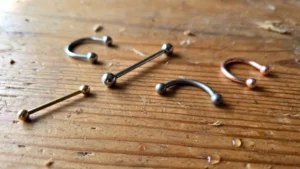
A nose screw is a small piece of jewellery with a curved or L-shaped post that twists gently into place and stays put without a back or clasp. It is a popular shape because it feels secure and looks neat, with only a tiny ball, gem, or crystal showing on the outside of the nostril. The trouble starts when the metal does not agree with your skin. A screw that looks lovely in the box can leave the skin around a piercing red, itchy, or sore within days, and that is usually a reaction to the metal, not a problem with the piercing itself.
That is where hypoallergenic nose screws come in. The word is used loosely in jewellery listings, so it helps to know what it actually means here: a screw made from a metal that rarely causes a reaction, such as implant-grade titanium, niobium, or solid gold, with no nickel in the alloy. These metals are the same ones used in medical implants and in jewellery made for people with sensitive skin, which is why they are the safest starting point if your skin reacts easily.
Below are nine hypoallergenic nose screws worth considering in 2027, from a plain titanium screw that suits almost everyone to gold and crystal-ended styles for dressier days. Each one is described by what it is good at, what to watch for, and who it suits best, so you can choose with your skin in mind. If your skin is sore, swollen, or weeping, skip the shopping and see a professional piercer or a doctor first.
Key takeaways
- Hypoallergenic nose screws are made from metals that rarely cause a reaction, most reliably implant-grade titanium, niobium, and solid gold.
- Nickel is the most common trigger for jewellery reactions, so check the alloy before you buy, not just the word hypoallergenic on the listing.
- A healed piercing is the right time to change a screw; a new piercing should keep the jewellery your piercer fitted until it is fully healed.
- Implant-grade titanium is usually the best value choice, while solid gold costs more but suits people who want a warmer, dressier finish.
- No nose screw suits every skin, and a screw that stays sore, swollen, or weeping after a few days should be checked by a professional, not swapped for another screw.
What hypoallergenic nose screws actually are
A hypoallergenic nose screw is a screw-shaped piece of jewellery made from a metal with a very low chance of irritating the skin. The most reliable choices are implant-grade titanium, which is the same grade used in medical implants, niobium, a soft grey metal that is naturally nickel-free, and solid gold in 14k or higher, where the alloy is tightly controlled. These metals are chosen because the body tolerates them well, and they are the ones professional piercers reach for when a client has a history of reactions.
The word hypoallergenic itself is not regulated in jewellery, so a listing can use it freely. Sterling silver is usually fine for many people, but its alloy can vary, so it is worth checking that the maker states it is nickel-free.
A nose screw is a good shape for sensitive skin because so little metal sits against the piercing. The curved or L-shaped post twists through the nostril once and rests gently inside, with one small end visible outside. There is no hinge to rub and no back to press on the skin.
How we chose these nose screws and what to look for
Every screw below is made from a metal with a strong record for sensitive skin: implant-grade titanium, niobium, solid gold, or nickel-free sterling silver. We looked for screws with smooth, polished ends, because a rough edge can irritate a piercing even when the metal is right, and for a sensible range of gauges and lengths, so the screw fits the piercing rather than pulling on it. Price was considered too, since a good titanium screw costs far less than a gold one and suits most people just as well.
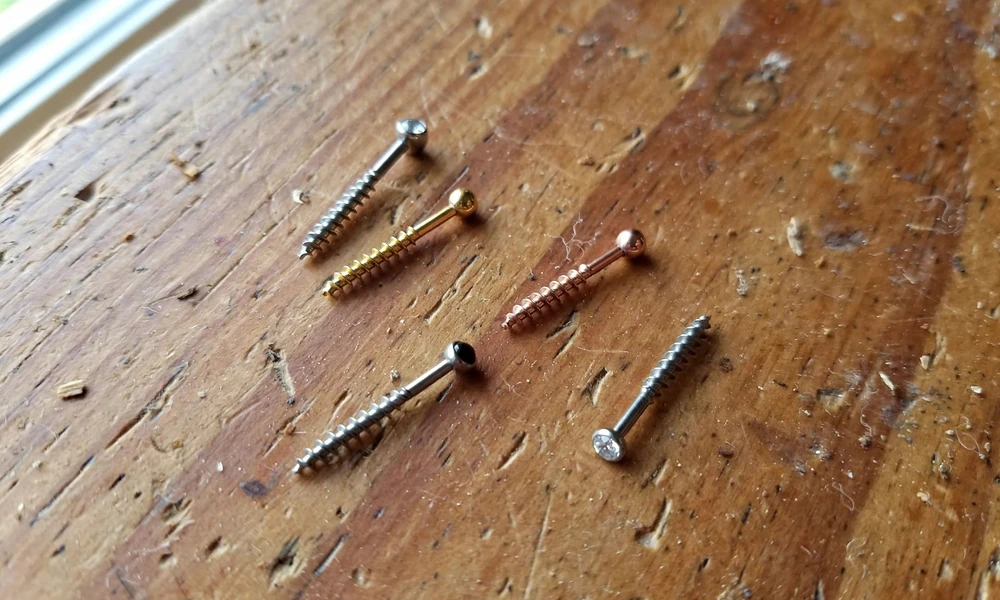
Before you buy, check three things. First, the exact metal and grade, written plainly in the listing, not just the word hypoallergenic. Second, the gauge and length, which should match what you already wear, or what your piercer fitted. Third, the shape, because an L-shaped screw is the easiest to put in and take out, while a corkscrew shape sits more snugly once it is in. The best nose screws for women cover the same shapes in a wider range of metals, if you want to compare styles before deciding on a hypoallergenic metal.
The 9 best hypoallergenic nose screws of 2027
The Classic Implant-Grade Titanium L-Shaped Screw
This is the screw to start with if your skin reacts easily. Implant-grade titanium is the metal professional piercers use most, it is naturally nickel-free, and it is light enough to forget you are wearing it.
What We Like: the safest metal choice for sensitive skin, light, easy to fit, and very affordable. What to Consider: the plain silver-grey finish is understated, so it suits everyday wear more than dressy occasions.
Best For: first-time screw wearers and anyone with a history of reactions. Material: implant-grade titanium. Price Range: under $25. Standout Feature: the smoothest, kindest metal in this list, in the easiest shape to fit.
The Slim Gold Corkscrew Screw
Solid 14k gold is one of the oldest safe choices for sensitive skin, and this slim corkscrew shows why.
What We Like: warm, classic, and made from a tightly controlled alloy, with a secure corkscrew fit. What to Consider: it costs several times more than titanium, gold is softer so it can scratch, and a corkscrew takes a little practice to fit.
Best For: anyone who wants a dressier screw in a proven safe metal. Material: solid 14k gold. Price Range: $60–$120. Standout Feature: a warm gold finish in a metal that rarely reacts.
The Tiny Diamond L-Shaped Screw
A small diamond set into the end of a titanium screw gives you sparkle without giving up the safe metal underneath. The stone is set flush, so it does not snag on clothing, and the L shape makes it simple to put in and take out.
What We Like: sparkle on a titanium post, with a secure flush setting and an easy L shape. What to Consider: the diamond needs a gentle clean now and then to keep its shine, and it is a little more visible than a plain ball.
Best For: everyday sparkle on sensitive skin. Material: implant-grade titanium with a diamond end. Price Range: $35–$60. Standout Feature: a flush-set diamond that stays put.
The Niobium Corkscrew Screw
Niobium is the quiet star of hypoallergenic jewellery. It is naturally nickel-free, slightly darker than titanium, and can be anodised into soft colours without any coating that might flake. This corkscrew keeps it simple: a polished curve, a small ball end, and nothing to irritate the skin.
What We Like: naturally nickel-free, with a soft grey tone that suits cool skin. What to Consider: fewer shops stock niobium, so sizes can sell out, the metal is softer than titanium, and a corkscrew takes practice to fit.
Best For: people who have reacted to steel and want a different safe metal. Material: niobium. Price Range: $20–$40. Standout Feature: a naturally nickel-free metal with a soft, dark finish.
The Rose Gold-Tone Titanium Screw
This screw gives you the warm rose tone many people love, on a titanium post rather than a coated base metal. The colour comes from anodising the titanium itself, so there is no plating to wear away and no hidden nickel layer underneath. The L shape keeps it easy to fit.
What We Like: a warm rose tone on a safe titanium post, with no plating to flake. What to Consider: the colour is softer than solid rose gold, and it suits warm skin tones best.
Best For: warm skin tones that want colour without a reaction. Material: anodised implant-grade titanium. Price Range: $25–$45. Standout Feature: rose colour built into the metal, not plated on.
The Black Niobium Screw
A black screw is a strong, modern choice, and this one is made from anodised niobium rather than a black coating on steel. The dark finish is part of the metal, so it will not peel, and the ball end is small enough to keep the look neat rather than heavy.
What We Like: a bold dark finish that will not flake, on a nickel-free metal. What to Consider: black suits some outfits more than others, and the dark end is more noticeable than a plain ball.
Best For: a modern, minimal look on sensitive skin. Material: anodised niobium. Price Range: $25–$45. Standout Feature: a dark finish that is part of the metal itself.
The White Gold Screw with a Crystal End
White gold has a cool, bright shine that suits many skin tones, and this screw pairs it with a small crystal end that catches the light. The crystal is set low and flush, so the screw still sits neatly against the nostril.
What We Like: a bright, cool finish with a touch of sparkle. What to Consider: white gold costs more than titanium, and the crystal needs a gentle clean to keep its shine.
Best For: cool skin tones that want a bright, dressy screw. Material: solid 14k white gold with a crystal end. Price Range: $70–$130. Standout Feature: a cool white gold shine with a low-set crystal.
The Sterling Silver Corkscrew Screw
Sterling silver has a bright, cool shine that suits almost everyone, and this screw is made from an alloy the maker states is nickel-free. The corkscrew curve sits snugly once fitted, and the ball end is polished smooth.
What We Like: a bright, classic silver finish at a fair price, with a secure fit. What to Consider: always confirm the nickel-free claim with the seller, since silver alloys vary, silver can tarnish if left unworn, and a corkscrew takes practice to fit.
Best For: anyone who loves silver and wants a verified nickel-free alloy. Material: nickel-free sterling silver. Price Range: $30–$55. Standout Feature: a bright silver shine with a stated nickel-free alloy.
The Tiny Two-Tone Screw
This screw pairs a polished titanium post with a small two-tone end, part silver and part gold-toned, so it works with both silver and gold jewellery. It is a useful piece if your other jewellery mixes metals and you want one screw that goes with everything.
What We Like: two tones in one screw, so it matches mixed-metal jewellery. What to Consider: the two-tone end is slightly larger than a plain ball, so it is a touch more visible.
Best For: mixed-metal jewellery wearers. Material: implant-grade titanium with a two-tone end. Price Range: $25–$45. Standout Feature: one screw that pairs with silver and gold alike.
Which hypoallergenic nose screw is right for you
If your skin has reacted before, start with implant-grade titanium. It is the metal with the longest record in piercing, it costs the least, and it suits almost everyone. An L-shaped screw is the calmest choice for a first fitting, while a corkscrew sits more snugly once you are used to putting it in.
If you want warmth, solid 14k gold is the classic step up, and a rose gold-tone titanium screw gives a similar look for much less. Niobium is worth trying if you have reacted to steel and want a metal that is nickel-free by nature rather than by alloy. The guide to buying a nose screw explains gauges, lengths, and L-shaped versus corkscrew shapes in detail, which is the other half of a comfortable fit. Whatever you choose, match the gauge and length to what you already wear, and give a new screw a few days before deciding whether it suits you.
The caveats that matter
Hypoallergenic does not mean reaction-proof. A small number of people react even to titanium or gold, and a screw can still irritate a piercing that is not fully healed, whatever the metal. The most common mistake is changing jewellery too soon. A nostril piercing usually needs four to six months to heal fully, and swapping a screw before then can set healing back, even with a kind metal.
Clean hands matter every time you touch a screw, and a new screw should be cleaned before it goes in. If the skin around your piercing stays red, swollen, or sore for more than a few days, or if there is discharge that looks unusual, take the screw out only on a professional’s advice and see a piercer or a doctor. Do not try to treat a bad reaction by swapping from one screw to another.
| Detail | What is known |
|---|---|
| Safest metals | Implant-grade titanium, niobium, and solid 14k gold or higher |
| Most common trigger | Nickel, often found in steel and in some plated jewellery |
| Healing time | A nostril piercing usually takes four to six months to heal fully |
| When to change a screw | Only once the piercing is fully healed, with clean hands |
| What to check first | The exact metal and grade, stated plainly by the seller |
| Word to watch for | Hypoallergenic is not a regulated term in jewellery listings |
| Signs of a reaction | Redness, itching, swelling, or soreness that does not settle |
| When to seek help | Sore or swollen skin, or unusual discharge, needs a professional |
Checklist: buying a hypoallergenic nose screw honestly
- Check the exact metal and grade in the listing, not just the word hypoallergenic.
- Match the gauge and length to the screw you already wear, or ask your piercer.
- Choose an L shape for the easiest fitting, or a corkscrew for a snugger fit once you are practised.
- Wait until the piercing is fully healed, usually four to six months, before changing a screw.
- Wash your hands and clean a new screw before it goes in.
- Give a new screw a few days, and see a professional if soreness or swelling does not settle.
Frequently asked questions
What metal is best for a hypoallergenic nose screw?
Implant-grade titanium is the usual first choice, because it is nickel-free, light, and widely used by professional piercers. Niobium and solid 14k gold are also reliable options. The key is the exact metal and grade, stated plainly by the seller.
Is surgical steel hypoallergenic?
Not always. Surgical steel often contains nickel, even though it sounds safe, and nickel is the most common cause of jewellery reactions. If your skin reacts easily, titanium or niobium is a safer choice than steel.
Can I wear a hypoallergenic nose screw in a new piercing?
Only if your piercer fits it. A new piercing should keep the jewellery your piercer chose until it is fully healed, which usually takes four to six months. Changing it early can irritate the piercing, whatever the metal.
How do I know if my skin is reacting to a nose screw?
The usual signs are redness, itching, swelling, or soreness that does not settle within a few days. A little tenderness in the first day can be normal after a change, but ongoing soreness is a sign to see a professional piercer or a doctor.
Is an L-shaped screw or a corkscrew better?
An L shape is easier to put in and take out, which makes it the better first screw. A corkscrew sits more snugly once it is in, so it suits people who are used to fitting screws and want extra security. Both shapes work in the same safe metals.
How should I clean a hypoallergenic nose screw?
Wash your hands first, then clean the screw with warm water and a mild, fragrance-free soap, and dry it fully before wearing it. Avoid harsh cleaners and alcohol, which can dull the finish and dry out the skin around the piercing. The gold versus silver nose screw comparison also covers how each metal ages with everyday wear.
The bottom line
A hypoallergenic nose screw is a simple idea done well: a secure, comfortable screw made from a metal your skin can live with. Implant-grade titanium is the best place to start for most people, niobium is a strong alternative if you have reacted to steel, and solid gold is the dressier option with a long, proven record. Check the metal grade, match your size, and give a new screw a few days to settle.
The metal matters more than the label, and a calm, healed piercing matters more than either. If your skin stays sore or swollen, no screw will fix it, and a professional piercer or doctor is the right next step. Choose kindly, wear it comfortably, and let your skin have the final say.