The best STEM toys for kids earn their place on the shelf by making hard ideas feel like play. A good set does not lecture a child about science or coding. It hands them a problem, a pile of parts and the freedom to try again.
That is the question every parent asks before buying: which toys teach something real without turning playtime into homework? The short answer is the ten below. Each one was chosen because children return to it, not because it looks clever in a catalogue.
STEM covers science, technology, engineering and maths, yet the best toys rarely announce which subject they teach. A bridge-building set is engineering and maths at once. A coding robot is logic dressed up as a game.
A crystal-growing kit is chemistry with a result a child can hold in their hand. The label matters less than the thinking it prompts.
Key takeaways
- The strongest STEM toys teach through doing, not through instructions or screens.
- Match the toy to the child, not to the age on the box.
- Open-ended sets last longer than toys with a single finished model.
- A little frustration is useful: the best toys let children fail safely and try again.
- Build, code, experiment and explore in turn.
How We Chose These Ten
We looked for toys that children choose again on their own, weeks after the novelty fades. A toy played with once and shelved has taught nothing. We also favoured sets that grow with a child, with harder builds or deeper challenges waiting inside the same box.
Safety came first throughout. We checked age guidance, small-part warnings and build quality, and we set aside anything that felt flimsy or poorly finished. We also kept the list balanced across building, coding, science and maths.
What a Good STEM Toy Feels Like
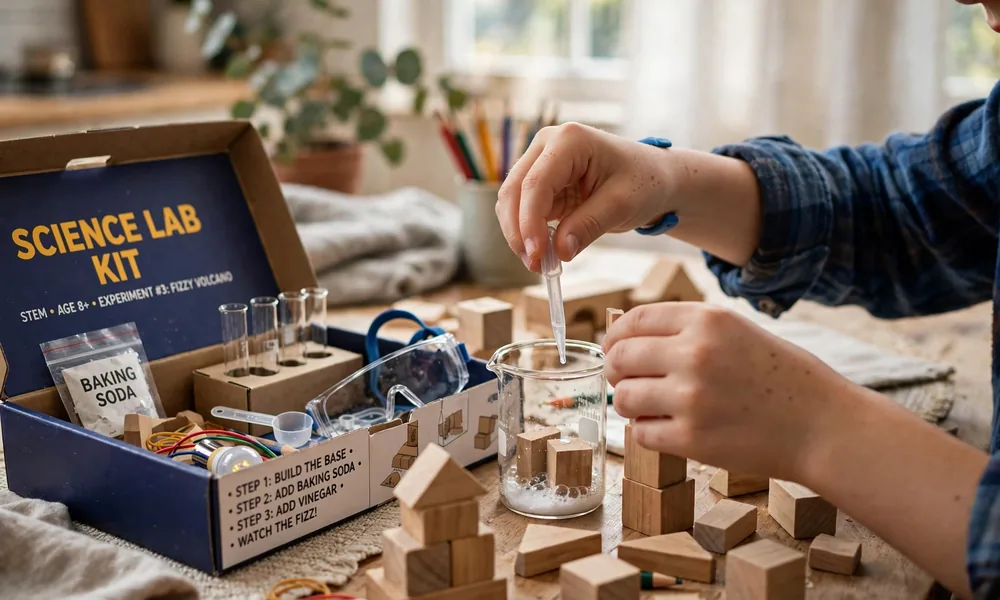
Pick up a good STEM toy and the first thing you notice is that it invites touch. Pieces fit together with a satisfying click, a robot responds when a child presses a button, and an experiment changes colour before their eyes. Nothing about it feels like a worksheet.
The second sign is conversation. Children narrate what they are doing, ask why something fell down, and argue with a sibling about the best way to fix it. That talk is the learning happening out loud.
The third sign is time. A strong toy holds a child for an hour without a screen or an adult directing every step. It offers a clear goal and several ways to reach it.
The Ten Best STEM Toys for Kids in 2027
These ten cover building, coding, science and maths for ages five to twelve. Every pick below works on its own, with no extra kit required. Start with the age and the interest, then let the child lead.
1. The Gear-Building Construction Set
Best for: ages five to eight who love taking things apart and rebuilding them.
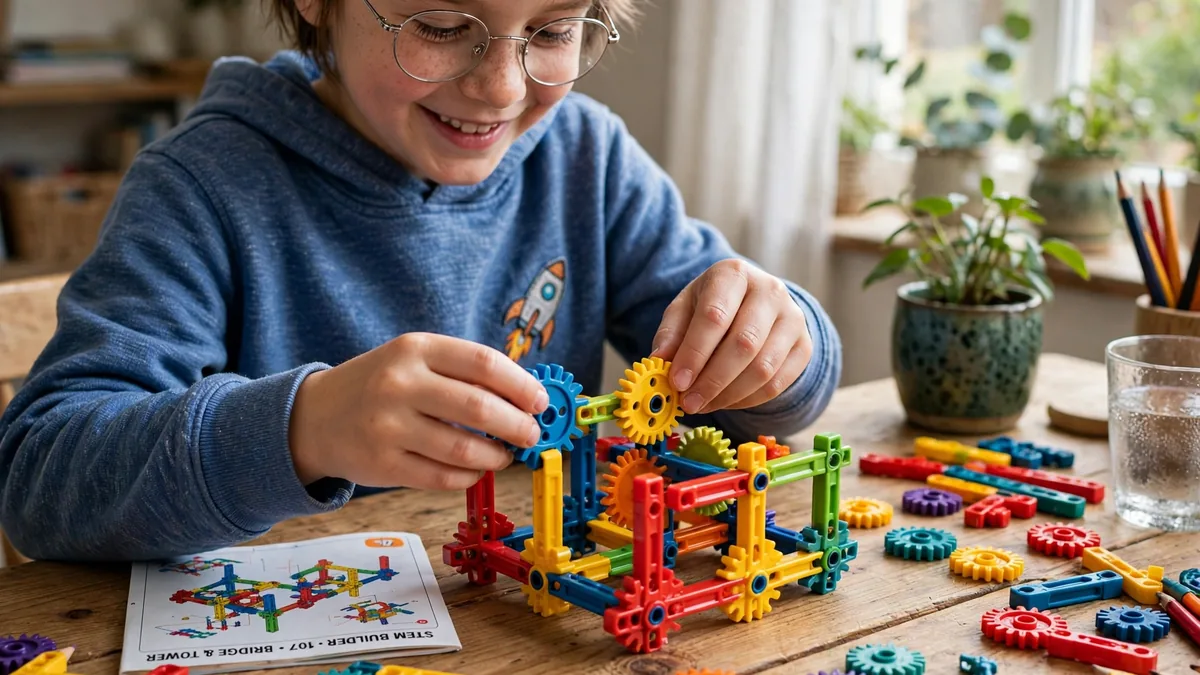
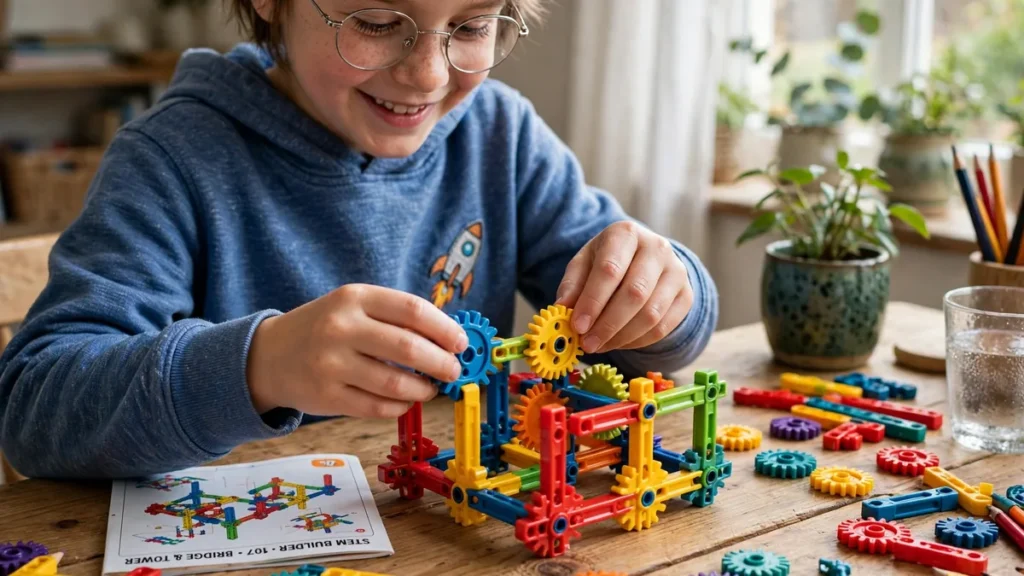
Gears, beams and connectors turn into cranes, bridges and spinning machines. Children learn how one turning cog drives another, the heart of mechanical thinking. The pieces are chunky enough for small hands and sturdy enough for daily play.
What lifts this set is cause and effect. A child changes one gear and watches the whole model behave differently. That instant feedback teaches more than any diagram.
2. The Screen-Free Coding Robot
Best for: ages five to nine who are curious about coding but not ready for a screen.
This little robot follows button-press sequences, so children program it with their hands instead of a tablet. They plan a route, press the arrows in order, and watch it roll its way there. Wrong turns become puzzles rather than failures.
Sequencing, debugging and patience all arrive disguised as a game. The robot works on a table, a rug or a maze of cushions. It is a gentle first step into coding.
3. The Crystal-Growing Science Kit
Best for: ages eight to twelve who love watching something change day by day.
Mix the solution, drop in the base, and crystals begin to form over several days. The slow reveal teaches patience in a way few toys manage, and the result is genuinely beautiful. Children check progress each morning like young scientists.
The kit also raises real questions about how crystals form and why temperature matters. Keep a notebook beside it and the experiment becomes a small research project.
4. The Magnetic Tile Building Set
Best for: ages three to eight who build big, bold structures and knock them down.
Coloured tiles snap together with magnets, so even young children can raise towers and castles in minutes. The shapes teach geometry without a single lesson. Building feels effortless, which keeps younger children playing longer.
Older children use the same tiles for harder challenges, such as bridges that span a gap. The set grows with the child, and it suits a whole family at once.
5. The Build-Your-Own Circuit Kit
Best for: ages eight to twelve who ask how things work inside.
Snap-together parts let children build working circuits with lights, buzzers and switches. A lamp that lights when a switch closes makes electricity feel concrete. The instructions guide the first builds, then children invent their own.
Safety is built in, with low-voltage parts and clear diagrams. The kit rewards careful thinking, since one loose connection stops the whole circuit. That small frustration, and the fix, is the lesson.
6. The Coding Board Game
Best for: families who want a coding toy that everyone can play together.
Players lay down command cards to guide a character through a maze, collecting stars and dodging obstacles. The game teaches sequences, loops and planning, all without a device in sight. Turns are quick, so nobody waits long.
What makes it special is the discussion it starts. Players argue about the shortest route and spot each other’s mistakes. It works as a family game first and a coding lesson second.
7. The Marble Run Engineering Set
Best for: ages six to twelve who love gravity, speed and spectacular crashes.
Tracks, funnels and spinning wheels stack into a towering run, and the marble tests every joint on its way down. Children learn about slopes and balance by watching what works. Each rebuild is a fresh experiment.
The set is gloriously open-ended, with no single right answer. Some children chase the fastest run, while others build the longest. Either way, the physics sinks in through play.
8. The Young Astronomer Telescope Kit
Best for: ages eight to twelve who stare at the night sky and ask questions.
A sturdy beginner telescope, a star map and a simple guide turn a clear evening into an expedition. The Moon’s craters appear in surprising detail. Setting it up together becomes part of the adventure.
The kit also encourages a sky diary, noting what they saw and when. That habit builds real scientific thinking.
9. The Maths Puzzle and Pattern Set
Best for: ages six to ten who enjoy puzzles, patterns and quiet concentration.
Tiles, cards and challenge booklets turn number patterns and logic puzzles into a game. Children sort and solve at their own pace, with harder cards waiting when the easy ones run out. The set suits rainy afternoons alike.
Its strength is confidence. A child who says they hate maths often changes their mind after solving a puzzle that looked impossible. The set proves numbers can be playful.
10. The Outdoor Nature Explorer Kit
Best for: ages five to twelve who would rather be outside than anywhere else.
A magnifier, specimen jars, a field guide and a notebook turn any garden or park into a laboratory. Children collect leaves, watch insects and test soil. The kit packs neatly into a small backpack.
For more fresh-air ideas, see our guide to the best outdoor toys for kids. Nature study pairs well with active play. It is science with mud on its boots.
| Toy | Ages | What it teaches | Why it stands out |
|---|---|---|---|
| Gear-Building Construction Set | 5 to 8 | Engineering and mechanics | Instant cause and effect |
| Screen-Free Coding Robot | 5 to 9 | Sequencing and logic | Codes without a screen |
| Crystal-Growing Science Kit | 8 to 12 | Chemistry and patience | A beautiful slow reveal |
| Magnetic Tile Building Set | 3 to 8 | Geometry and spatial thinking | Grows with the child |
| Build-Your-Own Circuit Kit | 8 to 12 | Electricity and circuits | Real working circuits |
| Coding Board Game | 6 and up | Logic and planning | Brilliant family play |
| Marble Run Engineering Set | 6 to 12 | Physics and gravity | Endlessly rebuildable |
| Young Astronomer Telescope Kit | 8 to 12 | Astronomy and observation | Real views of the Moon |
| Maths Puzzle and Pattern Set | 6 to 10 | Numbers and patterns | Builds quiet confidence |
| Outdoor Nature Explorer Kit | 5 to 12 | Field science | Science with muddy boots |
Choosing the Right Toy by Age
Ages three to five
Keep it chunky, colourful and simple, with big pieces and no fiddly parts. Magnetic tiles and large building sets suit this age best. For younger children, our guide to the best educational toys for 3-year-olds covers the safest first choices.
Ages five to seven
Children this age love making things that move, so gears, marble runs and simple robots shine. Look for picture instructions they can follow alone. A toy they can master without help builds confidence fast.
Ages eight to twelve
Older children want real results, such as crystals, circuits and telescope views. Give them kits with genuine depth and room to experiment. If a screen-based option suits your child, our guide to the best kids tablets explains how to choose one.
Before You Buy: A Quick Checklist
Run through this list before you pay, and the toy you choose is far more likely to be played with.
- Check the age guidance and any small-part warnings first.
- Choose open-ended play over a toy with one fixed outcome.
- Make sure the set works fully without extra purchases.
- Look for sturdy pieces that survive drops and daily use.
- Pick a toy that matches your child’s real interests, not yours.
- Check that instructions are clear enough for the child to follow.
- Leave room to grow, with harder builds or challenges inside the box.
Frequently Asked Questions
What age should children start with STEM toys?
Simple building and sorting toys suit children from age three, while coding robots and science kits work best from five upwards. The age on the box is a guide, not a rule. A keen younger child may manage a harder set with a little help.
Are screen-free STEM toys better than app-based ones?
Neither type is better in every case. Screen-free toys build hands-on thinking and patience, while good apps can teach coding in depth. Many families use both, keeping screens for coding and physical toys for building.
How do I know if a STEM toy is genuinely educational?
Watch what the child does with it after the first week. A genuinely educational toy prompts questions, experiments and repeat play. If your child explains what they built and why it works, the learning is real.
Do STEM toys help with schoolwork?
They can, though the effect is indirect and grows over time. Building toys strengthen spatial thinking, coding toys build logic, and science kits encourage observation. These habits support maths and science at school, but play should stay fun first.
What is the best first STEM toy for a five-year-old?
A magnetic tile set or a gear-building set makes an excellent first choice. Both are easy to start, hard to break and open-ended enough to last for years. Add a screen-free coding robot later if your child enjoys solving small puzzles.
The Short Version
The best STEM toy is the one your child reaches for without being asked. Start with their interests, match the challenge to their age, and choose a set that rewards trying again. Any one of the ten picks above can spark a lasting curiosity.