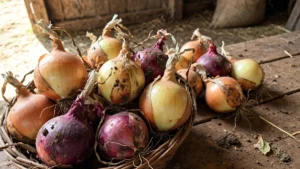
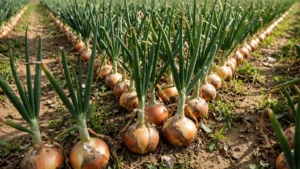
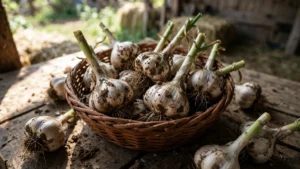
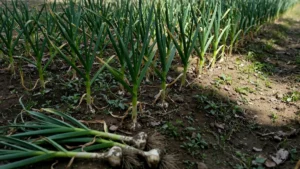
Garlic is planted in autumn and lifted in early summer, and the whole crop turns on a cold winter in between. A clove pushed into cool soil in October spends the dark months growing roots, then throws up green shoots in spring and swells into a bulb by June. The grower reads the leaves to know when to lift: three or four green leaves left standing means the wrappers are still tight, and a week too late means the bulb splits open in the ground. After lifting comes the curing, two to four weeks of drying in airy shade, and only then does the bulb keep.
A garlic farm retreat is a few nights on a working garlic farm in the lifting weeks, when the rows are at their busiest and the kitchen is cooking with the harvest. You sleep in a farmhouse room, eat cloves roasted, pickled and folded into soup, walk the rows while the bulbs are still warm from the sun, and watch the braids plaited in the barn and the scapes cut for the table. The farms run from the Californian valley that calls itself the garlic capital to a small island off the English coast, and the bulb ties them together.
Here are nine garlic farm retreats to weigh for 2027, from the cheapest Gilroy stay to the dearest Isle of Wight farm, covering hardneck and softneck bulbs, pink and purple skins, and braids that hang in the barn all winter, so the decision turns on the way you travel rather than the place on the map.
Key takeaways
- Garlic falls into two kinds: hardneck bulbs grow a curly scape and fewer, larger cloves, while softneck bulbs plait into braids and keep for months.
- The lifting window runs through early summer, and the farm names its week, not a month, so book the window before the flights.
- Freshly lifted bulbs must cure for two to four weeks in airy shade before they store, and a farm that skips the curing sells bulbs that spoil.
- Garlic farms run small, with a handful of rooms and meals shared at one table, so expect plain comfort and dust on your boots.
- Garlic carries no gluten, but the bread and pastry served beside it are usually wheat, so settle the kitchen and the calendar before you pay.
What a garlic farm retreat actually is
A garlic farm retreat means three to five nights on a working farm that grows garlic, with the lifting weeks as the reason for the trip. Guests sleep in a farmhouse room or a converted barn, eat what the farm kitchen cooks, and join the harvest, walking the rows to see the bulbs lifted by hand, the scapes snipped from hardneck stalks, and the braids plaited from softneck stems in the shade of the barn.
Garlic has been grown for thousands of years, and the great garlic places took shape around the bulbs they sold. Spain turned purple garlic into a protected crop on the La Mancha plain, France kept its pink garlic for the Tarn hills, Italy guarded white and red bulbs in the Po valley and the Apennine foothills, and California built a whole festival around a single valley’s harvest.
Days on these farms follow the bulb’s timetable rather than a hotel’s, with supper served at one shared table and honest work offered to guests who ask for it.
How we chose these stays, and what to ask first
We began with where garlic truly grows, not where it sells best. A genuine garlic farm offers rows to walk through, bulbs to stand among at lifting time, and a kitchen working with its own garlic. A farm that buys its bulbs in is not a garlic farm, whatever the website says.

The finest farms take only a handful of guests at a time, so the lifting remains honest labour instead of a performance for visitors. They also spell out in the first email what the nightly rate includes, with supper, the drive in from the nearest town and walks among the rows folded into the price rather than billed on arrival. Plain talk about cloves, curing and braiding is usually a sign the farm looks after its guests well too.
The 9 best luxury garlic farm retreats of 2027
Gilroy, California, USA — Garlic in the Santa Clara Valley
What we like: Garlic in Gilroy grows in the warm soil of the Santa Clara Valley, and the farm roasts whole bulbs for supper with olive oil and crusty bread. The valley is flat, the festival fills the town each summer, and the kitchen serves roasted bulbs, garlic soup and warm bread.
What to consider: The valley heat is strong by midday, and the festival week fills early, so the farm books its rooms well ahead.
Style: Californian valley farm stay. Best for: Travellers who want garlic where America celebrates it. Price range: $65–$95 per night. Standout feature: Whole bulbs roasted the same day they were lifted.
Las Pedroñeras, Spain — Purple Garlic on the La Mancha Plain
What we like: Purple garlic in Las Pedroñeras grows on the dry red earth of La Mancha, and the farm fries it gently for the table with eggs and potatoes. The plain is wide, the windmills stand on the horizon, and the kitchen serves garlic soup, fried cloves and warm bread.
What to consider: The plain sun is fierce at lifting time, and the farm sits far from the railway, so arrange the lift in advance.
Style: Spanish plain farm stay. Best for: Travellers who want purple garlic where Spain protects it. Price range: $100–$130 per night. Standout feature: Purple-skinned bulbs lifted from the red earth.
Lautrec, France — Pink Garlic in the Tarn Hills
What we like: Pink garlic in Lautrec grows in the rolling hills of the Tarn, and the farm folds it into soup with cream and herbs. The hills are green, the old town keeps its windmill, and the kitchen serves pink cloves with roast chicken, garlic soup and warm bread.
What to consider: The hillside lanes are narrow at lifting time, and the farm sits above the town, so the walk back is steep.
Style: French hillside farm stay. Best for: Travellers who want pink garlic the Tarn way. Price range: $135–$165 per night. Standout feature: Rose-skinned cloves from the Tarn hills.
Voghiera, Italy — White Garlic on the Po Plain
What we like: White garlic in Voghiera grows in the deep soil of the Po plain near Ferrara, and the farm serves it raw with tomatoes and olive oil. The plain is flat, the canals run beside the rows, and the kitchen serves white cloves with bruschetta, garlic soup and warm bread.
What to consider: The plain fog is thick in the early morning, and the farm books its lifting weeks early, so write well ahead.
Style: Italian plain farm stay. Best for: Travellers who want white garlic from the Po valley. Price range: $170–$200 per night. Standout feature: White bulbs with paper skins from the Po plain.
Sulmona, Italy — Red Garlic Below the Apennines
What we like: Red garlic in Sulmona grows in the valley below the Apennine peaks, and the farm braids it into strings that hang in the barn. The mountains stand close, the old town keeps its confetti makers, and the kitchen serves red cloves with pasta, garlic soup and warm bread.
What to consider: The mountain air turns cold at night, and the farm is a drive from Rome, so plan the journey before the lifting week.
Style: Italian mountain valley farm stay. Best for: Travellers who want red garlic below the Apennines. Price range: $205–$235 per night. Standout feature: Red-skinned bulbs braided into strings in the barn.
Taşköprü, Turkey — Garlic in the Kastamonu Hills
What we like: Garlic in Taşköprü grows in the high fields of the Kastamonu hills, and the farm bakes it into flatbread with butter for supper. The hills are green, the old town keeps its timber houses, and the kitchen serves baked bulbs, garlic soup and warm flatbread.
What to consider: The hill roads are rough at lifting time, and the farm sits far from Ankara, so allow a day for the journey.
Style: Turkish hill farm stay. Best for: Travellers who want garlic from the Kastamonu hills. Price range: $240–$270 per night. Standout feature: Large white bulbs baked into flatbread.
Pizhou, Jiangsu, China — Garlic on the North China Plain
What we like: Garlic in Pizhou grows on the wide North China Plain, and the farm pickles young bulbs in vinegar for the table. The plain is flat, the canals run beside the rows, and the kitchen serves pickled cloves, garlic shoots and steamed buns.
What to consider: The plain heat is heavy in early summer, and the farm sits far from the big cities, so travel in the cool of the morning.
Style: Chinese plain farm stay. Best for: Travellers who want garlic from the North China Plain. Price range: $275–$305 per night. Standout feature: Young bulbs pickled in vinegar from the plain.
Chiloé, Chile — Garlic on the Island Farms
What we like: Garlic on Chiloé grows in the damp soil of the island farms, and the farm roasts the big purple bulbs over wood for supper. The island is green, the wooden churches stand beside the fields, and the kitchen serves roasted bulbs, garlic soup and warm bread.
What to consider: The island rain is frequent at lifting time, and the farm is a ferry ride from the mainland, so keep the travel day loose.
Style: Chilean island farm stay. Best for: Travellers who want garlic from the island farms. Price range: $310–$340 per night. Standout feature: Big purple bulbs roasted over wood.
Isle of Wight, England — Garlic by the Solent
What we like: Garlic on the Isle of Wight grows in the mild soil south of the Solent, and the farm serves it with butter on fresh bread at the farm table. The island is gentle, the sea glints beyond the rows, and the kitchen serves roasted bulbs, garlic soup and warm bread.
What to consider: The farm is the dearest stay here, and the ferry crossing adds a day to the journey, so plan a year ahead.
Style: English island farm stay. Best for: Travellers who want garlic by the sea. Price range: $345–$380 per night. Standout feature: Bulbs grown on the island and served with farm butter.
Which garlic region fits your trip
If you want garlic where the bulb is treated as a feast, start with Gilroy or Las Pedroñeras, where the purple and white bulbs are lifted, cured and served the same week they were dug.
If you want scenery with your garlic, the Isle of Wight puts the rows beside the sea, Sulmona below the mountains, and Lautrec among the Tarn hills.
If you want the vegetable that grows beside the garlic, our guide to the leek farm retreats covers a fellow allium altogether, with long white shanks and winter soups instead of summer bulbs and braids, and the celery farm retreats offer crisp stalks from the dark muck soil, with salads and stocks instead of roasted cloves and flatbread.
The caveats that matter
Garlic farming answers to the weather: farms give a best guess, never a promise, and a trip pinned to one lifting day gambles on rain.
| Detail | What is known |
|---|---|
| Best time to visit | Early summer in the north for the lifting, with the southern season running the other way round |
| What the work involves | Walking the rows, watching the bulbs lifted by hand and the scapes snipped, and seeing the bulbs cured and braided in the barn |
| How long a stay runs | Three to five nights, set around the lifting weeks |
| Who should take care | Guests with a strong sensitivity to garlic, and anyone unused to fierce sun, loose soil or dusty barns |
| What the kitchen serves | Roasted bulbs with butter, garlic soup, pickled cloves and bulbs folded into pasta, with fresh bread and farm butter beside the plate |
| Gluten note | Garlic carries no gluten, but the bread and pastry served beside it are usually wheat, so ask the kitchen what it can safely serve |
| What to pack | Closed walking shoes, a broad sun hat, a warm layer for chilly nights, and clothes that wash easily by hand |
| What it does not do | No promised lifting day, no fixed menu, and no hotel-style service on a working farm |
Anyone with a strict gluten-free diet should ring the farm before booking. A single question about the kitchen and the garlic can save you a difficult stay, and a farm that answers honestly is usually worth the visit. The same caution appears in our cauliflower farm retreats, where the loaves on those tables are wheat as well.
Checklist: booking a garlic farm stay honestly
Work through this list before you pay.
- Have the farm put its lifting dates in an email, and ask what happens if the bulbs are still undersized on arrival.
- Confirm the nightly rate takes in supper, the drive in from the nearest town and the walks among the rows.
- Ask whether the lifting and braiding happen on the farm, and whether the kitchen can serve a meal without garlic.
- Ask to see the bedroom before you pay, and test the water, the mattress and the heating, since farm rooms are simple.
- Pack for sun and dusty ground: sturdy shoes, a hat, a warm layer for cold evenings, and clothes you can wash in a basin.
- Keep one day open for the closest market town, in case the lifting week moves.
Frequently asked questions
How do hardneck and softneck garlic differ?
Hardneck garlic grows a curly stalk called a scape and makes fewer, larger cloves, while softneck garlic has no scape and plaits into braids that keep for months. Hardneck suits cold winters and tastes sharper on the plate, softneck suits mild winters and stores longer, and the farms in this list grow both kinds.
When is garlic ready to lift?
Garlic is ready when three or four green leaves are still standing on the stalk and the lower leaves have turned brown. Lift one bulb and check that the wrappers are tight and the cloves are full, then lift the rest of the row, because a bulb left a week too long splits open in the ground.
What marks a fine garlic bulb?
A good bulb feels heavy for its size, with tight paper skins, firm cloves and no soft spots or green shoots. Press it gently and it should feel solid all the way round, and the skin should rustle when you peel it, because a bulb that feels light or loose has already begun to dry out inside.
May guests lift bulbs and plait braids with the growers?
Most farms let guests walk the rows, join the lifting and sit at the barn table to plait the softneck stems. Lifting is light work, so ask the farm what guests may do before you book, and expect dust on your hands either way.
Where should a first garlic farm trip begin?
Gilroy is the easiest first trip: the garlic beds are widest there, the farms are used to guests, and the roasted bulbs with olive oil best show what the vegetable can do. If you want the story as well as the plate, Las Pedroñeras is the plain town where purple garlic has been grown for generations.
Can a gluten-free traveller eat well on a garlic farm?
Mostly. The fields, the lifting and the harvest are worth the trip alone, and garlic carries no gluten, but the bread and pastry served beside it are usually wheat. Ask the farm what it can make without wheat for a gluten-free guest, and settle on the lifting week before any week the kitchen bakes bread.
The bottom line
A garlic farm retreat suits travellers who prefer summer bulbs, farm kitchens and garlic cooked the farm’s own way to a hotel. The purple bulbs come fresh and sharp, the white bulbs roast in butter, and the finest stays feed you from ground they worked themselves.
Fix the lifting week before you book anything else, and keep a free day at the end. When the garlic lifts on time you will eat bulbs dug that morning, and when it does not, the hills, the valleys and the old towns will still carry the trip.