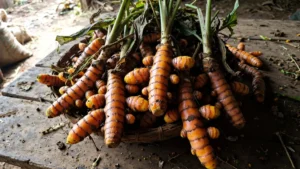
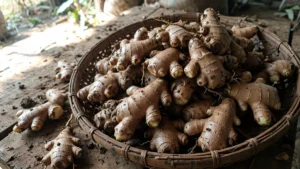
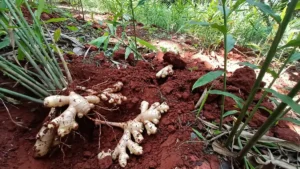
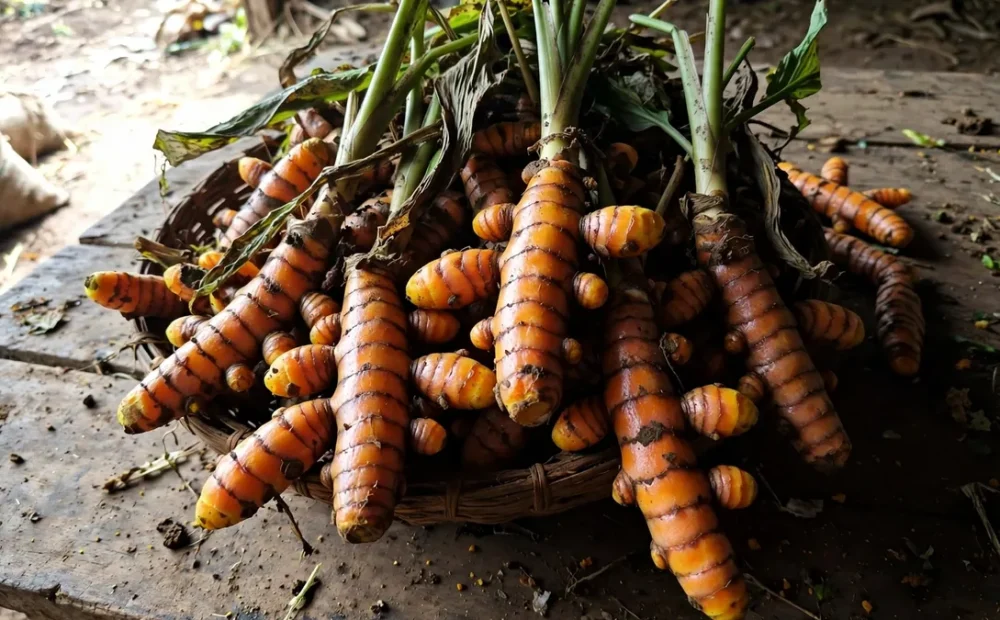
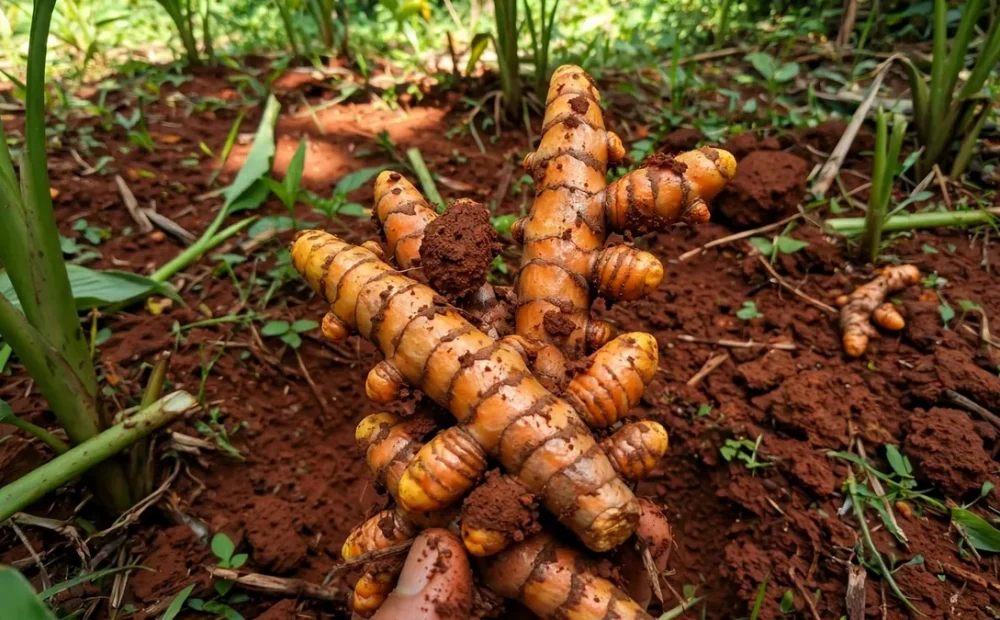
Turmeric is the gold crop a farm lifts, and the most staining. A piece of rhizome planted in warm, rich soil needs seven to ten months before it is ready, and the harvest is done by hand, forkful by forkful, so the knotted fingers come up whole. Dig too early and the turmeric is pale and thin; dig too late and the flesh turns woody, the gold dull.
A turmeric farm retreat is a few nights on a working farm in the lifting weeks, when the leaves have yellowed and the kitchen cooks what the fields gave. You sleep in a farmhouse room, drink golden milk, eat turmeric folded into curries, rice and dals, walk the beds while the leaves still stand, and watch the rhizomes lifted, washed, boiled and laid in the sun to dry. The farms stretch from the trading yards of Tamil Nadu to the wet tropics of Queensland, the gold rhizome tying them together.
Here are nine turmeric farm retreats to weigh for 2027, from the cheapest Erode stay to the dearest Cairns farm, covering fresh turmeric, dried turmeric and the high-curcumin types of the Indian hills, so the choice turns on how you travel, not where you go.
Key takeaways
- Turmeric is a rhizome, not a root: it grows sideways under the soil, and the harvest means digging it up whole with a fork.
- Fresh turmeric is juicy, mild and pale gold; dried turmeric is boiled, sun-dried and ground to powder, stronger and deeper in colour, and the two cook differently.
- The growing season lasts seven to ten months, and the farm names its lifting week, not a month, so book the week before the flights.
- Turmeric stains everything it touches — hands, cloth and chopping boards turn gold — so pack clothes you do not mind marking.
- Turmeric carries no gluten, but the bread and pastry beside it are usually wheat, so settle the kitchen and the calendar before you pay.
What a turmeric farm retreat actually is
A turmeric farm retreat means three to five nights on a working turmeric farm, with the lifting weeks as the reason for the trip. Guests sleep in a farmhouse room or a converted barn, eat what the farm kitchen cooks, and join the harvest — leaves cut back, rhizomes lifted from the warm earth, boiled in great pots, spread on mats in the sun to dry.
Turmeric has grown in warm Asia for thousands of years, and the great turmeric regions took shape around the dishes and markets they served. Tamil Nadu turned its turmeric into the trading yards of Erode, the Jaintia Hills grew a type so rich in curcumin that buyers travel for it, the tribal farms of Odisha kept their turmeric organic on forest plots, and the wet tropics of Queensland carried the crop to Australia. The crop needs heat, rain and rich soil, so the farms sit in warm lowlands and hills, where the ground stays dark and the air stays damp.
The day runs on the crop’s clock, not a hotel’s: supper lands on one long table, and anyone who asks is handed work in the beds.
How we picked these stays, and what to ask first
We began with where turmeric truly grows, not where it sells. A genuine turmeric farm offers beds to walk through, leaves to stand among at lifting time, a drying yard with rhizomes in the sun, and a kitchen working with its own crop. A farm that buys its powder in is not a turmeric farm, whatever the website says.

The best farms keep numbers small, so the lifting stays real work, not a show for visitors. A good farm spells out in its first email what the nightly rate takes in — supper, the drive in from the nearest town, walks among the beds — instead of billing them on arrival. Straight talk about rhizomes, boiling and drying usually means the farm looks after guests well too.
The 9 best luxury turmeric farm retreats of 2027
Erode, Tamil Nadu, India — Turmeric in the Turmeric City
What we like: Turmeric in Erode grows on the warm plains of Tamil Nadu, and the town is the trading heart of India’s turmeric world, with sacks of dried fingers piled in the market yards. The farm outside town grows its own crop, and the kitchen serves turmeric folded into sambar, rasam and golden milk, with rice and coconut.
What to consider: Market dust hangs in the air at lifting time, and the farm rooms are plain, so expect a fan, a hard bed and an early start.
Style: Tamil trading-town farm stay. Best for: Travellers who want turmeric where India buys and sells it. Price range: $65–$95 per night. Standout feature: Fresh rhizomes dug from the plain beds that morning.
Lakadong, Meghalaya, India — Turmeric in the Jaintia Hills
What we like: Turmeric in Lakadong grows on steep plots in the Jaintia Hills, and the local type is famed for deep gold colour and high curcumin, so buyers travel up the hills for it. The plots are small, the farmers work by hand, and the kitchen serves turmeric tea, rice, pork and greens from the hill gardens.
What to consider: Hill paths are steep at lifting time, the monsoon rain is heavy, and the drive up from Shillong is slow.
Style: Meghalaya hill farm stay. Best for: Travellers who want the richest gold turmeric India grows. Price range: $100–$130 per night. Standout feature: Lakadong rhizomes, deep gold and strong, from the hill plots.
Kandhamal, Odisha, India — Turmeric in the Kandhamal Hills
What we like: Turmeric in Kandhamal grows on forest plots worked by tribal farmers, and the crop carries a geographical tag, so its name is protected and its quality checked. The farms are organic, the plots small, and the kitchen serves dalma, rice and greens, with turmeric in every pot.
What to consider: The district is remote, the roads rough, the rooms simple, so travel light and expect an early night.
Style: Odisha forest farm stay. Best for: Travellers who want turmeric grown the old way, on small organic plots. Price range: $135–$165 per night. Standout feature: Geographical-tag turmeric from tribal forest plots.
Khagrachari, Bangladesh — Turmeric in the Chittagong Hills
What we like: Turmeric in Khagrachari grows on terraced plots in the Chittagong Hill Tracts, where families farm steep ground by hand and dry rhizomes on bamboo mats. The hills are green, the houses stand on stilts, and the kitchen serves rice, hill vegetables and fish, with fresh turmeric in the curries.
What to consider: Visitors to the Hill Tracts need permission to travel there, and the farm books early, so arrange the papers and the dates well ahead.
Style: Bangladeshi hill farm stay. Best for: Travellers who want turmeric from terraced hill plots. Price range: $170–$200 per night. Standout feature: Rhizomes dried on bamboo mats above the valley.
Nghe An, Vietnam — Turmeric in the Annamite Foothills
What we like: Turmeric in Nghe An grows in the foothills below the Annamite range, planted beside tea and cinnamon on the same slopes. The valleys are green, the rivers run fast, and the kitchen serves turmeric fish, rice and herbs, with the gold rhizome in the pan every day.
What to consider: Foothill heat is heavy at lifting time, and few at the farm speak English, so bring patience and a phrasebook.
Style: Vietnamese foothill farm stay. Best for: Travellers who want turmeric beside tea and cinnamon country. Price range: $205–$235 per night. Standout feature: Turmeric fish cooked the morning the rhizomes were lifted.
Shan State, Myanmar — Turmeric in the Shan Hills
What we like: Turmeric in Shan State grows on terraced plots in the cool hills, planted between the tea bushes and the beans. The hills are misty, the markets loud, and the kitchen serves Shan noodles, tea-leaf salad and rice, with turmeric in the broth and the pickle jars.
What to consider: Travel advice for Myanmar changes often, and the farm sits far from the main roads, so check the current guidance and use the farm’s own driver.
Style: Myanmar hill farm stay. Best for: Travellers who want turmeric from cool terraced hills. Price range: $240–$270 per night. Standout feature: Turmeric grown between the tea bushes on terraced plots.
Sabah, Malaysia — Turmeric on the Borneo Coast
What we like: Turmeric in Sabah grows on smallholdings near the Crocker Range, planted in the shade of fruit trees, the rhizomes dried in the coastal sun. The coast is warm, the forest stands close behind the beds, and the kitchen serves hinava, rice and coconut dishes, with fresh turmeric in the fish and rice.
What to consider: Coastal rain falls hard at lifting time, and the farm is a drive from Kota Kinabalu, so travel in the morning and pack for wet weather.
Style: Malaysian coastal farm stay. Best for: Travellers who want turmeric from Borneo’s smallholdings. Price range: $275–$305 per night. Standout feature: Rhizomes dried in the coastal sun below the Crocker Range.
San Jose, Costa Rica — Turmeric in the Coffee Hills
What we like: Turmeric in San Jose grows in the coffee hills around the Central Valley, planted between the coffee rows and lifted in the dry months. The hills are green, the coffee flowers smell sweet in the mornings, and the kitchen serves gallo pinto, casado and turmeric rice, with the gold rhizome in the pot.
What to consider: Afternoon rain arrives fast in the hills, and the mountain roads are narrow, so the farm’s own driver is worth the price.
Style: Costa Rican hill farm stay. Best for: Travellers who want turmeric grown beside coffee. Price range: $310–$340 per night. Standout feature: Turmeric lifted from between the coffee rows.
Cairns, Queensland, Australia — Turmeric in the Wet Tropics
What we like: Turmeric in Cairns grows on small farms at the rainforest’s edge, where the wet tropics give the crop heat, rain and rich red soil. The farms are small, the rainforest stands close to the beds, and the kitchen serves barramundi, tropical fruit and turmeric lattes, with fresh rhizomes in the curries.
What to consider: The farm is the dearest stay here, and wet-season rain falls hardest at lifting time, so plan a year ahead and pack for heat.
Style: Queensland rainforest farm stay. Best for: Travellers who want turmeric at the rainforest’s edge. Price range: $345–$380 per night. Standout feature: Fresh turmeric grated into the kitchen’s curries the same day.
Which turmeric region fits your trip
If you want turmeric where the trade happens, start with Erode or Kandhamal, where rhizomes are dug, boiled and dried the same week they are lifted. Both suit a first visit, with gentle walks and long meals at the farm table.
For scenery with your turmeric, Cairns puts the beds at the rainforest’s edge, Sabah on a warm coast, Lakadong in steep green hills.
For the crop beside the turmeric, our guide to the ginger farm retreats covers the other warm rhizome, with teas and pickles instead of golden milk and powder, and the leek farm retreats offer a stalk for the cold months, with soups and braises instead of grated turmeric and curries.
The caveats that matter
Turmeric farming answers to the weather: farms give a best guess, never a promise, and a trip pinned to one lifting day gambles on rain. The warning that counts is the rhizome itself, easy to overlook when the stay is sold as gentle countryside.
| Detail | What is known |
|---|---|
| Best time to visit | Seven to ten months after planting, when the leaves yellow and the rhizomes are ready to lift; the season shifts by region |
| What the work involves | Walking the beds, watching the leaves cut back and the rhizomes lifted with a fork, then the turmeric washed, boiled, dried and polished in the yard |
| How long a stay runs | Three to five nights, set around the lifting weeks |
| Who should take care | Guests with a strong sensitivity to turmeric, and anyone unused to fierce sun, heavy rain or steep paths |
| What the kitchen serves | Golden milk, turmeric curries, turmeric rice, fresh rhizome grated into dals, with bread and farm butter beside the plate |
| Gluten note | Turmeric carries no gluten, but the bread and pastry beside it are usually wheat, so ask the kitchen what it can safely serve |
| What to pack | Closed walking shoes, a broad sun hat, a rain layer, and clothes you do not mind turning gold |
| What it does not do | No promised lifting day, no fixed menu, and no hotel-style service on a working farm |
Anyone on a strict gluten-free diet should ring the farm before booking. One question about the kitchen and the turmeric can save you a difficult stay, and a farm that answers honestly is usually worth the visit. The same caution appears in our tomato farm retreats, where the loaves on those tables are wheat as well.
Checklist: booking a turmeric farm stay honestly
Work through this list before you pay, and again in the week before you travel.
- Get the lifting window in writing, and ask what happens if the rhizomes are still small on arrival.
- Confirm the nightly rate takes in supper, the drive in and the walks among the beds.
- Ask whether the lifting, boiling and drying happen on the farm, and whether the kitchen can serve a meal with no turmeric.
- Before you pay, see the room with your own eyes — run the taps, test the bed, try the heater — because farm rooms are plain.
- Pack for rain and gold: sturdy shoes, a hat, a rain layer, clothes you can wash in a basin.
- Keep a day free for the nearest town, so a lifting week that moves still leaves you a good trip.
Frequently asked questions
Fresh or dried — which turmeric will I actually taste?
Both, on most farms. Fresh turmeric is dug, washed and grated the same day, juicy and mild, pale gold; dried turmeric is boiled, sun-dried and ground to powder, stronger and deeper in colour. Fresh turmeric goes into the curries and the golden milk, dried turmeric into the spice jars, and farms that show you both are the ones that know their crop.
When do the farms lift their turmeric?
Turmeric is harvested seven to ten months after planting, when the leaves yellow and fall; the precise week shifts with the rain and the warmth, so ask the farm for its lifting window instead of a single date, and hold off booking flights until that window is fixed.
Is turmeric a root or a rhizome?
Turmeric is a rhizome — an underground stem that grows sideways and sends up leafy shoots — not a root. A root takes in water and food for the plant, while a rhizome stores the plant’s strength and can sprout again, so a piece of dug turmeric can be planted to grow a new crop.
Can guests help with the lifting and the drying?
Most farms let guests walk the beds, join the lifting and sit at the kitchen table, and some invite you to wash the rhizomes and spread them on the drying mats. Lifting is steady work, so ask the farm what guests may do before you book, and expect gold on your hands either way.
Which turmeric region suits a first trip?
Erode is the easiest first trip: the turmeric beds are widest there, the farms are used to guests, and the trading yards best show what the crop means. If you want hills with the plate, Lakadong is the hill town where the gold runs deepest.
Can a gluten-free guest eat well on a turmeric farm?
Mostly. The fields, the lifting and the harvest are worth the trip alone, and turmeric carries no gluten, but the bread and pastry served beside it are usually wheat. Ask the farm what it can cook without wheat for a gluten-free guest, and fix the lifting week before any week the kitchen bakes bread.
The bottom line
A turmeric farm retreat suits travellers who prefer gold rhizomes, farm kitchens and turmeric cooked the farm’s own way over a hotel. Fresh turmeric comes juicy and mild, dried turmeric grinds into curries and golden milk, and the finest stays feed you from ground they worked.
Nail down the lifting week before you book travel, and leave one spare day at the end of the trip. When the turmeric lifts on time you will eat rhizomes dug that morning; when it does not, the hills, the valleys and the old towns will still carry the trip.