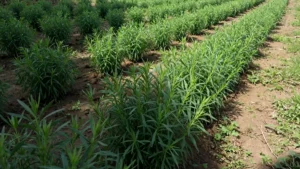
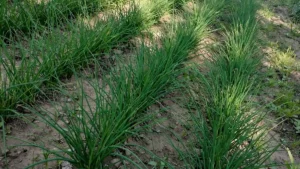
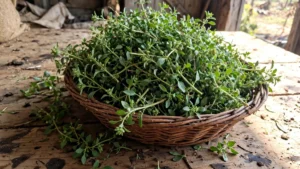
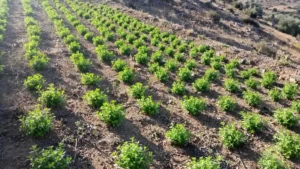
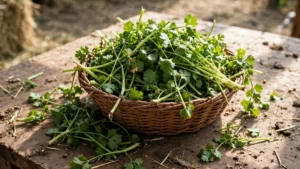
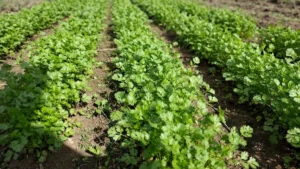
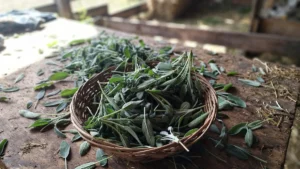
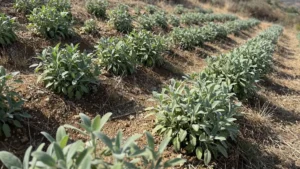
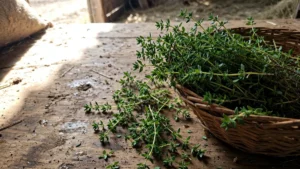
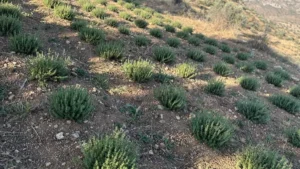
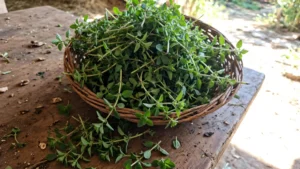
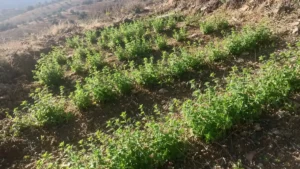
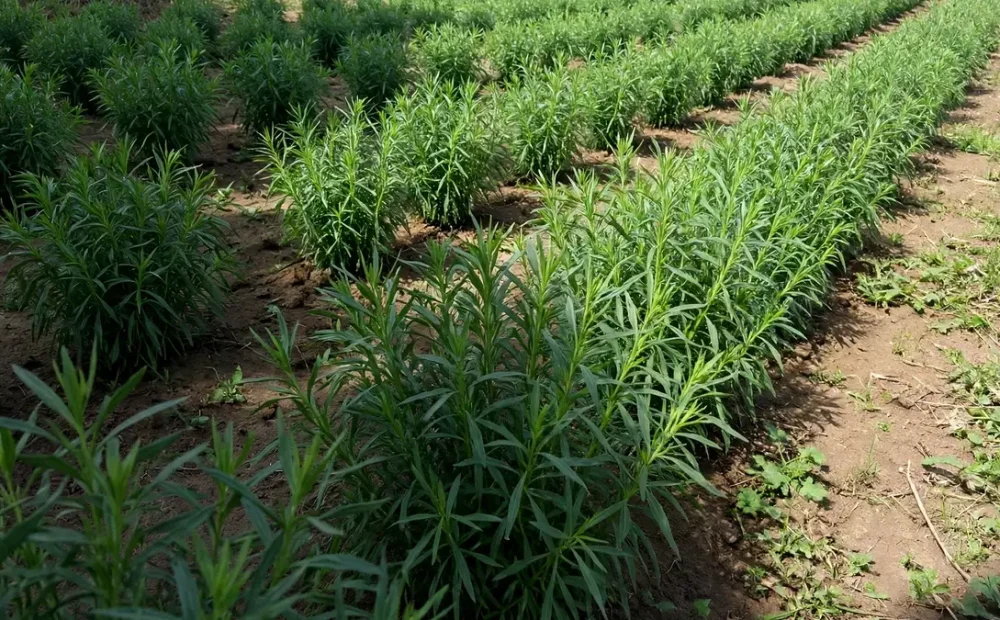
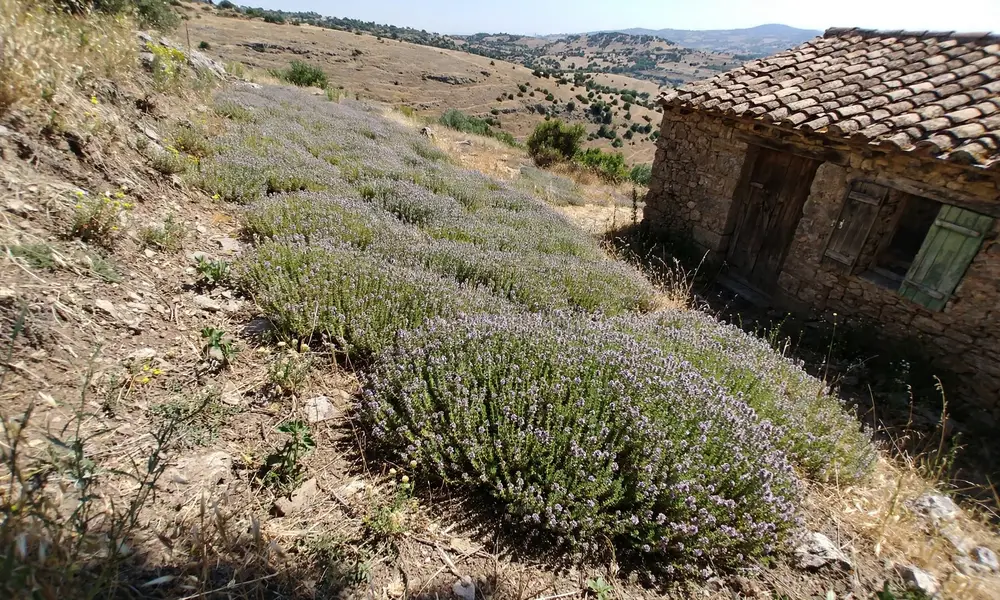
Thyme is a small plant with an outsized presence. On a dry Mediterranean hillside it grows low and tough, its tiny leaves holding a scent that carries on the wind long before you see the plants. A thyme farm retreat is built around that scent: you stay on or beside a working herb farm, walk the rows in the cool of the morning, cut sprigs with the growers, and eat food cooked with the herb you picked an hour earlier.
The best thyme farm retreats in 2027 share a few things. They are small, usually fewer than a dozen guests at a time. They grow more than one kind of thyme, so you can compare common thyme with lemon thyme side by side. And they are honest about the work: cutting is done by hand, in the morning, before the sun gets high, and guests are expected to join in rather than watch from a terrace. The nine stays below were chosen on those grounds, from a thyme honey farm on Lesbos to an island stay in the Kvarner Gulf.
Thyme rewards a traveller who arrives with a little knowledge. Common thyme, Thymus vulgaris, is the cooking herb most people know, warm and slightly earthy. Lemon thyme, Thymus citriodorus, is a different plant with a citrus note that suits fish, tea and desserts. Both grow on dry, sunny slopes in poor soil, and both are cut before flowering, when the oil in the leaves is at its strongest.
Key takeaways
- A thyme farm retreat is a small working-herb stay: morning cutting, farm cooking, and usually fewer than a dozen guests at a time.
- Common thyme is the warm cooking herb; lemon thyme is a separate plant with a citrus note, and the best farms grow both so you can compare them.
- Cut thyme before it flowers, in the morning after the dew lifts, when the oil in the leaves is strongest.
- Thyme honey is the souvenir worth buying: bees working thyme make a dark, herbal honey that keeps well and travels safely.
- No farm can promise the same cutting dates two years running, and a dry spring or a wet June can move the harvest by weeks, so book the week the farm names, not the week you guessed.
What a thyme farm retreat actually is
A thyme farm retreat is a stay on a working herb farm where thyme is the main crop. The farm grows thyme in beds or terraces, dries it in a barn or a drying room, and often keeps bees that work the thyme flowers. Guests sleep in converted farm buildings, eat meals cooked with the farm’s herbs, and spend the mornings in the rows. The afternoons are usually free for walking, swimming or a visit to a nearby village, and the evenings are built around the kitchen: thyme bread, roast vegetables with thyme, thyme tea, and on some farms a tasting of thyme honey.
It is different from a general farm stay because the herb sets the rhythm. Thyme is cut by hand with shears, bundled, and hung to dry. The cutting window is short, usually two to three weeks in late spring or early summer, and the farm plans the guest calendar around it. Outside that window the trip is still pleasant, but you will not be cutting.
Thyme is a forgiving crop for a first herb trip. Unlike basil it is frost-hardy, so a cold snap does not end the season, and unlike saffron it does not demand dawn picking of single flowers. Our guide to basil farm retreats covers the tender-herb end of the same world, and the contrast is useful: basil needs heat and shelter, thyme needs sun and poor soil.
How we picked these stays, and what to ask first
We looked for farms where thyme is the crop, not a garnish. That means at least half the herb beds are thyme, the farm dries its own harvest, and the growers can talk about varieties by name. We also looked for small groups, real farm cooking, and a clear cutting calendar. A farm that could not name its cutting week did not make the list, and neither did a farm that keeps guests behind a fence while staff do the work.
Before you book any stay on this list, ask three questions. First, which thyme varieties does the farm grow, and which one will be cut in your week? Second, how many guests stay at once, and do guests cut alongside the growers or only watch? Third, what is the cancellation rule if the cutting week moves? Prices below run from $65 to $95 a night at the low end to $345 to $380 at the top.
The 9 best luxury thyme farm retreats of 2027
Lesbos, Greece — Thyme Honey on the Aegean Shore
A small farm above the Aegean on Lesbos keeps bees on thyme-covered slopes and takes eight guests in stone rooms above the drying barn. The cutting week usually falls in late May.
What we like: The best thyme honey on this list, and a farm where the bees are part of the story, not an afterthought. What to consider: The slopes are steep, and the cutting week can shift with the spring rain. Best for: A first thyme trip with a clear purpose. Style: Stone rooms above the drying barn. Price range: $65 to $95 a night. Standout feature: Thyme honey tasted straight from the comb.
Corfu, Greece — Thyme in the Olive Groves
A family farm in the Corfu hills grows common thyme between old olive trees and takes ten guests in two whitewashed cottages. The cutting week usually falls in early June.
What we like: Gentle terrain, shade from the olives, and a kitchen that cooks with thyme at every meal. What to consider: The cottages are simple, and the island is busy in June. Best for: A relaxed first cutting trip. Style: Whitewashed cottages among the olive trees. Price range: $100 to $130 a night. Standout feature: Lemon thyme tea from leaves cut that morning.
Chalkidiki, Greece — Thyme on the Aegean Peninsula
A farm on the Chalkidiki peninsula grows thyme on dry hills above the Aegean and takes six guests in a stone house near the coast. The cutting week usually falls in mid-June.
What we like: Thyme with a beach nearby, and a farm that cooks simply. What to consider: The hills are dry and exposed, and the coast is busy in June. Best for: A thyme trip with swimming in the afternoon. Style: A stone house near the coast. Price range: $135 to $165 a night. Standout feature: Thyme cut on dry hills above the Aegean.
Drôme, France — Thyme on the Lavender Roads
A farm in the Drôme grows thyme on dry hills beside lavender fields and takes nine guests in a converted stone barn. The cutting week usually falls in late June. The farm kitchen cooks with thyme, and the drying room smells of both herbs at once.
What we like: Two harvests in one trip, and a drying room that smells of thyme and lavender together. What to consider: Late June is hot, and the barn rooms have no air conditioning. Best for: Travellers who want thyme and lavender in one stay. Style: A converted stone barn between herb fields. Price range: $170 to $200 a night. Standout feature: A drying room shared by thyme and lavender.
Ibiza, Spain — Thyme Above the White Cliffs
A hillside farm on Ibiza grows thyme on dry terraces above the sea and takes seven guests in a white finca. The cutting week usually falls in early June.
What we like: Sea air, white walls, and thyme grown on terraces with a view. What to consider: Ibiza is expensive to reach in June, and the farm is a drive from the port. Best for: A thyme trip with a sea view. Style: A white finca above the cliffs. Price range: $205 to $235 a night. Standout feature: Evening meals with thyme, rosemary and a sea view.
Gozo, Malta — Thyme on the Salt-Wind Terraces
A small farm on Gozo grows thyme on low terraces facing the sea wind and takes eight guests in limestone rooms around a courtyard. The cutting week usually falls in late May. The thyme here is low and dense from the wind, and the farm dries it in a shaded barn.
What we like: The smallest island on this list, and thyme shaped by the sea wind. What to consider: Gozo is reached by ferry, and the farm is quiet by design. Best for: A short, slow thyme break. Style: Limestone rooms around a courtyard. Price range: $240 to $270 a night. Standout feature: Thyme oil pressed from the farm’s own harvest.
Pantelleria, Italy — Thyme on the Black Rock Slopes
A farm on Pantelleria grows thyme on black volcanic rock terraces and takes six guests in a dammuso, the island’s domed stone house. The cutting week usually falls in mid-June.
What we like: The most distinctive thyme on this list, grown on volcanic rock. What to consider: Pantelleria is a flight and a ferry from the mainland, and summer is hot. Best for: Travellers who want the most unusual thyme. Style: A domed dammuso on volcanic terraces. Price range: $275 to $305 a night. Standout feature: Thyme grown on black volcanic rock, served with capers.
Capri, Italy — Thyme Beneath the Faraglioni
A terraced farm on Capri grows thyme on steep slopes below the Faraglioni rocks and takes five guests in a lemon grove villa. The cutting week usually falls in early June.
What we like: The smallest group on this list, and lemon thyme at its best. What to consider: Capri is the priciest island here, and the terraces are steep. Best for: A short luxury thyme stay. Style: A villa in a lemon grove above the sea. Price range: $310 to $340 a night. Standout feature: Lemon thyme granita from leaves cut that morning.
Kvarner, Croatia — Thyme on the Adriatic Islands
A farm on an island in the Kvarner Gulf grows thyme on dry stone terraces and takes eight guests in a restored stone farmhouse. The cutting week usually falls in late June. The thyme is cut in the morning, dried in the farmhouse attic, and cooked with lamb and sage in the evening.
What we like: Dry stone terraces, a real farmhouse, and thyme honey in small jars. What to consider: The island is reached by ferry, and the cutting week is the busiest time. Best for: A full Adriatic herb trip. Style: A restored stone farmhouse on dry terraces. Price range: $345 to $380 a night. Standout feature: Thyme honey in small jars from the farm’s own bees.
Which thyme region fits your trip
Start with the thyme you cook with. If you cook with common thyme, the Greek islands and the Drôme will feel familiar, and the cutting is straightforward. If you cook with lemon thyme, Capri and Corfu are the better fit, because both farms grow it well and use it in the kitchen every day.
Then match the terrain to your legs. The island stays on Gozo, Pantelleria and Capri are steep, while Corfu, Lesbos and the Drôme are gentler, with shade and shorter walks. If you want a sea view, Ibiza and Capri have it from the terrace table. If you want quiet, Gozo and Pantelleria are the quietest islands on the list. Our mint farm retreats cover a greener, wetter herb world, and the contrast is worth reading before you choose: mint wants water and shade, thyme wants sun and poor soil.
Finally, think about the season. Late May suits Lesbos and Gozo, when the thyme is fresh and the islands are not yet crowded. Early June suits Corfu, Ibiza and Capri. Mid to late June suits Chalkidiki, the Drôme, Pantelleria and Kvarner, when the cutting is at its peak and the drying rooms are full. A farm that cannot name its week is a farm to avoid, and a farm that names it clearly is usually the one that runs the best trip.
The caveats that matter
| Detail | What is known |
|---|---|
| Best flavour window | Just before flowering, when the leaves are full of oil and the buds are still shut |
| What flowering does | Leaves turn woody and less fragrant, and the plant puts its energy into seed |
| Frost risk | Thyme is frost-hardy, unlike basil, and survives cold winters in the ground |
| Allergy note | Thyme is in the mint family; people sensitive to mint or oregano should ask first |
| Gluten in farm kitchens | Thyme is gluten-free, but farm kitchens bake bread and cook pasta in shared spaces |
| Heat and sun | Thyme loves heat, but cutting is still a morning job; midday sun is for the drying room |
| Group size | Cutting works in small groups; ask how many guests stay at once |
| What it does not do | It does not replace a cooking course, and it does not guarantee the same dates next year |
Checklist: booking a thyme farm stay honestly
Use these checks before you book, and again before you travel.
- Check the variety: ask whether the farm grows common thyme, lemon thyme, or both, and which one is cut in your week.
- Check the cutting week: get the harvest dates in writing, and ask what happens if the weather moves them.
- Check the group size: fewer than a dozen guests means real cutting time, not a demonstration.
- Check the kitchen: ask whether meals are cooked with the farm’s own thyme, and whether gluten-free cooking is possible.
- Check the terrain: ask how steep the walk to the beds is, and whether shade is available at midday.
- Check the honey: ask whether the farm’s bees work thyme, and whether jars are sold on site.
Frequently asked questions
What sets common thyme apart from lemon thyme?
Common thyme, Thymus vulgaris, is the warm, earthy cooking herb most people know. Lemon thyme, Thymus citriodorus, is a separate plant with a clear citrus note, and it suits fish, tea and desserts.
When do the farms cut their thyme?
Usually late May to late June, depending on the island and the spring. The cutting window is two to three weeks, and it moves with the weather, so ask the farm to name its week before you book.
Do guests cut the thyme themselves?
On the farms in this list, yes. Guests cut with shears in the morning, alongside the growers, and the bundles they cut are the ones that go into the drying room.
Which thyme region suits a first visit?
Lesbos or Corfu. Lesbos has the best thyme honey and a clear purpose, and Corfu has gentle terrain, shade from the olives, and a kitchen that cooks with thyme at every meal. Both are forgiving for a first cutting trip.
Can you eat thyme raw straight from the bed?
Yes, a leaf or two is fine, and growers often hand you one to taste.
Can you eat well gluten-free on a thyme farm?
Usually yes, but ask first. Thyme itself is gluten-free, and most farm kitchens can cook gluten-free if they know in advance. The risk is shared ovens and bread baked in the same kitchen, so tell the farm before you arrive. Our rosemary farm retreats carry the same advice, and the farms there handle it the same way.
The bottom line
The best thyme farm retreat in 2027 is the one that grows the thyme you cook with, names its cutting week clearly, and keeps the group small enough that you actually cut. Lesbos is the best first trip for its honey and its purpose, Corfu is the easiest on the legs, and Pantelleria is the most distinctive thyme you will taste.
Book the week the farm names, not the week you guessed, and arrive ready to work in the morning. Cut before the sun gets high, taste the honey, and bring dried thyme home rather than fresh sprigs. That is the honest way to enjoy a thyme farm, and the dried herb will still be flavouring your cooking months after the trip is over.