A yam farm escape is a short trip into the working heart of West Africa, and it runs on a different clock from a city break. The days are set by the sun and the soil: a cool start in the ridges, a hot midday under shade, a long evening around the cooking fire. You do not need a packed itinerary. You need a farm that grows white yam properly, a room that stays cool, and a kitchen that knows what to do with the harvest.
Getting the plan right matters more than getting it done quickly. The harvest is short, the festival weeks fill early, and the farms are small, with only a handful of rooms each. A trip booked in a hurry can land you on a farm after the digging has finished, eating stored tubers and wondering what the fuss was about. A trip booked with care puts you in the ridges on the morning the new yams come out of the ground. Most farms sit within a few hours of a major city, so the journey is part of the pleasure rather than a chore, as long as you leave the driving to someone who knows the road.
The nine steps below walk through the whole plan, from choosing your month to buying yams from the farm shop on the way home. Work through them in order, and the farm handles everything after that.
Key takeaways
- White yam, Dioscorea rotundata, is a West African staple, and the main harvest runs from August to October, with new yam festivals in August and September.
- Book the harvest weeks first, then the flights. Festival season fills months ahead, and small farms have only a few rooms.
- Fly into the nearest city, rest a night there, and let the farm arrange the drive. The roads out to the ridges are rough after rain.
- Yam must always be cooked, boiled, roasted or fried, and it is not the same crop as sweet potato, which belongs to a different plant family.
- Yam itself contains no gluten, but farm kitchens also bake bread and thicken sauces with wheat, so guests who avoid gluten should warn the kitchen in writing before they pay.
What a yam farm escape actually involves
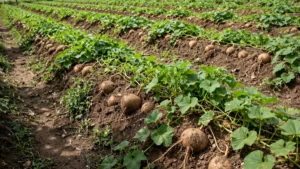
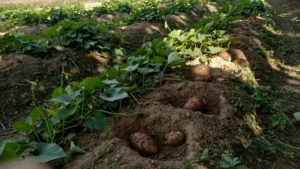
A yam farm escape is a stay of three to five nights on a working farm in the yam belt, organised around the crop. The farm plants yam on ridged mounds, stakes the vines as they climb, and digs the tubers when the season turns. Guests walk the ridges in the morning, learn to loosen a mound without cutting the tuber, and eat the harvest at the farm table the same day.
The rhythm is simple and it suits the climate. Field work happens early, before the heat builds. The middle of the day is for shade, cooking lessons and rest. The evening is for pounded yam, roasted yam and conversation. There is no schedule packed with activities, and that is the point. The work is never forced. If you would rather watch the digging from a shaded chair with a cold drink, the farm is happy with that too, and the kitchen will still feed you the same meal.
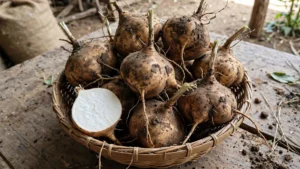
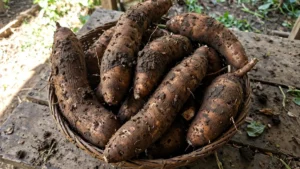
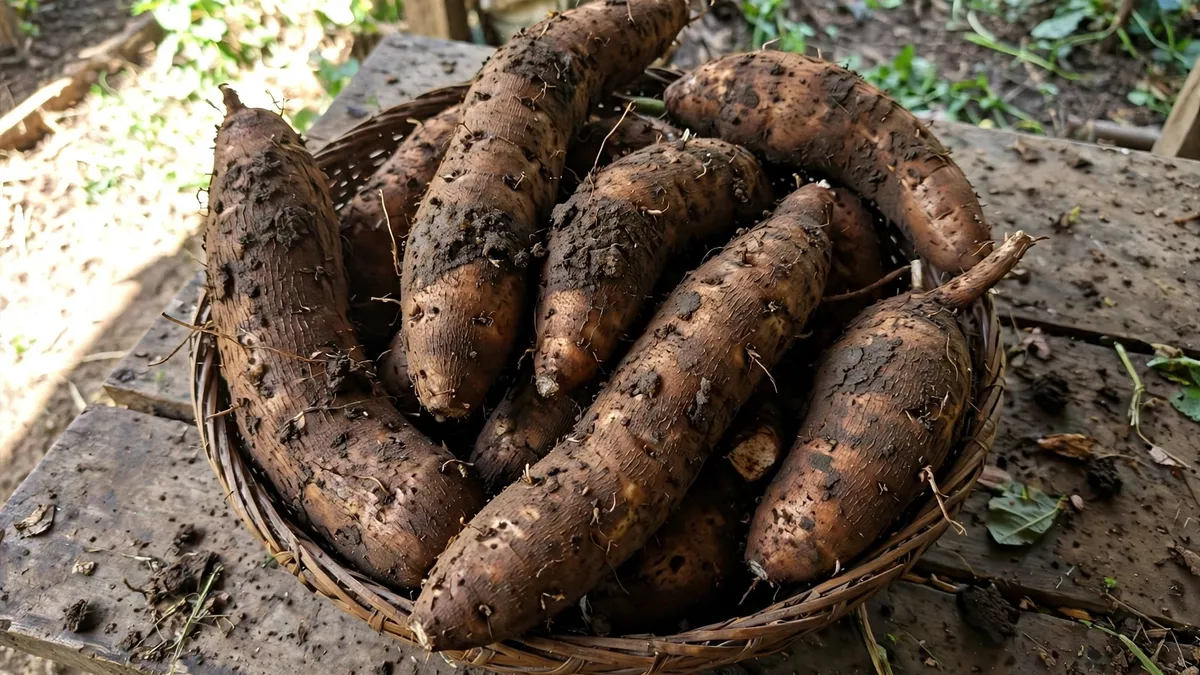
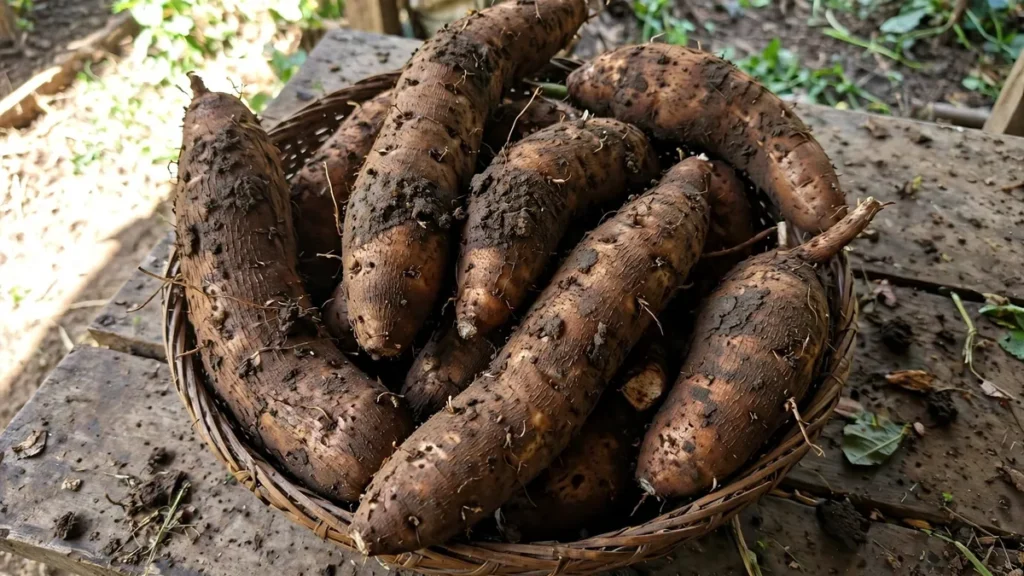
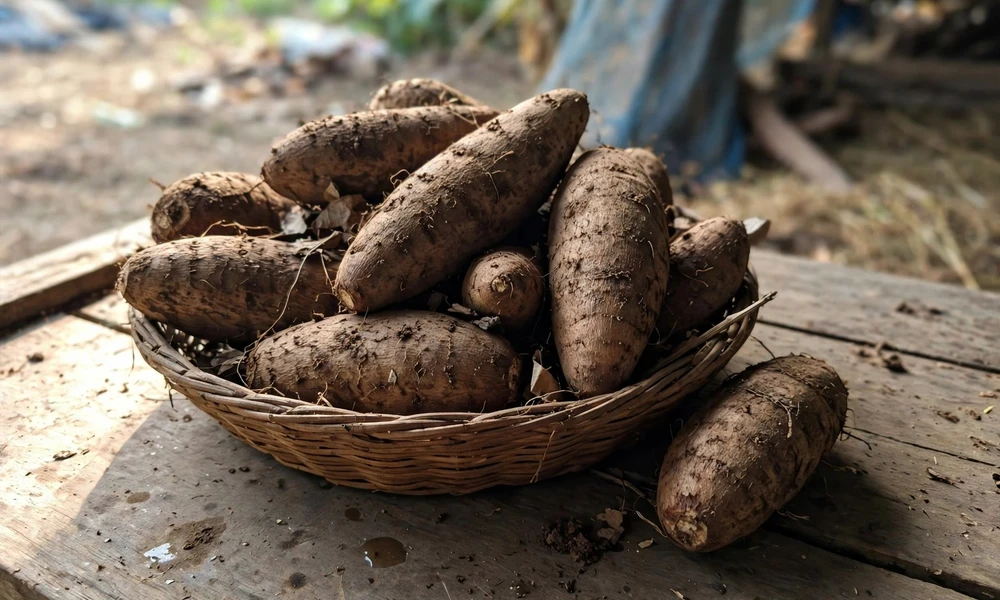
The crop itself is worth understanding before you arrive. White yam is a true yam, Dioscorea rotundata, grown on mounds in red soil under a hot sun. It is not a sweet potato, which is Ipomoea batatas from the morning glory family, and it is not taro or cassava either. Cooked, white yam is mild, earthy and smooth. Pounded, it turns stretchy and silky. It is the staple that holds West African meals together, and tasting it an hour after digging it is the reason to make the trip.
How to plan a yam farm escape, step by step
Start with the month, not the map. The harvest runs from August to October, and the festival weeks in August and September are the liveliest time to go. Once you have your dates, choose a farm in the region that suits your heat tolerance and your appetite for the road, then let the farm arrange the drive from the nearest city.
Money and messages are the two things to settle early. Most farms take cards in the nearest city but not on the farm, so carry cash for tips and farm-shop purchases. And put every important request in writing, especially about food. Our guide to planning a tucumã farm escape uses the same approach, because a written message is the only record a small farm kitchen can rely on.
The 9 steps to a yam farm escape
Pick your harvest month before you pick your farm
What to do: Choose August, September or October, and check the festival dates for the region you want before you look at rooms. What to avoid: Booking a farm first and discovering afterwards that the harvest ended two weeks earlier. Best for: Anyone whose trip is built around the digging itself. Time needed: One evening of reading and one message to the farm. Standout tip: The festival weeks in August are the busiest and the most rewarding, so decide on them first.
Fly into the nearest city and rest a night there
What to do: Fly into Lagos, Accra, Abidjan or Yaoundé, stay one night in the city, and travel to the farm the next morning. What to avoid: Landing late and driving straight to the farm in the dark on an unfamiliar road. Best for: First-time visitors to West Africa and anyone arriving on a long flight. Time needed: One extra night in the city. Standout tip: A city night also gives you a buffer if your flight is delayed.
Book the farm by message, not by a booking site
What to do: Write to the farm directly, confirm the harvest weeks, the room, the meals and the price, and get it all in one written reply. What to avoid: Trusting a listing page that has not been updated since last season. Best for: Anyone who wants a clear answer on what the farm actually serves that week. Time needed: Two or three messages over a few days. Standout tip: Ask for the name of the person who will meet you at the farm gate.
Warn the kitchen about gluten before you pay anything
What to do: Send a written message saying you cannot eat wheat, and ask whether the kitchen can cook your meals without it. What to avoid: Mentioning it for the first time at the dinner table, when the soup is already thickened with flour. Best for: Guests who avoid gluten, and anyone with an allergy the kitchen needs to know about. Time needed: One message, sent with your booking request. Standout tip: Ask specifically about soups and sauces, because that is where wheat hides.
Pack for heat, red dust and sudden rain
What to do: Pack light cotton clothes, a wide hat, sturdy closed shoes, a rain layer, and a bottle you can refill through the day. What to avoid: Bringing white clothes for the fields, or sandals for the ridges. Best for: Anyone spending mornings in the fields rather than on the veranda. Time needed: One packing evening, and a pharmacy stop for sun protection. Standout tip: Closed shoes matter more than anything else on the list, because the ridges are uneven and the soil is rough.
Learn the digging before you lift a hoe
What to do: Watch the farmer loosen the first mound, then copy the movement slowly, keeping the blade away from the tuber. What to avoid: Digging hard and fast on your first mound, which is how tubers get cut and hands get blistered. Best for: Guests who want to join the harvest rather than watch it. Time needed: Ten minutes of watching, then a morning of practice. Standout tip: The farmer judges ripeness by the vine and the soil, so ask what they are looking at before you start.
Taste yam four ways in one day
What to do: Ask the kitchen for pounded yam at lunch, roasted yam in the afternoon, fried yam as a snack, and yam porridge for supper. What to avoid: Eating only one preparation and deciding the crop is boring. Best for: Food lovers who want to understand the crop properly. Time needed: One full day at the farm table. Standout tip: The pounded yam is the test of the kitchen, so judge the farm by that bowl.
Save one morning for the town market
What to do: Go to the nearest market with the farm cook, buy peppers, fish and fruit, and watch how the yam is sold by size and by heap. What to avoid: Skipping the market and missing the part of the trip that explains the crop best. Best for: Travellers who like markets, cooking and meeting people. Time needed: One morning, leaving the farm just after breakfast. Standout tip: Bring small cash notes, because market stalls rarely have change for large ones.
Shop the farm stall before your driver arrives
What to do: Buy yams, dried peppers and any farm-made sauce from the farm shop on your last morning, and pack them carefully for the journey home. What to avoid: Leaving it to the final hour, when the shop may be closed and the driver is already waiting. Best for: Anyone who wants to cook the trip again at home. Time needed: Half an hour before your driver comes. Standout tip: Ask the farm which tubers travel best, because some bruise more easily than others.
When to go, and what the seasons feel like
August to October is the window that matters. The rains have eased, the vines are turning, and the farms are digging the new crop. August brings the new yam festivals, especially around Enugu, where the first tubers of the season are celebrated with drumming, dancing and a feast. September is calmer and still fresh, and October is the tail of the harvest, with good digging and fewer visitors. If you can only manage one week, pick the festival week nearest Enugu, because the atmosphere carries the whole trip even if the weather turns.
The dry months from November to February are a different trip. The harmattan wind brings dust from the north, the air is drier, and the farms are cooking stored yams rather than fresh ones. It is still a pleasant time to travel, and the skies are clearer, but the digging is over. The rainy months from April to July are the planting season, when the ridges are being built and the vines are climbing. It is the greenest time to see the farms, and the muddiest.
Heat is a constant, not a season. Every month in the yam belt is warm, and the midday sun is strong all year. Plan your field mornings early, rest in the shade after lunch, and drink water through the day. Our guide to planning a buriti farm escape makes the same point about heat shaping the day, and it holds here too.
The caveats that matter
Cooked white yam is a safe, long-eaten food, but the raw tuber is not something to snack on. The tubers should always be boiled, roasted or fried before eating, and the raw flesh can irritate the skin and mouth, so handle cut tubers with care and wash your hands after. Heat is the bigger practical concern on the trip itself. The midday sun in the yam belt is serious, so carry water, wear a hat, and rest in the shade after lunch.
| Detail | What is known |
|---|---|
| Best months | August to October, with new yam festivals in August and September |
| Trip length | Three to five nights on the farm, plus one night in the nearest city |
| How to book | Message the farm directly and confirm dates, meals and price in writing |
| Getting there | Fly to the nearest city, rest a night, and let the farm arrange the drive |
| How yam is eaten | Boiled, pounded, roasted or fried, always cooked, never raw |
| Heat and humidity | Hot and humid year-round; carry water and rest at midday |
| Gluten note | Yam has no gluten, but kitchens bake bread and thicken sauces with wheat |
| What it is not | Not a sweet potato, not taro, not cassava, and not eaten raw |
Money is simple on these farms. Most take cards in the nearest city but not on the farm, so carry cash for tips, market purchases and the farm shop. Health is straightforward too: check your travel advice and vaccinations with your clinician before you go, and bring the medicines you already use, because the nearest pharmacy may be an hour away.
Checklist: planning a yam farm escape honestly
Use these checks before you book, and again a week before you travel.
- Confirm the harvest weeks and the festival dates in writing before you pay anything.
- Book one night in the nearest city before the farm, and let the farm arrange the drive.
- Message the kitchen about gluten, allergies, and anything else you cannot eat.
- Pack closed shoes, a wide hat, a rain layer and a refillable water bottle.
- Ask what the price actually covers, because meals, ridge walks, cooking lessons and laundry are not always part of it.
- Carry cash for the farm, the market and the farm shop, because card machines rarely work outside the city.
Frequently asked questions
How many nights does a yam farm escape need?
Three to five nights on the farm is the right length, plus one night in the nearest city before you travel out. Shorter than three nights and you will barely settle into the rhythm. Longer than five and the heat and the routine start to wear thin for most travellers.
What travel documents should I sort out before a yam farm trip?
Check passport validity, visa requirements and recommended vaccinations for the country you are visiting, and do it at least a month before you travel. Your clinician or a travel health clinic can confirm what applies to your route, and the farm cannot advise on this.
Can I visit a yam farm outside the harvest months?
Yes, and the farms are still welcoming, but the trip is different. Outside August to October you will eat stored yams, watch the planting or the storing rather than the digging, and miss the festivals. If the harvest is the reason for the trip, go in the harvest months. The planting season in the rainy months has its own charm, with green ridges and cool mornings, but it is a farm visit, not a harvest trip.
What should I pack to wear in the ridges?
Light cotton clothes, closed shoes, and a wide hat. Long sleeves protect against the sun and the rough soil. Avoid white clothes, because the red dust stains them, and avoid sandals, because the ridges are uneven and the soil is rough underfoot.
Is the food safe for someone who avoids gluten?
Yam itself is safe, because it contains no gluten, but the kitchen is the question. Farm kitchens bake bread daily and often thicken soups with wheat, so you need a written agreement with the kitchen before you book. Tell them clearly, ask about soups and sauces, and confirm it again when you arrive.
How do I get from the airport to the farm?
Fly into the nearest city, rest a night there, and let the farm arrange a driver for the morning. The farm knows the road, the driver and the price, and that is safer than hiring a car at the airport. Confirm the pick-up time and the price in writing before you travel.
The bottom line
A yam farm escape works when the month, the farm and the kitchen all line up. Pick August, September or October, book the farm by message, rest a night in the city, and tell the kitchen about gluten before you pay. Book the digging weeks early, because the smallest farms have only a handful of rooms and the festival season fills first. The rest of the trip takes care of itself, because the farm knows its crop and its land.
Come for the digging, stay for the table, and leave with a bag of yams from the farm shop. The harvest is short and the rooms are few, so the trips that work best are the ones planned early. Our guide to planning a cupuacu farm escape follows the same rhythm in the Amazon, if you want to keep exploring farm stays after the yam belt.