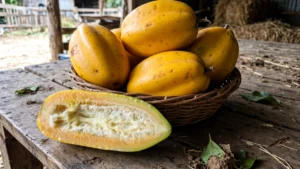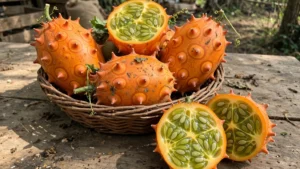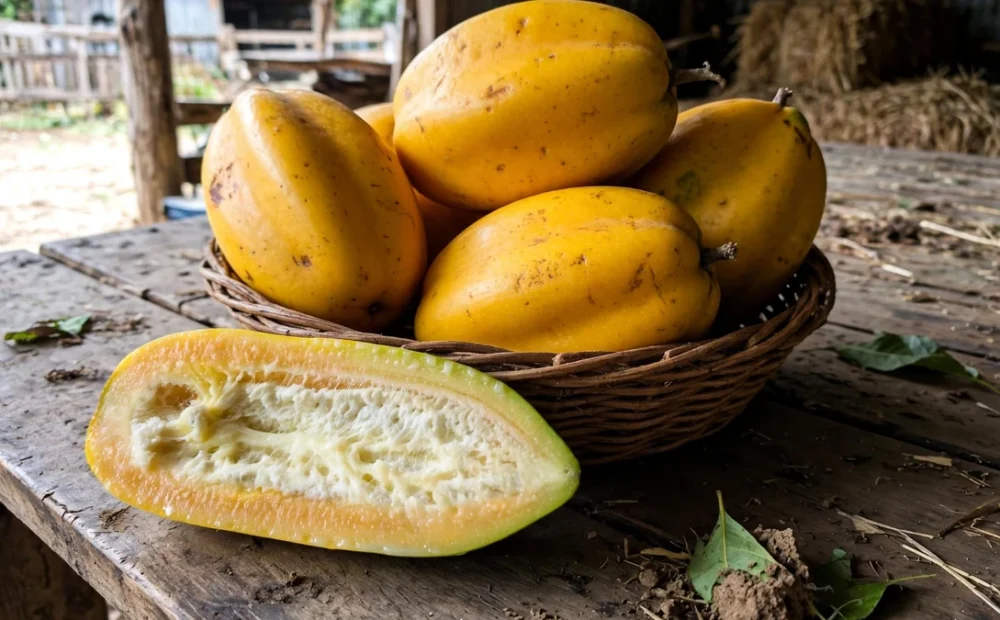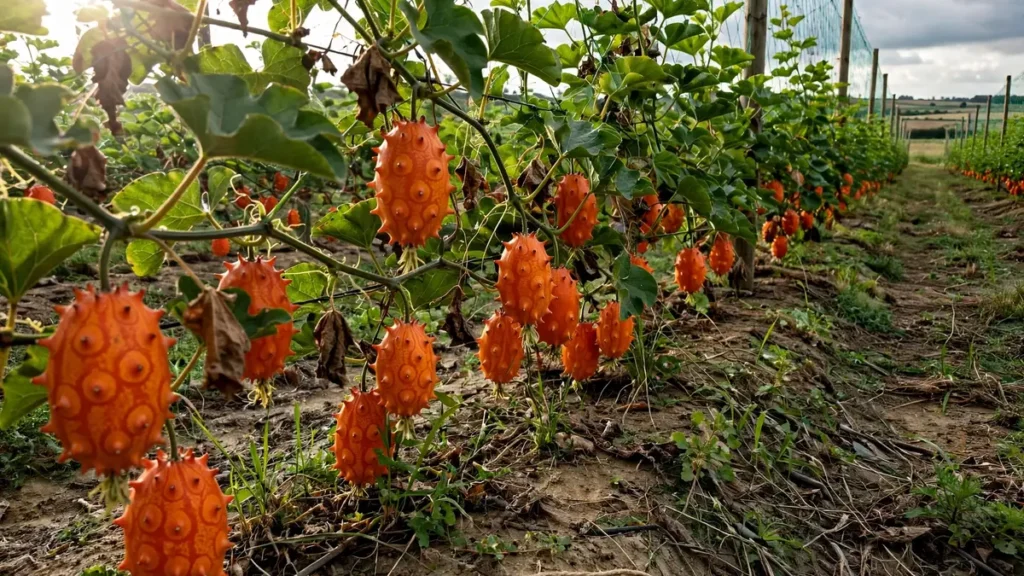
Kiwano is the fruit that stops people in a market aisle. It is orange, covered in blunt spikes, and it looks like something invented for a cartoon, so the first question is always the same: is it actually edible? It is, and the inside is the surprise. Slice it open and you find a cool, lime-green jelly studded with soft seeds, ready to be scooped out with a spoon.
The fruit comes from southern Africa, where it grows wild on the edges of the Kalahari and has been eaten for generations. In the last few decades it has travelled. Growers in New Zealand gave it the name kiwano, Australian farms followed, and Kenyan and Zimbabwean growers now raise it as a crop too. A small number of luxury farm stays let visitors walk the vine rows, pick the fruit at its orange peak, and eat it minutes later, still warm from the sun.
The nine stays below are grouped by place, from the Highveld to the Kenyan highlands to the New Zealand coast, and each entry spells out its strengths, its drawbacks, and the traveller it fits best. Prices are per night, and every stay on the list grows kiwano on the farm itself, not in a garden bed beside the car park.
Key takeaways
- Kiwano is ripe when the skin turns deep orange and the spikes soften slightly; green fruit is sour and under-ripe.
- The flesh is a lime-green jelly with soft edible seeds, scooped out with a spoon, and the flavour sits between banana, lime and cucumber.
- The best picking season runs through the warm months, roughly late summer into autumn in the southern hemisphere.
- Farm stays range from working Kalahari-edge farms to New Zealand coastal orchards, so the trip changes completely by region.
- Kiwano is in the cucumber family, so anyone with a melon or cucumber allergy should check with a clinician first, and guests who avoid gluten should confirm the kitchen before booking.
What a kiwano farm retreat actually is
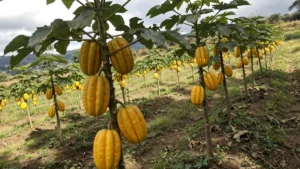
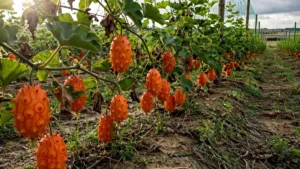
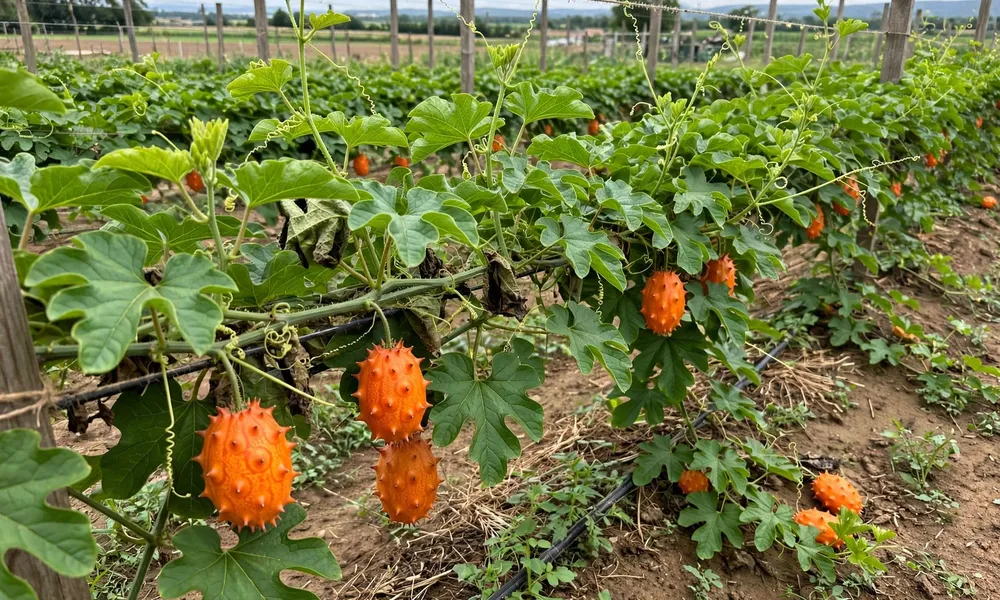
A kiwano farm retreat is a working farm with guest rooms, where the vines are the main event rather than a decoration. The plants climb trellises in long rows, and by late summer the orange fruit hangs among the leaves like lanterns. Guests stay in a lodge or farmhouse on the property, eat meals cooked from the farm’s own produce, and join the picking in the morning, when the fruit is cool and the light is soft.
A typical day starts early. The farm hands out baskets and gloves, because the spikes are blunt but not friendly, and the group walks the rows with a guide who shows how to test ripeness: deep orange skin, a slight give when pressed, and spikes that bend rather than snap. After picking, the fruit is cut open at a long table, and the jelly is eaten with a spoon, sometimes with a squeeze of lime, sometimes over ice cream. The afternoon is slower, with a swim, a walk, or a nap in a hammock, and dinner is cooked around what the farm grew that week.
What it is not is a resort that happens to grow a novelty fruit. The stays on this list earn their place because the kiwano is grown at scale, the picking is part of the stay rather than an add-on, and the hosts know the plant properly, from the first flower to the last orange fruit of the season.
How we picked these stays, and what to ask first
Three things decided the list. First, the farm must grow kiwano in real rows, not a handful of vines for show. Second, guests must be able to stay on the farm itself, in rooms that are comfortable rather than basic, with proper beds, hot water and a cooked breakfast. Third, the picking and tasting must be included in the stay, not sold as a separate tour with a separate price.
Before you book, ask three questions. When does the fruit ripen on this farm, and is the picking open to guests on your dates? How far is the farm from the nearest town, and is a car needed? And what does the kitchen do about gluten-free meals, if that matters to you? A farm that answers clearly is usually a farm that runs well. If you want a different kind of farm stay for comparison, our yacon farm retreats follow the same idea in the Andes, with tubers dug in the morning instead of fruit picked from a vine.
The 9 best luxury kiwano farm retreats of 2027
Pretoria, South Africa — Kiwano on the Highveld doorstep
What we like: The easiest arrival of any stay on this list, with kiwano rows less than an hour from the city, mountain views from the rooms, and breakfasts built around fresh fruit and farm eggs. What to consider: The Highveld sun is fierce at midday, and the city edge means traffic on the way out. Best For: First-time visitors who want kiwano without a long journey. Style: Bushveld lodge with stone walls and wide verandas. Price Range: $105–$165 per night. Standout Feature: Morning picking walks that finish at the farm table.
Pretoria is the gentle way into kiwano country, close enough to reach easily and far enough to feel like a farm.
Johannesburg, South Africa — Kiwano among the Magaliesberg hills
What we like: Dry sunny air, a proper lodge with guides on staff, and vine rows that pair picking with views across the Magaliesberg. What to consider: The journey takes a full morning from the airport, and the hills make for steep walks. Best For: Travellers who want the hills themselves, not just the fruit. Style: Hillside farmhouse with shaded courtyards. Price Range: $175–$260 per night. Standout Feature: Guided dawn walks through old kiwano rows.
Johannesburg gives the most complete kiwano stay on the list, and the most demanding walk to go with it.
Nairobi, Kenya — Kiwano on the highland edge
What we like: Cool highland air, a working farm with a proper kitchen garden, and kiwano grown alongside passion fruit and tree tomatoes. What to consider: The road from the city is slow in the rain, and the best rooms book out early. Best For: Travellers who want East Africa with their fruit. Style: Highland farmhouse with a long dining table. Price Range: $140–$215 per night. Standout Feature: A tasting table where kiwano is served three ways.
Nairobi pairs the fruit with a highland farm that feels a world away from the city below it.
Harare, Zimbabwe — Kiwano in the green highlands
What we like: Lush green hills, a small lodge with a warm welcome, and vine rows that run down to a dam where birds gather at dusk. What to consider: The farm is a long drive from the airport, and power cuts are part of life here. Best For: Slow travellers who want quiet and green. Style: Lakeside lodge with a thatched dining room. Price Range: $95–$150 per night. Standout Feature: Sunset tastings beside the dam.
Harare is the calmest stay on the list, green and unhurried, with the fruit as a bonus rather than a rush.
Auckland, New Zealand — Kiwano on the northern coast
What we like: The country that gave kiwano its name, with orchards near the coast, mild weather, and growers who have raised the fruit for decades. What to consider: The season is short, and the orchard is a drive from the city. Best For: Travellers who want the original kiwano story. Style: Coastal orchard lodge with sea views. Price Range: $190–$290 per night. Standout Feature: A grower’s tour that ends with a kiwano sorbet.
Auckland is where the name was born, and the orchards here take the fruit as seriously as anywhere on earth.
Brisbane, Australia — Kiwano in the subtropical hills
What we like: Warm subtropical air, a farm with a long growing season, and kiwano picked from February through to May. What to consider: Summer humidity is heavy, and the hills mean mosquitoes at dusk. Best For: Travellers who want a long picking window. Style: Queenslander farmhouse with wide verandas. Price Range: $130–$200 per night. Standout Feature: A picking season that stretches for months.
Brisbane offers the longest chance to catch the fruit at its best, with a warm climate that suits the vine.
Sydney, Australia — Kiwano near the Blue Mountains
What we like: Mountain air, a farm with eucalyptus all around, and kiwano rows that sit in the shadow of the Blue Mountains. What to consider: The farm is a two-hour drive from the city, and winter nights are cold. Best For: Travellers pairing a farm stay with a mountain trip. Style: Mountain lodge with a wood fire. Price Range: $160–$240 per night. Standout Feature: Kiwano tastings beside a wood fire.
Sydney is the stay for people who want mountains and fruit in the same weekend, with a fire waiting at the end of the day.
Perth, Australia — Kiwano under the western sun
What we like: Bright dry weather, a farm in the Swan Valley, and kiwano grown alongside wine grapes and citrus. What to consider: The heat is strong in summer, and the farm is best reached by car. Best For: Travellers who want sun, wine and fruit together. Style: Valley farmhouse with a vineyard next door. Price Range: $120–$185 per night. Standout Feature: A fruit-and-wine tasting on the same table.
Perth is the sunniest stay on the list, and the only one where the kiwano shares the table with a glass of local wine.
Durban, South Africa — Kiwano on the warm coast
What we like: Warm coastal air, a farm in the green hills behind the city, and kiwano that ripens early in the season. What to consider: The humidity is high, and the coast means rain in summer. Best For: Travellers who want the beach and the farm in one trip. Style: Coastal farmhouse with a pool and a view. Price Range: $110–$175 per night. Standout Feature: The earliest kiwano picking of the season.
Durban is the warmest stay on the list, and the first place in South Africa where the fruit turns orange each year.
Which kiwano region fits your trip
Southern Africa is the natural first choice, because that is where kiwano comes from. Pretoria and Durban suit short trips, with easy arrivals and early fruit, while Johannesburg and Harare suit longer stays, with bigger landscapes and slower days. The Highveld farms give you the wild origin story, and the coastal farms give you warmth and an early season.
New Zealand and Australia offer a different kind of trip. Auckland is the place for the history of the fruit, and the orchards there have been growing it longer than anywhere outside Africa. Brisbane and Perth suit travellers who want a long season and a warm climate, while Sydney suits anyone pairing the farm with a mountain weekend. If you are choosing between regions, think about the season first, then the flight, then the farm. A stay in the wrong month will give you green fruit and no picking, however good the lodge is. Our oca farm retreats in the Andes work the same way, with the harvest deciding the dates, not the calendar.
The caveats that matter
Kiwano is a friendly fruit, but it has its quirks. The spikes are blunt, not sharp, yet they can still scratch, so gloves are worth wearing on a picking morning. The seeds are soft and edible, and the jelly is best eaten fresh, because it loses its cool brightness after a day in the fridge. Anyone with a melon or cucumber allergy should be careful, because kiwano sits in the same family, and a quick check with a clinician is sensible before eating a lot of it.
| Detail | What is known |
|---|---|
| Best time to pick | Late summer into autumn in the southern hemisphere, when the skin turns deep orange |
| How to tell ripeness | Deep orange skin, a slight give when pressed, and spikes that bend rather than snap |
| How to eat it | Cut in half and scoop the jelly out with a spoon; the seeds are soft and edible |
| What it tastes like | Banana, lime and cucumber, cool and lightly tart |
| Who should be careful | Anyone with a melon or cucumber allergy; check with a clinician first |
| Picking safety | Wear gloves; the spikes are blunt but can scratch bare hands |
| Storage | Best eaten the same day; the jelly dulls after a day or two in the fridge |
| What it does not do | It does not keep well, and unripe green fruit is sour and not worth picking |
Gluten is the other thing to settle early. Farm kitchens cook from what the farm grows, which is usually good news, but bread, sauces and desserts are not always gluten-free. Raise it in your first message to the farm, and ask what the kitchen can do, rather than hoping it works out at the table.
Checklist: booking a kiwano farm stay honestly
Use these checks before you book, and again the week before you travel.
- Check the ripening dates: ask the farm when the fruit turns orange, and book inside that window.
- Check the picking: confirm that guests can pick, and whether gloves and baskets are provided.
- Check the drive: ask how far the farm is from the nearest town, and whether a car is needed.
- Check the kitchen: ask about gluten-free meals and allergies in your first message, not at the table.
- Check the room: ask for a room near the vine rows if you want the view, or away from them if you want quiet.
- Check the weather: pack sun protection and a light jacket, because farm mornings are cool and middays are strong.
Frequently asked questions
When is kiwano ripe enough to pick?
When the skin has turned deep orange all over and the spikes bend slightly when pressed. Green or yellow-green fruit is under-ripe and sour, so wait for the full orange colour, and ask the farm which weeks the fruit is at its best.
What does kiwano taste like?
Cool, lightly tart and refreshing, with a flavour that sits between banana, lime and cucumber. The jelly is the part you eat, and the soft seeds are swallowed with it, much like the seeds in a passion fruit.
How do you eat a kiwano?
Cut it in half across the middle and scoop the jelly out with a spoon. Some farms serve it with a squeeze of lime, some spoon it over ice cream or yoghurt, and some blend it into a cold drink. The skin is not eaten.
Is kiwano the same as a cucumber?
No. Kiwano is Cucumis metuliferus and cucumber is Cucumis sativus, so they share a genus but not a fruit. Cucumber is smooth, green and crisp, while kiwano is spiky, orange and filled with jelly. They are cousins, not the same plant, and they taste nothing alike.
Which kiwano farm suits a first visit?
Pretoria is the easiest first visit, with the shortest journey and the simplest picking. Durban is the warmest first visit, with the earliest fruit of the season. If you want the full story of the fruit, Auckland is the one to choose, because the growers there have raised it for decades. For a different first farm trip, our mashua farm retreats offer the same shape of escape in the Andes, with tubers dug in the morning instead of fruit picked from a vine.
What should guests who cannot eat gluten ask before they book?
Ask whether the kitchen can cook gluten-free meals for the whole stay, what the breakfast bread is made from, and whether sauces and desserts are safe. Farm kitchens are usually happy to help, but they need notice, so ask in your first message and confirm again the week before you travel.
The bottom line
Kiwano is a strange-looking fruit with a simple pleasure at its centre: a cool, green jelly eaten with a spoon, minutes after it was picked. The best stays on this list are the ones that let you do exactly that, in a place worth staying in, with hosts who know the plant properly.
Choose your region by the season, book inside the ripening window, and settle the kitchen questions early. Do that, and the fruit will do the rest, orange and spiky on the outside, cool and green on the inside.