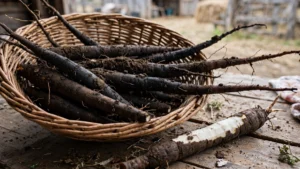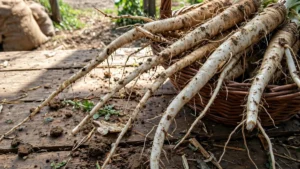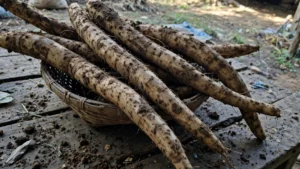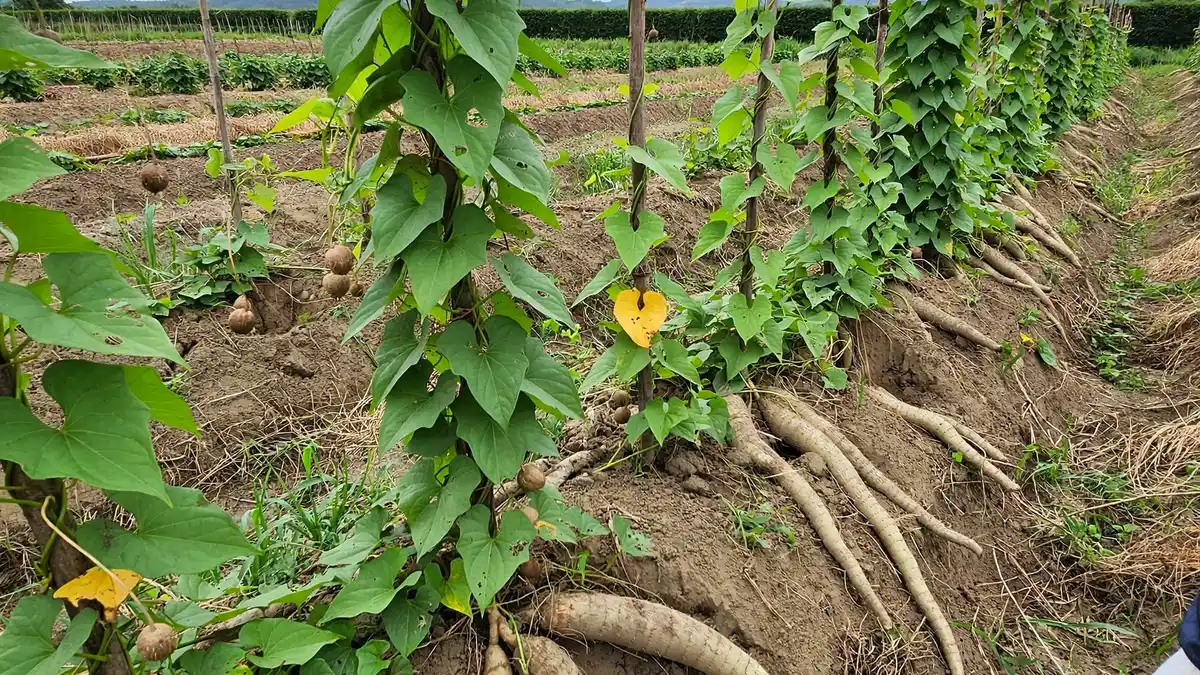
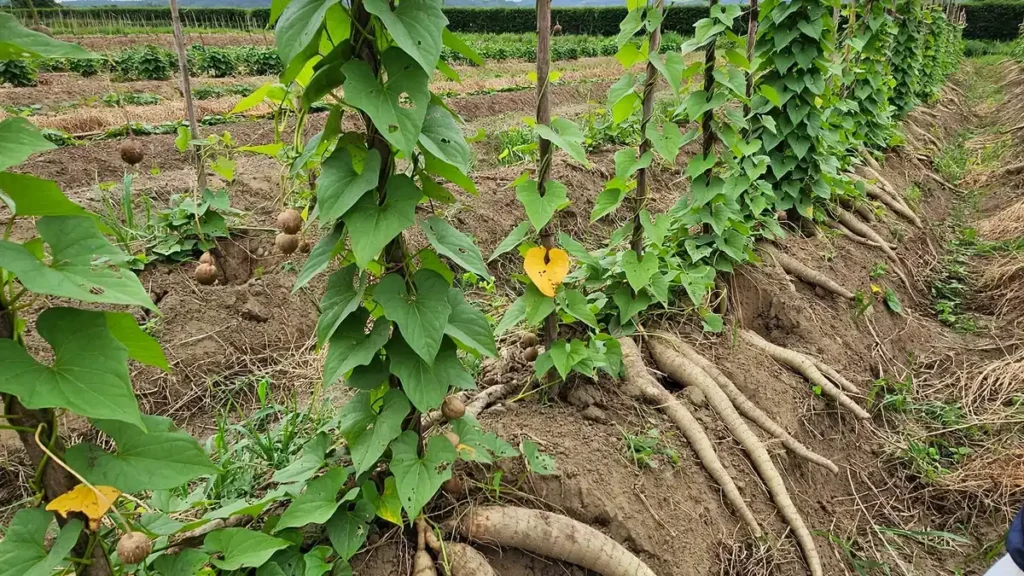
Chinese yam is the quietest tuber in the East Asian kitchen, and that is exactly why a farm stay built around it feels different. It is long, pale and slender, dug from deep sandy soil after a full season of growth, and it turns slippery and sticky the moment it is grated. In Japan it is whisked into tororo and spooned over rice. In China it goes into clear soups, steamed dishes and herbal cooking. It is not showy, it is not sweet, and it does not look like much on a plate, yet the work of growing it is slow, careful and deeply tied to the land it comes from.
A Chinese yam farm retreat puts you in the middle of that work. You walk rows of climbing vines, you learn how deep the tuber runs, you watch a farmer coax a metre-long root out of the ground without snapping it, and you eat it the same evening in dishes that taste nothing like the yam you might know from a supermarket shelf. These stays are small, seasonal and hands-on, and they suit travellers who like to learn by doing rather than by watching.
Below are nine farm retreats worth considering in 2027, from a mountain lodge in Sichuan to a coastal farm near Busan. Each one is set out by what it does well, what to keep in mind, and who it suits, so you can pick a stay that matches how you like to travel, not just where you want to go.
Key takeaways
- Chinese yam is Dioscorea polystachya, a long white tuber from East Asia, distinct from West African white yam and from purple water yam.
- The best visits fall in autumn and early winter, when the tubers are dug after a full season of growth.
- Wear gloves when peeling or handling raw yam, because the sap can itch and irritate bare skin.
- Most farms are small and family-run, so book early and confirm the harvest dates before you travel.
- The tuber itself has no gluten, but sauces, marinades and shared pans can add it, so check with the kitchen before eating.
What Chinese yam is, and why a farm stay suits it
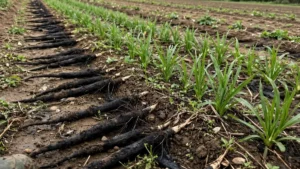
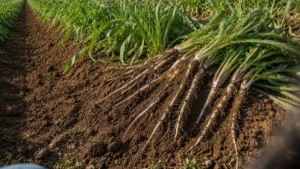
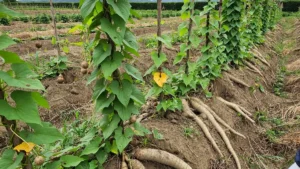
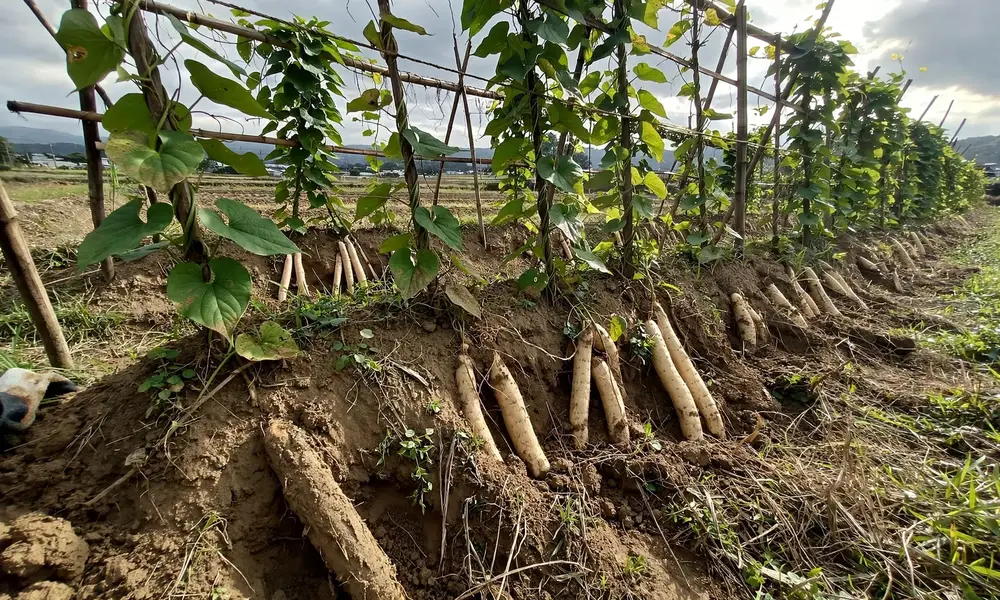
Chinese yam, known as shan yao in China and nagaimo or yamaimo in Japan, grows as a climbing vine with heart-shaped leaves. Below ground it forms a long, straight tuber that can run a metre or more into deep, loose soil. Farmers grow it in raised beds or in deep trenches lined with sand, because a straight root is easier to dig out whole than one that has bent around stones.
The flavour is mild and clean, closer to a firm potato than to a sweet yam, and the texture is what makes it memorable. Grated raw, it becomes a slippery, stretchy paste that is eaten over rice or with soba noodles. Cooked, it turns soft and almost creamy, and it thickens soups without any flour.
A farm stay works well here because the crop rewards patience and rewards people who are there at the right moment. Arrive a week early and the roots are still thin. A week too late and the ground may be too cold or too wet to dig. The farms in this guide open their doors around the harvest, and they build the stay around it: a morning in the field, a midday cooking session, and an evening meal made from what was dug that day.
How we chose these retreats
We looked for farms that grow Chinese yam as a main crop, not as a side note, and that welcome guests into the harvest rather than keeping them at a distance. Each stay below runs a real digging season, serves yam in its own kitchen, and is small enough that you meet the people who grew your dinner. We also checked that the farms are reachable by ordinary transport, that they publish clear prices, and that they answer messages before you book.
Price ranges below cover a night at the farm with meals and a harvest activity included, unless the farm states otherwise. Some stays add a cooking class or a market visit for a small fee, and a few charge separately for transfers.
Chinese yam is not the same as white yam from West Africa, which is pounded into a dough, and it is not the same as water yam, the purple tuber used for ube desserts. If you have eaten one of those, expect something different here: paler, milder, and far stickier when grated. Our guide to water yam farm retreats covers the purple yam in its own right, and it makes a good comparison if you want to taste both in one trip.
The 9 best Chinese yam farm retreats of 2027
Chengdu Valley Yam Farm, Chengdu
What we like: A working farm in a quiet valley outside Chengdu, with deep sandy beds and a long digging season. The host family cooks yam with pork ribs and dates in the evening, and guests join the digging from the first morning.
What to consider: Rooms are simple and the valley is damp in autumn, so bring layers and sturdy shoes. Best For: Hands-on travellers. Style: Family farm stay. Price Range: $70–$115 per night. Standout Feature: The longest digging season in this guide.
Chengdu Valley is the most down-to-earth stay on this list. The mornings start early, the work is real, and the food is the food the family eats. It suits people who want to get their hands dirty and do not mind simple rooms.
West Lake Yam Fields, Hangzhou
What we like: A calm farm near West Lake with neat rows of vines and a strong cooking programme. The grated yam breakfast, served over rice with pickles, is the best introduction to the crop we found.
What to consider: The farm is popular in October, so weekends book out fast. Best For: Food lovers. Style: Lakeside farm inn. Price Range: $95–$150 per night. Standout Feature: A full morning cooking class included.
West Lake suits travellers who care as much about the kitchen as the field. The digging is gentler here, the teaching is patient, and the setting is the prettiest in the guide.
Kyoto Hills Yam Retreat, Kyoto
What we like: A small hillside retreat where the yam is grown in deep trenches and served as tororo over barley rice. The host explains the grating technique step by step, and the garden is quiet and well kept.
What to consider: The retreat takes only a few guests at a time, and it closes in midwinter. Best For: Quiet seekers. Style: Hillside guesthouse. Price Range: $120–$185 per night. Standout Feature: Tororo taught by the farmer himself.
Kyoto Hills is the most refined stay here, and the most Japanese in its approach.
Osaka River Yam Farm, Osaka
What we like: A friendly farm near the river plains, with a big shared table and a lively evening meal. The yam is fried into crisp fritters, grated into soup, and steamed with mushrooms on the same night.
What to consider: Evenings are social and can run late, so light sleepers should ask for a quiet room. Best For: Sociable guests. Style: Shared-table farmhouse. Price Range: $85–$130 per night. Standout Feature: Three yam dishes in one dinner.
Osaka River is the warmest stay in the guide.
Seoul Mountain Yam Lodge, Seoul
What we like: A mountain lodge with terraced yam beds and a clear view over the valley. The lodge serves yam porridge for breakfast and runs a short walk to a local market in the afternoon.
What to consider: The lodge is a drive from central Seoul, and transfers cost extra. Best For: Mountain walkers. Style: Mountain lodge. Price Range: $110–$170 per night. Standout Feature: Terraced beds with a valley view.
Seoul Mountain suits travellers who want a farm stay and a walk in the same trip.
Busan Coast Yam Farm, Busan
What we like: A coastal farm where the yam grows in sandy soil near the sea, and the kitchen pairs it with fresh seafood. The grated yam and raw fish combination is unusual and very good.
What to consider: Sea wind can make the fields cold in late autumn, so pack a warm jacket. Best For: Seafood fans. Style: Coastal farm stay. Price Range: $90–$140 per night. Standout Feature: Yam served with the day’s catch.
Busan Coast is the only seaside stay in this guide, and the pairing of yam and seafood is its signature.
Taipei Basin Yam Retreat, Taipei
What we like: A compact retreat in the Taipei basin with raised beds and a short, well-run harvest. The farm blends yam into drinks and desserts, which is a gentle way to meet the crop for the first time.
What to consider: The season here is shorter than on the mainland, so check the dates carefully. Best For: First-timers. Style: Basin garden retreat. Price Range: $75–$120 per night. Standout Feature: Yam drinks and desserts.
Taipei Basin is the easiest first step into Chinese yam.
Hanoi Delta Yam Farm, Hanoi
What we like: A delta farm with rich soil and a long growing season, where the yam is cooked into clear soups with herbs. The host family is generous, and the market visit on the second morning is a highlight.
What to consider: The delta is hot and humid, and the fields can be muddy after rain. Best For: Market lovers. Style: Delta farmhouse. Price Range: $65–$105 per night. Standout Feature: The lowest price in this guide.
Hanoi Delta is the most affordable stay here and one of the most welcoming.
New Territories Yam Farm, Hong Kong
What we like: A small farm in the New Territories with deep beds and a serious approach to the harvest. The yam is steamed, sliced and served with ginger, and the farm runs a short course on peeling and grating safely.
What to consider: The farm is small and takes few guests, so book well ahead. Best For: Serious cooks. Style: Working farm stay. Price Range: $130–$195 per night. Standout Feature: A hands-on peeling and grating course.
Hong Kong New Territories is the most practical stay in the guide for anyone who wants to cook yam at home afterwards. You leave knowing how to peel it, grate it and store it, which is more useful than any souvenir.
What a day on a Chinese yam farm looks like
Most stays follow the same rhythm, and it is worth knowing before you go. The morning starts with the vines: you walk the rows, the farmer shows you which plants are ready, and the digging begins. The soil is loosened with a fork, the tuber is eased out by hand, and the long root is laid out to be measured and cleaned.
Midday is for the kitchen. The yam is peeled with gloves on, because the sap can make bare hands itch, and then it is grated, sliced or steamed depending on the dish. In Japan the grated yam is whisked and poured over rice. In China it is simmered in soup. In Korea it may be blended with milk and honey. The same tuber can taste quite different in each of these, which is part of the pleasure of a farm stay.
Evenings are quieter. The meal is served family-style, the farmer talks about the season, and guests compare notes on what they dug and what they liked. If you want a similar harvest experience with a different crop, our water chestnut farm retreats follow the same pattern in shallow ponds rather than deep beds, and they make a good second stop.
The caveats that matter
Chinese yam is a safe and widely eaten food, but it has a few quirks that matter on a farm stay. The sap can irritate skin, so gloves are not optional when you peel or grate it. And because the harvest is seasonal, a farm that looks open online may have no digging left by the time you arrive, so confirm the harvest dates in writing before you book.
| Detail | What is known |
|---|---|
| Scientific name | Dioscorea polystachya, also sold as Dioscorea opposita |
| What it is | A long white tuber grown in deep sandy soil in East Asia |
| Best season to visit | Autumn and early winter, when the tubers are dug |
| How it is eaten | Grated raw over rice, simmered in soup, steamed, or fried |
| Handling warning | Wear gloves; the sap can itch and irritate bare skin |
| Not the same as | White yam (Dioscorea rotundata) or purple water yam (Dioscorea alata) |
| Gluten | Naturally gluten-free; sauces and shared surfaces can carry gluten |
| Who should check first | Anyone with a yam allergy or sensitive skin should ask the farm before booking |
If you have a yam allergy, sensitive skin, or you are unsure about eating raw grated yam, tell the farm before you arrive. Most farms will cook everything for you and leave the raw dishes out of your bowl, as long as they hear about it beforehand.
Checklist: choosing a Chinese yam farm retreat honestly
Use these checks before you book, and again when the farm confirms your stay.
- Confirm the harvest dates in writing: ask which weeks the farm is actually digging.
- Ask about gloves and tools: check whether the farm supplies them or you should bring your own.
- Check what is included: meals, digging, cooking class, and transfers are not always in the same price.
- Send allergy and gluten details ahead of time, rather than mentioning them at dinner.
- Pack for mud and cool mornings: sturdy shoes, layers, and a warm jacket for late autumn.
- Book the nights around the harvest, not the other way round, so the digging is the centre of the trip.
Frequently asked questions
When is the best time to visit a Chinese yam farm?
Autumn and early winter, usually from October to December, when the tubers have had a full season to grow and the farms are digging. Spring visits are green and pleasant, but there is little or no harvest to join.
Is Chinese yam the same as the yam sold in Western supermarkets?
No. The yam in most Western supermarkets is usually a sweet potato, and true white yam from West Africa is a different species again. Chinese yam is Dioscorea polystachya, a long white tuber with a mild flavour and a sticky texture when grated.
Can I eat Chinese yam raw?
Yes, grated raw it is a normal dish in Japan and Korea, where it is served over rice or noodles. Some people find the slippery texture strange at first, so try a small amount. If you prefer, every farm in this guide will cook it for you.
Why do I need gloves to handle Chinese yam?
The sap contains compounds that can make bare skin itch, and some people react more strongly than others. Gloves keep the sap off your hands while you peel and grate, and the farms in this guide supply them.
How long should I stay at a yam farm?
Two or three nights suits most travellers. One night gives you a single digging session, while two or three let you dig, cook, and visit a market without rushing. Longer stays suit travellers who want to learn the cooking properly.
Is Chinese yam gluten-free?
The tuber itself is naturally gluten-free. The risk comes from sauces, marinades and shared cooking surfaces, so tell the farm about gluten needs before you arrive. A similar caution applies on other harvest stays, including our bamboo shoot farm retreats, where sauces are the main gluten risk too.
The bottom line
Chinese yam is a modest crop that rewards a slow visit. The best stays in this guide are the ones where the digging is real, the cooking is taught properly, and the farm is small enough that you meet the people who grew your dinner. Kyoto Hills and Hong Kong New Territories are the strongest picks for cooks, while Chengdu Valley and Hanoi Delta are the best value for travellers who want the work itself.
Pick your dates around the harvest, tell the farm about allergies and gluten needs before you arrive, and wear the gloves. Do that, and a Chinese yam farm stay is one of the most satisfying food trips in East Asia: quiet, hands-on, and full of a flavour you will not find anywhere else.