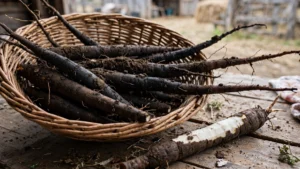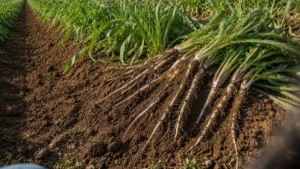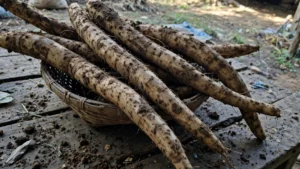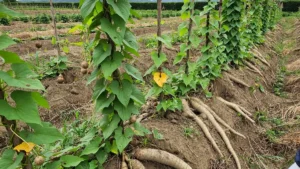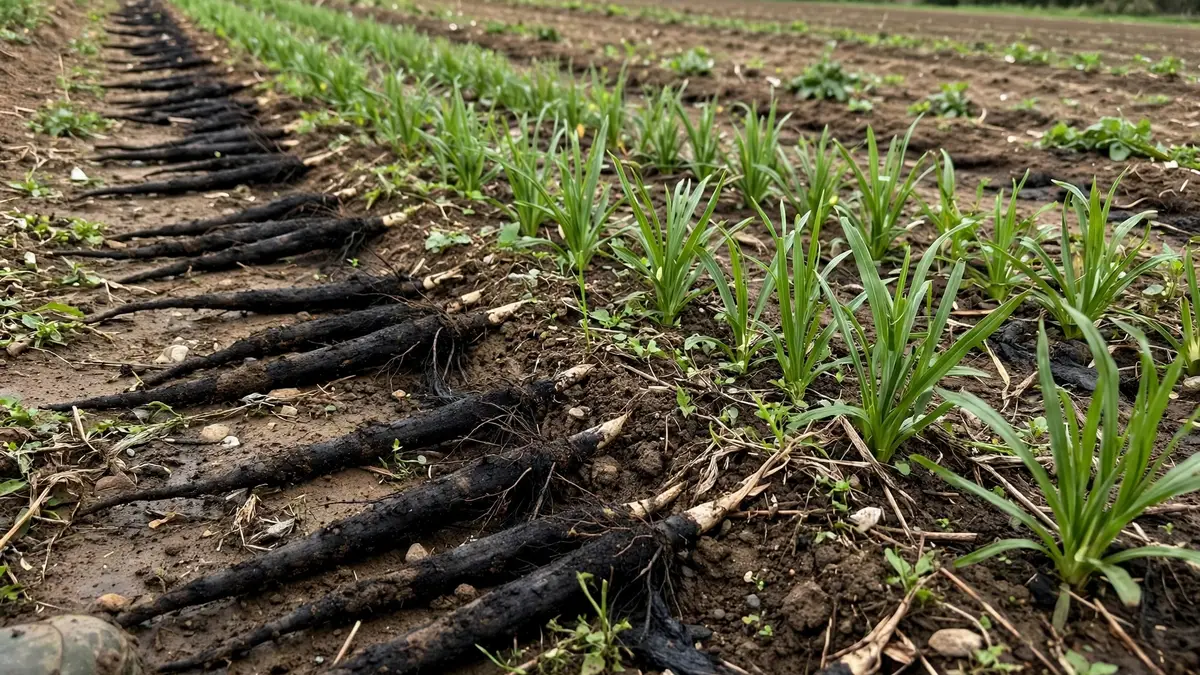
Scorzonera is the quiet root of the European winter kitchen. Under its dark, almost black skin sits white flesh that tastes sweet and nutty, somewhere between an artichoke heart and a hazelnut, with a softness that suits butter, cream and a slow oven. It has been grown in France, Belgium and the Netherlands for centuries, yet most cooks only meet it frozen, jarred, or not at all, because the fresh root is awkward to peel, stains the hands, and is rarely stocked in a supermarket.
That is the reason to visit a farm rather than a shop. On a scorzonera farm you dig the root yourself in cold soil, learn to peel it under running water so the flesh stays white, and eat it the same day it came out of the ground, when the flavour is at its best. The stays in this guide are small working farms, not resorts dressed up as farms, and each one grows scorzonera as a real crop, with a kitchen that knows what to do with it.
Below are nine farm stays worth considering in 2027, spread from the Loire to the Lothians. Every one is described by what it does well, what to watch for, and who it suits best, so you can pick a region and a pace that fit the trip you actually want.
Key takeaways
- Scorzonera, or black salsify, is Scorzonera hispanica, a long black root with white flesh and a sweet, nutty flavour.
- Peel it under running water and drop it straight into water with lemon juice, or the white flesh turns brown within minutes.
- A touch of frost sweetens the root, so the best digging runs from October into March.
- Book four to six weeks ahead for the autumn harvest weekends, and ask whether the farm supplies gloves and digging forks.
- The root itself has no gluten, but gratins, battered dishes and thickened sauces on farm menus may contain flour, so ask the kitchen before you eat.
What scorzonera actually is
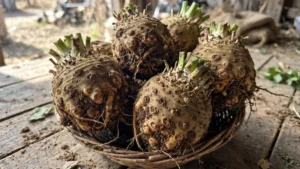
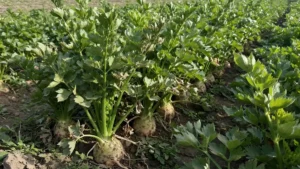
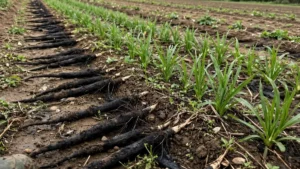
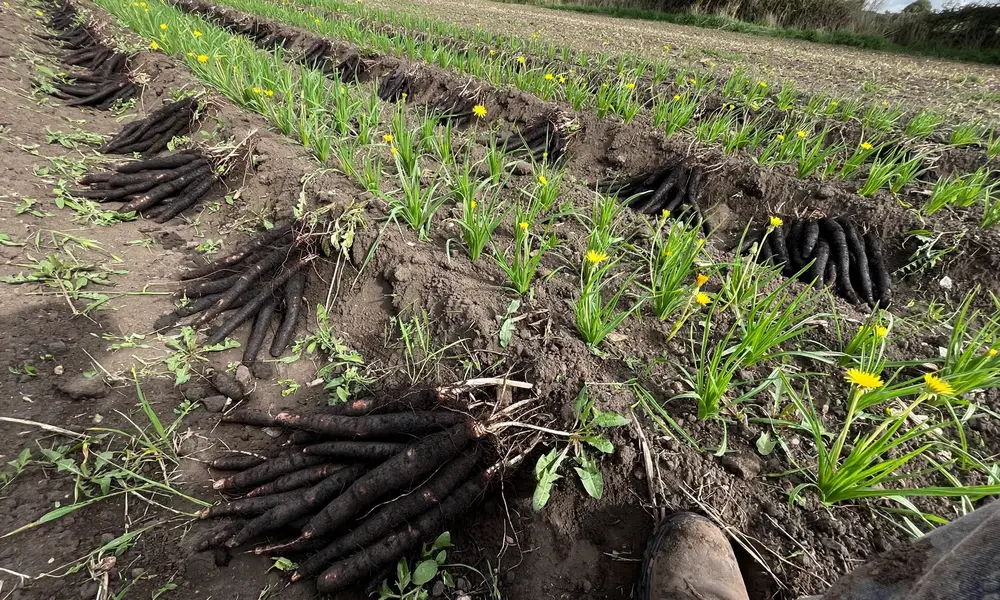
Scorzonera hispanica is a member of the daisy family, grown for its long, straight root, which is usually twenty to thirty centimetres long and dark brown to black on the outside. The plant itself is unremarkable, with grass-like leaves and small yellow flowers in summer, and the root does its best work underground, in deep, loose, sandy soil where it can grow straight without forking. It is a slow crop. Seed sown in spring is usually left in the ground until the following autumn or even a second year, and a light frost before digging is welcomed, because the cold turns some of the root’s starch to sugar and softens its flavour.
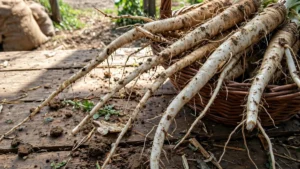
It is not the same plant as white salsify, even though the two share a kitchen and a reputation. White salsify is Tragopogon porrifolius, with pale skin and a milder, oyster-like taste, while scorzonera is darker, sweeter and nuttier, and holds its shape better in a gratin. It is not a parsnip either. Parsnip is Pastinaca sativa, a cream-coloured root from the carrot family with a distinctly spiced sweetness, while scorzonera belongs to the daisy family and tastes closer to artichoke. The confusion is understandable, since all three are pale-fleshed winter roots, but a scorzonera peeled and roasted beside a parsnip is easy to tell apart by colour, texture and flavour.
In the kitchen, scorzonera is usually peeled, cut into short lengths, and cooked gently in water with lemon juice, which keeps the flesh white. From there it goes into butter, cream sauces, gratins with cheese, or simple soups, and it pairs well with mushrooms, leeks, ham and soft herbs. The peeling is the part that puts people off, because the root bleeds a milky sap that stains skin and turns the flesh brown on contact with air. On a farm stay, that chore becomes part of the visit: a bucket of cold water, a sharp peeler, lemon at hand, and a cook who has done it a thousand times.
In Belgium and northern France, black salsify has long been a winter staple rather than a novelty. Market stalls in Brussels and Lille sell it by the kilo from November onwards, and home cooks treat it as an ordinary vegetable, boiled and served with butter or folded into a gratin. That everyday status is part of its charm: scorzonera is not a rare delicacy flown in for a tasting menu, but a working root with a long season, a fair price and a kitchen tradition that has survived because the flavour earns its place.
How we picked these nine farm stays
We looked for farms that grow scorzonera as a genuine crop, not as a token row beside the car park. That meant asking how much ground the root covers, whether guests can join the digging, and whether the kitchen cooks it fresh in season rather than serving it from a jar. We also looked for stays where the root is part of a wider winter table, with leeks, celeriac, mushrooms and stored apples, so the trip is a meal as well as a harvest.
Each stay below was chosen for a different strength: one for its kitchen, one for its setting, one for its price, one for its ease from a city. Our guide to yacon farm retreats in the Andes follows the same approach, ranking stays by what they do well rather than by how polished their photographs look. The prices quoted are per night with breakfast included, as listed by the farms for the 2027 season, and they move with the harvest calendar, so confirm the exact figure when you book.
The 9 best scorzonera farm retreats of 2027
Loire Black Root Farm Stay, Paris
What we like: A market-garden farm an hour south of Paris, with three guest rooms, a long kitchen table, and sandy beds where the scorzonera grows straight and long. The Saturday dig ends with a gratin cooked in the farm oven, and the host presses her own walnut oil. What to consider: Rooms are plain, the lane in floods after heavy rain, and there is no restaurant on site. Best For: A first scorzonera trip from Paris. Style: Working market garden. Price Range: $72–$108 a night, breakfast included. Standout Feature: Scorzonera gratin from the farm oven.
Rhône Scorzonera Garden Retreat, Lyon
What we like: Terraced beds above the river, a kitchen that treats scorzonera as a main dish rather than a side, and a cellar of Beaujolais for the evening. The soup with mushrooms and cream is the best on this list. What to consider: The slope is steep, the farm is quiet after dark, and weekends book out early in October. Best For: Cooks who want a serious kitchen. Style: Hillside garden farm. Price Range: $88–$132 a night, breakfast included. Standout Feature: Creamed scorzonera soup with wild mushrooms.
Brabant Black Salsify Farm Stay, Brussels
What we like: A Belgian farm that has grown black salsify for three generations, with a proper dining room, a small shop selling roots by the kilo, and a host who explains the peeling without making a fuss of it. What to consider: The rooms face the yard, the digging is early, and the farm shop closes on Sundays. Best For: Learning the classic Belgian preparation. Style: Family farm with dining room. Price Range: $96–$148 a night, breakfast included. Standout Feature: Three generations of black salsify growers.
Polder Scorzonera Fields Retreat, Amsterdam
What we like: Flat polder fields, straight rows you can walk in minutes, and a farmhouse kitchen that serves scorzonera with butter, parsley and boiled potatoes. Bicycles are free, and the light across the fields at dusk is superb. What to consider: The wind is relentless, the rooms are small, and the farm is a cycle ride from the nearest town. Best For: Flat-field walking and cycling. Style: Polder farmhouse. Price Range: $78–$118 a night, breakfast included. Standout Feature: Bicycle rides between the straight rows.
Spree Black Root Farm Stay, Berlin
What we like: A sandy-soil farm east of Berlin, with a wood-fired oven, a sauna for cold evenings, and a kitchen that roasts scorzonera with caraway and serves it beside smoked fish. The digging sessions are unhurried and well taught. What to consider: The train connection needs a bus at the end, the rooms are heated by stove, and English is patchy with the older crew. Best For: A slow winter weekend from Berlin. Style: Sandy-soil farm with sauna. Price Range: $82–$124 a night, breakfast included. Standout Feature: Wood-fired oven and roasted scorzonera with caraway.
Danube Scorzonera Garden Stay, Vienna
What we like: A polished garden farm along the Danube, with comfortable rooms, a restaurant that plates scorzonera like a fine vegetable, and a harvest market in November. The gratin with mountain cheese is excellent. What to consider: It feels more hotel than farm, the digging sessions are short, and the restaurant books up on Saturdays. Best For: Comfort with a farm flavour. Style: Polished riverside estate. Price Range: $92–$142 a night, breakfast included. Standout Feature: Scorzonera gratin with mountain cheese.
Vltava Black Salsify Farm Retreat, Prague
What we like: A small farm on the river flats, with a wood stove, a kitchen that fries scorzonera in breadcrumbs for Sunday lunch, and a host family that grows leeks and celeriac beside it. The price is the lowest on this list. What to consider: Rooms are basic, the road in is rough, and the farm is a bus ride from Prague. Best For: A budget winter break. Style: River-flat family farm. Price Range: $68–$102 a night, breakfast included. Standout Feature: Sunday lunch of breadcrumb-fried scorzonera.
Kent Scorzonera Farm Stay, London
What we like: The easiest logistics on this list, with a Kent farm an hour from London, guided digging, and a kitchen that serves scorzonera with brown butter and sage. The farm shop sells roots, walnut oil and chutney. What to consider: The priciest stay here, the fields are modest, and the weekend crowds arrive by mid-morning. Best For: A single-night taster from London. Style: Garden-of-England farm. Price Range: $118–$176 a night, breakfast included. Standout Feature: Brown-butter scorzonera with sage.
Lothian Black Root Farm Retreat, Edinburgh
What we like: A Scottish farm with sea wind, a bothy kitchen, and scorzonera cooked in soups with barley and root vegetables. The pace is the slowest on this list, and the host bakes oatcakes for the digging crew. What to consider: The weather is raw, the island of calm is real, and the wifi is patchy. Best For: A long, slow winter stay. Style: Coastal bothy farm. Price Range: $104–$158 a night, breakfast included. Standout Feature: Barley soup with scorzonera and oatcakes.
Which region suits which traveller
France suits the cook. The Loire and Rhône farms treat scorzonera as a dish in its own right, with gratins, soups and cream sauces, and the kitchens are the reason to go. Belgium suits the traditionalist, with three generations of growers and a preparation that has barely changed. The Netherlands suits the walker and the cyclist, with flat fields, straight rows and a farmhouse table that keeps things simple.
Germany and Austria suit the comfort-seeker. The Spree farm pairs a sauna with a wood-fired oven, and the Danube farm is the most polished stay on this list, with a restaurant and a November market. Prague suits the budget traveller, with the lowest prices and a family kitchen, while London suits the short break, with Kent an hour away and a farm shop worth the trip alone. Edinburgh suits the slow traveller, with sea wind, barley soup and a bothy kitchen.
If you are choosing between regions, pick by food first and by flight second. Our guide to oca farm retreats in the Andes makes the same point for a very different root: the cooking changes with the place, and the region you pick decides what ends up on your plate. A scorzonera trip is a winter trip, so check the frost calendar for the region as well as the flight times, and ask the farm which weeks the digging is at its best.
The caveats that matter
Scorzonera is a forgiving crop to eat and a fiddly one to handle. The sap stains, the flesh browns fast, and the root snaps if you pull it carelessly from heavy soil. None of that is a reason to stay away, but it is worth knowing before you arrive, along with the practical points below.
| Detail | What is known |
|---|---|
| What it is | Scorzonera hispanica, black salsify, long black root, white flesh, sweet and nutty |
| How long it takes to grow | Sown in spring, dug from October into March, often left a second year |
| Can it be eaten raw | No, peel and cook it, and wear gloves, because the sap stains skin |
| Best-known dishes | Gratin, creamed soup, roasted with butter, breadcrumb-fried, barley soup |
| Who should ask first | Anyone avoiding gluten or dairy, and anyone with a daisy-family allergy |
| What to pack | Gloves, closed shoes for mud, a warm layer, a lemon for the peeling bucket |
| How far ahead to book | Four to six weeks for autumn harvest weekends, two weeks outside them |
| What it is not | Not white salsify, not parsnip, not a potato, despite the similar shape |
Checklist: before you book a scorzonera farm stay
Run through this list before you pay a deposit, and you will avoid the usual surprises.
- Ask which weeks the farm digs scorzonera, and whether guests can join the digging.
- Check whether gloves, forks and peeling buckets are provided, or bring your own.
- Tell the kitchen about gluten, dairy or allergies before you arrive, not at the table.
- Confirm the price per night, what breakfast covers, and whether dinner is extra.
- Ask about the ground: sandy soil digs easily, heavy clay snaps roots and ruins shoes.
- Plan the trip home: roots travel well in a cloth bag, but keep them cool and dry.
Frequently asked questions
Is scorzonera the same thing as black salsify?
Yes. Black salsify is the common English name for scorzonera, Scorzonera hispanica. White salsify is a different plant, Tragopogon porrifolius, with pale skin and a milder taste, so the two are often confused in shops and on menus.
Why does scorzonera turn brown when I peel it?
The white flesh darkens on contact with air, like an apple or an artichoke. Peel it under running water and drop each piece straight into water with lemon juice, and it stays white until you cook it.
Can I eat scorzonera raw?
No. Peel it and cook it thoroughly, as you would a parsnip. The raw root is tough and bitter, and the milky sap can irritate skin, so wear gloves while you peel and wash your hands afterwards.
When is the best month to visit a scorzonera farm?
October to March, after the first frosts have sweetened the roots. November is the busiest month, with harvest markets and weekend digging sessions, so book early for those dates.
Do scorzonera farm stays suit children?
Often yes. Digging is muddy and physical, which children tend to enjoy, and the peeling is a good kitchen job for older children. Check with the farm about ages, sharp peelers and the cold, and bring closed shoes for everyone.
Is scorzonera gluten-free?
The root itself has no gluten, and a plain boiled or roasted root is safe for a gluten-free plate. Gratins, breadcrumb coatings and thickened sauces may contain flour, so ask the kitchen how each dish is made.
The bottom line
Scorzonera rewards the traveller who likes winter, mud and a proper kitchen. Pick the Loire or the Rhône for cooking, Belgium for tradition, the Netherlands for walking, and Prague or Edinburgh for a slower, cheaper break, and go between October and March, when the frost has done its work and the roots are at their sweetest. Our guide to mashua farm retreats in the Andes covers a very different high-altitude tuber, but the advice is the same: choose the farm by its kitchen, ask about the digging before you book, and eat what you dig.
Book four to six weeks ahead for the autumn weekends, tell the kitchen about gluten or dairy before you arrive, and bring gloves and closed shoes. The peeling takes ten minutes to learn and a season to master, and the gratin at the end of it is worth the stained hands.