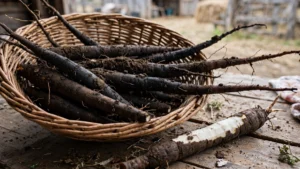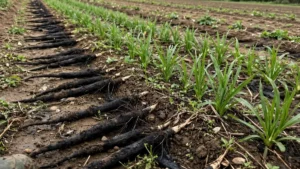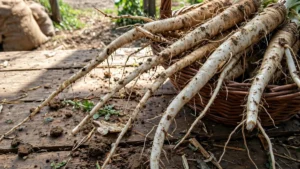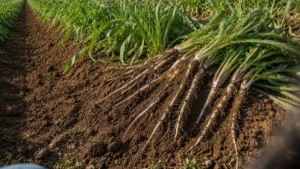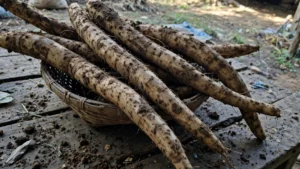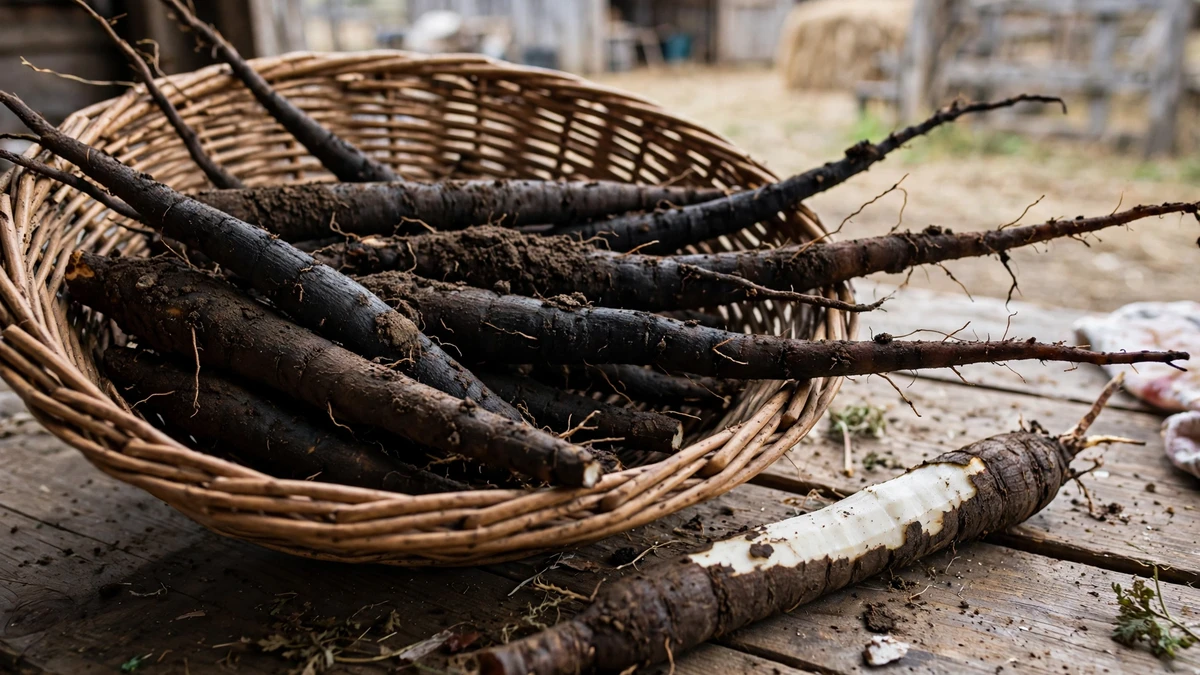
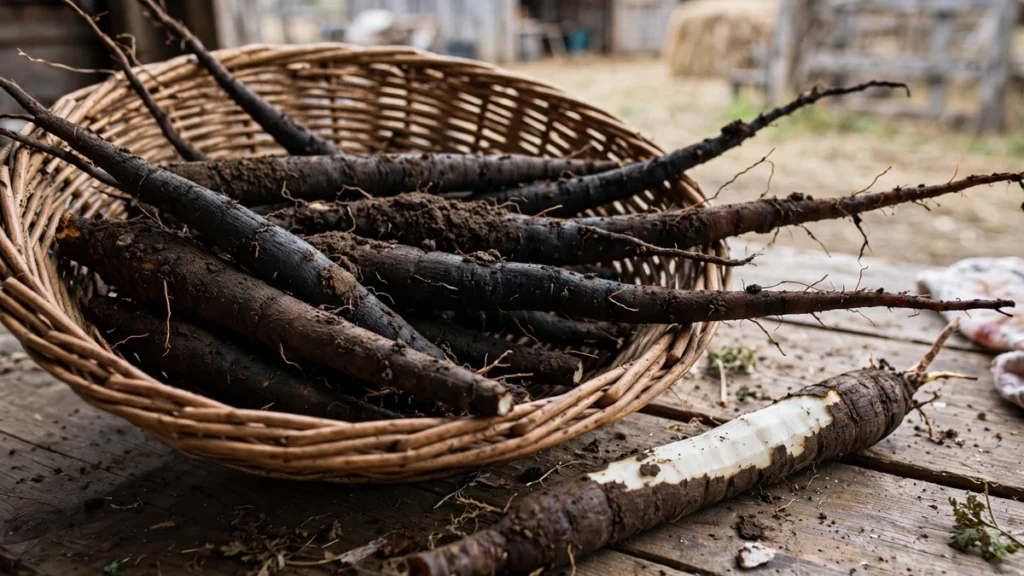
A scorzonera farm escape is a winter trip built around a single root. You arrive at a small farm in France, Belgium, the Netherlands or further afield, walk out to sandy beds in cold air, and dig long black roots from the ground with a fork. The work is slow and muddy, the kitchen is warm, and by evening you are eating what you dug, peeled under running water, cooked in butter or cream, and served with the kind of pride only a grower has for a difficult crop.
It is not a sightseeing holiday. The farms in this guide are working places, with early mornings, simple rooms and meals that follow the season. What makes the trip worthwhile is the gap between the root in the ground and the root on the plate: scorzonera is awkward to buy, fiddly to peel and easy to ruin, and on a farm you learn all three lessons in a day, with someone standing beside you who has done it for years.
This guide walks through the trip in nine steps, from fixing your dates to packing roots for the journey home. Follow the steps in order, and the farm will handle the rest.
Key takeaways
- Scorzonera, or black salsify, is a slow winter root, dug from October into March after frost has sweetened it.
- Peel it under running water into lemon water, or the white flesh browns within minutes.
- Book four to six weeks ahead for autumn harvest weekends, and confirm the digging days before you travel.
- Pack gloves, closed shoes for mud, a warm layer, and a peeler you trust.
- The root itself has no gluten, but gratins, breadcrumb coatings and thickened sauces may contain flour, so tell the kitchen before you eat.
What a scorzonera farm escape actually involves
Most scorzonera farms are small, family-run places with a handful of guest rooms and a kitchen that cooks what the fields produce. A typical day starts with breakfast, then a morning in the beds, digging with a fork, shaking off the soil, and trimming the roots into a basket. The afternoon is for peeling, cooking and eating, often with a walk between the rows and a visit to the farm shop. Evenings are quiet, with a fire, a simple dinner and an early night.
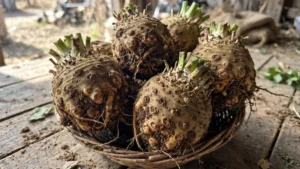
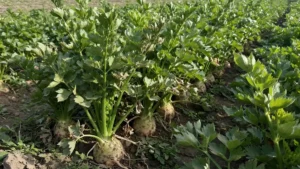
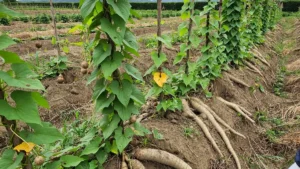
The digging itself is the heart of the trip. Scorzonera grows in deep, loose soil, and the root snaps if you pull it, so you loosen the ground with a fork, ease the root out whole, and lay it in a basket without bruising it. A good crew will show you the angle of the fork, how far to stand from the row, and when a root is ready to come out. The work is physical but not punishing, and it is done at the pace of the farm, not the pace of a gym.
The kitchen is the other half of the escape. Peeling takes patience: a bucket of cold water, lemon juice, a sharp peeler, and gloves against the milky sap. From there the root goes into gratins, soups, roasts and breadcrumb fries, and the best farms cook it three ways in a single day so you can taste the difference. Our guide to planning a yacon farm escape in the Andes follows the same rhythm of digging in the morning and cooking in the afternoon, for a very different high-altitude tuber.
Expect simple rooms, shared tables and weather that does not care about your plans. Bring the right clothes, keep your schedule loose, and the trip rewards you with a meal you helped to grow.
Plan it in nine steps
Nine steps carry the trip from the first frost check to the roots in your bag at home.
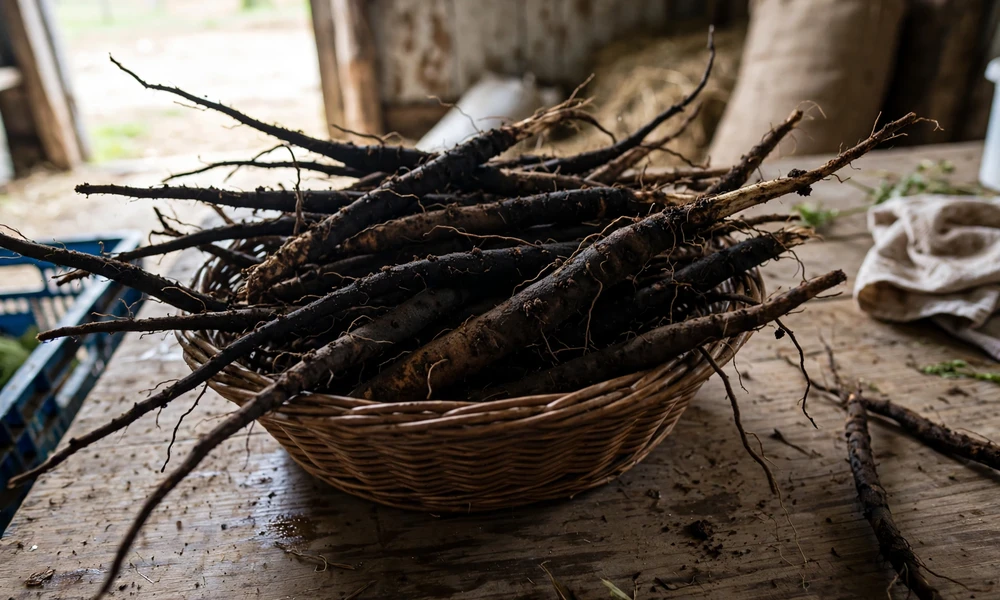
Time your trip to the frost weeks
What to do: Pick October to March, and ask the farm which weeks follow the first frosts. What to avoid: Booking a summer date and finding the beds empty. Best For: Travellers who can move their dates by a week. Time Needed: An evening of checking frost dates. Standout Tip: Ask which week brings the sweetest roots, not just the first digging day.
The frost matters more than the month. A light frost turns starch to sugar in the root, and a farm that digs a week after the first cold snap will serve sweeter scorzonera than one that digs in a mild October.
Choose the region for its cooking, not its airport
What to do: Choose France for gratins and soups, Belgium for the classic preparation, the Netherlands for simple farmhouse cooking. What to avoid: Picking a region for the cheapest flight and finding the food is not what you came for. Best For: Guests who plan meals before flights. Time Needed: An evening spent reading farm menus. Standout Tip: Look at the farm’s winter menu, not its room photos, when you compare regions.
The root is the same everywhere, but the cooking is not. The Loire leans rich, with cream and cheese, while the polders lean plain, with butter, parsley and boiled potatoes. Edinburgh leans slow, with barley soup and oatcakes. Match the region to the plate you want, and the rest of the trip follows.
Sleep on the farm, not in the nearest town
What to do: Book a room on the farm so you are in the beds at first light. What to avoid: Staying in a nearby town and missing the morning dig. Best For: Early risers and keen diggers. Time Needed: One message to the farm. Standout Tip: Ask for the room nearest the kitchen, where the morning is warmest.
The digging starts early, and the farm does not wait for guests who drive in at ten. A room down the road saves little and costs you the best hour of the day.
Arrange the farm pickup before you land
What to do: Confirm the pickup time, the meeting point and a phone number that works. What to avoid: Landing with no plan and hoping for a taxi in a farming village. Best For: Guests arriving without a car. Time Needed: A week of messages ahead of booking. Standout Tip: Send your flight number the day before, in case the time changes.
Most scorzonera farms sit outside the towns, on lanes where buses are rare and taxis are scarcer. The farm will usually collect you from the station if you ask in advance, and the pickup is often the first conversation of the trip, with the host pointing out fields on the drive in. Arrange it before you travel, and keep the farm’s number in your phone.
Pack gloves, boots and a peeler you trust
What to do: Bring rubber gloves, closed boots for mud, a warm layer and a sharp peeler. What to avoid: Arriving in trainers and borrowing the farm’s last spare pair of gloves. Best For: Anyone who dislikes cold hands. Time Needed: An afternoon of packing. Standout Tip: Pack a lemon in your bag for the peeling bucket.
The sap stains skin brown for a day, and the mud is the kind that swallows light shoes. Gloves keep your hands clean, boots keep your feet dry, and a peeler you know is worth more than a drawer of blunt ones.
Learn the digging from the crew on your first morning
What to do: Watch one row dug properly, then copy it exactly. What to avoid: Pulling roots by hand and snapping them in the ground. Best For: First-time diggers. Time Needed: A morning in the field. Standout Tip: Ask the crew to show you the fork angle before you touch a row.
A snapped root is still edible, but it will not keep, and a bruised root browns faster in the kitchen. The crew digs a thousand roots a season and knows where the fork goes, how far to lean, and when to stop and lift. Spend the first morning learning, and the second morning digging properly.
Eat gratin, soup and a fried root in one afternoon
What to do: Ask the kitchen to cook the morning harvest three ways. What to avoid: Eating one dish and leaving without tasting the root’s range. Best For: Curious eaters. Time Needed: One afternoon at the table. Standout Tip: Taste the plain boiled root first, before the sauces.
Scorzonera changes with the cooking. Boiled plain it is mild and nutty, in a gratin it is rich and soft, fried in breadcrumbs it is crisp and sweet. A farm that cooks it three ways in one afternoon teaches you more about the root than a week of reading, and the plain piece first is the honest baseline.
Pay the bill the night before you leave
What to do: Check the bill, the farm shop total and any extras the evening before. What to avoid: Rushing the payment while the pickup waits outside. Best For: Travellers on an early departure. Time Needed: An evening of checking the bill. Standout Tip: Keep small notes for the farm shop, where card machines can fail.
Farm mornings are busy, and the host is often in the field while you are leaving. Settling the night before means a calm departure, a proper goodbye, and no argument over a forgotten dinner charge. Ask for the bill after dinner, check it over coffee, and pay before bed.
Carry the roots home dry and cool
What to do: Shake off the soil, wrap the roots in cloth, and keep them cool and dry. What to avoid: Sealing damp roots in plastic, where they sweat and rot. Best For: Cooks taking the harvest home. Time Needed: Half an hour before you leave. Standout Tip: Trim the tops in the field, not in your bag.
Scorzonera travels well if it is dry. A cloth bag in a cool corner of the car will keep roots firm for a week, while a sealed plastic bag will turn them soft in a day.
When to go: the scorzonera calendar
October opens the season, with the first digging weekends and the earliest gratins, and November is the busiest month, when harvest markets run and farms fill their guest rooms. December brings the coldest digging and the sweetest roots, with soups and roasts taking over the menu, while January and February are the quietest months, with fewer guests, lower prices and a slower pace in the fields.
March closes the season, when the last roots come out of the ground before the beds are turned for spring. After that the farms move on to sowing, and the fresh root disappears from menus until autumn. If you can only go once, pick November for the markets, or January for the quiet and the price. Ask the farm which weeks it digs, because a farm that grows for its own kitchen and a farm that grows for market will keep different calendars.
What to eat on a scorzonera farm
Start with the plain root, boiled in lemon water and dressed with butter and parsley, so you know the flavour before the sauces arrive. Then try the gratin, layered with cream and cheese and baked until the top browns, which is the dish most farms are proudest of. The creamed soup, with mushrooms and a little nutmeg, is the winter lunch that keeps coming back, and the breadcrumb-fried root, crisp outside and soft inside, is the Sunday dish in Prague and Vienna.
Beyond the root itself, the farm table follows the season: leeks, celeriac, stored apples, mushrooms from the woods, barley soups in Scotland, smoked fish beside the Spree farm’s roast. Our guide to planning an oca farm escape in the Andes covers a very different Andean tuber, but the eating advice is the same: taste the plain root first, then the farm’s best dish, and ask the cook what the season allows. Tell the kitchen about gluten or dairy before you sit down, because gratins and breadcrumb coatings are the dishes that usually contain flour.
The caveats that matter
Scorzonera is safe and simple to eat once it is peeled and cooked, but the handling has its quirks, and the trip has its practical limits. The points below are the ones guests ask about most, and the ones worth settling before you travel.
| Detail | What is known |
|---|---|
| What it is | Scorzonera hispanica, black salsify, long black root, white flesh, sweet and nutty |
| How long it takes to grow | Sown in spring, dug from October into March, often left a second year |
| Can it be eaten raw | No, peel and cook it, and wear gloves, because the sap stains skin |
| Best-known dishes | Gratin, creamed soup, roasted with butter, breadcrumb-fried, barley soup |
| Who should ask first | Anyone avoiding gluten or dairy, and anyone with a daisy-family allergy |
| What to pack | Gloves, closed shoes for mud, a warm layer, a lemon for the peeling bucket |
| How far ahead to book | Four to six weeks for autumn harvest weekends, two weeks outside them |
| What it is not | Not white salsify, not parsnip, not a potato, despite the similar shape |
Checklist: planning a scorzonera farm escape
Work through this list a week before you leave, and the trip will run itself.
- Confirm the digging dates with the farm, and ask which weeks follow the first frost.
- Book a room on the farm, not in the nearest town, so you are there for the morning dig.
- Arrange the station pickup, and keep the farm’s phone number in your pocket.
- Pack gloves, boots, a warm layer, a sharp peeler and a lemon.
- Tell the kitchen about gluten, dairy or allergies before you arrive.
- Leave a spare day in the plan for rain, frozen ground or a delayed dig.
Frequently asked questions
Does black salsify on a menu always mean scorzonera?
Usually yes, since black salsify is the common name for Scorzonera hispanica. Some menus use the name loosely for white salsify, so ask whether the root is black-skinned with white flesh, and you will know which plant the kitchen means.
Could I use parsnip in a scorzonera recipe?
You can, but the dish will taste different. Parsnip is sweeter and more strongly spiced, while scorzonera is nuttier and closer to artichoke. Swap them only if the farm shop has run out, and expect a different plate.
Is it safe to nibble a root while I dig?
No. Peel and cook scorzonera before eating it, as you would a parsnip. The raw root is tough and bitter, and the sap can irritate skin, so wear gloves while you dig and wash your hands before you eat.
How long does a scorzonera farm escape take?
Two or three nights is enough. One day to learn the digging and the peeling, one day to cook and eat properly, and a morning to pack roots for home. A single night works for a taster, but the digging deserves a full day.
Do I need to be fit to dig scorzonera?
Reasonably. The work is bending, forking and carrying baskets in cold, muddy ground, and it suits anyone comfortable on their feet for a morning. Tell the farm about stiff knees or a bad back, and the crew will set you a lighter row.
Can I bring scorzonera roots home with me?
Yes, if they are dry. Shake off the soil, wrap them in cloth, keep them cool, and peel them within a few days. Check the customs rules if you are crossing a border, since some countries restrict fresh roots and soil.
The bottom line
A scorzonera farm escape is a small, muddy, delicious winter trip. Fix your dates to the frost weeks, stay on the farm, let the crew teach you to dig, and eat the harvest three ways in one afternoon. Our guide to planning a mashua farm escape in the Andes covers a peppery Andean tuber with the same advice at its core: the farm teaches the crop, the kitchen teaches the cooking, and the trip is measured in meals, not miles.
Book four to six weeks ahead for November, tell the kitchen about gluten or dairy before you arrive, and pack gloves, boots and a peeler. The sap will stain your hands for a day, the gratin will be worth it, and the roots in your bag will keep the trip going for a week after you get home.