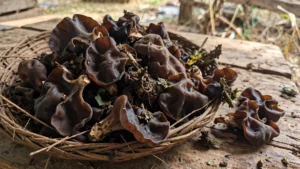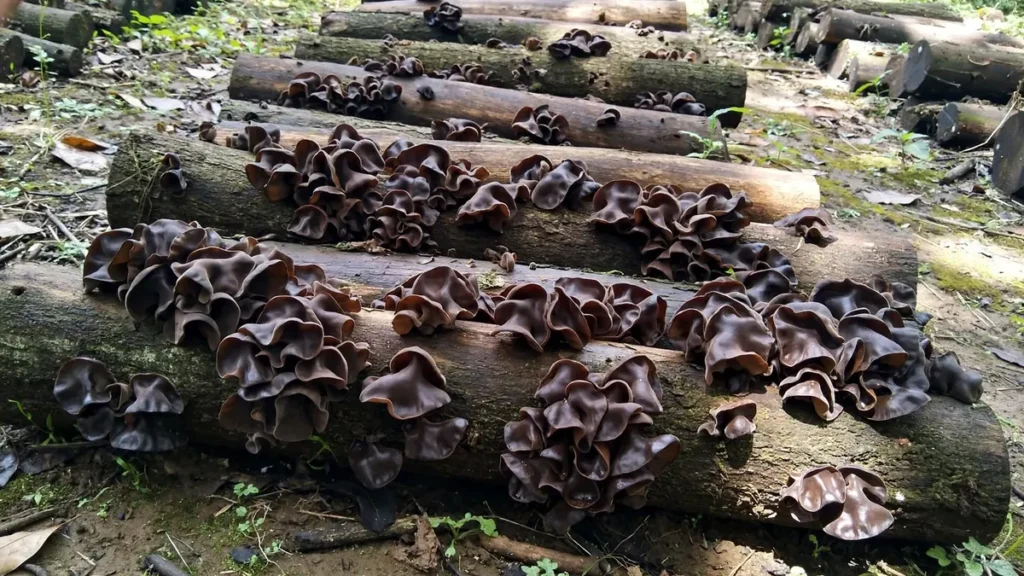
Wood ear does not look like a mushroom most people expect: no cap, no stem, no gills. It grows in dark brown, ear-shaped folds on dead logs, feels like cool jelly when fresh, and turns crisp once cooked. In Chinese kitchens it is mu’er, in Japanese cooking it is kikurage, and in hot-and-sour soup it gives the bowl its texture.
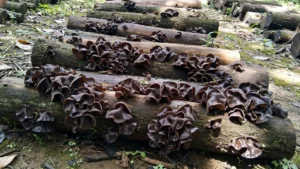
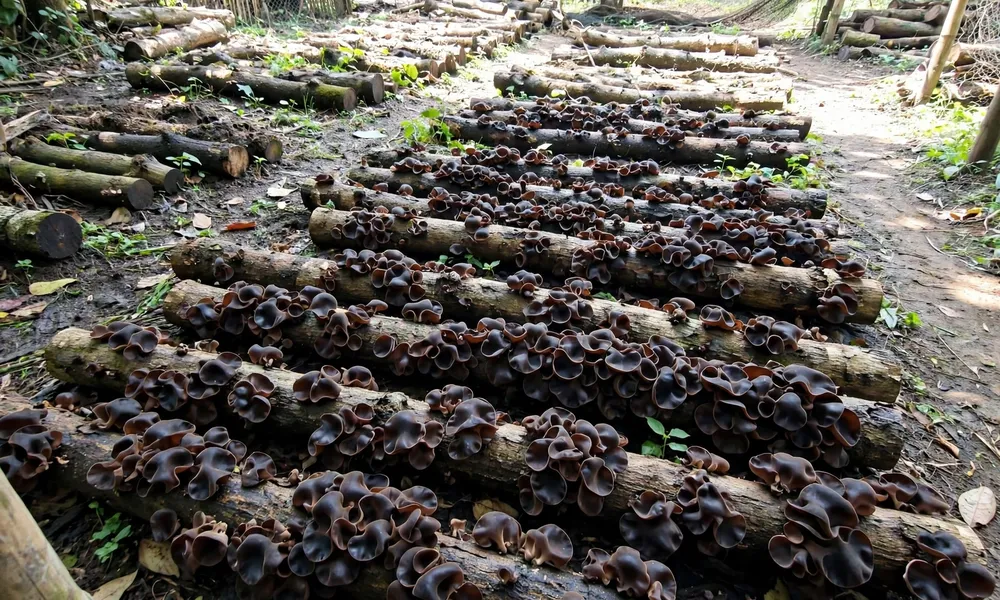
A wood ear farm is quieter than a shiitake yard or a chanterelle wood. The work happens under shade cloth or in a damp growing room, the logs are stacked in long rows, and the harvest means cutting soft folds away from bark with a small knife. There is no rush to beat a flush and no race against the sun, and the farms that welcome guests tend to be small, family-run places with a kitchen that knows what to do with the crop.
Below are nine wood ear farm retreats worth considering in 2027, from a working log yard outside Chengdu to a misty mountain lodge above Hanoi. Each entry notes its strengths, its drawbacks, and its best fit.
Key takeaways
- Wood ear is a dark brown, ear-shaped jelly fungus from dead logs, valued for its crunch in soups, stir-fries and salads.
- Dried wood ear is the form most farms sell, and it needs a proper soak in cold water before cooking.
- Fresh wood ear should always be cooked, and dried wood ear should be soaked, rinsed and cooked through before eating.
- Log-yard farms suit slow mornings and hands-on work, while growing-room farms suit visitors who want a reliable harvest in any weather.
- Wood ear is naturally gluten-free, but farm kitchens use soy sauce and wheat noodles, so ask about sauces and shared pans before you eat.
What a wood ear is, and why a farm stay suits it
Wood ear, Auricularia auricula-judae, is a jelly fungus, not a gilled mushroom. It grows on dead elder, oak and beech as soft, wrinkled, ear-shaped folds, dark brown outside and paler underneath. Fresh, it feels rubbery and cool; dried, it shrinks into hard flakes that look nothing like food until they meet cold water. A twenty-minute soak brings them back, and they swell to three or four times their dried size.
In the kitchen, wood ear is prized for texture rather than flavour. It tastes mild and faintly earthy, and it takes on the flavour of whatever it is cooked with, which is why it works in hot-and-sour soup, a garlicky stir-fry, or a cold salad with black vinegar, chilli and sesame. It stays crisp where other mushrooms go soft, and it is rich in iron and fibre.
A farm stay suits wood ear because the crop asks for patience rather than speed. The logs need shade, damp air and time, and the best farms have kept the same stacks for years, checking them after rain and cutting only ready folds. Guests learn to spot a ripe ear, cut it cleanly at the base, and trim the woody stem, and the work leaves time for long lunches and walks between the rows.
How we chose these retreats
We looked for farms that grow wood ear as their main crop and welcome guests into the real work. A good retreat has a yard or growing room you can walk through, a grower who explains the soak and the drying, and a kitchen serving the crop the same day it is picked. We also checked each farm sits near a town, a market or a walk, because a farm stay that is only a farm gets dull by the second day.
Price was weighed against what is included. A cheaper stay that charges separately for every meal and workshop can cost more than a dearer one that includes the cooking session, so we noted where the soak-and-cook session is part of the stay. Our guide to the best luxury chanterelle farm retreats follows the same approach, and it is worth reading to compare a woodland mushroom stay with a log-yard one.
Finally, we kept the list honest about comfort. Some farms are simple, with shared bathrooms and early mornings; others are proper retreats, with private rooms and a chef. Each entry says which one it is, so you can choose the comfort you actually want.
The 9 best wood ear farm retreats of 2027
Dujiangyan Wood Ear Log Yard, Chengdu
What we like: A working log yard with guest rooms above the drying shed, a grower who has kept the same oak stacks for a decade, and a soak-and-cook session included.
What to consider: Rooms are simple, the yard is muddy after rain, and the nearest town is twenty minutes away. Best For: First-time wood ear eaters who want to see the whole process. Style: Working farm with plain, clean guest rooms. Price Range: $72–$104 per night. Standout Feature: A soak-and-cook session using the dried harvest.
This is the most hands-on stay on the list: you cut the ears in the morning, soak them at noon, and cook them in the evening.
Longjing Wood Ear Farm, Hangzhou
What we like: Log stacks set beside tea rows, a wood-fired kitchen, and a hot-and-sour soup that is cooked over an open flame at lunch.
What to consider: The farm is busiest in spring, when the tea fields draw day visitors on weekends. Best For: Travellers who want a tea morning and a fungus afternoon in one place. Style: Tea-country farmhouse with a large shared kitchen. Price Range: $88–$126 per night. Standout Feature: Hot-and-sour soup over a wood fire with the morning pick.
A morning in the tea rows, an afternoon in the log yard, and a bowl of soup at the end is a good day, and the farm knows how to pace it.
Beitou Wood Ear Farm, Taipei
What we like: A small farm in a hot-spring town, a vinegar-dressed wood ear salad made fresh at lunch, and public baths a short walk away.
What to consider: The farm is compact, so groups are small and weekends book out early. Best For: A short stay with a soak in the springs after the yard. Style: Small family farm with a garden kitchen. Price Range: $96–$138 per night. Standout Feature: A cold wood ear salad with black vinegar, chilli and sesame.
Beitou suits a two-night stay: one day in the yard, one afternoon in the baths, and a market walk in between.
Tai Po Wood Ear Retreat, Hong Kong
What we like: A country-park edge location, a night walk to check the log stacks after rain, and a kitchen serving the crop three ways at dinner.
What to consider: Rooms are few, the park trails are steep, and the retreat is quiet by design. Best For: A weekend escape without travelling far from the city. Style: Quiet retreat with private rooms and a shared dining table. Price Range: $104–$152 per night. Standout Feature: A night walk through the log stacks after rain.
The night walk is the reason to come: the folds are cool and full in the dark, lit by a torch and smelling of wet bark.
Tam Dao Wood Ear Lodge, Hanoi
What we like: A misty mountain lodge, cool air even in summer, and a stir-fry class using the morning pick with garlic and greens.
What to consider: The road up is winding, mornings are foggy, and the lodge is far from the city. Best For: Cool-air walking and slow mornings above the heat. Style: Mountain lodge with a wood stove and a wide veranda. Price Range: $64–$98 per night. Standout Feature: A stir-fry class using the morning pick, garlic and greens.
Tam Dao is the cheapest stay on the list, and the veranda is the best place on the farm for a slow breakfast.
Gwanaksan Wood Ear Farm, Seoul
What we like: A mountain-slope farm with a growing room as well as a log yard, and a dried wood ear tasting comparing three soaks.
What to consider: The slope is steep, the growing room is warm and humid, and the farm is a hike from the station. Best For: Hikers who want a farm stop on the way down the mountain. Style: Slope-side farm with a humid growing room. Price Range: $78–$112 per night. Standout Feature: A tasting comparing wood ear soaked for ten, twenty and forty minutes.
The tasting is genuinely useful: ten minutes gives a firm ear, twenty gives the classic texture, and forty gives a softer fold for soup.
Jangsan Wood Ear Lodge, Busan
What we like: A coastal mountain lodge, a seafood-and-fungus hotpot at dinner, and a market morning below.
What to consider: The lodge is popular with families, so it is livelier than the quieter farms here. Best For: Seafood-and-fungus cooking in one kitchen. Style: Family lodge with a big dining room and a hotpot table. Price Range: $82–$118 per night. Standout Feature: A wood ear and seafood hotpot at a shared dinner table.
The hotpot works because wood ear keeps its crunch in simmering broth while everything else softens.
Ohara Wood Ear Farm, Kyoto
What we like: A quiet valley farm, a log inoculation workshop with the farm’s grower, and temple mornings a short walk away.
What to consider: The farm is small and the workshop runs only twice a week, so check the schedule first. Best For: Slow travel and temple mornings in a quiet valley. Style: Valley farmhouse with tatami rooms and a garden. Price Range: $92–$134 per night. Standout Feature: A log inoculation workshop where you drill, plug and seal a log.
The workshop is the most memorable part of the stay: you drill, plug and seal your own log, then wait a year for it to fruit.
Kongosan Wood Ear Retreat, Osaka
What we like: A mountain-edge retreat, a build-your-own soup bar at lunch, and rooms for families with older children.
What to consider: The retreat is a drive from the city, and the soup bar opens only at lunch. Best For: Families with older children who want to cook together. Style: Mountain-edge retreat with family rooms and a soup bar. Price Range: $86–$124 per night. Standout Feature: A build-your-own soup bar at lunch, with wood ear, tofu and greens.
The soup bar is simple and it works: children pick their own bowl, the kitchen adds the broth, and everyone eats together.
What a day on a wood ear farm looks like
A day on a wood ear farm starts early and slowly. After breakfast the grower checks the stacks for folds that swelled overnight, and guests follow with a basket and a small knife, cutting each ear cleanly at the base and leaving the small ones to grow. It takes an hour or two, at a walking pace, with time to look at the logs and ask questions.
By midday the fresh pick is in the kitchen: dried ears from an earlier batch go into cold water to soak, and fresh ears are rinsed and sliced for lunch, usually a hot-and-sour soup, a garlic stir-fry, or a cold vinegar salad. The afternoon is for the drying shed or a walk to the nearest town. Our best luxury lion’s mane farm retreats follow a similar rhythm, though the crop there is a shaggy white pom-pom rather than a dark jelly fold.
Evening is quiet: the logs are checked once more, the drying shed is closed, and dinner is served at a shared table. Most farms ask guests to be in bed early, because the yard is best at dawn, when the air is still damp.
The caveats that matter
Wood ear is a safe and forgiving crop, but it has rules worth knowing. Fresh wood ear needs cooking, and dried wood ear needs soaking, rinsing and a full cook; eat neither raw nor barely warmed. Over-soaked ears turn slimy, and market dried ears should be checked for grit and rinsed well. Wild jelly fungi need an expert beside you, so do not pick them from a park or woodland alone.
| Detail | What is known |
|---|---|
| Best season | Spring and autumn for outdoor logs; growing rooms fruit all year |
| What it looks like | Dark brown, ear-shaped, jelly-like folds on dead logs |
| How it grows | On dead elder, oak and beech logs, or sawdust blocks in a damp room |
| How it is eaten | In hot-and-sour soup, stir-fries and vinegar-dressed salads |
| Dried vs fresh | Needs a 20 to 30 minute soak in cold water before cooking |
| Who should be careful | Anyone with a mushroom allergy or taking blood-thinning medicine |
| What to avoid | Eating it raw, under-soaking dried ears, and picking wild jelly fungi alone |
| What it does not do | It does not replace a meal on its own, and it is not a medicine |
If you take blood-thinning medicine or have a mushroom allergy, ask your clinician before eating a lot of wood ear. It is widely eaten and safe for most people, but discovering a sensitivity on a farm stay is a poor way to spend a holiday, and a quick check before you travel prevents it.
Checklist: choosing a wood ear farm retreat honestly
Use these checks before you book, and again before you pay in full.
- Check the crop: the farm should grow wood ear as its main crop, with a yard or room you can walk through.
- Check the kitchen: ask whether the soak-and-cook session is included, and whether the meal uses the day’s pick.
- Check the soak: a good farm will show you the dried ears, the soaking bowl, and what a proper soak does.
- Check the rooms: ask whether the bathroom is shared, whether the room is heated, and how early the yard work starts.
- Check the season: outdoor logs fruit best in spring and autumn, while growing rooms fruit all year.
- Check the diet: tell the farm about allergies and gluten-free needs at booking.
Frequently asked questions
When is the best time to visit a wood ear farm?
Spring and autumn are best for an outdoor log yard, because damp air and rain bring the logs out. A growing-room farm is worth visiting any time, since the crop is kept warm and humid indoors. Ask which week the logs are fruiting before you book.
Is wood ear the same as shiitake?
No. Shiitake is a brown-capped, gilled mushroom with a stem and a deep savoury flavour, grown on oak logs. Wood ear is a stemless jelly fungus with no gills, a mild flavour and a crisp texture, grown on dead logs. Our best luxury maitake farm retreats cover another log-grown mushroom, showing how varied one log yard can be.
Can I eat wood ear raw?
No. Fresh wood ear needs cooking, and dried wood ear needs soaking, rinsing and a full cook. Raw or barely warmed wood ear can upset your stomach; a quick blanch is the minimum, and a simmer in soup or a stir-fry is better.
How do I tell wood ear from other jelly fungi?
Wood ear is dark brown and ear-shaped, growing on dead wood, smooth and slightly velvety outside, paler inside. Other jelly fungi can look similar and some are not good to eat, so do not rely on a photograph. Learn from a grower, and do not pick jelly fungi from a woodland without an expert beside you.
How long should I stay at a wood ear farm?
Two nights is enough for most people: one full day covers the harvest, the soak and the cooking, and a second leaves time for a market morning or a walk. Three nights suits a slower pace, or a farm combined with a nearby town.
Is wood ear gluten-free?
Wood ear itself is naturally gluten-free. The risk is the kitchen, where soy sauce, wheat noodles and shared pans are common. If you need a gluten-free meal, tell the farm at booking, ask for tamari, and check the noodles are rice noodles before you eat.
The bottom line
The best wood ear farm retreat in 2027 is not the most expensive or the most remote. It is the one where the grower lets you into the real work, the kitchen cooks the crop the same day it is picked, and you leave knowing how to soak, rinse and cook dried wood ear at home. Dujiangyan is most hands-on, Ohara quietest, and Tam Dao best value.
Pick one farm, stay two nights, cut the ears in the morning, cook them at lunch, and take a bag of dried wood ear home. That is the honest way to enjoy a fungus that asks for patience and rewards it with a crunch no other mushroom matches.