


What makes an SUV worth calling “best”? Ask ten drivers and you will get ten answers, because the luxury SUV market has quietly split into several different vehicles wearing the same label. One buyer wants a three-row family hauler with massaging seats. Another wants a gravel-road capable box with a badge that turns heads at the valet stand. A third wants a silent electric cruiser that never visits a fuel pump.
That is the first thing to understand: “best luxury SUV” is not a regulated category, and no official body decides which vehicles qualify. Segmentation into compact, mid-size, full-size and ultra-luxury tiers comes from industry and press convention, not law. The label is marketing shorthand, and the rankings built on top of it rarely agree because each outlet weighs different criteria.
So instead of crowning one winner that will not survive next year’s model cycle, this guide breaks the segment down by what each type of buyer actually needs, flags the mistakes people make in showrooms, and explains how to read the ratings and figures that matter.
Why There Is No Single “Best” Luxury SUV
Every major publication that ranks luxury SUVs uses its own scoring. Some weight driving dynamics heavily. Others prioritize cargo volume, infotainment responsiveness, or predicted reliability. The result is that the same vehicle can top one list and land mid-pack on another, and both rankings can be defensible.
This matters practically. A shopper who reads one “best of” list and buys accordingly may end up with a vehicle tuned for a priority they do not share. The more useful approach is to define your own criteria first, then check how candidates score against them.
A defensible shortlist usually weighs five things:
- Seating and cargo needs — two rows or three, and whether the third row must hold adults.
- Powertrain fit — gasoline, plug-in hybrid, or battery-electric, based on charging access at home.
- Ride comfort versus handling — air suspension and adaptive dampers favor comfort; sport-tuned chassis favor engagement.
- Technology that ages well — over-the-air update capability and a mature driver-assist suite.
- Cost of ownership — depreciation, insurance, tires, and scheduled maintenance, rather than sticker price alone.
Notice that “prestige” is not on the list. It is real, but it is subjective, and it rarely predicts satisfaction three years in.
The Main Tiers, and Who Each One Suits
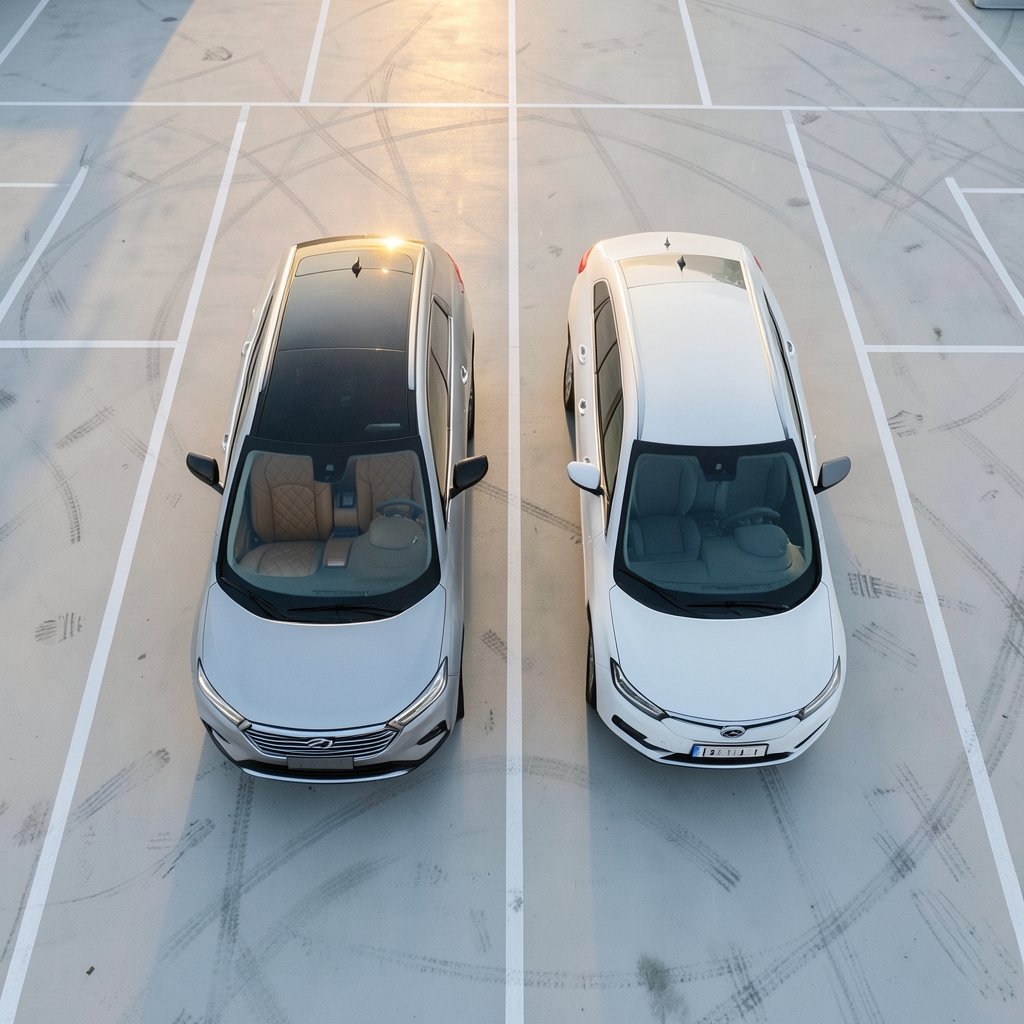
The luxury SUV segment spans an enormous range, from compact crossovers to body-on-frame giants. Here is how the tiers shake out and what each tends to deliver.
| Tier | Typical examples | Best for | Trade-offs |
|---|---|---|---|
| Compact | BMW X1/X3, Mercedes GLC, Audi Q5, Volvo XC60, Porsche Macan | Urban drivers, couples, small families | Tight rear seat, limited cargo |
| Mid-size two-row | BMW iX, Mercedes EQE SUV, Audi Q8 e-tron, Rivian R1S | Tech-focused buyers, EV adopters | Charging dependence, higher insurance |
| Mid-size three-row | BMW X7, Mercedes GLS, Land Rover Defender | Families needing flexible seating | Weight, fuel consumption, tight parking |
| Full-size | Cadillac Escalade, Lincoln Navigator, Mercedes G-Class | Towing, chauffeur duty, maximum space | Size, running costs, urban maneuverability |
| Ultra-luxury | Range Rover, Mercedes-Maybach GLS | Presence, craftsmanship, rear-seat comfort | Depreciation, complexity, service cost |
Model lineups change every year, and some nameplates get redesigned or discontinued, so treat this table as a map of the terrain rather than a shopping list. The tier matters more than the specific badge when you are narrowing down.
One practical note from the showroom floor: compact luxury SUVs are where most buyers start, and they are also where the gap between “luxury” and “premium mainstream” is narrowest. Sit in a well-optioned mainstream compact crossover before you commit to a luxury badge. Sometimes the difference is mostly trim material and dealer experience, and sometimes it is genuinely a quieter cabin, better seats and a more sophisticated suspension. You will only know by driving both back to back.
Gasoline, Plug-In Hybrid, or Electric: Matching the Powertrain to Your Life
Electrification has reshaped the segment faster than any other factor. Battery-electric luxury SUVs and plug-in hybrids now sit alongside established gasoline models, and the right choice depends almost entirely on where you park at night.
If you have a garage with a dedicated circuit, a battery-electric SUV is genuinely convenient: you wake up to a full battery and skip fuel stops entirely. If you live in an apartment or rely on street parking, the calculus flips, and a plug-in hybrid or conventional gasoline model may be the calmer ownership experience.
Be careful with range comparisons. Electric range figures are test-cycle dependent — the EPA cycle in the United States and the WLTP cycle in Europe produce different numbers, and they are not directly comparable. A vehicle advertised with a certain range in one market may show a notably different figure in another. Use the official cycle figures for the market where you will actually drive, and assume real-world highway range will be lower in cold weather.
For efficiency claims on combustion models, official fuel-economy data is the honest reference point. Manufacturer marketing figures are usually measured under favorable conditions.
Safety Ratings: What to Check and What They Do Not Tell You
In the United States, two organizations dominate crash-test reporting. The National Highway Traffic Safety Administration runs the 5-Star Safety Ratings program, covering frontal, side and rollover testing. The Insurance Institute for Highway Safety publishes its own crash-test ratings and the Top Safety Pick awards, and it periodically tightens its criteria, particularly around pedestrian protection and headlight performance.
Both are worth checking, but they answer different questions and their results do not always align. A vehicle can ace one program and stumble on a specific test in the other. Ratings are also updated per model year, so a strong result from three years ago says little about the car on the lot today.
What ratings do not capture: how a vehicle feels in an emergency lane change, whether the adaptive cruise control is smooth or jerky in traffic, and whether the lane-keeping system fights you on a narrow road. Those are subjective, and they require a test drive that includes highway merging and a stretch of stop-and-go traffic. Ask the dealer for an extended drive, not a five-minute loop.
Reliability, Depreciation, and the Costs Buyers Forget
Two surveys dominate reliability conversation, and they often disagree. Consumer Reports builds its reliability ratings from member surveys, while J.D. Power publishes quality and dependability studies with different methodologies and different definitions of a “problem.” When rankings conflict, the conflict is usually methodological, not evidence that one source is wrong.
The bigger financial story is depreciation. For most luxury vehicles, depreciation is the single largest ownership cost, typically dwarfing fuel and maintenance over a multi-year hold. Residual-value data from industry sources gives a rough guide, but the practical version is simpler: check what three-year-old examples of your shortlisted model are selling for. A steep drop tells you the market cooled on that vehicle, which is bad news if you buy new and sell early, and good news if you buy used.
Costs that surprise first-time luxury buyers:
- Tires. Large-diameter performance tires on heavy SUVs wear quickly and cost significantly more than mainstream sizes.
- Insurance. Repair costs on complex vehicles push premiums up, especially for models with expensive sensors in the bumpers.
- Scheduled maintenance. Some brands include it; others charge premium rates for routine service.
- Optional equipment failures. Air suspension, 48-volt systems and adaptive dampers are wonderful until they need repair out of warranty.
If the numbers feel steep, there is a legitimate middle path. Buying a certified pre-owned example, or choosing a well-optioned model from a lower tier, is a recognized route to luxury on a budget without giving up the cabin quality that made you want the badge in the first place.
Practical Buying Tips That Save Real Money
These are the moves that consistently work in practice, and the mistakes that consistently cost people money.
Do this:
- Drive at least three competitors on the same day, on the same roads, so your impressions are comparable.
- Test the third row with actual passengers if you plan to use it. Many “three-row” SUVs have a third row suitable only for children on short trips.
- Check cargo volume with the seats in the configuration you will use daily, not the maximum figure in the brochure.
- Verify the warranty terms for the high-tech components specifically — air suspension, battery packs and driver-assist sensors sometimes have different coverage.
- Get an insurance quote before you sign, not after.
Avoid this:
- Buying on the first visit. Luxury SUVs frequently carry incentives that appear at month or quarter end.
- Skipping the infotainment test. Spend ten minutes pairing your phone and using the navigation. Some systems are far more intuitive than others, and you will live with it for years.
- Assuming a bigger engine means a better vehicle. In this segment, the base powertrain is often the more refined daily companion.
- Ignoring the dealer network. Service loaner policies and dealership distance matter more on a luxury vehicle than most buyers expect.
For buyers who view the vehicle as part of a broader lifestyle picture, it helps to think about how it fits the rest of your home and travel life. Someone building out a garage gym and a home office is making the same kind of decision — see this guide to a luxury home gym for the same logic applied to fitness equipment. And if the SUV is a second or third property asset, professional luxury property management services can handle the logistics while you are away.
Where the Luxury SUV Fits in a Wider Taste for Craftsmanship
The appeal of a well-made SUV is rarely isolated. Buyers who care about stitched leather, machined metal and quiet cabins tend to care about materials everywhere. That instinct connects to the same values driving Italian luxury fashion, where the difference between good and exceptional usually lives in details most people never consciously notice: seam density, hardware weight, the way a surface feels under the hand.
The same principle applies to the vehicle. The options that age best are usually the ones you touch every day — the seat, the steering wheel, the door pull — rather than the ones that photograph well. A useful exercise is to sit in a used example of the model you are considering, ideally a three-year-old one, and check how the interior has held up. Leather that sags, trim that rattles and screens that have gone dim tell you more about long-term quality than any press launch.
Conclusion
The best luxury SUV is not a single model. It is the one that matches your seating needs, your parking situation, your charging access and your tolerance for running costs, and that scores well on the safety and reliability data for its current model year. Start with the tier, then the powertrain, then the specific vehicle. Check official safety ratings and fuel or range figures per model year rather than trusting marketing copy. Drive three rivals back to back. And budget for depreciation, tires and insurance before you fall in love with a cabin.
Do that, and the “best” question answers itself — not because a magazine said so, but because the vehicle fits the life you actually live.
Frequently Asked Questions
What is the best luxury SUV overall?
There is no single answer, because no official standard defines the category and rankings from different outlets use different criteria. The most reliable approach is to define your priorities first — seating, powertrain, ride comfort, technology, ownership cost — and then compare candidates against them. A vehicle that wins on driving dynamics may lose on cargo space or predicted reliability.
Are luxury SUVs worth the extra money over mainstream models?
It depends on what you value. The extra spend typically buys a quieter cabin, better seat support, more sophisticated suspension, stronger driver-assist systems and a more attentive dealer experience. If those matter to you daily, the premium can be justified. If you mainly want space and a high seating position, a well-optioned mainstream SUV may deliver most of the benefit for less.
How do I compare electric range figures between luxury SUVs?
Use the official test-cycle figures for the market where you drive. The EPA cycle in the United States and the WLTP cycle in Europe produce different numbers and are not directly comparable. Also expect real-world highway range to fall below the official figure, particularly in cold weather or at sustained high speeds.
Which safety ratings should I check before buying?
In the United States, check both the NHTSA 5-Star Safety Ratings and the IIHS ratings, since they test differently and results do not always align. Confirm the ratings for the specific model year you are buying, because results are updated annually and older scores may not reflect the current vehicle.
Do luxury SUVs hold their value well?
It varies widely by model, and depreciation is usually the largest single ownership cost in this segment. The practical check is to look at what three-year-old examples of your shortlisted model are selling for. A steep drop hurts if you buy new and sell early, but it can make a certified pre-owned example an excellent value.
Is a plug-in hybrid a good choice if I cannot charge at home?
Usually not the best fit. A plug-in hybrid delivers its efficiency advantage mainly when you charge regularly; without home charging, you end up carrying extra weight and complexity for little benefit. In that situation, a conventional gasoline model or a strong hybrid is often the more sensible choice.














