


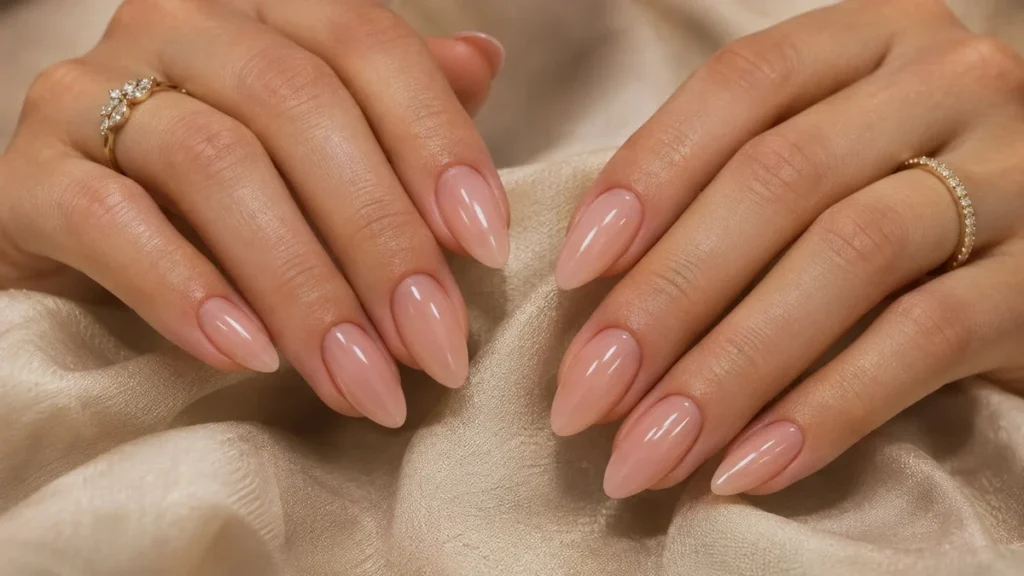
Almond shape nails have a soft, pointed look that makes fingers appear longer. They are wider near the nail bed and become narrower toward the tip. Unlike stiletto nails, almond nails have a rounded point instead of a sharp one.
You can create this shape at home with a nail file and a little patience. The most important part is filing both sides evenly and keeping the tip soft and rounded.
This guide explains what almond nails look like, how to file them in six easy steps, and how to care for them. You will also learn how they compare with round, square, coffin, and stiletto nails.
What Are Almond Shape Nails?
Almond shape nails have sides that slowly narrow toward the center. The tip is rounded, just like the shape of an almond. The shape does not have a flat edge or sharp corners. Instead, both sides meet in a smooth, soft point. Many people like this shape because it gives the fingers a longer look. It also offers a softer style than sharp stiletto nails.
However, almond nails need some length. If your nails are very short, there may not be enough free edge to create the tapered sides. A few millimeters of nail beyond your fingertip usually makes the shape easier to see.
How to File Almond Shape Nails at Home
You do not need special tools to create almond nails. A nail file, a fine buffer, and good lighting are enough. Before you start, make sure your nails are clean and dry. Work slowly so you do not remove too much length.
Follow these six steps.
Step 1: Keep Some Nail Length

Almond nails need a little length to create their pointed shape. If your nails are too short, wait until they grow slightly before filing them into this style. Keep a few millimeters of free edge beyond your fingertips.
Do not cut your nails too short at the start. You need enough length to shape both sides.
Step 2: File Both Sides at an Angle

Hold your nail file at a slight angle. Start filing one side of the nail toward the center of the tip. Then repeat the same movement on the other side.
The goal is to make the nail narrower near the tip while keeping the sides balanced. Avoid filing too much from one side. Small movements will help you control the shape.
Step 3: Round the Tip
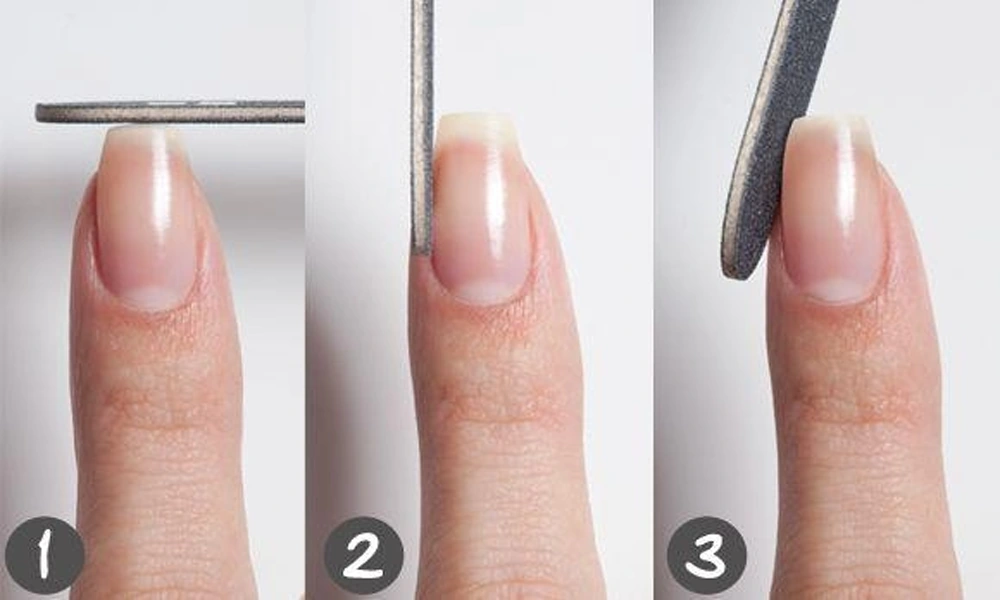
Now look at the point where both sides meet. Use your file to soften this area. Do not leave a sharp tip. This step is important because it separates almond nails from stiletto nails. Almond nails have a rounded point, while stiletto nails have a much sharper tip.
Step 4: Check Both Sides

Look at your nail from the front.
Are both sides the same length and angle?
Does the point sit in the center?
If one side looks wider, make a few small adjustments. Repeat this check on every nail so your hands look even.
Step 5: Smooth the Edges

Use a fine nail buffer to smooth any rough edges. Do not press too hard or remove too much nail. You only need to make the filed edges feel smooth. This helps the nail look like one clean shape instead of having uneven filing marks.
Step 6: Check the Final Shape
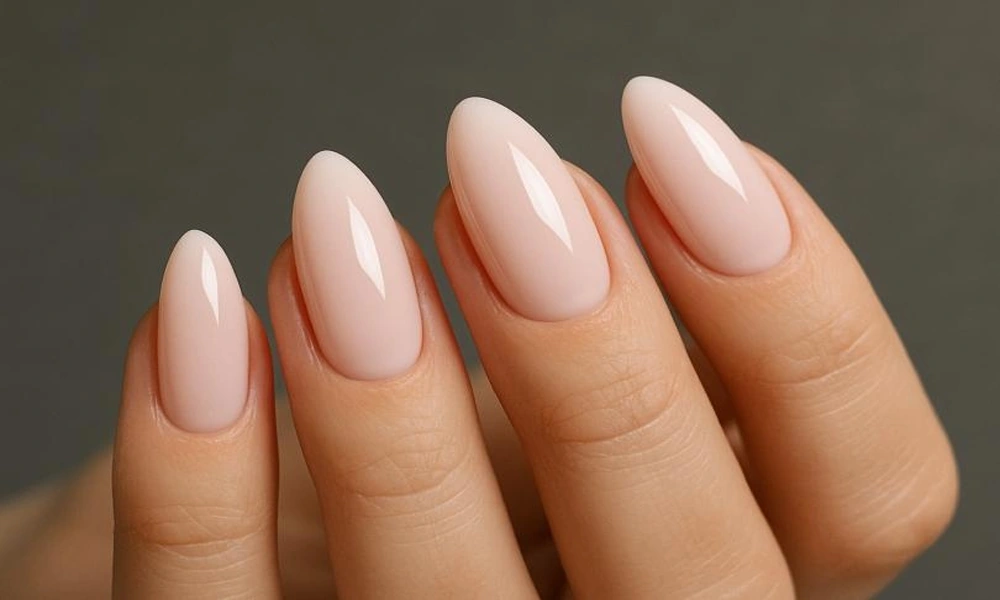
Hold your finger straight and look at the nail from above. The sides should narrow smoothly toward the tip. The end should look rounded, not sharp or flat. If the shape looks uneven, make a small adjustment with your file. Take your time. It is better to file a little at a time than to remove too much nail.
Almond Nails vs. Other Nail Shapes
Almond nails are not the only option if you like shaped nails. Round, square, coffin, and stiletto shapes all have a different look.
Here is a simple comparison to help you choose.
| Nail Shape | What It Looks Like | Length Needed | Maintenance |
| Almond | Narrow sides with a soft point | A few millimeters of free edge | Moderate |
| Stiletto | Long sides with a sharp point | Long | High |
| Round | Follows the natural curve of the fingertip | Works on short nails | Low |
| Coffin | Narrow sides with a flat tip | Long | Moderate to high |
| Square | Straight sides and a flat tip | Works on short to medium nails | Low to moderate |
If you like pointed nails but want a softer finish, almond is a good option. If you prefer a bold and sharp look, see our stiletto nails guide.
For a shape with a flat edge, explore our square nails guide.
Who Should Choose Almond Shape Nails?
Almond nails can suit many people, but the final look depends on your natural nail shape, nail length, and daily activities.
Here are a few things to consider.
Almond nails may suit you if:
- You have narrow or medium-width nail beds.
- You want your fingers to look longer.
- You like a soft, pointed nail shape.
- You want a pointed look without the very sharp tip of stiletto nails.
- Your daily routine does not put too much pressure on your nail tips.
You may prefer another shape if:
- Your nail beds are naturally wide and you prefer a less tapered look.
- Your natural nails peel or bend easily.
- You often use your fingertips for heavy work.
- You prefer short nails that need very little care.
If you have wider nail beds, square or squoval shapes may give your nails a more balanced look. You can compare options in our square nails guide.
How to Care for Almond Shape Nails

Almond nails need regular care because their tips are narrower than square or round nails. A few simple habits can help keep them in good shape.
File Your Nails Regularly
As your nails grow, the sides may lose their original shape. For natural nails, check the shape every one to two weeks. Use a file to make small changes when needed.
Do not wait until the nails look very uneven.
Use Your Finger Pads
Try not to use your nail tips to press buttons, open packages, or lift objects. Use the soft pads of your fingers instead. This can help reduce pressure on the narrow tips.
Use Cuticle Oil
Apply cuticle oil around your nails and along the free edge. It helps keep the skin around your nails moisturized. Make it part of your daily nail-care routine.
You can also use a hand cream after washing your hands.
Shorten Nails Carefully
If your almond nails become too long for daily tasks, shorten them slowly. Remove a little length at a time and keep checking the shape. A shorter almond shape can still look neat and balanced.
Take Care of Gel and Nail Extensions
If you wear gel or nail extensions, follow the correct care and refill schedule for your product.
Enhancement sets often need salon maintenance every two to three weeks, depending on nail growth and the type of product used.
You can learn more about gel nails, builder gel nails, and Gel-X nails.
Do not pull or peel off artificial nails. Follow safe removal instructions to avoid damaging your natural nails.
Easy Tips for Getting the Almond Shape Right
Keep these simple tips in mind when filing your nails:
- File dry nails: Dry nails are easier to shape because they do not bend as much as wet nails.
- Use small movements: Remove a little nail at a time to avoid making the shape too narrow.
- Keep both sides even: Check each nail from the front while filing.
- Round the tip: A soft point gives almond nails their classic look.
- Use cuticle oil: Moisturize the nail area and free edge regularly.
- Do not rush: Slow filing gives you more control and helps prevent mistakes.
Frequently Asked Questions
What is the difference between almond and stiletto nails?
Almond nails have sides that taper toward a soft, rounded point. Stiletto nails have a sharper and more pointed tip. Almond nails usually need less length and offer a softer look.
How long do nails need to be for an almond shape?
Your nails need a few millimeters of free edge beyond the fingertips. This gives you enough length to file both sides toward the center. Very short nails may look round rather than almond-shaped.
Can I have almond nails with wide nail beds?
Yes, you can. However, a strong taper may make wide nail beds look narrow near the tip. You can try a gentle taper with a rounded point. Square or squoval nails are other options if you prefer a wider shape.
How often should I file almond nails?
Natural almond nails may need small adjustments every one to two weeks. If you wear gel or other nail enhancements, your maintenance schedule may be different. Follow the advice of your nail technician.
Do almond nails break more easily than square nails?
The narrow point can be more likely to catch or break under pressure. This is why nail length and daily care matter. Keep the tips at a comfortable length and avoid using your nails as tools.
Can I make almond nails on short natural nails?
You can create a softer version, but very short nails may not have enough length for a clear almond shape. Let them grow a little before filing if you want a more noticeable taper.
Final Thoughts
Almond shape nails are a simple way to give your hands a longer and more balanced look. Their soft point makes them different from sharp stiletto nails, while their tapered sides create a neat finish. For more guidance, read OPI’s guide to shaping different nail styles, including the steps for creating an almond shape.
You can file this shape at home with a little patience. Start with enough length, shape both sides slowly, and round the tip. Remember to care for your nails after filing. Keep them moisturized, avoid using the tips as tools, and make small changes when the shape starts to grow out. If your natural nail shape does not suit a strong taper, try a softer almond or choose a square or squoval shape instead.









