

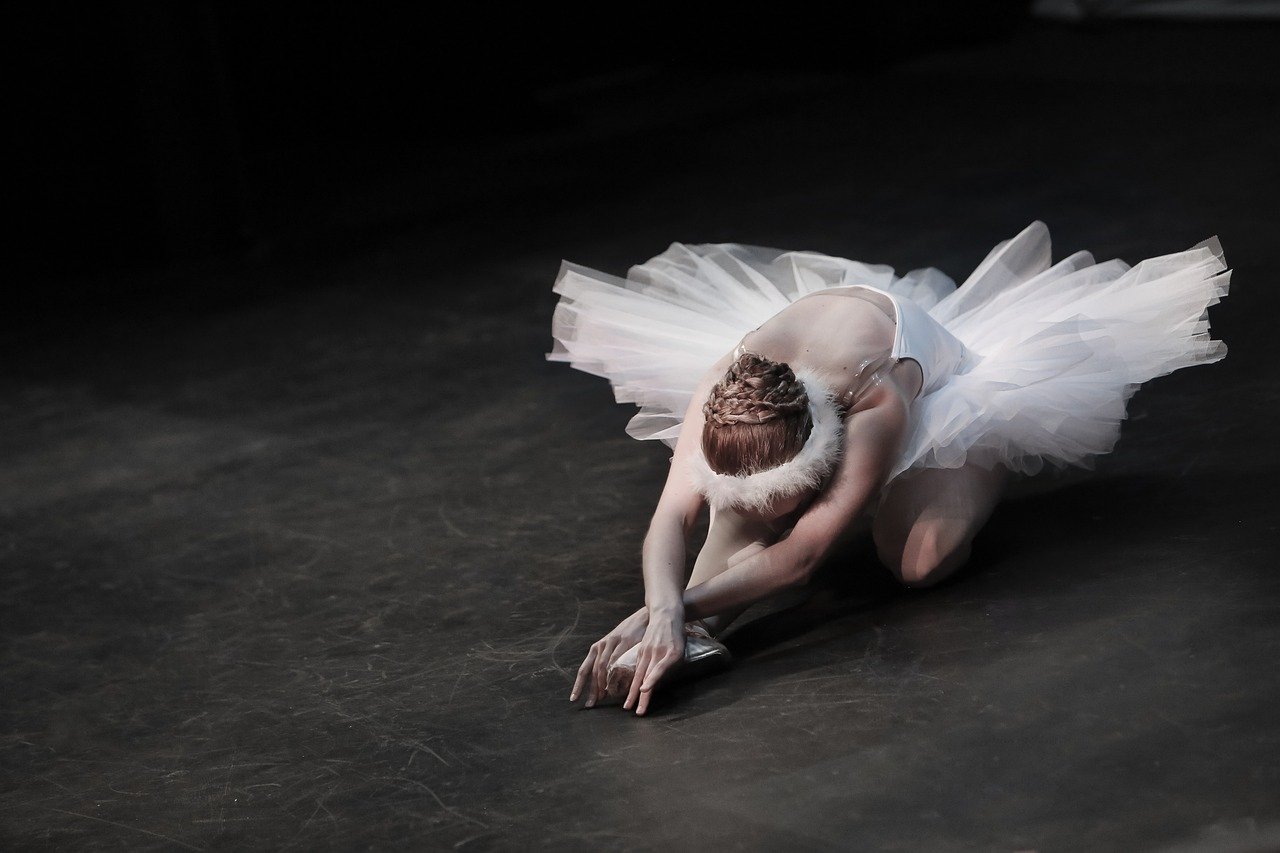

What does a dancer wear after the pointe shoes come off and the stage door closes behind her? That question drives one of fashion’s most durable aesthetics. The phrase ballerina off duty appears constantly in style writing, usually attached to leg warmers, wrap cardigans, and slicked-back buns. But more is going on beneath the surface than a cute outfit formula. (Off campus book series elle kennedys briar university)
The look borrows from real rehearsal clothing, real recovery habits, and a very real contrast between the glamour of the stage and the sweat of the studio. Understanding that contrast is the difference between a costume and a wardrobe. This guide breaks down where the aesthetic came from, what belongs in it, what usually goes wrong, and how to wear it without looking like you raided a dance-school lost-and-found bin.
What “Ballerina Off Duty” Actually Means
It helps to be clear from the start: ballerina off duty is not a technical term. In dance writing, vocabulary like “class,” “rehearsal,” and “call time” carries precise meaning. “Off duty” does not. It is editorial framing, a journalistic shorthand for the space between a dancer’s working life and her everyday one.
In fashion and lifestyle writing, the phrase is used almost interchangeably with balletcore, a named trend generally dated to 2022–2023 in the fashion press. Balletcore draws on ballet practice wear and rehearsal clothing rather than stage costume. That distinction matters enormously. A tutu is performance. Leg warmers, a leotard under a zip hoodie, and flat pumps are practice. The off-duty look lives entirely in the second category.
The trend’s origin date and coinage are reported inconsistently across outlets, so treat any confident claim about who invented balletcore with suspicion. What is not in dispute is the source material: the everyday uniform of people who spend six hours a day in a studio.
The Real Rehearsal Room Roots

Dancers have long worn warm-up clothing between rehearsals and performances. Muscles need to stay warm, joints need to stay loose, and nobody wants to sit in a stiff costume between calls. Leg warmers became standard dancer wear in the 1970s and 1980s before crossing into mainstream fashion in the early 1980s, the era of Flashdance in 1983.
That diffusion timeline is often oversimplified. Leg warmers were dance-world equipment long before they were a pop-culture accessory, and popular sources date the earlier studio use poorly. The point stands regardless: the off-duty aesthetic was not invented by stylists. It was borrowed from people who needed their calves to stay warm in a cold studio at 9 a.m.
The same is true of the flat shoe. The ballet flat derives from the soft slipper worn in and around dance training and entered mainstream women’s fashion in the mid-20th century, with recurring revivals ever since. It is a shoe designed around the shape of a foot at rest, not a foot on display.
Why Pointe Shoes Never Belong in This Look
Here is where a lot of styling goes wrong. Pointe shoes are constructed with a stiffened box and shank. They are not designed for walking on pavement. Dancers typically change out of them and into flats or warm-ups off stage, precisely because the shoe is a tool, not a shoe.
Wearing pointe shoes as streetwear is not a bold fashion statement. It is closer to wearing a tennis racket as a hat. If a look depends on pointe shoes to read as “ballerina,” it has misunderstood the assignment. The whole idea of off duty is that the hard equipment is gone.
The Core Pieces of an Off-Duty Ballet Wardrobe
The aesthetic works because it is built from a small number of functional items. Here is how the practice-wear pieces map onto everyday wear.
| Dance-world original | Everyday version | What makes it work |
|---|---|---|
| Leg warmers | Ribbed knit ankle or calf warmers | Adds texture and warmth without bulk |
| Wrap cardigan | Soft tie-front knit | Layers easily, moves with the body |
| Leotard | Fitted bodysuit | Clean line under looser layers |
| Tights | Opaque or sheer black tights | Grounds the silhouette |
| Ballet flat | Soft leather or satin pump | Low, quiet, close to the foot |
| Studio bun | Slicked-back low bun | Signals discipline, not effort |
The through-line is softness plus structure. A fitted base layer, a loose warm layer, and a flat shoe. That is the whole formula. Everything else is variation.
Getting the Proportions Right
The most common mistake is treating the look as an excuse to wear entirely shapeless clothing. Real dancers layer for function, and function creates shape: a close-fitting layer near the body, volume on top or at the ankle, and a shoe that keeps the line clean.
Practical guidance that actually works:
- Start with a fitted base. A bodysuit or close-fitting knit top prevents the whole outfit from reading as a bag.
- Add one loose layer only. A wrap cardigan or oversized zip hoodie, not both.
- Keep the ankle deliberate. Leg warmers should sit at the calf or bunch at the ankle, not swallow the foot.
- Choose one soft texture. Ribbed knit, brushed cotton, or fine gauge wool. Three competing textures look messy fast.
- Leave the hair simple. A low bun or a claw clip. Anything more styled fights the premise.
A useful rule of thumb: if the outfit would survive a ninety-minute rehearsal, it is probably working. If it would fall apart the moment someone raised an arm, it is a costume.
The Health Logic Behind the Look
There is a reason dancers dress this way, and it is not aesthetic. Rest, cross-training, and load management are standard advice for reducing dance injury risk, and overtraining with insufficient recovery is a recognised risk factor. Warm layers, supportive flat shoes, and clothing that allows full range of motion all serve that recovery logic.
This is where the off-duty look earns its credibility. It is a wardrobe built around a body that has been worked hard and needs to be looked after. That is also why the aesthetic reads as calm rather than flashy. Comfort is the point.
Anyone who has spent time around a dance studio knows the pattern: the dancers who look most effortlessly put together off stage are usually the ones who have been most ruthless about comfort. The ones in the stiffest outfits are usually the newest.
Common Mistakes That Undermine the Look
A few recurring errors show up again and again in real life, and each one has a simple fix.
Wearing performance pieces as daywear. Tulle skirts, stage makeup, and pointe shoes belong to the theatre. The off-duty look is about what happens after.
Over-accessorising. The aesthetic is quiet. A single delicate necklace is plenty. Layered hardware competes with the softness that makes the look distinctive.
Ignoring fit at the ankle. This is the detail people skip. A leg warmer that pools over the whole foot turns a clean line into a puddle. Check the length before you commit.
Treating it as a costume. The moment the outfit looks like a themed party, it stops working. The look should read as someone’s actual clothes, because for a great many dancers, it is.
Skipping the layers in cold weather. Thin knits and flats in January are a fast route to misery. Swap the ballet pump for a soft flat boot and keep the rest of the formula intact.
The same principle of getting small physical details right applies elsewhere too. A display that sits slightly crooked or a fitting that is subtly off can ruin an otherwise clean result, which is why guides on fixing a misaligned screen focus on the tiny adjustments that make the whole thing read correctly. The off-duty ballet look rewards the same attention to the small stuff.
Ballet’s Public Image and the Off-Duty Contrast
Press and memoir writing often contrast the disciplined, athletic reality of a dancer’s day with the glamorous stage image. The off-duty framing plays directly on that gap. Audiences see the curtain call. They do not see the six hours of class, the ice packs, the tape, or the walk home in flats with a bag over one shoulder.
That contrast is why the aesthetic has staying power. It offers a glimpse behind the curtain that still looks beautiful. It is the same instinct that makes people fascinated by any profession’s behind-the-scenes uniform, whether it is a chef’s whites after service or a mechanic’s tools laid out in order. There is a certain satisfaction in seeing the functional version of something usually presented as spectacle. The same appeal shows up in unexpected places, including the world of heavy-duty towing hardware, where a pintle hitch built for tough duty gets admired for exactly the same reason: it is honest about what it is for.
Terminology and Framing
One caution for anyone writing about this topic. Because “off duty” is not a technical dance term, using it as a title is an editorial choice, not a description of a recognised practice. That is fine, as long as the framing is clear. The look is real. The label is journalism.
How the Aesthetic Crosses Into Everyday Wardrobes
The reason balletcore has legs is that it solves a genuine problem: how to look considered without looking like you tried. The formula is forgiving. It works on a range of body types, ages, and budgets, and it does not require anything particularly expensive.
A few practical notes from watching people actually wear this:
- Buy the flat shoe for walking. The ballet pump’s revival is real, but a paper-thin sole is miserable on pavement. Look for a slightly cushioned footbed and a flexible upper.
- Choose warmers you can wash. They will be worn constantly. Ribbed cotton blends hold up better than loose acrylic knits.
- Keep a wrap cardigan at your desk. It is the single most useful piece in the whole aesthetic and layers over almost anything.
- Do not over-invest in trend pieces. The core items are basics. The trend will cycle. The bodysuit and the flat will not.
For anyone who likes their gear to do exactly what it says on the tin, the appeal of functional design is familiar territory. It is the same reason a simple ball valve’s quarter turn really does shut off flow: a well-designed object earns trust by behaving predictably. Ballet practice wear earns the same trust. It does one job and does it without drama.
Where the Look Goes Next
Trend cycles being what they are, balletcore will keep returning in slightly different forms. The core pieces tend to survive each cycle because they are functional first. Leg warmers come back because calves get cold. Flats come back because feet get tired. Wrap cardigans come back because studios are draughty.
That is the quiet strength of the aesthetic. It is not built on novelty. It is built on a body doing work and needing to be comfortable afterward.
Conclusion
The ballerina off duty look is often sold as a styling trick, but it is really a translation. It takes the rehearsal-room uniform of working dancers, strips out the performance, and offers the functional remainder as everyday wear. That is why it feels calm rather than theatrical. The pointe shoes are gone. The warm layers, the flat shoes, and the simple hair are what remain.
Getting it right comes down to a handful of decisions: keep the base fitted, add one soft layer, respect the ankle, and resist the urge to turn it into a costume. The look works because it is honest about what it is for. Wear it as clothes, not as a theme, and it will do exactly what it was designed to do.
Frequently Asked Questions
What does “ballerina off duty” mean?
It is a descriptive phrase used mainly in fashion and lifestyle writing, not a technical dance term. It refers to the rehearsal-room aesthetic of a dancer between classes and performances: warm layers, fitted basics, flat shoes, and simple hair. It overlaps heavily with balletcore, a named trend generally dated to 2022–2023.
Is balletcore the same as the off-duty ballerina look?
They are closely related but not identical. Balletcore is the broader fashion trend drawing on ballet practice wear and rehearsal clothing. The off-duty framing emphasises the contrast between stage glamour and studio reality. In practice, most articles use the two interchangeably.
Can you wear pointe shoes as part of the look?
No. Pointe shoes are built with a stiffened box and shank and are not designed for walking on pavement. Dancers change out of them and into flats or warm-ups off stage. Using them as streetwear misreads the entire premise of the aesthetic, which is about what happens after the shoes come off.
Where did leg warmers in fashion come from?
Leg warmers became standard dancer wear in the 1970s and 1980s before crossing into mainstream fashion in the early 1980s, the Flashdance era of 1983. The earlier dance-world use is well documented but poorly dated in popular sources, so treat precise timelines with caution.
What are the most common mistakes with this look?
The main ones are wearing performance pieces as daywear, over-accessorising, ignoring fit at the ankle, and treating the outfit as a costume. Another frequent error is skipping warm layers in cold weather. The fix is simple: keep the base fitted, add one loose layer, and choose a flat shoe built for actual walking.
Do you need to be a dancer to wear it?
Not at all. The aesthetic is a translation of functional practice wear into everyday clothing, and it works on a wide range of body types and budgets. The core pieces are basics: a fitted bodysuit, a wrap cardigan, opaque tights, and a soft flat. What matters is that the outfit reads as real clothes rather than a themed costume.









