


What makes an audiobook worth twelve hours of your life? That question matters more than it sounds. A printed book you can skim, flip back through, and abandon on page forty without guilt. An audiobook demands your ears for the whole ride, and a bad narrator can turn a great novel into a chore. So the hunt for the best audiobooks is not really a hunt for titles. It is a hunt for the right pairing of book, voice, and listener. (Barbie world tour book delivers fashion movie only hinted at)
The good news is that the format has matured. Audiobooks have posted revenue growth nearly every year since 2011, and the catalog now spans everything from six-hour thrillers to full-cast productions with sound design. The bad news is that “best” lists rarely agree with each other, because they are measuring different things: sales, awards, narrator skill, or pure listenability. This guide sorts out what actually separates a great listen from an average one, and how to find titles that fit your own ears.
Why the Best Audiobook Lists Keep Changing
Walk into any bookstore and you will see the same classics on every shelf. Walk into the audiobook section, and the picks shift every few months. There are three reasons for that.
First, the market moves fast. Industry surveys have tracked double-digit growth in most years for over a decade, which means publishers are commissioning more audio editions, more celebrity narrations, and more original audio productions than ever before. New contenders arrive constantly.
Second, awards carry real weight in this format. The Audie Awards, given annually since 1996, are the industry’s main prize, with categories that include Audiobook of the Year and Narrator of the Year. A win or a nomination is one of the few objective quality signals a listener has, because it reflects judgments about both the text and the performance.
Third, taste splits sharply by genre. A listener who loves cozy mysteries and a listener who loves literary fiction will not agree on a single title, even if both are right. Most “best audiobooks” lists quietly assume one kind of listener. Yours should not.
The Narrator Is Half the Book
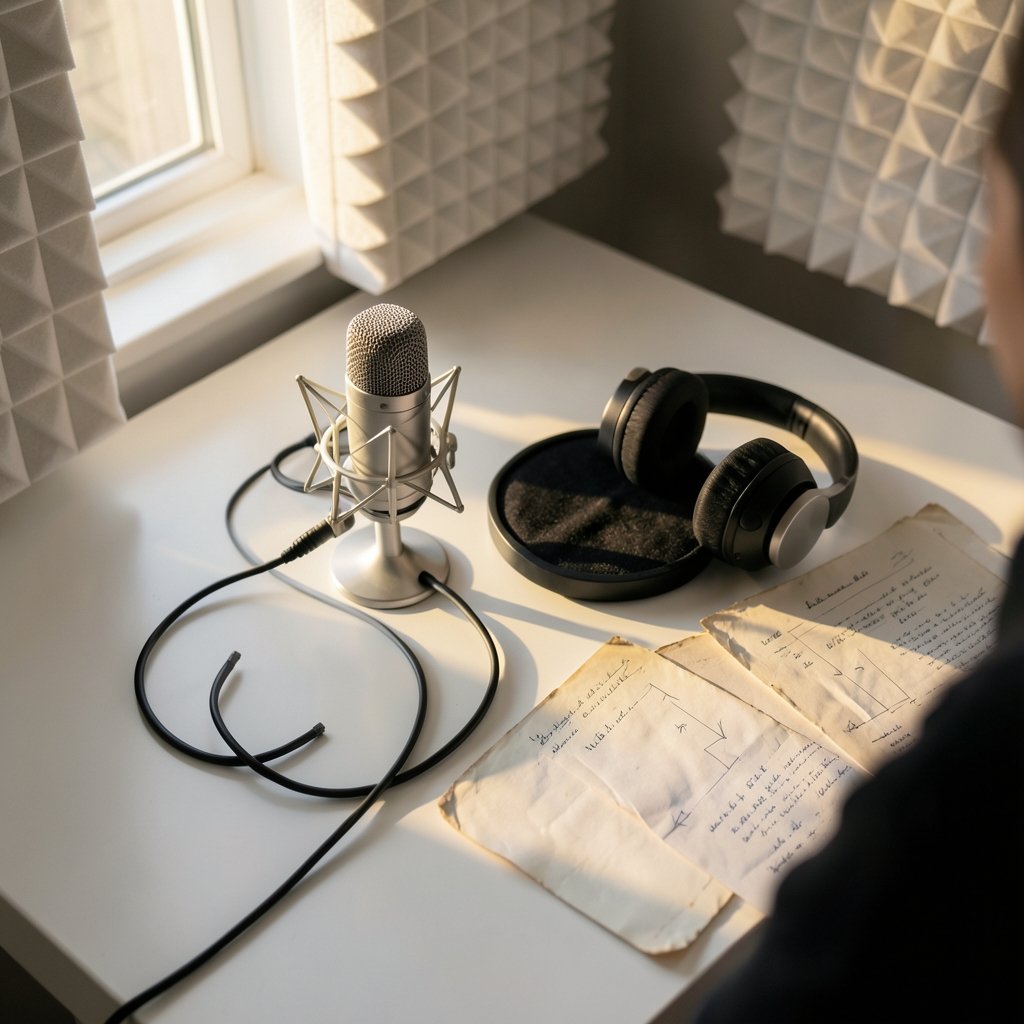
Here is the practical truth that most recommendation lists bury: narration quality decides whether you finish. A competent narrator can lift middling prose. A miscast narrator can sink a bestseller.
What separates a strong performance from a weak one? A few things show up again and again in reviews and award citations.
- Consistency of voice. Characters need to sound distinct without tipping into caricature. If you cannot tell two speakers apart in dialogue, the listen gets muddy fast.
- Pacing that matches the material. Thrillers need momentum. Literary fiction needs room to breathe. A narrator who reads everything at the same tempo flattens the book.
- Accent and dialect care. Bad accents pull listeners out of the story instantly. Good ones disappear into it.
- Breath and editing. Strange pauses, audible mouth clicks, and uneven volume are production problems, not performance problems, but they ruin the experience just the same.
A useful habit: before committing to a twelve-hour title, listen to the free sample of two or three narrators in the same genre. Most retailers offer several minutes of audio for free. That sample tells you more than any review.
Match the Format to the Book
Not every book belongs in audio. Some are better read with the eyes. Knowing which is which saves hours.
| Book type | Works well in audio? | Why |
|---|---|---|
| Memoir read by the author | Usually yes | The author’s own voice adds intimacy and authority |
| Thrillers and mysteries | Usually yes | Plot momentum carries the listener forward |
| Full-cast fiction | Often yes | Multiple narrators distinguish characters clearly |
| Dense nonfiction with charts and tables | Sometimes | Visual material does not translate; check for a PDF companion |
| Poetry and experimental prose | Rarely | Line breaks and page layout carry meaning |
| Technical manuals and reference works | No | You need to jump around, not listen linearly |
The pattern is simple. Books driven by voice, plot, or argument work in audio. Books driven by layout, diagrams, or visual structure usually do not. If a nonfiction title has a downloadable companion PDF, that is a sign the publisher thought about listeners, and it is worth grabbing before you start.
Where to Find the Best Audiobooks for Free
Price is the reason many people never try audiobooks at all. A single credit-based subscription can cost more than a paperback, and a twelve-hour listen is a big commitment if you are not sure you will like it.
There are three legitimate free or low-cost routes worth knowing.
Public libraries. In the United States, most public libraries lend digital audiobooks through services like OverDrive and Libby. You need a library card, and availability varies by library and by title, but the price is right. This is the single most underused route to good listening.
Public-domain recordings. Volunteer-read classics are available for free from LibriVox, founded in 2005. Quality varies wildly because readers are volunteers, but for out-of-copyright novels and essays, it is a genuine option. Listen to a sample first.
Included catalogs. Some subscription services bundle a rotating selection of audiobooks at no extra cost. The catalog changes monthly, so check what is actually included before you commit.
A word of caution on free routes: not every “free audiobook” site is legal, and pirated audio often has poor quality and missing chapters. Libraries and public-domain archives are the safe bets.
Accessibility Is Reshaping the Format
Audiobooks are not just a convenience. For blind and low-vision readers, dyslexic readers, and people with motor impairments, they are a primary way to access books at all. That has pushed the format forward in ways that benefit everyone.
The EPUB 3 specification, maintained by the W3C and revised as EPUB 3.3 in 2023, includes support for media overlays, which synchronize text and audio so a reader can follow along as they listen. This “read-along” approach helps emerging readers, language learners, and anyone who processes better with two channels instead of one.
Law has followed. In the United States, the Americans with Disabilities Act of 1990 and Section 508 of the Rehabilitation Act, as amended in 1998, shape obligations around accessible formats for public entities and federal agencies. In the European Union, the European Accessibility Act, adopted in 2019, applies to e-books and e-commerce from 28 June 2025. The practical effect for listeners is a growing supply of well-produced accessible titles, not just a legal checkbox.
Reading vs. Listening: What the Research Actually Says
Plenty of people worry that listening is “cheating.” The research does not support that fear, but it does not fully dismiss it either.
Studies comparing comprehension from listening versus reading have produced mixed results. For narrative text, such as novels and memoirs, listening and reading tend to produce similar comprehension. For complex, dense, or technical material, reading often has an edge, probably because it lets you slow down, re-read a sentence, and control the pace.
That finding lines up with what most listeners discover on their own. Fiction and narrative nonfiction are natural fits for audio. Dense argument, math-heavy material, and anything with figures is easier on the page. A sensible rule: listen to stories, read to study.
There is also a practical variable the studies cannot capture: attention. A listener driving on a quiet highway will absorb more than a listener folding laundry in a noisy house. The format is not the problem. The environment is.
Practical Tips That Actually Work
A few habits separate people who finish audiobooks from people who abandon them at chapter three.
- Set the speed deliberately. Most players default to normal speed. Many listeners find 1.25x or 1.5x more engaging for thrillers and slower speeds better for literary fiction. Experiment on a short title first.
- Use the sample every time. Two minutes of listening beats any review, including this one.
- Check the runtime against your commute. A twelve-hour book is roughly two weeks of a one-hour daily commute. If that feels long, start with something in the six-to-eight-hour range.
- Keep a backup title for low-attention moments. A familiar re-read or a light mystery is ideal for chores and errands.
- Note the narrator’s name. When you find a voice you love, follow it. Narrator-led browsing is one of the most reliable ways to find your next good listen.
Common mistakes are just as predictable. People start with a dense nonfiction title, lose the thread, and conclude audiobooks are not for them. People pick a book they already struggled with in print and expect audio to fix it. People ignore the sample and then blame the book. None of these are format failures. They are mismatches. (Off campus book series elle kennedys briar university)
Building a Personal “Best” List
The most useful thing any listener can do is stop treating “best audiobooks” as a universal ranking and start treating it as a personal filter. Award winners and bestseller lists are a fine starting point, but they describe what a lot of people liked, not what you will like.
A workable method: pick one award-winning title in a genre you already read, one author-narrated memoir, and one library borrow you would never have paid for. Listen to all three. The patterns that emerge, whether you prefer single narrators, full casts, fast pacing, or slow, tell you more than any list.
That approach also keeps the hobby affordable. Libraries, samples, and short titles let you experiment without spending much. And the experimentation is the fun part. The best audiobook is not the one at the top of a chart. It is the one you finish, remember, and recommend to a friend in the parking lot.
Conclusion
The best audiobooks are not a fixed set of titles. They are the ones where the book, the narrator, and your own listening conditions line up. Start with the narrator, use the free sample every time, borrow from the library before you buy, and match the format to the material. Listen to stories; read to study. Do that, and the twelve hours stop feeling like a risk and start feeling like the best part of your commute.
Frequently Asked Questions
What makes an audiobook “best”?
There is no single standard. Awards like the Audie Awards weigh narration and production quality, bestseller lists measure sales, and individual listeners weigh whether they actually finished the book. The most reliable signal is a combination: award recognition plus a narrator whose sample you enjoyed plus a genre you already read. (Pet friendly vacation rentals actually works when you book)
Are audiobooks as good as reading?
For narrative text like novels and memoirs, comprehension from listening is generally comparable to reading. For dense or technical material, reading tends to work better because you control the pace and can re-read. Most listeners do best with a mix of both formats.
How do I find good audiobooks for free?
Public libraries in the U.S. lend digital audiobooks through services like OverDrive and Libby with a library card. Public-domain classics are available free from LibriVox, though volunteer narration quality varies. Some subscription services also include a rotating catalog at no extra cost.
Do I need to listen at normal speed?
No. Many listeners prefer 1.25x to 1.5x for thrillers and faster-paced fiction, and slower speeds for literary fiction or complex material. Try a short title at two or three speeds before settling on a default. The right speed is the one where you stop noticing the speed.
Why do some books work badly in audio?
Books that depend on layout, charts, diagrams, or line breaks do not translate well. Dense nonfiction with tables often needs a companion PDF. Poetry and experimental prose usually lose meaning when read aloud. Books driven by voice, plot, or argument are the safest bets.
Can I follow an audiobook if I have trouble with print?
Yes. Audiobooks are a primary access route for blind, low-vision, and dyslexic readers. Read-along formats that synchronize text and audio, supported by the EPUB 3 specification, help listeners follow along. Accessibility law in the U.S. and the EU has also pushed publishers to produce more accessible editions.














