

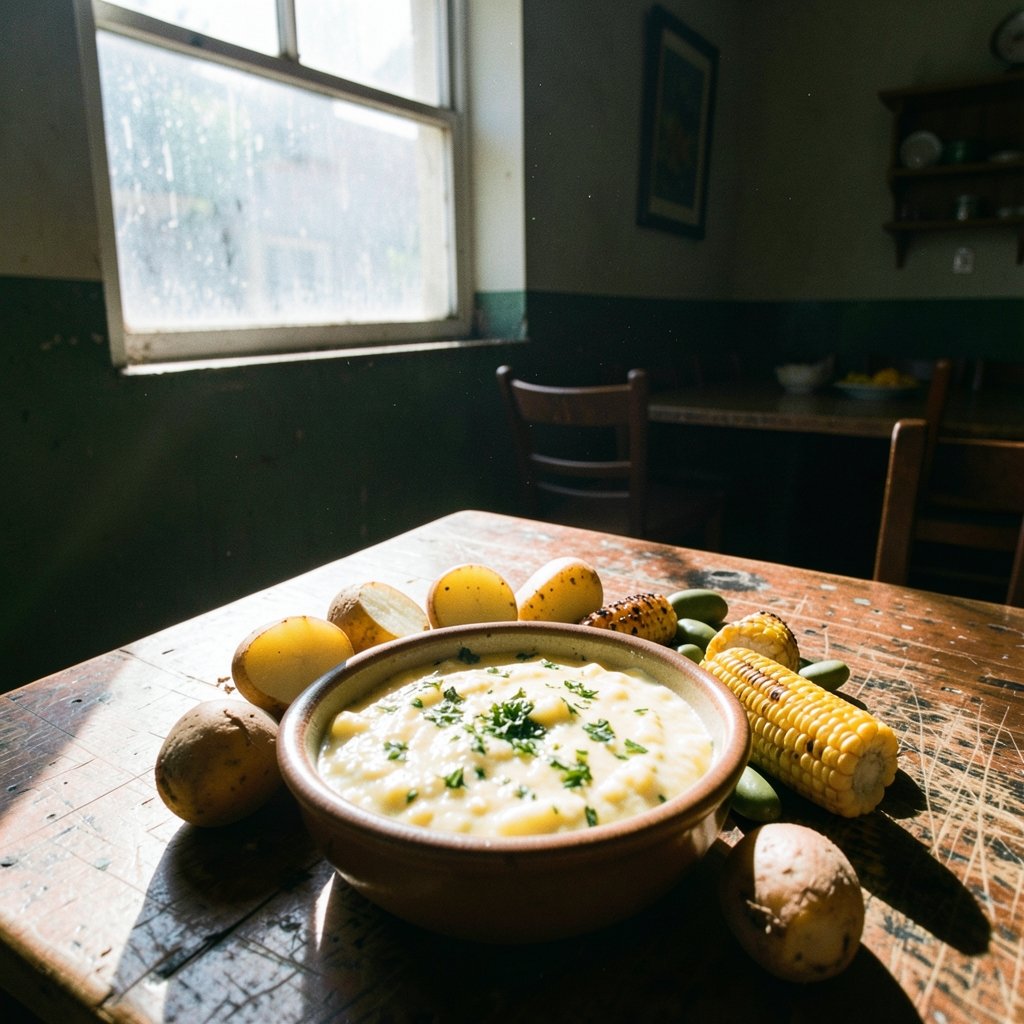
What if the hardest part of finding great queso humacha near you isn’t the cooking, but the searching? That’s the odd truth about this Bolivian classic. Queso humacha is a dish built from humble things: potatoes, corn, broad beans, and a cheese sauce that ties it all together. Yet if you type the dish name into a map app in most cities, you get a shrug and a list of unrelated Mexican restaurants. The dish exists. The search results don’t always cooperate. (Laser hair removal near me)
So this guide treats the hunt as the main event. It explains what queso humacha actually is, why the name is so hard to search, and how to work around that. It covers how to judge a bowl once you find one, what to order alongside it, and the mistakes that send people to the wrong restaurant. By the end, “near me” stops being a lottery and starts being a method.
What queso humacha actually is
Queso humacha is a Bolivian stew, most closely associated with the Andean altiplano and often with La Paz. The base is a mix of boiled vegetables. Potatoes are a given, usually more than one variety. Sweet corn goes in. Broad beans, known in Spanish as habas, are common too. Everything sits in a warm cheese sauce, and that sauce is the point of the dish.
The name is usually parsed as coming from the Aymara word jumacha, a preparation of boiled vegetables with a cheese or chilli sauce. Etymology is contested, so treat that as the popular reading rather than settled fact. The spelling is just as unsettled. You’ll see humacha, jumacha, and humach’a in the wild, and no standard English form has taken hold. That spelling chaos matters later, because it breaks searches.
The sauce itself varies by household. Milk and cheese form the backbone. A chilli such as ají amarillo or locoto adds heat and color. A roux or bread thickens it. Some cooks keep it mild and milky, almost like a savory custard. Others push the chilli until the cheese becomes a background note. There is no single canonical version, which is both the charm and the frustration of ordering it.
One more piece of context: queso humacha is commonly eaten during Lent and Holy Week in Bolivia, alongside other meatless dishes. That detail is useful. It tells you the dish is traditionally meat-free, so a restaurant that loads it with beef or sausage is riffing, not reproducing. Riffing can be delicious. It just isn’t the thing you were looking for.
Why “near me” searches fail for this dish

Here’s the practical problem. Search engines and map apps match words, and queso humacha is a low-volume term in English. Few restaurant menus are indexed in English under that name. Many Bolivian restaurants describe the dish in Spanish, or list it simply as humacha, or don’t list it online at all. A search for the full dish name can return almost nothing even in a city with several Bolivian kitchens.
Location compounds it. In English-speaking cities, Bolivian restaurants cluster in a few neighborhoods rather than spreading evenly. If you live outside those pockets, a literal “near me” search may show you nothing within a reasonable drive, even though good food exists twenty minutes away. The radius setting, not the food supply, is doing the filtering.
There’s a parallel lesson from other cuisine searches. People hunting for a specific regional dish often do better by searching the cuisine than the plate, then checking menus one by one. The same logic that helps someone trying to find a good Chinese restaurant near them applies here: search broad, verify narrow. The dish name is the last filter, not the first. (Chinese restaurants near me find good one fast)
So the fix is a search strategy, not a better app. Start with the cuisine, widen the radius, and use the dish name only when you’re reading a menu.
A search method that actually works
The method below is ordered from broadest to narrowest. Work through it in sequence and you’ll usually surface options within a few minutes.
- Search maps for “Bolivian restaurant” rather than the dish name. This is the single highest-yield change. Bolivian kitchens are indexed under the cuisine far more reliably than under individual dishes.
- Widen the radius beyond your default. Set it to a comfortable drive, not a walk. Regional cuisines are sparse, and a fifteen-minute detour is often the price of the real thing.
- Search all spelling variants. Try humacha, jumacha, and humach’a. Try “queso humacha” in quotes and without. Try it in Spanish with the word “receta” removed so you get restaurant pages instead of recipes.
- Check the menu, not the photos. Photos show what the kitchen wants you to see. The menu line tells you whether the dish is a regular or a special.
- Call ahead for specials. Lent and Holy Week are peak humacha season, and many places run it as a limited special rather than a permanent menu item. A two-minute phone call beats a wasted trip.
- Cross-check review text. Search the reviews for the dish name. A single review mentioning humacha by name is worth more than a dozen generic five-star ratings.
If you’re also scouting other cuisines in the same trip, the same broad-then-narrow logic applies to something like finding a Chinese restaurant near you fast: pick the neighborhood, then read the menus. The pattern is portable.
How to judge a bowl once you find one
Finding the restaurant is half the job. Judging the bowl is the other half, and it helps to know what separates a careful version from a careless one. The table below lays out the signals.
| What to check | A strong sign | A weak sign |
|---|---|---|
| Sauce texture | Coats the back of a spoon, clings to potatoes | Thin and watery, or gluey and pasty |
| Cheese flavor | Distinct, savory, present but not salty | Bland, or buried under chilli |
| Chilli balance | Warmth that builds without scorching | Raw heat that flattens everything else |
| Vegetables | Potatoes intact, corn sweet, habas tender | Mushy potatoes, frozen corn, mealy beans |
| Temperature | Served hot enough to keep steaming | Lukewarm at the table |
| Seasoning | Balanced, bright, seasoned through | Flat, or aggressively salted to compensate |
The sauce is the clearest tell. A good queso humacha sauce tastes of cheese first and chilli second. If the chilli wins outright, the kitchen is hiding something. If the sauce tastes like white sauce with a handful of grated cheese stirred in at the end, you’re eating a shortcut. Texture matters just as much. The sauce should be thick enough to cling but loose enough to soak into the potatoes.
Vegetable quality is the second tell, and it’s where cost-cutting shows. Fresh habas have a grassy sweetness that frozen ones lose. Corn should taste like corn. Potatoes should hold their shape without being undercooked. None of this requires culinary training to detect. It requires paying attention to the first three bites.
What to order alongside it
Queso humacha is rarely a solo act. In Bolivia it shares a table with other meatless dishes, especially during Lent. Ordering well means building a plate that balances the creamy, cheesy sauce with something sharper or crunchier.
Good companions include a simple tomato and onion salad, which cuts the richness. Llajua, a fresh chilli sauce, adds brightness if the humacha itself is mild. If the restaurant serves other Bolivian staples, a salteña or a plate of grilled meat can round out the meal for anyone at the table who wants protein. For a lighter pairing, look for a corn-based side or a quinoa dish.
Portion size is worth asking about. Queso humacha is filling, and some kitchens serve it as a starter portion while others bring a full bowl. Ask before you order two mains. And if you’re dining with someone who doesn’t love cheese, don’t push it. This is a dairy-forward dish, and there’s no hiding that.
Common mistakes that waste the trip
Most failed humacha hunts come down to a handful of avoidable errors. Here are the ones that show up again and again.
Searching only the dish name and giving up after one query. The term is too rare in English to carry a search on its own. Search the cuisine instead.
Staying inside a tight radius. Regional food clusters. If you limit yourself to a mile, you’re often limiting yourself to nothing.
Assuming a Mexican menu will have it. Queso humacha is Bolivian, and the name overlap with “queso” leads people astray. A restaurant can be excellent and still not serve this dish.
Ignoring seasonality. Lent and Holy Week are when humacha traditionally appears. If it’s not on the menu in July, that may be tradition rather than a gap in the kitchen’s skills.
Trusting photos over menus. A beautiful photo doesn’t tell you whether the dish is a regular item or a one-off special from three years ago.
Skipping the call ahead. A quick phone call resolves the specials question faster than any app.
Making the search part of the pleasure
There’s a case for treating the hunt as part of the meal. Queso humacha is a dish with regional roots, household variation, and a seasonal rhythm. Finding a good version takes a little effort, and that effort filters out the places that treat it as a novelty. The reward is a bowl that tastes like someone’s actual kitchen rather than a menu item designed to check a box.
If you enjoy the research side of eating, the same approach pays off across cuisines. The habits that make a laser hair removal near me search work, like reading reviews carefully and verifying details before committing, transfer neatly to restaurant scouting. So does the discipline of checking a menu rather than a photo. Good searching is a skill, and it compounds.
Conclusion
The best queso humacha near you probably won’t appear at the top of a literal dish-name search. It will come from searching the cuisine, widening the radius, trying every spelling, and reading menus instead of photos. Once you’re seated, judge the bowl by its sauce first, then its vegetables, then its balance. Order something sharp alongside it, ask about portion size, and don’t be surprised if the dish shows up as a seasonal special rather than a permanent fixture. The search takes a few extra minutes. The bowl is worth it.
FAQ
What is queso humacha made of?
It’s a Bolivian stew of boiled vegetables, typically potatoes, corn, and broad beans, served in a cheese sauce. The sauce usually combines milk and cheese with a chilli such as ají amarillo or locoto, thickened with a roux or bread. Recipes vary widely from household to household.
Why can’t I find queso humacha on restaurant menus near me?
The dish name is a low-volume search term in English, and many Bolivian restaurants list it in Spanish or don’t post menus online. Spelling variants like jumacha and humach’a split the search further. Searching for “Bolivian restaurant” and then checking menus directly works far better than searching the dish name alone.
Is queso humacha vegetarian?
Traditionally, yes. It’s commonly eaten during Lent and Holy Week in Bolivia alongside other meatless dishes, and the core recipe is vegetables and cheese sauce. Some restaurants add meat as a variation, so check the menu description if avoiding meat matters to you.
What should I order with queso humacha?
Look for something that cuts the richness. A simple tomato and onion salad, a fresh chilli sauce like llajua, or a corn-based side all work well. If the humacha is mild, a sharper condiment on the side helps balance the plate.
When is the best time to find queso humacha?
Lent and Holy Week are the traditional season for the dish in Bolivia, and some restaurants follow that calendar with limited specials. Outside those periods, availability depends on the individual kitchen. Calling ahead is the fastest way to confirm.
How do I tell a good queso humacha from a mediocre one?
Start with the sauce. It should taste of cheese first and chilli second, and it should cling to the potatoes rather than run off them. Then check the vegetables: intact potatoes, sweet corn, tender beans. Lukewarm serving temperature and flat seasoning are the usual warning signs.














