


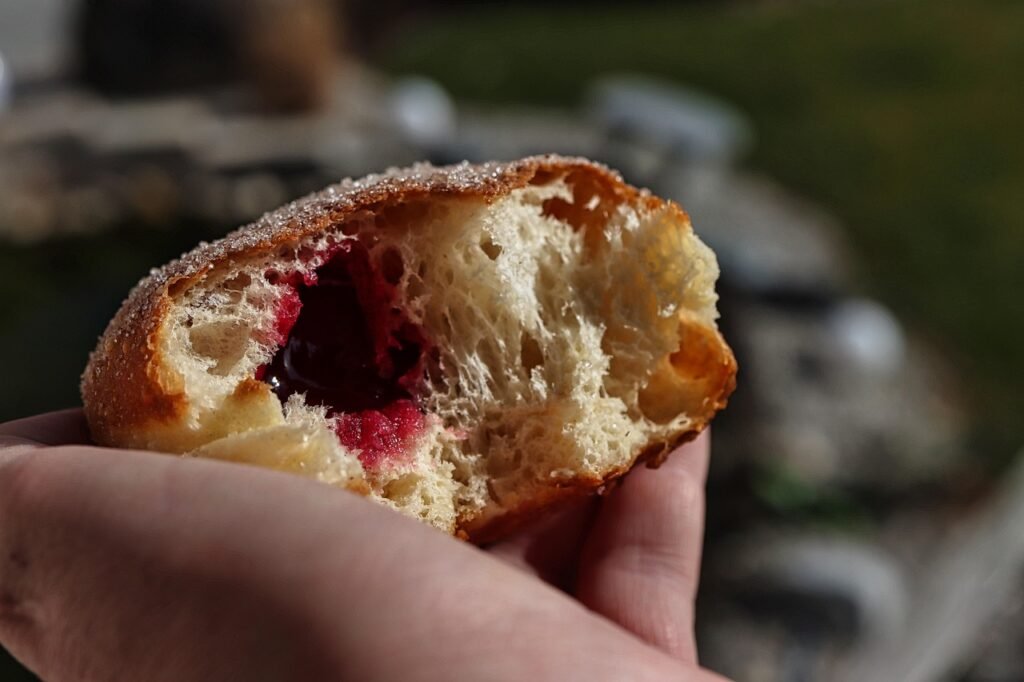
What if the most disappointing doughnut you’ll eat this year is the one sitting closest to you right now? That sounds dramatic, but anyone who has bitten into a so-called Berliner and found a dry, bready shell with a thimble of jam in the middle knows the sting. A great one is pillowy, faintly sweet, and generous with filling. A bad one is a sad roll in disguise.
The search “best Berliner doughnut near me” is trickier than it looks, because the answer changes depending on where you stand, what day it is, and what the bakery behind you considers a Berliner. This guide walks through what the pastry actually is, how to judge one before you pay, where the naming gets confusing, and how to run a smart local search that surfaces fresh dough instead of last night’s leftovers.
What a Berliner Actually Is (and Why Names Get Weird)
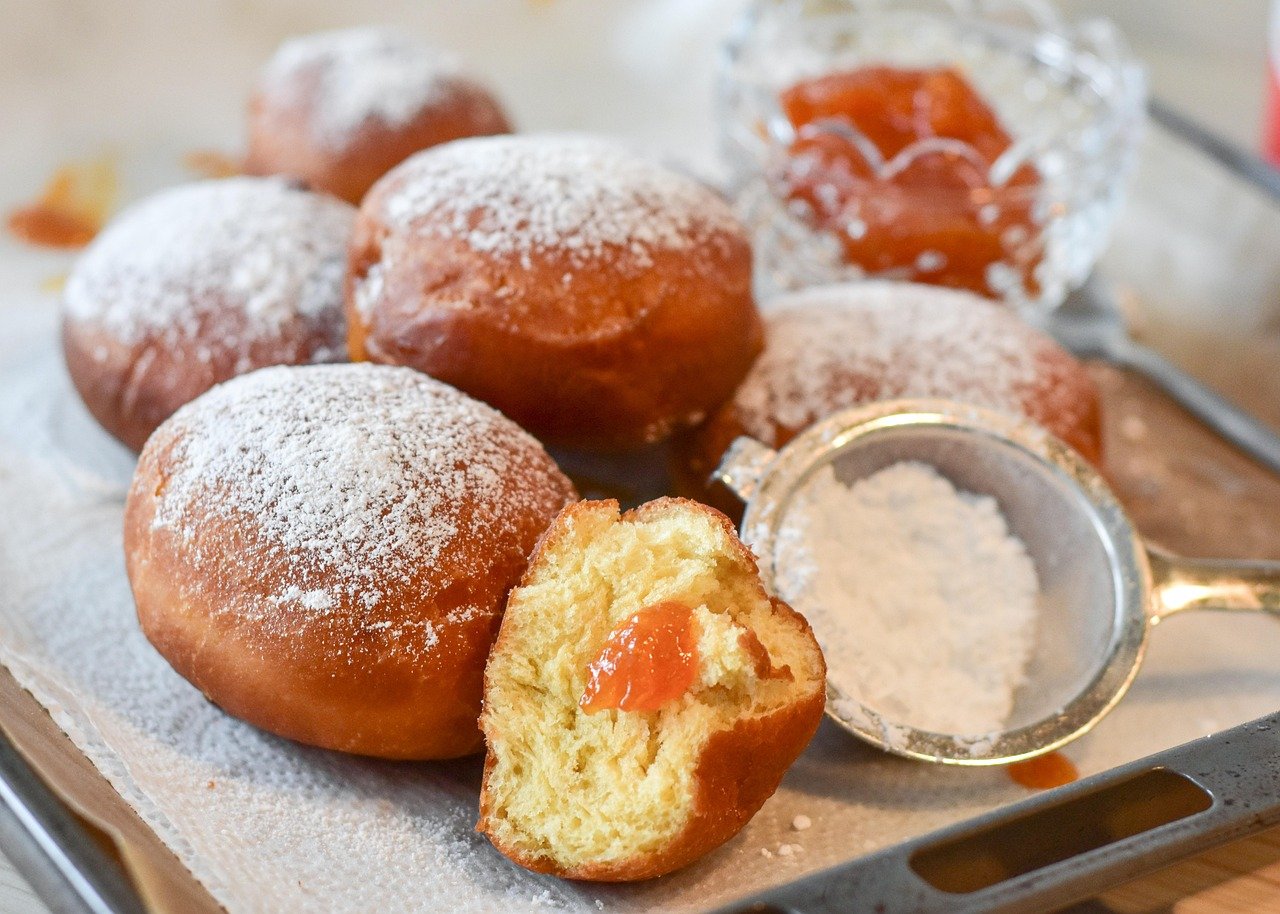
A Berliner is a round, yeast-raised doughnut with no hole, filled with jam and rolled in sugar or finished with glaze. That’s the simple version. The naming is where things fall apart.
In German usage, the pastry is often called a Berliner Pfannkuchen. But in Berlin and much of northern Germany, people usually just say Pfannkuchen, which literally means pancake. In parts of southern and western Germany, the same pastry shows up as Krapfen or Fasnetskühnle. So a visitor asking for a Berliner in Berlin may get a puzzled look, while the person behind the counter hands them exactly what they wanted under a different name.
The famous story that John F. Kennedy’s 1963 “Ich bin ein Berliner” speech accidentally called him a doughnut is widely repeated and generally treated by linguists and historians as folklore. In context, the indefinite article is ordinary German, and Berliners would not have misread the sentence. It’s a fun piece of trivia, not a reason to doubt your order.
In the United States, the naming is just as inconsistent. Across much of the country, this pastry is sold as a jelly doughnut or a Bismarck. In parts of the Upper Midwest, especially Wisconsin, Berliner is the term you’ll actually see on the case. That matters for your search: if you type “Berliner near me” in a city where nobody uses the word, you may miss the best jelly doughnut in town sitting two blocks away.
Why “Near Me” Never Has One Right Answer
Search engines and map apps rank local results by proximity, opening hours, and user signals. They don’t taste anything. That means “best Berliner near me” is not a fact you can look up once and keep. It’s a snapshot tied to your location, the time of day, and the date you searched.
Two practical consequences follow. First, always note where and when you ran the search, because a bakery that’s closed on Mondays will look like a champion on Sunday and vanish on Tuesday. Second, treat star ratings as a starting point rather than a verdict. A place with 4.8 stars and forty reviews is a different animal from one with 4.3 stars and four thousand. Read the recent reviews, not the lifetime average, because kitchens change hands and fryers change oil.
If you want a broader framework for evaluating local businesses by proximity and quality signals, the same logic that applies to choosing a laser hair removal clinic near you applies here: location is the easy filter, and reputation and freshness are the hard part. You can also browse more near-me search guidance for how proximity results behave in practice. The principle holds across categories: the map gets you to the door, but your own judgment decides whether you walk in.
Seasonality: When Berliners Are at Their Best
Berliners and Krapfen are strongly tied to Carnival season in German-speaking regions, the weeks of Fasching and Fasnet leading up to Lent. In Polish-American communities around Detroit, Chicago, Cleveland, and Buffalo, the equivalent moment is Paczki Day, tied to Shrove Tuesday. Because Easter moves each year, these dates shift annually.
What does that mean for a doughnut hunt? It means availability and quality peak around those windows, when bakeries fry in high volume and nothing sits long enough to go stale. Outside those dates, a bakery may still make them, but the batch size shrinks and the turnover slows. Ask whether the Berliner is a daily item or a seasonal special. If it’s seasonal, ask when the season starts. A bakery that fries them only in the run-up to Lent will usually outperform one that keeps three in the case all year for the occasional customer.
How to Judge a Berliner Before You Buy
You can learn a lot in thirty seconds at the counter. Here’s what experienced buyers look at, in order.
- The sugar coating. It should look dry and slightly uneven, not wet or syrupy. A glazed Berliner should have a thin, set glaze, not a sticky puddle.
- The shape. Look for a slightly irregular sphere with a faint pale band around the middle, the mark of proper proofing and frying. Perfectly uniform, machine-stamped discs often signal a par-baked or frozen product.
- The weight. Pick it up. A good Berliner feels light for its size. A heavy one is usually dense and underproofed, or loaded with so much filling that the dough never had room to rise.
- The seam. Many Berliners are filled through a small hole on the side or bottom. If filling is leaking out, the pastry has been sitting too long or was overfilled.
- The smell. Fresh yeast dough smells faintly of bread and butter. Oil that’s past its prime smells flat and slightly acrid.
Then there’s the filling itself. Ask what kind of jam is inside. Apricot, plum, and rosehip are traditional in German bakeries; raspberry and strawberry dominate in American jelly doughnuts. A bakery that makes its own jam is usually proud of it and will say so unprompted.
Common Mistakes People Make
Most Berliner disappointments trace back to a handful of avoidable errors.
Buying too late in the day. Filled doughnuts are at their best within a few hours of frying. A jam-filled pastry sitting in a case since 6 a.m. will have a soggy interior by 4 p.m. because the moisture migrates into the dough. Go early, or ask when the next batch comes out.
Assuming the fanciest bakery wins. A place with beautiful croissants and a sourdough program may treat doughnuts as an afterthought. The best Berliner in town often comes from a place that specializes in fried dough, or from a German or Polish bakery where the pastry is core business.
Ignoring the filling-to-dough ratio. Too little jam and you’re eating a plain roll. Too much and the pastry collapses. The right ratio is roughly a tablespoon of jam per doughnut, enough to reach the edges without turning the center to mush.
Skipping the allergen check. Typical Berliners contain wheat, egg, and milk, and often soy. Fillings may contain tree nuts or come from shared facilities. Labeling rules differ by country, so ask directly if you have a serious allergy rather than relying on a sign.
Not asking about storage. Jam-filled doughnuts are a moist, low-acid product, and food-safety guidance generally treats such fillings as needing refrigeration or strict time limits. A bakery that leaves them unrefrigerated all day in summer deserves a question. Check local health-department guidance if you’re buying in bulk for an event.
Running a Smarter Local Search
Here’s a sequence that works better than typing the phrase once and hoping.
Start with the right vocabulary. Search “Berliner bakery near me,” then repeat with “jelly doughnut near me,” “Krapfen near me,” and “Paczki near me.” You’ll get different result sets, and the overlap is your shortlist. If you’re also hunting for a good meal nearby, the same discipline of checking recent reviews and hours applies to finding a reliable Chinese restaurant near you quickly.
Next, filter by hours and check the current day. A bakery closed on the day you’re searching is noise. Then read the three most recent reviews that mention doughnuts specifically, not the ones that mention coffee or parking. Finally, call ahead. A thirty-second phone call (“Do you have Berliners today, and when were they fried?”) saves a wasted trip and tells you volumes about how the shop thinks about its product.
A Quick Comparison of Where Berliners Turn Up
| Type of shop | Typical quality | Best time to go | What to ask |
|---|---|---|---|
| German bakery | High, traditional fillings | Morning, Carnival season | Which jam, fried when |
| Polish bakery | High, especially near Paczki Day | Early morning | Whether they’re Paczki or Berliners |
| Doughnut chain | Consistent, sweeter | Mid-morning batch drop | Which batch is freshest |
| General cafe | Variable | Morning | Whether they’re made in-house |
| Supermarket | Low to moderate | Morning restock | Sell-by date and filling type |
The pattern is clear: specialists beat generalists, mornings beat afternoons, and season beats off-season. None of this is absolute, but it’s a reliable prior.
What “Best” Should Mean to You
There is no authoritative ranking of Berliners, and any list claiming otherwise should disclose its method and date. “Best” is subjective. So decide what you actually value before you go.
If you want tradition, prioritize a German or Polish bakery with a long history and a narrow menu. If you want indulgence, look for a shop that fills to order or fries in small batches. If you want convenience, a chain with a predictable batch schedule will beat a great bakery that sold out at 9 a.m. None of these is wrong. The mistake is letting a star rating decide for you.
There’s a broader lesson in this that shows up in all kinds of consumer choices. The beauty world has the same problem: a hyped launch doesn’t guarantee a good product, which is why it’s worth reading a clear-eyed look at what a luxury makeup line actually offers before spending. The same skepticism helps with a Japanese hair care line that gets oversold. And when a celebrity puts their name on a product, it pays to check whether the vitamin line genuinely delivers rather than trusting the face on the label. Even the question of where a stylist’s professional judgment ends and friendship begins is really a question about trusting the right signal. Food is no different. The signal that matters is freshness, not marketing.
Conclusion
Finding the best Berliner near you is less about luck and more about timing, vocabulary, and a few seconds of inspection at the counter. Know that the pastry goes by several names, search all of them, go early, pick it up to check the weight, and ask when it was fried. Favor specialists over generalists and season over off-season. Do that, and the doughnut in your hand will be pillowy, jammy, and worth the trip. Skip those steps, and you’ll be eating a sad roll in disguise, wondering why you bothered. The difference between the two is usually about four hundred meters and one good question.
Frequently Asked Questions
What is the difference between a Berliner and a jelly doughnut?
They’re essentially the same pastry: a round, yeast-raised doughnut with no hole, filled with jam and finished with sugar or glaze. The difference is regional naming. In German-speaking areas it’s a Berliner, Pfannkuchen, or Krapfen depending on the region. In the US, it’s usually sold as a jelly doughnut or Bismarck, with “Berliner” common in parts of the Upper Midwest.
Why do some bakeries call it a Pfannkuchen instead of a Berliner?
Because in Berlin and much of northern Germany, that’s the everyday word for the pastry, even though Pfannkuchen elsewhere means pancake. If you order a Berliner in Berlin, you may get a blank look, then the exact doughnut you wanted under a different name. Ask for a Pfannkuchen and you’ll be understood.
When is the best time of year to buy a Berliner?
Around Carnival season in German-speaking regions and around Shrove Tuesday or Paczki Day in Polish-American communities, when bakeries fry in high volume and turnover is fast. Because Easter moves each year, those dates shift. Outside those windows, ask whether the Berliner is a daily item or a seasonal special.
How can I tell if a Berliner is fresh?
Pick it up: it should feel light for its size. The sugar coating should look dry, not wet, and the shape slightly irregular with a pale band around the middle from frying. It should smell of fresh yeast dough, not flat oil. Best of all, ask when the batch was fried, and buy within a few hours of that time.
Are Berliners safe to keep unrefrigerated all day?
Jam-filled doughnuts are a moist, low-acid product, and food-safety guidance generally treats such fillings as needing refrigeration or strict time limits. If you’re buying in bulk for an event, ask the shop how they store them and check local health-department guidance rather than assuming they’re shelf-stable.
Do Berliners contain common allergens?
Usually yes. Typical Berliners contain wheat, egg, and milk, and often soy. Fillings may contain tree nuts or come from shared facilities. Labeling rules differ by country, so if you have a serious allergy, ask the bakery directly about ingredients and cross-contact rather than relying on a sign or a menu description.














