A cashmere scarf is the quietest luxury in a winter wardrobe. It does not shout, it does not need a logo to be recognised, and it is the piece you reach for on the coldest mornings, on long flights, and on evenings when a coat alone is not quite enough. The best cashmere scarves feel soft from the first wear, hold their shape for years, and get better with careful use.
The problem is that not every scarf labelled cashmere is worth the price. Some are thin and scratchy, some are blended with wool or synthetic fibres and sold as pure cashmere, and some pill so badly after a few weeks that they look older than a scarf half their price. Knowing what to look for — the fibre grade, the ply, the weave, and the finish — is what separates a scarf you will keep for a decade from one you will quietly stop wearing by February.
Below are nine cashmere scarves worth the splurge in 2027, from the classic fringed rectangle to oversized wraps, checked designs and silk-blend options. Each one is described by what it does well, what to watch for, and who it suits best, so you can choose with your wardrobe in mind, not just a price tag.
Key takeaways
- Real cashmere comes from the soft undercoat of cashmere goats, and the longest, finest fibres make the softest, longest-lasting scarves.
- Two-ply cashmere is warmer and more durable than single-ply, while a silk blend adds sheen and drape but less warmth.
- A good cashmere scarf should feel soft, not scratchy, and should spring back when you gently pull it — stiffness is a warning sign.
- Fold, do not hang, a cashmere scarf, and hand-wash it in cold water with a gentle detergent to keep it soft for years.
- No scarf, however expensive, is immune to pilling, and a very low price on a “pure cashmere” label usually means a blend or short fibres.
What cashmere actually is
Cashmere is the fine, soft undercoat of cashmere goats, combed out once a year in spring. The fibres are far finer than sheep’s wool — usually 14 to 19 microns against 20 microns and above for merino — which is why cashmere feels soft against bare skin where ordinary wool can itch. A single goat produces only a small amount each year, which is why genuine cashmere costs more than wool.
What matters most is fibre length. Long fibres, sometimes called Grade A, spin into a smooth, even yarn that resists pilling and stays soft. Short fibres, often left over from cheaper processing, make a yarn that feels soft in the shop but pills quickly and thins with wear. You cannot see fibre length on a label, but you can feel it: a good scarf feels dense and smooth, not fluffy and loose, and it recovers its shape when you scrunch it gently in your hand.
Ply matters too. A two-ply scarf uses two strands twisted together, making it warmer, stronger and longer-lasting than a single-ply scarf of the same weight. Single-ply is lighter and drapes more fluidly, but it suits spring better than deep winter and needs more careful handling.
How we chose these scarves and what to look for
Look first at the label. Pure cashmere should say 100 percent cashmere, or cachemire, with no wool, viscose or acrylic listed. A blend is not automatically bad — cashmere and silk is a classic pairing that adds shine and drape — but it should be labelled honestly, and priced accordingly. If a scarf claims to be pure cashmere and costs less than a good wool scarf, be sceptical.
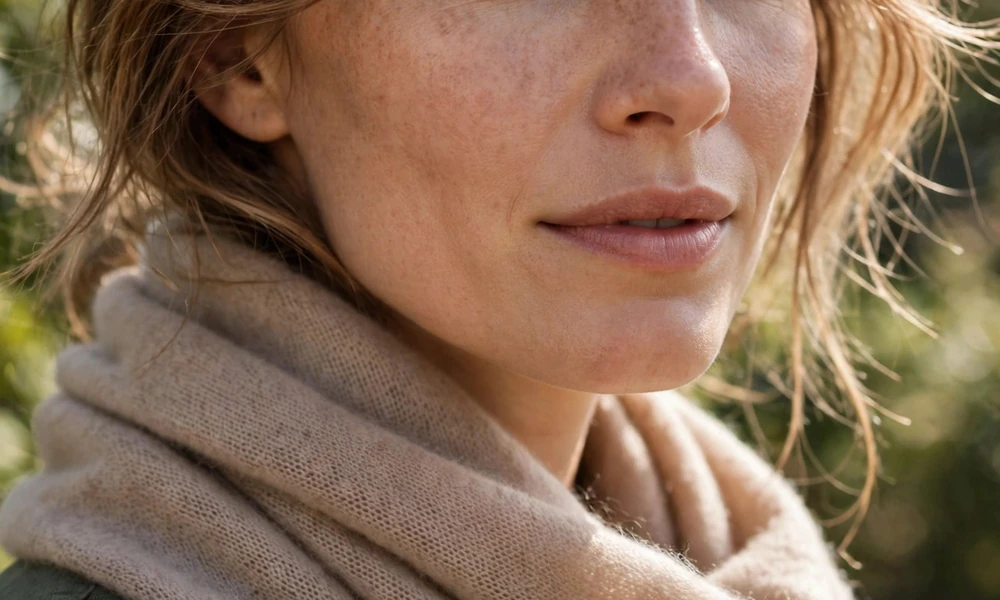
Look next at the feel and the finish. Run the scarf across the inside of your wrist, where skin is sensitive. It should feel smooth and warm, not prickly. Check the edges: a well-made scarf has even, secure fringing or a clean hem. Hold it up to the light — a dense, even weave is a good sign, while a loose, open weave will stretch out of shape.
Finally, think about size and weight. A classic rectangle, roughly 180 to 200 centimetres long and 30 to 40 centimetres wide, is the most versatile shape — long enough to loop twice, narrow enough to tuck into a coat. Oversized wraps are warmer and double as a shawl on a plane, but they can overwhelm a slim coat. Our guide to the best winter scarves of 2027 covers the wider scarf landscape, including wool and knit options, if you want to compare cashmere against heavier, more casual styles before you commit to the splurge.
The 9 best cashmere scarves of 2027
Loro Piana Cashmere Scarf
What we like: The benchmark for fine cashmere — exceptionally soft, densely woven, and finished with neat fringing that stays tidy for years.
What to consider: The highest price in this guide, and the classic colours sell out early in the season. Best for: A once-a-decade investment piece. Fabric: 100% cashmere, two-ply. Price range: Premium. Standout feature: The softest hand-feel of any scarf here, with a subtle sheen that reads as quiet luxury.
This is the scarf other cashmere scarves are measured against. It is not the most dramatic, and it is not the cheapest, but for softness, warmth and longevity it remains the reference point.
Brunello Cucinelli Cashmere Scarf
What we like: Impeccably made in Italy, with a soft, substantial drape and understated colours that work with everything from a camel coat to a navy blazer.
What to consider: Premium price, and the palette leans neutral, so there are few bright options. Best for: Understated, tailored winter dressing. Fabric: 100% cashmere, two-ply. Price range: Premium. Standout feature: A beautifully balanced weight — warm without bulk, and elegant rather than showy.
A practical luxury choice for people who want one excellent scarf rather than a drawer full of average ones. It looks as good in year five as it does in year one.
Acne Studios Canada Scarf
What we like: A wide, oversized shape in a soft wool-cashmere blend, with a relaxed, modern feel and a range of colours from neutral to bold.
What to consider: It is a blend, not pure cashmere, and the oversized shape can overwhelm a petite frame. Best for: A cosy, oversized wrap that doubles as a shawl. Fabric: Wool and cashmere blend. Price range: Mid to premium. Standout feature: The generous width, which makes it the warmest-feeling scarf in this guide.
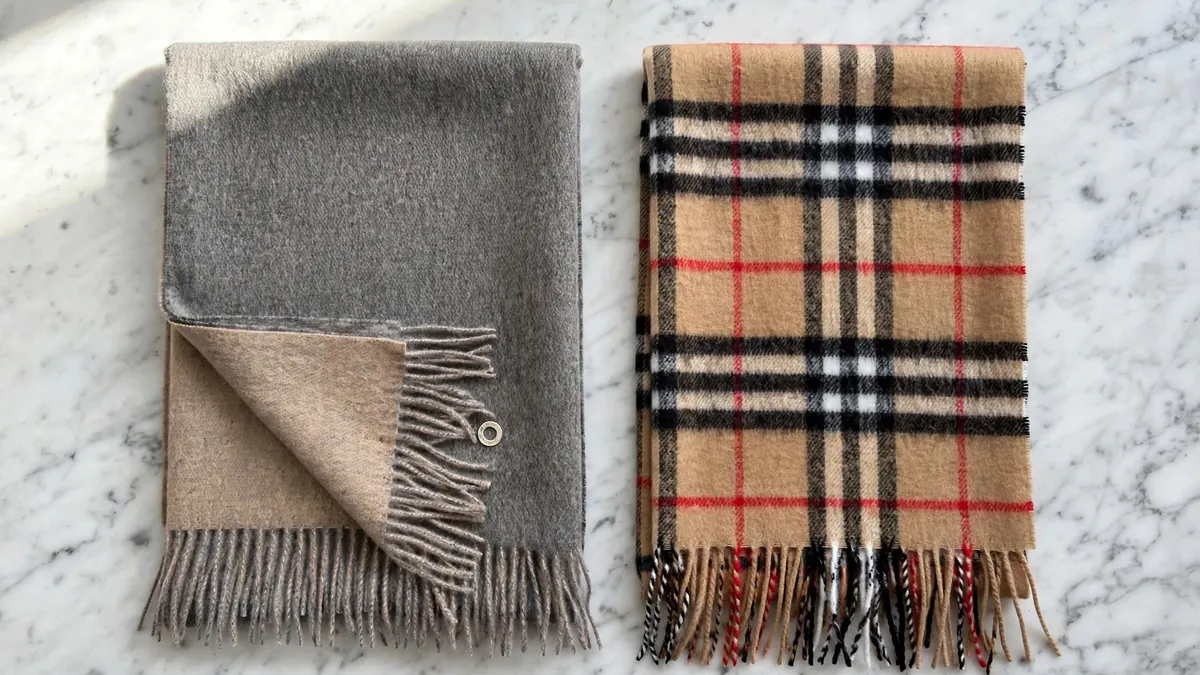
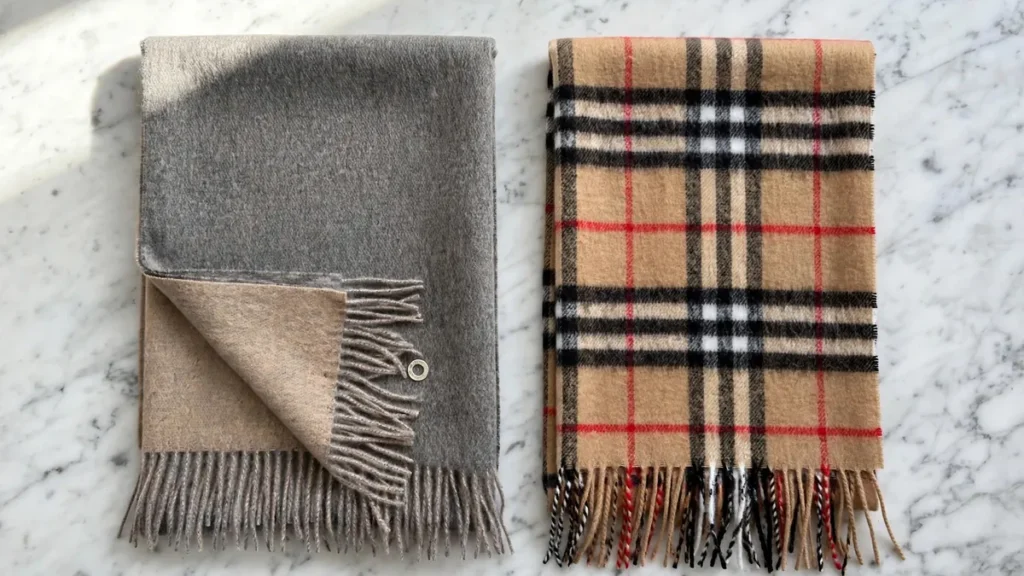
Burberry Cashmere Scarf
What we like: The iconic checked pattern, instantly recognisable, in a soft, warm cashmere that has been a wardrobe staple for decades.
What to consider: The check is a strong look, so it suits plain coats better than patterned ones, and the price reflects the brand. Best for: A classic, recognisable winter accessory. Fabric: 100% cashmere. Price range: Premium. Standout feature: The check itself — the most famous scarf pattern in the world, and one that never really goes out of fashion.
White + Warren Cashmere Travel Wrap
What we like: A large, soft, generously sized wrap in pure cashmere, with a clean finish and a price that undercuts the European luxury houses without feeling cheap.
What to consider: The large size needs folding to wear as a scarf, and darker colours can show lint. Best for: Travel, layering, and anyone who wants one piece to do three jobs. Fabric: 100% cashmere, two-ply. Price range: Mid-range. Standout feature: Its versatility — scarf, wrap, shawl and plane blanket in one.
A sensible, well-made choice for people who travel often. It folds small, weighs little, and is the first thing you will pack for a winter trip.
J.Crew Cashmere Scarf
What we like: A solid, soft, two-ply cashmere scarf at an accessible price, in a useful range of colours and a classic fringed finish.
What to consider: Slightly lighter than the luxury options, so it is less warm on the coldest days, and the fringe needs occasional trimming. Best for: A first cashmere scarf, or a second colour at a sensible price. Fabric: 100% cashmere, two-ply. Price range: Affordable to mid-range. Standout feature: The best value in this guide — genuine two-ply cashmere without a luxury markup.
For anyone buying their first cashmere scarf, this is the easy, low-risk place to start. It does the job well, and it will tell you whether you want to invest more next time.
Everlane The Cashmere Scarf
What we like: A clean, modern rectangle in Grade A cashmere, with transparent sourcing and a straightforward, honest price.
What to consider: The colour range is small, and the scarf is on the lighter side, so it suits mild winters better than deep cold. Best for: Minimal, everyday winter dressing. Fabric: 100% Grade A cashmere. Price range: Affordable to mid-range. Standout feature: The sourcing story — Mongolian cashmere with a clear, traceable supply chain.
A good choice if you care about where your cashmere comes from as much as how it feels. It is simple, well made, and easy to wear every day.
COS Cashmere Scarf
What we like: A refined, architectural shape in a soft cashmere blend, with the clean lines and muted palette COS is known for.
What to consider: It is a blend, so it is slightly less warm than pure cashmere, and the shape is more structured than soft. Best for: A polished, modern look with a tailored coat. Fabric: Cashmere blend. Price range: Affordable to mid-range. Standout feature: The cut — longer and narrower than most, which makes it sit neatly under a coat collar.
If your winter wardrobe leans minimal and architectural, this is the scarf that fits it best. It looks intentional rather than cosy, which is exactly the point.
Naadam Cashmere Scarf
What we like: A soft, warm, two-ply cashmere scarf made from Mongolian fibre, with fair-trade sourcing and a price that is hard to beat for the quality.
What to consider: The colour range is limited, and the fringe is longer than some people prefer. Best for: Warmth and value, with an ethical sourcing story. Fabric: 100% Mongolian cashmere, two-ply. Price range: Affordable to mid-range. Standout feature: The warmth for the weight — one of the cosiest scarves here, at a fraction of the luxury price.
Which cashmere scarf is right for you
If you want one scarf to last a decade, choose a two-ply pure cashmere rectangle in a neutral colour — camel, grey, navy or charcoal — from a maker with a reputation for fibre quality. It will go with every coat you own, and it will look better with age than any trendy pattern.
If you run cold, or you live somewhere with real winter, go oversized. A wide wrap like the Acne Studios Canada or the White + Warren travel wrap gives you twice the coverage, and it doubles as a shawl indoors. If you travel often, the same logic applies — a large wrap is a scarf, a blanket and a layer in one, and it weighs almost nothing in a bag.
If you are buying your first cashmere scarf, start at the accessible end. The J.Crew, Everlane and Naadam scarves in this guide are genuine cashmere at honest prices, and they will teach you what good cashmere feels like before you spend more. A good cashmere sweater follows the same logic — start with a well-made, fairly priced piece, learn how the fibre behaves, and invest in the luxury version once you know what you value most.
The caveats that matter
Cashmere is wonderful, but it is not indestructible. It pills, especially where the scarf rubs against a coat collar or a bag strap, and the first few weeks of wear are when pilling is worst. That is normal, not a defect, and it slows down as the short fibres shed. A cashmere comb, used gently, removes pills without damaging the yarn, and it is a better tool than a razor or a lint roller.
| Detail | What is known |
|---|---|
| Best fibre for most people | Two-ply, 100% cashmere, long Grade A fibres |
| Most versatile shape | Classic rectangle, 180 to 200 cm long, 30 to 40 cm wide |
| Warmest option | Oversized two-ply wrap, worn doubled around the neck |
| Who should choose a blend | Anyone who wants sheen and drape, or a lighter spring scarf |
| What to avoid | Very cheap “pure cashmere” labels, loose open weaves, scratchy hand-feel |
| Care | Hand-wash cold, gentle detergent, dry flat, fold rather than hang |
| Pilling | Normal in the first weeks, especially at friction points; use a cashmere comb |
| What it does not do | It does not replace a coat, and it will not stay perfect without care |
Moths are the other quiet risk. Cashmere is a natural protein fibre, and moths love it. Store your scarf clean — moths are drawn to body oils and food marks — in a sealed bag or a drawer with cedar blocks, and check it at the start of each season.
Checklist: choosing a cashmere scarf honestly
Use these checks before you buy, and again after two weeks of wear.
- Check the label: 100 percent cashmere, or an honestly labelled blend, with no hidden synthetics.
- Check the feel: smooth and warm on the inside of your wrist, not prickly or stiff.
- Check the weave: dense and even, with secure fringing or a clean hem, not loose or open.
- Check the size: long enough to loop twice, or oversized if you want a wrap.
- Check the colour: a neutral you will wear with every coat, not a shade you will tire of by January.
- Check the care: are you willing to hand-wash it, fold it, and store it properly? If not, a wool scarf may suit you better.
Frequently asked questions
Is cashmere worth the price?
For a piece you wear every day in winter, yes. Good cashmere is warmer, softer and longer-lasting than wool at the same weight, and a well-cared-for scarf can last a decade. The value is in the cost per wear, not the price on the tag.
How do I stop my cashmere scarf from pilling?
You cannot stop it completely, but you can slow it down. Wear it against smooth fabrics rather than rough wool where possible, avoid rubbing it against bag straps, and use a cashmere comb gently to remove pills. Pilling is worst in the first weeks and usually eases off.
Can I wash a cashmere scarf at home?
Yes. Hand-wash in cold water with a gentle detergent or a dedicated cashmere wash, press out the water without wringing, and dry it flat on a towel away from direct heat. Do not hang it wet, or it will stretch out of shape.
What is the difference between cashmere and a cashmere blend?
Pure cashmere is 100 percent cashmere fibre. A blend mixes cashmere with silk, wool or another fibre. Silk adds sheen and drape but less warmth; wool adds structure and lowers the price. A blend is not worse, it is just different, and it should be labelled and priced honestly.
How do I store a cashmere scarf in summer?
Wash it first, then fold it and store it in a sealed bag or a drawer with cedar blocks or lavender. Do not hang it, and do not store it dirty, because moths are drawn to body oils and food marks left on the fibre.
Which cashmere scarf goes with a camel coat?
Almost any neutral works, but grey, cream and navy are the most versatile with camel. A checked scarf, such as the Burberry, adds pattern to a plain coat, while a solid grey or charcoal scarf keeps the look quiet and elegant. Our guide to the best winter coats for women can help you match scarf, coat and colour before you buy.
The bottom line
The best cashmere scarf in 2027 is not the most expensive one. It is the one that suits your climate, your coat and your habits — a two-ply pure cashmere rectangle in a neutral colour for most people, an oversized wrap if you run cold or travel often, and an honestly priced first scarf if you are new to the fibre. Buy the best you can afford, and look after it, because cashmere rewards care in a way few fabrics do.
Choose one scarf, wear it through the season, wash it properly, store it clean, and judge it on how it feels in February, not just how it looks in the shop. That is the honest way to get the benefit cashmere is known for, without the disappointment that comes from a bargain that was never really cashmere at all.