


What if the best breakfast in Bogotá is a bowl of soup that costs less than a bus ticket? Changua, the milky, scallion-scented morning soup of the Andean highlands, is exactly that: humble, cheap, and quietly beloved by millions of people who grew up eating it before school or work. But searching for the best changua near me is trickier than it sounds. The dish lives in bakeries, market stalls, and neighborhood lunch counters, not in glossy restaurant guides. Hours are odd. Recipes vary wildly from one kitchen to the next. And “best” depends entirely on whether you want the version your grandmother made or the one a market cook has been perfecting for thirty years.
This guide walks through what changua actually is, where it hides in Bogotá and beyond, how to judge a good bowl, and the practical mistakes that send visitors to the wrong place at the wrong time.
What Changua Actually Is, Before You Go Looking
Changua is a traditional Colombian soup most closely associated with the Andean highlands around Bogotá and Boyacá. The core ingredients are simple: milk, water, cebolla larga (long green scallions), cilantro, and egg. The egg is either poached gently in the hot broth or stirred in to create soft ribbons. It arrives with bread or an arepa for dipping, and it is almost always a breakfast dish.
That simplicity is the point. Changua is comfort food built from what a highland household already had. It is also why recipes are contested. Some cooks use all milk, others cut it with water. Some add a splash of something acidic, some float cubes of stale bread in the pot, and some insist on a specific ratio of scallion to cilantro that they will defend at length. There is no single authoritative recipe, and anyone who claims otherwise has not eaten enough changua.
It is also widely described as a hangover remedy and a cold-morning warmer. Treat that as cultural folklore rather than a studied health effect. The appeal is real; the medical claim is anecdotal.
Why “Near Me” Is the Hard Part
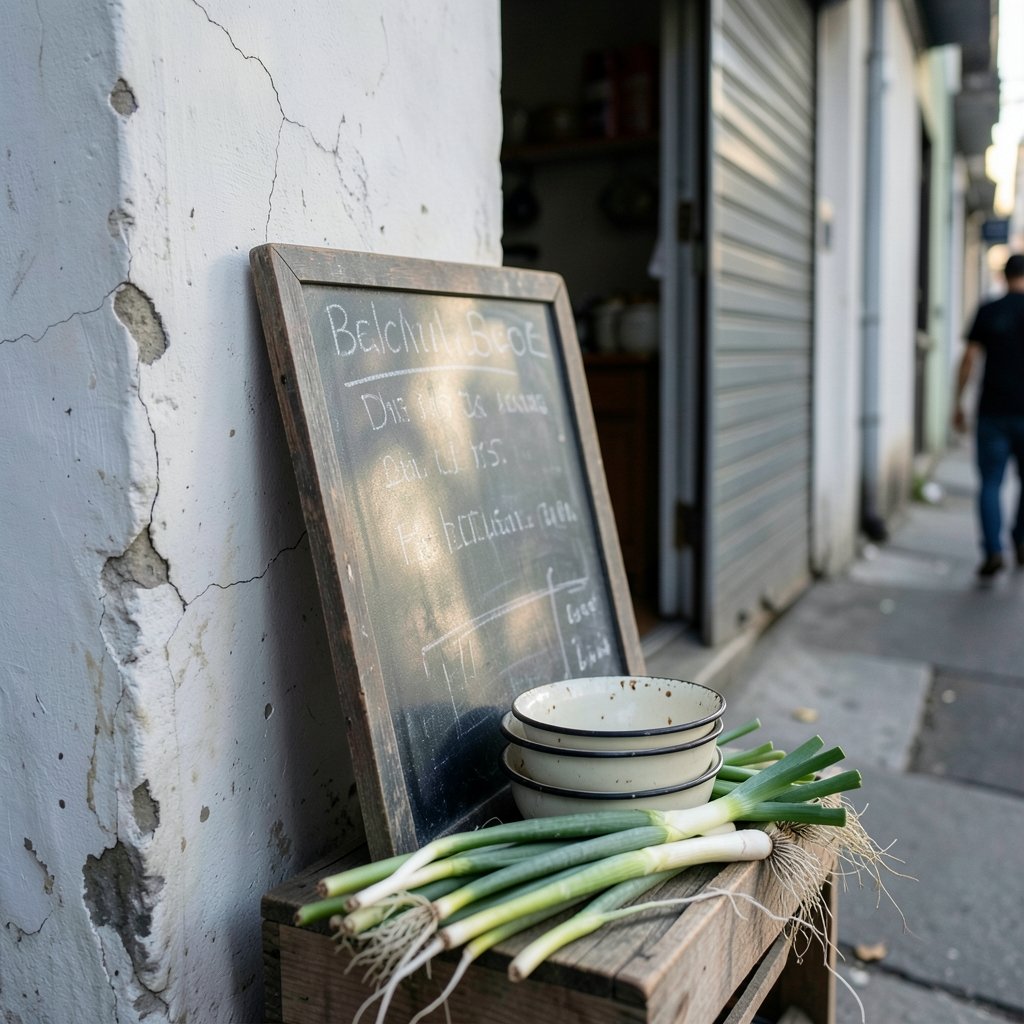
Most food searches work because the category is obvious: pizza places are open at dinner, and they advertise. Changua breaks both rules.
First, it is a breakfast dish. A restaurant that serves spectacular changua at 7 a.m. may be closed by 3 p.m., and a place with great reviews for lunch may never make it at all. Second, changua is rarely a headline item. It appears on a chalkboard, in a bakery case, or on a short handwritten menu at a market stall. It does not usually get its own website.
That means the practical search is not “changua restaurant” but “who is open early and cooking traditional food near me.” The same logic that applies when you search for a Chinese restaurant near you and need to find a good one fast applies here: narrow by hours and neighborhood first, then judge quality. A place that is open, busy, and locally patronized at 7 a.m. beats a highly rated venue that opens at noon.
Where Changua Hides in Bogotá
In Bogotá, changua is most reliably found in three kinds of places, and each has a different personality.
| Venue type | What to expect | Best for |
|---|---|---|
| Traditional lunch counters (corrientazos) | Cheap set breakfasts, fast service, plastic chairs | Authentic everyday changua at low cost |
| Panaderías and bakeries | Changua plus fresh bread, often a morning-only menu | A sit-down bowl with good bread |
| Public market food stalls | Big pots, long-simmered broth, vendors who have done this for decades | Depth of flavor and people-watching |
Public markets are the classic answer. The areas around Bogotá’s large market halls, including the famous Paloquemao market, are the kind of place where changua is cooked in quantity every morning for shoppers and workers. Specific stalls change, so treat any named vendor as a lead to verify rather than a guarantee.
Fine dining is the wrong instinct here. Changua is not a dish that improves with plating. It improves with repetition, a well-seasoned pot, and a cook who has made it ten thousand times.
A Note on Hours and Timing
Go early. By mid-morning, the best pots are often scraped low, and some bakeries stop serving breakfast entirely. A 6:30 to 8:30 a.m. window is the sweet spot in most Bogotá neighborhoods. If you arrive at 11 a.m. and find nothing, that is not bad luck; it is the schedule.
How to Judge a Bowl Once You’re Sitting Down
You do not need to be a food critic to tell a good changua from a careless one. Four things give it away.
- The scallion is cooked, not raw. Good changua tastes sweet and mellow, not sharp and grassy. Raw-tasting scallion usually means the broth was assembled at the last minute.
- The egg is tender. Whether poached or stirred, the egg should be soft, not rubbery or aggressively boiled into hard knots.
- The milk has not split. A well-made bowl looks smooth. Curdled or grainy texture suggests the pot was overheated or held too long.
- The bread is fresh. Changua is a dipping dish. Stale bread undercuts everything.
Ask a local, too. In Bogotá, everyone has an opinion about the best changua, and those opinions are usually attached to a specific bakery within walking distance of where they grew up. That is a far better signal than any online ranking.
The Search Outside Colombia
For readers searching in English from outside Colombia, expectations need adjusting. Changua appears mainly at Colombian restaurants and Latin American groceries in cities with large Colombian communities, including parts of the United States, Spain, and the United Kingdom. Coverage is uneven. A city with a strong Colombian population may have several options; a smaller city may have none.
When you do find a candidate, call ahead and ask two questions: do you serve changua, and what time do you start? Many Colombian restaurants serve it only on weekend mornings, if at all. If nothing turns up, the fallback is straightforward: changua is a five-ingredient soup, and Latin American groceries usually stock cebolla larga and the right bread. Making it at home is genuinely easy.
Practical Tips That Save Time
A few habits make the search much less frustrating.
Search by neighborhood, not by city. “Changua near me” in a city of eight million people returns noise. Add the neighborhood name, or simply walk the blocks around a market.
Use map apps for hours, not for rankings. Opening times are the single most useful data point, and they are the thing most likely to be accurate. Rankings are not.
Read recent reviews for the word “breakfast.” A review that mentions morning service tells you more than a five-star rating from a dinner visit.
Check the bakery before the restaurant. Bakeries have the strongest incentive to serve changua well, because the bread is the pairing. A bakery that serves a weak changua is a bakery with a problem.
Ask what time the pot was made. It is a normal question in a market, and the answer is informative.
If you are also comparing clinics or services in the same area, the same discipline applies: laser hair removal near me searches reward people who check hours and location before booking. The pattern holds across categories. Local searches succeed when you filter by logistics first and quality second.
Common Mistakes People Make
Several recurring errors send people to the wrong bowl.
Arriving too late. The most common mistake by a wide margin. Changua is a morning food, and the good pots empty early.
Trusting a dinner-menu listing. A restaurant that lists changua on its evening menu is often serving a reheated version, or something closer to a milk soup with an egg dropped in. It is not the same dish.
Assuming all changua is identical. It is not. Some bowls are thin and brothy; others are rich and almost creamy. Both are legitimate. Knowing which style you want prevents disappointment.
Ignoring the bread. A bowl of changua without good bread is an incomplete meal. Judge the bakery and the soup together.
Overpaying. Changua is a working person’s breakfast. A high price is not a quality signal here; it is usually a tourist signal.
There is a broader lesson in this: when searching for something local and traditional, the laser hair removal near me tag archive style of browsing, organized by location and topic rather than by ranking, tends to surface more useful leads than a single “best of” list. Local knowledge resists ranking.
Food Safety: The Part Worth Taking Seriously
Changua contains two ingredients that deserve attention: egg and dairy.
Eggs in changua are sometimes lightly cooked. General public-health guidance advises thoroughly cooking eggs for vulnerable groups, including pregnant people, young children, older adults, and anyone immunocompromised. If that describes you or someone at the table, ask for the egg well cooked, or skip it.
Because changua is milk-based, it is perishable. Standard food-safety practice applies: keep hot food hot, refrigerate leftovers promptly, and reheat thoroughly rather than gently warming. A market stall with a fast turnover and a visibly steaming pot is generally a safer bet than a lukewarm one that has been sitting.
These are ordinary precautions, not reasons for alarm. Millions of bowls are eaten safely every week. But they are worth a moment’s thought, especially when traveling.
What “Best” Really Means Here
Any list of the best changua in Bogotá is an opinion, and food-media rankings for the city change constantly. No stable, authoritative ranking exists, and treating one as definitive is a mistake.
The better approach is to define your own criteria. Do you want the cheapest, fastest, most traditional bowl, eaten standing at a market counter? Do you want a sit-down bakery breakfast with fresh bread and a proper cup of coffee? Do you want the version a specific family makes, which you will only find by being invited?
Changua rewards curiosity over checklists. The bowl that wins is usually the one near a market, served early, by someone who has been making it for years and does not think of it as a specialty at all.
Conclusion
Finding the best changua near you comes down to a few unglamorous moves: search by neighborhood, check the hours, go early, and head for bakeries and market stalls rather than dinner restaurants. Judge the bowl by its scallion, its egg, its texture, and its bread. Ask locals where they eat, and treat every online ranking as a starting point rather than a verdict. Changua is not a dish that hides behind reservations or press coverage. It is a pot on a stove at seven in the morning, and the people who eat it every day already know exactly where to go.
Frequently Asked Questions
What is changua made of?
Changua is a Colombian milk-based soup made with milk, water, long green scallions (cebolla larga), cilantro, and egg, usually served with bread or an arepa. Recipes vary by household and region, and there is no single authoritative version.
What time of day is changua served?
Changua is traditionally a breakfast dish, so the practical window is early morning, roughly 6:30 to 8:30 a.m. in most Bogotá neighborhoods. Some places serve it later, but the best pots are usually gone by mid-morning.
Where can I find changua in Bogotá?
The most reliable places are traditional lunch counters, bakeries with morning menus, and food stalls in public markets, including the areas around large market halls such as Paloquemao. Specific vendors change, so verify hours before making a trip.
Is changua safe to eat if I’m pregnant?
Changua often contains lightly cooked egg, and general public-health guidance advises thoroughly cooking eggs for pregnant people, young children, older adults, and immunocompromised individuals. Asking for a well-cooked egg is a simple precaution. Because the soup is dairy-based, it should also be served hot and reheated thoroughly.
Can I find changua outside Colombia?
Yes, but coverage is uneven. Changua appears mainly at Colombian restaurants and Latin American groceries in cities with large Colombian communities, including parts of the United States, Spain, and the United Kingdom. Many venues serve it only on weekend mornings, so calling ahead is worth the effort.
Why does changua taste different from place to place?
Because the recipe is a household tradition rather than a fixed standard. Cooks vary the milk-to-water ratio, the amount of scallion and cilantro, whether bread goes into the pot, and how the egg is added. Some bowls are thin and brothy; others are rich and creamy. Both styles are traditional.














