

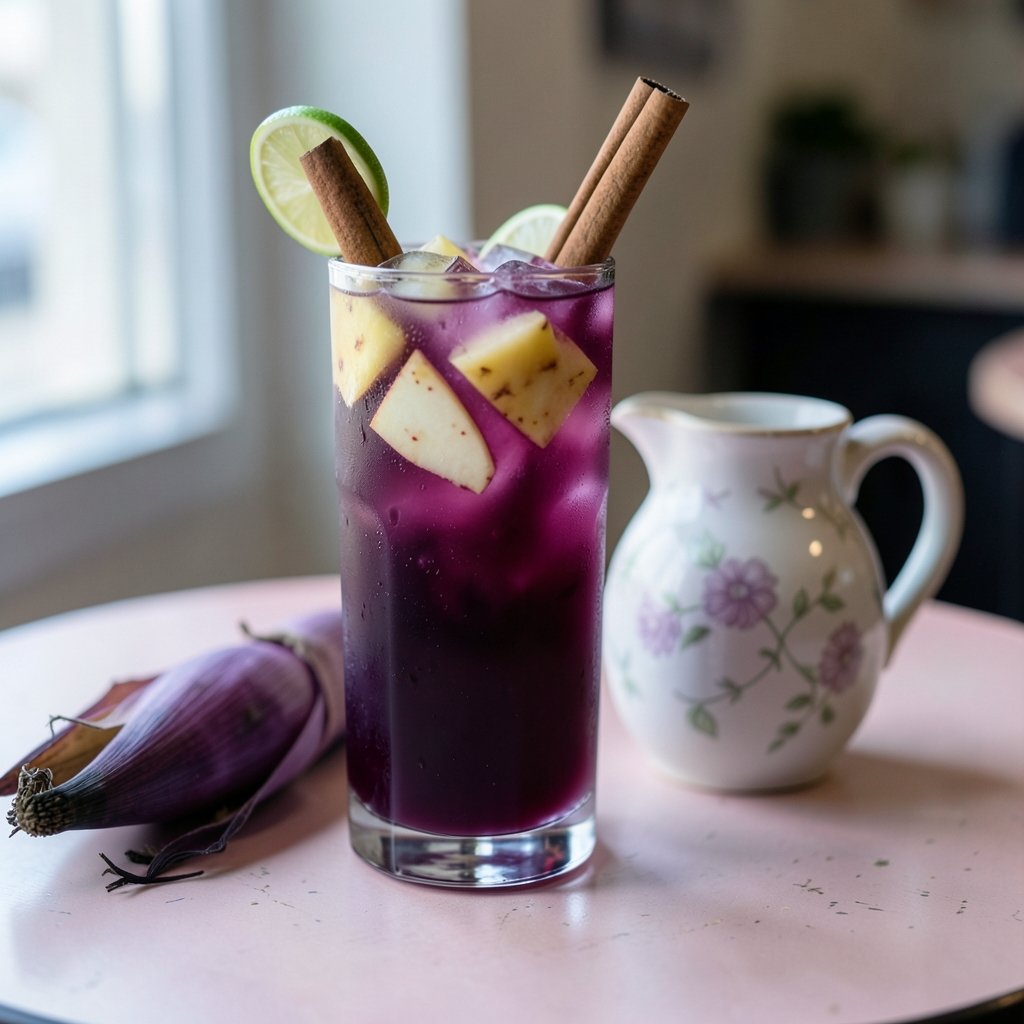
Ever ordered a tall glass of something deep purple, taken one sip, and thought, “Wait, what is this, and why is it so good?” That’s chicha morada, Peru’s beloved purple corn drink, and once you’ve had a proper one, a mediocre version is hard to forgive. The trouble is that “best chicha morada near me” is a search that returns wildly uneven results. Some cups taste like spiced fruit punch with real depth. Others taste like sweet syrup poured from a jar. This guide explains what separates the two, where to look in your own city, and how to judge a glass before you commit to a whole pitcher.
What Chicha Morada Actually Is
Chicha morada is a non-alcoholic Peruvian beverage made by boiling purple corn (maíz morado) with pineapple, cinnamon, cloves, and lime, then sweetening the finished liquid. It is served cold, often over ice, and it shows up everywhere in Peru: at family tables, at street stalls, and alongside ceviche in restaurants.
The name trips people up. Chicha de jora is a different drink entirely, a fermented corn beer with a long Andean history. Chicha morada contains no alcohol and is essentially a spiced fruit-and-corn infusion. If a menu lists “chicha” without the word “morada,” ask which one you’re getting. It’s the single most common point of confusion for first-timers.
The purple color comes from anthocyanins, the same family of water-soluble pigments found in blueberries and red cabbage. That’s also why the drink stains tablecloths and why a good batch looks almost jewel-toned rather than flat maroon.
Why the “Best” Cup Is So Hard to Pin Down

Here’s the honest problem with hunting for the best chicha morada: there is no standard recipe. Every cook adjusts the ratio of corn to fruit to spice to sugar, and every family claims theirs is correct. Some versions lean tart and bright. Others are sweeter and heavier on cinnamon. A cup that delights one drinker may strike another as cloying.
That subjectivity matters because “best” in a search bar usually means “highest rated,” and ratings reward things that have little to do with the drink itself: portion size, price, the friendliness of the server, whether the food arrived hot. A restaurant with a 4.8-star average may be serving chicha morada from a powdered mix. A modest neighborhood spot with a thin online presence may make it from scratch every morning.
The practical takeaway: treat review scores as a starting filter, not a verdict. You still have to taste.
Where to Find Chicha Morada Near You
In English-speaking markets, chicha morada turns up in a few predictable places. Knowing which type of venue you’re walking into helps you set expectations.
Peruvian restaurants
This is your most reliable bet. Peruvian cuisine gained global visibility after it was inscribed on the Representative List of the Intangible Cultural Heritage of Humanity in 2011, and that wave brought hundreds of Peruvian kitchens to cities worldwide. Many list chicha morada on the menu by name, sometimes translated as “purple corn drink.” If a restaurant serves ceviche, lomo saltado, and causa, there’s a good chance the chicha is house-made.
Latin American groceries and markets
Look for bottled chicha morada, concentrated syrup, or bags of dried maíz morado you can boil at home. These products vary enormously in sugar and anthocyanin content, so read labels and expect some trial and error. Concentrates are convenient but often sweeter than restaurant versions.
Bakeries, juice bars, and street vendors
In cities with large Andean communities, small bakeries and juice counters sometimes carry chicha morada alongside other fruit drinks. Quality swings widely, but prices are low, which makes experimenting cheap.
Festivals and pop-ups
Peruvian food festivals, Latin American cultural events, and weekend markets are excellent places to sample several versions side by side. You’ll learn more about your own preferences in one afternoon than in a month of guessing.
A Practical Checklist for Judging a Glass
Before you order a second round, run through a few quick observations. None of these require expertise, just attention.
| What to check | A good sign | A warning sign |
|---|---|---|
| Color | Deep, clear purple-red | Muddy brown or unnaturally neon |
| Aroma | Cinnamon, clove, citrus | Flat, sugary, or chemical |
| First sip | Tartness from lime or pineapple | Immediate sugar hit, no acidity |
| Body | Light but with some texture | Thin and watery, or syrupy thick |
| Finish | Clean, spiced, refreshing | Sticky sweetness that lingers |
| Ice | Fresh, plentiful | Sparse or slightly melted on arrival |
That acidity point is the one most people miss. Real chicha morada gets brightness from lime and pineapple, and that tartness is what keeps a sweet drink from becoming exhausting. If your glass tastes like candy with no edge, the kitchen probably leaned on sugar to cover a shortcut.
How to Search Smarter Than “Near Me”
The phrase “near me” hands control to your search engine and your location settings, which means two people in the same city can get completely different results. A few adjustments make the search far more useful.
- Search “Peruvian restaurant” plus your neighborhood or city name rather than the drink itself. Restaurant directories index cuisine type far more reliably than individual beverages.
- Open a map app and search for “Peruvian food” to see what’s within walking or transit distance, then check menus directly on each venue’s page.
- Read reviews for the words “homemade,” “from scratch,” or “purple corn” rather than scanning star averages.
- Call ahead. A thirty-second phone call settles whether the chicha is made in-house or poured from a bottle.
- Cross-check with local food communities, where people who actually cook Peruvian food tend to name specific spots.
If you’re the type who researches thoroughly before committing, the same instinct that helps you vet a service provider applies here. Choosing a clinic for a treatment and choosing a restaurant for a specific dish both reward checking credentials, reading beyond the headline rating, and asking direct questions rather than trusting the first result. A guide to laser hair removal near me makes the same point about local searches: proximity is easy, quality takes a bit more digging. The same logic shows up in something as ordinary as finding a good Chinese restaurant, where knowing what to look for helps you find a good one fast.
Making It at Home When the Search Comes Up Empty
If your city has no Peruvian restaurant within reasonable distance, homemade chicha morada is genuinely achievable. The ingredient that matters most is dried purple corn, sold in Latin American groceries and online. Everything else is ordinary supermarket fare.
- Simmer dried purple corn, a few chunks of pineapple (skin included, for flavor), a cinnamon stick, and a couple of whole cloves in water for about 45 minutes.
- Strain the liquid and let it cool completely.
- Sweeten to taste with sugar or simple syrup, starting light.
- Finish with fresh lime juice right before serving, then chill thoroughly and serve over ice.
Two common mistakes ruin home batches. The first is over-boiling, which pulls bitter notes from the corn and turns the color muddy. The second is sweetening while hot, which makes it easy to overshoot because cold liquid tastes less sweet. Sweeten after chilling, then adjust.
A third mistake is skipping the lime. Without acid, the drink tastes flat no matter how good the corn is. Add it at the end, taste, and add more if needed.
What About the Health Claims?
Chicha morada often gets marketed as an antioxidant “superdrink,” and this is where a balanced view helps. The anthocyanins in purple corn are real, and they belong to the same pigment family found in berries and red cabbage. But most of the research on purple corn has been done on extracts in laboratory or animal settings, not on the sweetened drink as people actually consume it. Health benefits attributed to the beverage itself are usually overstated.
There’s a second issue: added sugar. Sweetened chicha morada can carry a lot of it, and public health guidance recommends keeping free sugars under 10 percent of daily energy intake. That doesn’t make the drink a villain. It makes it a treat, like lemonade or sweet tea. If you’re watching sugar, ask for it less sweet or dilute a strong batch with sparkling water, which also makes a surprisingly good spritz.
Bottled, Powdered, or Fresh?
Each format has a place, but they are not interchangeable.
| Format | Convenience | Flavor control | Typical weakness |
|---|---|---|---|
| Fresh, house-made | Low | High | Varies by kitchen |
| Bottled, ready to drink | High | Low | Often very sweet |
| Concentrate or syrup | High | Medium | Can taste artificial |
| Dried corn, DIY | Low | Highest | Takes time and practice |
If you’re buying bottled, look for short ingredient lists and check where sugar appears in the order. If you’re making it from dried corn, buy from a store with steady turnover so the corn hasn’t sat on a shelf for years.
Reading a Menu Like Someone Who Knows
Menus drop useful hints. A restaurant that lists chicha morada alongside chicha de jora is signaling that it understands the difference, which usually means someone in the kitchen cares. A menu that offers it in a pitcher alongside a house-made juice selection suggests it’s made in volume and made fresh. A single line item buried under sodas is more likely a bottled product.
Ask your server one question: “Is the chicha morada made here?” The answer tells you almost everything. Servers who light up and describe the recipe are a good sign. A vague shrug is your cue to order something else.
Conclusion
Finding the best chicha morada near you comes down to knowing what you’re looking for and being willing to ask. The drink is a spiced infusion of purple corn, pineapple, cinnamon, cloves, and lime, and the good versions balance sweetness against real acidity. Search for Peruvian restaurants rather than the drink itself, call ahead to confirm it’s made in-house, and judge your glass on color, aroma, tartness, and finish rather than on a star rating. If your local options disappoint, dried purple corn and an hour of simmering will get you a better cup than most bottled products. Whether you browse laser hair removal near me style local listings or hunt down a specific dish, the habit is the same: look past the headline, ask a direct question, and trust your own taste over the crowd.
Frequently Asked Questions
Is chicha morada alcoholic?
No. Chicha morada is a non-alcoholic drink made by boiling purple corn with fruit and spices. It is often confused with chicha de jora, which is a fermented corn beer and does contain alcohol. If a menu lists only “chicha,” ask which one is being served.
What does chicha morada taste like?
It tastes like a spiced fruit punch with a tart edge. Expect cinnamon and clove up front, pineapple and lime in the background, and a sweetness that ranges from subtle to quite strong depending on the recipe. The best versions stay refreshing because the acidity balances the sugar.
Why is chicha morada purple?
The color comes from anthocyanins, water-soluble pigments in purple corn that also appear in blueberries and red cabbage. Those pigments are why the drink can stain fabric, and why a fresh batch looks bright and jewel-toned rather than dull.
Can I buy chicha morada without a Peruvian restaurant nearby?
Yes. Latin American groceries often stock bottled chicha morada, concentrated syrup, and dried purple corn. Bottled and powdered versions vary widely in sugar and flavor, so expect some trial and error. Making it from dried corn at home gives you the most control.
Is chicha morada healthy?
It contains anthocyanins from purple corn, but most research has looked at corn extracts rather than the sweetened drink itself, so health claims are often overstated. Sweetened versions can also carry significant added sugar. Treat it as an occasional treat rather than a health beverage.
How do I make chicha morada less sweet?
Ask for it lightly sweetened, or dilute a strong batch with water or sparkling water. If you’re making it at home, sweeten after the liquid has chilled, since cold drinks taste less sweet and it’s easy to overshoot while the mixture is still warm.














