Citrine is the warmest stone in the jewellery box. It is yellow quartz, ranging from a pale lemon to a deep, honeyed amber, and it catches the light in a way that makes even a simple pendant look sunny. A citrine necklace is the easiest way to wear that warmth, whether it is a delicate chain with a single stone, a bold pendant, or a classic tennis-style line of matched stones.
The appeal is obvious, but citrine is not a stone you buy blind. Most of the citrine on the market is heat-treated amethyst, which is standard practice but must be disclosed. Natural citrine is rarer, paler, and more expensive, and a lot of what is sold at a low price is glass. The difference matters, because it decides what the stone is worth and how it should be described.
Below are nine citrine necklaces worth considering in 2027, from fine pendants to statement pieces. Each one is described by what it is good at, what to watch for, and who it suits best, so you can choose a necklace that looks warm and honest, and survives daily wear.
Key takeaways
- Citrine is yellow quartz, Mohs 7, hard enough for daily wear, with colours from pale lemon to deep honey amber.
- Most citrine sold is heat-treated amethyst, which is standard and stable, but the treatment must be disclosed and the price should reflect it.
- Natural citrine is usually pale yellow to smoky, while a deep burnt-orange stone is almost always heat-treated amethyst.
- Pendant and bezel settings protect citrine best; clean with a soft cloth and mild soap, and keep it out of prolonged strong sunlight.
- Citrine has no proven healing properties and is not an investment stone; buy it because you love the colour, not because it will hold value.
What citrine actually is
Citrine is a variety of quartz, coloured yellow by traces of iron. Its colour range is wide, from a soft lemon yellow to a rich golden amber, and the most valued natural stones are a clear, even yellow without brown or orange tones. Natural citrine is much rarer than most people realise. The large majority of citrine on the market started life as amethyst, which turns yellow or orange when it is heated, a treatment that is stable, permanent, and widely accepted, as long as it is disclosed.
That treatment is the key fact to understand before you buy. A deep, burnt-orange citrine, especially with white at the base of the stone, is almost certainly heat-treated amethyst. It is still citrine by the trade definition, and it is still a durable, attractive stone, but it should be priced as treated material, not as rare natural citrine. A pale, smoky yellow stone is more likely to be natural, and it will usually cost more for its size.
Citrine is also one of the most imitated yellow stones, because yellow glass is cheap and looks convincing at a glance. Glass is softer, lighter, and often has bubbles, while genuine citrine is cool to the touch and heavier for its size. A seller who names the treatment, the origin, and the setting honestly is the best protection against paying a citrine price for a glass stone.
How we chose these necklaces and what to look for
Look first at the colour and the disclosure. A good citrine necklace should have an even colour across the stone, without cloudy patches or a white base that signals heat-treated amethyst sold as natural. The listing should say whether the stone is natural or heat-treated, and a reputable seller will say so plainly. If it does not, ask before you buy.
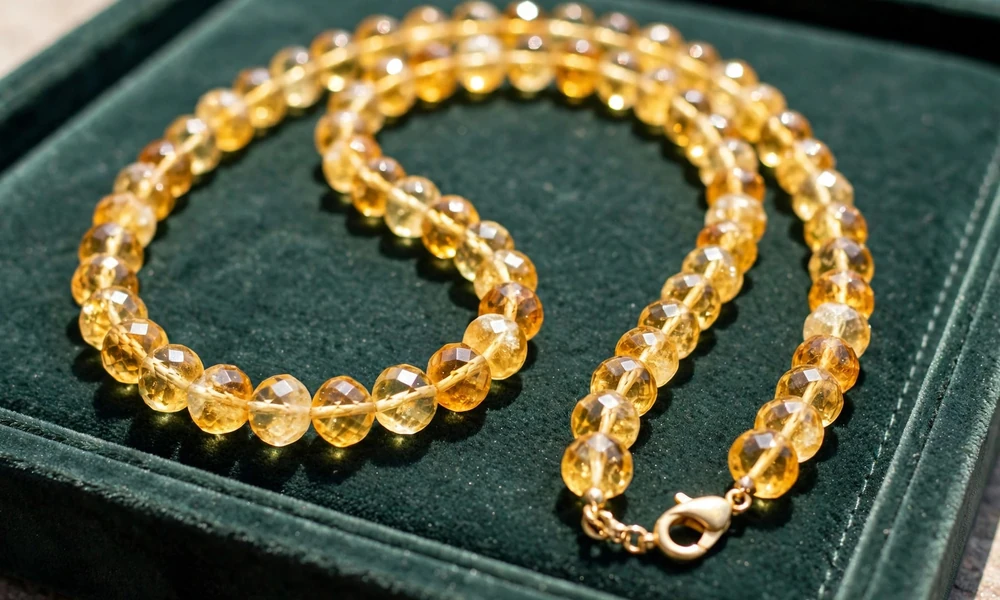
Look next at the cut and the setting. Citrine is usually faceted, because faceting shows off its clarity and warmth, and a good cut makes the stone look brighter without making it look glassy. Bezel and pendant settings protect the stone best, while prong settings show more of the stone but leave the edges exposed. A halo setting adds sparkle, but it also adds small stones that need checking for looseness.
Finally, look at the chain and the metal. A citrine pendant deserves a chain that matches its weight, because a heavy stone on a fine chain will snap the chain sooner or later. Gold, whether yellow, white or rose, suits citrine best, because it warms the yellow rather than cooling it. Our guide to gold jewellery for everyday wear explains how to read metal descriptions, because the chain is what decides how long the necklace lasts, not just how it looks on day one.
The 9 best citrine necklaces of 2027
Tiffany & Co. Pendant
What we like: A classic pendant in a clear, evenly coloured citrine with a polished sterling silver setting, elegant and timeless, with a chain that matches the stone’s weight. What to consider: Premium price for a simple pendant, and the silver needs regular polishing to keep its shine. Stone: Citrine, faceted, heat-treated and disclosed. Setting: Sterling silver pendant, bezel-set. Best for: Everyday classic wear. Price range: Premium.
The stone is the star here, and it is well chosen. It is clear, evenly yellow, and cut to catch the light, and the silver setting keeps the focus on the colour rather than the metal.
Cartier Pendant
What we like: A refined pendant in a deep golden citrine with an 18k gold setting, understated luxury that works from day to evening. What to consider: The stone is small for the price, and the pendant is best worn on its own rather than layered. Stone: Citrine, faceted, heat-treated and disclosed. Setting: 18k yellow gold pendant, prong-set. Best for: Fine jewellery lovers. Price range: Luxury.
This is the necklace for someone who wants citrine in a fine-jewellery context. The gold warms the yellow beautifully, and the proportions are exactly right for a single-stone pendant.
David Yurman Pendant
What we like: A sculptural pendant in a large faceted citrine set in sterling silver with a cable chain, bold and modern, with a satisfying weight. What to consider: The stone is large, so it suits a confident style rather than a delicate one, and it needs a soft cloth after wear. Stone: Citrine, large faceted stone. Setting: Sterling silver pendant with cable chain. Best for: Statement everyday wear. Price range: Luxury.
The scale is what makes this one work. A large citrine shows its colour properly, and the silver cable chain is strong enough to carry it without looking heavy.
Mejuri Pendant
What we like: A well-priced pendant in a clear citrine with a gold vermeil setting, lightweight and easy to wear daily, with an adjustable chain. What to consider: Gold vermeil wears over time, so expect the setting to fade with heavy use. Stone: Citrine, faceted, heat-treated and disclosed. Setting: Gold vermeil pendant, bezel-set. Best for: Affordable everyday wear. Price range: Mid-range.
For the price, the stone quality is strong. It is clear and evenly coloured, and the vermeil setting gives it a warm finish that suits citrine better than silver does.
Monica Vinader Pendant
What we like: A delicate gold vermeil pendant with a small faceted citrine, elegant and easy to layer with other necklaces. What to consider: The stone is small, so the citrine reads as an accent rather than the main event. Stone: Citrine, small faceted stone. Setting: Gold vermeil pendant, bezel-set. Best for: Layering and everyday wear. Price range: Mid-range.
This is the most wearable option in the list for people who like delicate jewellery. The citrine adds warmth to a layered stack without dominating it, and the chain is adjustable.
Missoma Pendant
What we like: A fine gold vermeil chain necklace with a single citrine drop, minimal and modern, with a length adjuster for a perfect fit. What to consider: The chain is delicate, so it is not a necklace for rough handling, and the stone is small. Stone: Citrine, polished drop. Setting: Gold vermeil chain, bezel-set drop. Best for: Minimal everyday wear. Price range: Mid-range.
A good choice if you like the idea of citrine but not a large pendant. The single drop gives you the colour and the warmth in a piece you can wear with everything.
Maria Black Pendant
What we like: A sculptural sterling silver pendant with a faceted citrine, bold and architectural, with a dark, modern edge that suits the warm stone. What to consider: The pendant is a statement piece, so it suits confident styling rather than quiet outfits. Stone: Citrine, faceted, heat-treated and disclosed. Setting: Sterling silver pendant, bezel-set. Best for: Bold statement wear. Price range: Mid-range to premium.
The contrast is the clever part. Cool silver against warm yellow citrine makes the stone look brighter, and the sculptural setting gives it a modern, gallery-like feel.
Astrid & Miyu Pendant
What we like: A pendant in a warm citrine with a gold-plated setting, playful and affordable, with an adjustable chain and a secure clasp. What to consider: The setting is plated, so it will wear with time, and the stone is modest in size. Stone: Citrine, faceted, heat-treated and disclosed. Setting: Gold-plated pendant, bezel-set. Best for: Casual everyday wear. Price range: Affordable.
A friendly, low-commitment way into citrine. The stone is clear and warm, and the pendant is light enough to wear all day without noticing it.
Thomas Sabo Pendant
What we like: A pendant in a deep golden citrine with a sterling silver setting and a sturdy chain, with a satisfying weight and a classic, collectible feel. What to consider: The chain is heavier than a fine chain, so it suits a looser fit, and the silver needs polishing. Stone: Citrine, faceted, heat-treated and disclosed. Setting: Sterling silver pendant, prong-set. Best for: Collectors and classic styling. Price range: Mid-range.
This is the most substantial necklace in the list, and it feels it. The citrine is a rich golden colour, and the silver work is solid and well finished.
Which citrine necklace is right for you
If you want one necklace to wear every day, choose a bezel-set pendant in a clear, evenly coloured citrine. It is the most practical, the most forgiving of the stone’s softness, and the easiest to layer. A pendant on a gold vermeil or yellow gold chain is the safest all-rounder, and it works with a plain shirt, a work outfit, or an evening dress without ever looking out of place.
If you want citrine as a statement, choose a larger faceted stone in a sculptural setting. The size shows the colour properly, and a bezel setting protects the edges while the metal frame gives it presence. Wear it on its own, not layered against other pendants, because citrine scratches when it rubs against metal all day. Our guide to citrine bracelets is a useful companion here, because it covers the same stone in a form that takes more knocks, and it shows how the colour works across different pieces.
If you are buying a gift, a pendant in a pale, natural-looking citrine is a thoughtful choice, because it is the rarest and most honest form of the stone. Ask the seller whether it is natural or heat-treated, and keep the receipt, because a gift that is really glass is a disappointing one, and a gift sold as natural citrine that is really heat-treated amethyst is an overpriced one.
The caveats that matter
Citrine is durable and beautiful, but it is not a rare stone, and it is not a stone with proven healing powers. It is yellow quartz, and it should be bought and worn with that in mind. The most common disappointment is paying a natural-citrine price for heat-treated amethyst, or a citrine price for glass. Both are avoidable with a careful choice and honest disclosure.
| Detail | What is known |
|---|---|
| What it is | Yellow quartz, coloured by traces of iron, Mohs 7, hard enough for daily wear |
| Colour range | Pale lemon to deep honey amber; natural citrine is usually pale, deep orange is usually heat-treated amethyst |
| Most common treatment | Heat treatment of amethyst, stable and permanent, but must be disclosed |
| Most common imitation | Yellow glass, which is softer, lighter, and often has bubbles |
| Best settings | Bezel and pendant settings, which protect the edges of the stone |
| Cleaning | Soft cloth and mild soap; avoid ultrasonic cleaners and harsh chemicals |
| What to avoid | Prolonged strong sunlight, which can fade the colour, and hard knocks |
| What it does not do | It has no proven healing properties and is not an investment stone |
If you have sensitive skin, citrine itself is usually well tolerated, but check the metal. Nickel in plated base metal is a common irritant, and a necklace that causes a rash is almost always a metal problem, not a stone problem. Sterling silver or gold vermeil is a safer choice if your skin reacts easily.
Checklist: choosing a citrine necklace honestly
Use these checks before you buy, and again when the necklace arrives.
- Check the treatment: the seller should say whether the stone is natural or heat-treated, and price it accordingly.
- Check the colour: it should be even across the stone, with no cloudy patches and no white base.
- Check the cut: faceting should be crisp and even, with no chips on the edges or the points.
- Check the setting: bezel settings protect the stone best; prong settings show more stone but leave the edges exposed.
- Check the chain: it should match the weight of the pendant, with a sturdy clasp that closes securely.
- Check the metal: sterling silver, gold vermeil or solid gold should be named honestly, and plated metal should be priced as plated.
Frequently asked questions
Is most citrine heat-treated amethyst?
Yes, the large majority of citrine on the market is amethyst that has been heated until it turns yellow or orange. The treatment is stable and widely accepted, but it must be disclosed, and the price should reflect that the stone is treated, not rare natural citrine.
How can I tell natural citrine from heat-treated amethyst?
Natural citrine is usually a pale, smoky yellow, while heat-treated amethyst is often a deep burnt orange with white at the base of the stone. The most reliable check is the seller: buy from a reputable maker who states the treatment plainly.
Can I wear a citrine necklace every day?
Yes. At Mohs 7, citrine is hard enough for daily wear, and a bezel-set pendant is the most practical choice. Take it off for the gym or heavy work, and do not layer it against other pendants that can scratch it. Our roundup of citrine jewellery covers the same care rules across rings, earrings and bracelets.
Does citrine fade in sunlight?
It can fade slowly in prolonged strong sunlight, so do not leave it on a sunny windowsill or in a hot car for long periods. Normal daily wear, including time outdoors, is fine, and the colour will not change noticeably in a few hours of sun.
Can citrine go in water?
A quick rinse in lukewarm water with mild soap is fine, but do not swim, shower or soak in it regularly. Water can weaken plated metal and the chain, and salt water and chlorine are hard on both the stone and the setting.
Is citrine good for sensitive skin?
Citrine itself is usually well tolerated. Skin reactions to a necklace are almost always caused by the metal, especially nickel in plated base metal. If your skin reacts, choose sterling silver or gold vermeil and check the metal description before you buy.
The bottom line
The best citrine necklace in 2027 is a bezel-set pendant in a clear, evenly coloured stone, with the treatment honestly disclosed and a chain that matches the pendant’s weight. Pale natural citrine is the rarest and most honest form, while a deep golden heat-treated stone is a fair choice at a treated price.
Buy from a seller who names the treatment, check the setting and the metal, and wear the necklace with the confidence that comes from knowing exactly what you bought. Do that, and citrine gives you one of the warmest looks in jewellery for a very fair price.