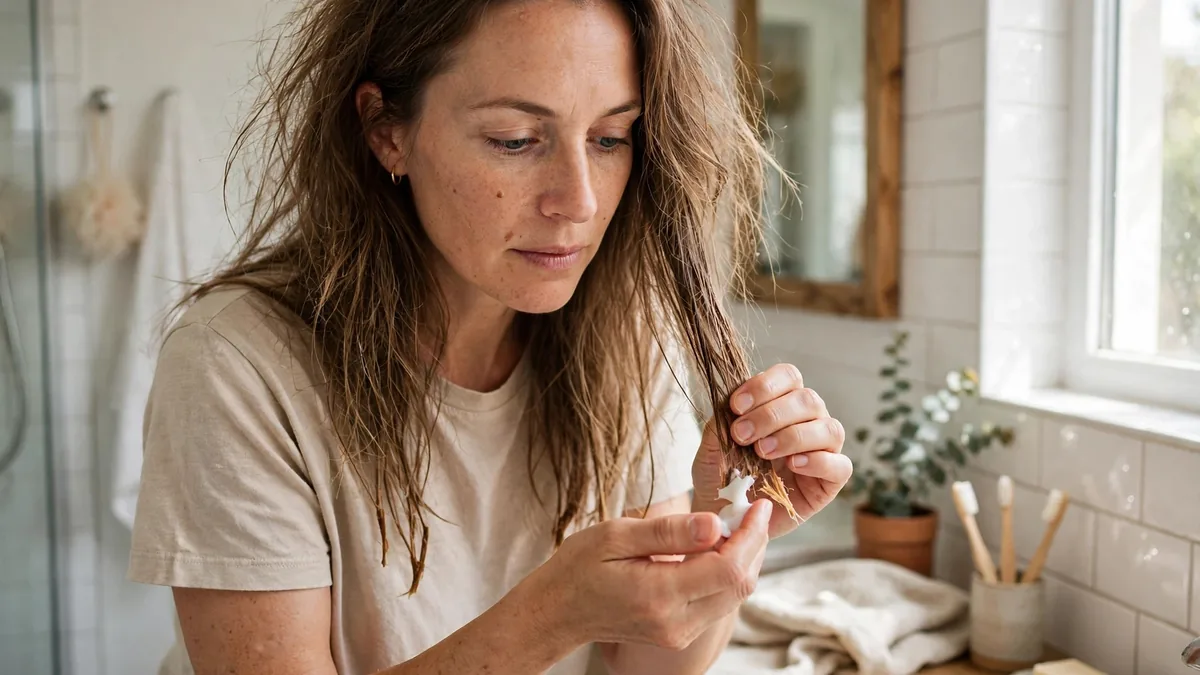
Damaged hair does not happen all at once. It builds up quietly, wash after wash, colour appointment after colour appointment, until one day the ends feel rough, the lengths tangle for no reason, and hair that used to shine looks dull no matter how much you brush it. Heat styling, bleach, highlights, sun, chlorine, tight hairstyles and even rough towel-drying all wear away the hair’s outer layer, and once that layer is lifted, moisture escapes and breakage follows.
A good conditioner is the simplest repair step you can add to a routine, and for damaged hair it matters more than almost any other product. Shampoo cleans, but conditioner is what smooths the cuticle back down, replaces lost moisture, adds slip so hair does not snap when you comb it, and leaves a light protective layer behind. The difference between a conditioner that merely smells nice and one that genuinely helps damaged hair is real, and it shows up in how easily hair detangles, how soft the ends feel when dry, and how much breakage you find on your brush.
Below are nine conditioners worth considering in 2027, from a budget pharmacy favourite to a salon bond-builder for bleached hair. Each one is described by what it is good at, what to watch for, and who it suits best.
Key takeaways
- A good conditioner for damaged hair smooths the cuticle, replaces lost moisture and adds slip, so hair detangles without snapping.
- Bond-builders, proteins and ceramides help weakened, bleached or heat-damaged hair, while rich oils and butters suit very dry, coarse or curly hair.
- Apply conditioner mainly to the mid-lengths and ends, leave it on for two to three minutes, and rinse with lukewarm water.
- Look for hydrolysed protein, ceramides, argan or shea butter, and panthenol, and be cautious with heavy silicones and drying alcohols.
- No conditioner repairs split ends permanently or reverses severe breakage on its own, and a formula that leaves hair limp or coated should be swapped for a lighter one.
What a conditioner actually does for damaged hair
Healthy hair has a smooth, overlapping cuticle, like tiles on a roof, that keeps moisture in and reflects light. Damage lifts and chips those tiles. The hair becomes porous, so it soaks up water quickly and loses it just as fast, it tangles easily, and the ends fray into splits. Conditioner coats each strand with a thin layer that flattens the cuticle back down and makes strands glide past each other instead of catching and breaking.
That smoothing layer does three jobs at once. First, it restores moisture, because humectants and emollients draw water into the hair shaft and hold it there. Second, it adds strength, because small proteins and bond-building ingredients can temporarily patch weak spots inside the strand. Third, it protects, because the coating left behind shields hair from friction, heat and brushing until the next wash.
Damaged hair needs this help more than healthy hair because it has lost its own protection. Bleach and colour remove natural lipids, heat styling dries out the inner cortex, and repeated brushing wears the cuticle thin. A conditioner cannot undo that damage permanently, but used every wash it can keep weakened hair soft and far less prone to breaking while new hair grows in.
How we chose these conditioners and what to look for
Look first at your type of damage. Bleached or chemically treated hair needs protein and bond-building ingredients to rebuild strength, while dry, coarse or curly hair usually needs richer moisture from oils and butters. Fine hair needs the lightest formulas, because a heavy conditioner will flatten it. The best conditioner is the one that matches your damage, not the most expensive one on the shelf.

Look next at the ingredients. Hydrolysed keratin, wheat or silk protein helps weakened hair feel stronger. Ceramides and amino acids support the hair’s structure. Argan oil, shea butter and squalane add softness and shine without harshness, and panthenol helps hair hold moisture. Heavy silicones can make damaged hair feel smooth at first, but if they build up they can leave it dull and coated, so a clarifying wash now and then helps. Our guide to the best moisturisers for dry skin covers the same barrier-repair idea for skin, and the principle is similar for hair: repair the outer layer, hold moisture in, and protect it from further stress.
Finally, look at how you use it. Conditioner works best on hair that has been gently squeezed, not dripping wet, and it needs time, so leave it on while you finish the rest of your shower. Focus on the mid-lengths and ends, where damage is worst. A conditioner that suits your hair, used consistently after every wash, will always beat a richer one used only occasionally.
The 9 best conditioners for damaged hair 2027
Olaplex No.5 Bond Maintenance Conditioner
What we like: A bond-building conditioner that helps bleached and chemically treated hair feel stronger and less brittle, with a creamy texture that detangles well and leaves hair soft without heaviness.
What to consider: It is a premium price, and very fine hair may find it a little rich if too much is used. Key ingredients: Bis-aminopropyl diglycol dimaleate, shea butter, panthenol. Hair type: Bleached, colour-treated, chemically damaged. Size: 250 ml / 1000 ml. Cruelty-free: Yes.
This is the conditioner many people reach for after bleach or heavy colour. Hair feels genuinely stronger and smoother after a few washes, and the ends tangle far less.
Kérastase Resistance Fondant Extentioniste
What we like: A salon conditioner designed for long hair that breaks easily, with creatine and ceramides that help lengths feel stronger, and a light texture that does not weigh hair down.
What to consider: It is a luxury price, and it is best for breakage-prone lengths rather than very dry, coarse hair. Key ingredients: Creatine, ceramides, taurine. Hair type: Long, breakage-prone, fine to medium. Size: 200 ml. Cruelty-free: No.
For hair that snaps when you brush it or tie it up, this is a strong choice. It leaves lengths feeling smoother and more resilient, and it is light enough to use after every wash.
Redken Extreme Conditioner
What we like: A protein-rich conditioner that helps distressed hair feel stronger and more manageable, with good slip for detangling and a clean, fresh scent that is not overpowering.
What to consider: Protein-heavy formulas can make some hair feel stiff if overused, so alternate with a moisturising conditioner if hair feels dry. Key ingredients: Protein complex, ceramides, arginine. Hair type: Damaged, distressed, chemically treated. Size: 250 ml / 500 ml. Cruelty-free: No.
A reliable salon staple for hair that has been through a lot. It is at its best for hair that feels weak and stretchy when wet.
Moroccanoil Moisture Repair Conditioner
What we like: A rich, argan-oil conditioner that restores softness and shine to dry, damaged hair, detangles easily, and leaves hair smelling warm and pleasant without feeling coated.
What to consider: It is rich, so fine hair should use a small amount and keep it off the roots. Key ingredients: Argan oil, keratin, fatty acids. Hair type: Dry, damaged, medium to thick. Size: 250 ml / 500 ml. Cruelty-free: No.
This is the comforting option for hair that feels dry and rough after colour or heat. It softens the lengths noticeably and leaves a warm shine behind.
Pureology Strength Cure Conditioner
What we like: A vegan, sulphate-free conditioner that helps colour-treated hair feel stronger, with good moisture and a formula designed to protect colour from fading.
What to consider: It is a mid-to-premium price, and very coarse hair may want an even richer conditioner alongside it. Key ingredients: Keravis protein, astaxanthin, arginine. Hair type: Colour-treated, damaged, fine to medium. Size: 266 ml / 1000 ml. Cruelty-free: Yes.
A thoughtful choice for coloured hair that is also damaged. It balances strength and moisture well, and it is gentle enough for daily use without stripping colour.
L’Oréal Paris Elvive Total Repair 5 Conditioner
What we like: An affordable, widely available conditioner that softens damaged hair, helps with split ends and tangles, and works well for everyday use without a salon price.
What to consider: It is a lighter repair formula, so severely bleached hair may need a richer treatment as well. Key ingredients: Ceramide, pro-keratin. Hair type: Damaged, dry, all hair types. Size: 400 ml. Cruelty-free: No.
This is the budget pick that earns its place. It is easy to find, pleasant to use, and for mild to moderate damage it is genuinely effective.
Living Proof Restore Conditioner
What we like: A lightweight conditioner that helps damaged hair feel smoother and stronger without heaviness, with a clean formula that rinses well and suits fine hair.
What to consider: It is a premium price for the size, and very thick or coarse hair may prefer a richer formula. Key ingredients: OFPMA, amino acids, shea butter. Hair type: Damaged, fine to medium. Size: 236 ml. Cruelty-free: Yes.
For fine hair that is damaged but easily weighed down, this is one of the best options. It repairs without flattening, and hair feels clean and soft after rinsing.
Davines NOUNOU Conditioner
What we like: A rich, nourishing conditioner for bleached and very dry hair, with a creamy texture that deeply softens lengths and helps restore shine to dull, straw-like ends.
What to consider: It is rich and best kept to the mid-lengths and ends, and it is a salon price. Key ingredients: Tomato extract, fiaschetto tomato, vitamin E. Hair type: Bleached, very dry, damaged. Size: 250 ml / 1000 ml. Cruelty-free: No.
This is the rescue conditioner for hair that feels like straw after bleaching. Used after every wash, it softens the ends gradually and makes combing far less painful.
SheaMoisture Manuka Honey & Mafura Oil Intensive Hydration Conditioner
What we like: A deeply moisturising conditioner for dry, curly and coily hair, with manuka honey and mafura oil that soften and define curls, and a rich texture that detangles well.
What to consider: It is very rich, so fine or straight hair may find it too heavy, and it is best for thick, curly or coily hair. Key ingredients: Manuka honey, mafura oil, shea butter. Hair type: Dry, curly, coily, thick. Size: 384 ml. Cruelty-free: Yes.
For curly and coily hair that is dry and damaged, this conditioner is a favourite for good reason. It adds moisture and softness, and curls feel more defined and less frizzy.
Which conditioner is right for your hair
Bleached or highlighted hair needs protein and bond-building care first. Look for conditioners with hydrolysed protein, ceramides or bond-building ingredients, and use a deep treatment once a week alongside your regular conditioner. Be patient: bleached hair takes months of consistent care to feel stronger, and trimming split ends regularly helps more than any product can. Our guide to the best face oils is a useful reminder that a little rich oil goes a long way, and the same is true for hair: a small amount of a rich conditioner on the ends is more effective than a large amount all over.
Dry, coarse or curly hair needs moisture above all. Rich conditioners with shea butter, argan oil or manuka honey soften the lengths, reduce frizz and make detangling easier. Leave the conditioner on a little longer, and consider a leave-in conditioner on top for extra protection. Avoid clarifying shampoos too often, because they strip the moisture you are trying to replace.
Fine, damaged hair needs the lightest touch. Choose a lightweight conditioner, apply it only from the ears down, and rinse thoroughly. Heavy conditioners will flatten fine hair and make it look limp, even if the ends feel soft. A protein conditioner used two or three times a week, alternated with a light moisturising one, is often the best balance. For a similar balance in skincare, our guide to the best hydrating serums shows how light layers of moisture can hydrate without heaviness, and fine hair benefits from the same layered approach.
The caveats that matter
Conditioner helps, but it has limits. It cannot glue split ends back together permanently, and it cannot reverse severe breakage on its own. Split ends need trimming, and hair that is breaking badly may need a break from bleach, heat and tight styles as well as a better conditioner. If hair is shedding in large amounts, or the scalp is sore, itchy or flaking, see a clinician or a trichologist rather than trying a stronger product.
| Detail | What is known |
|---|---|
| Best formula for most damaged hair | A conditioner with protein or ceramides for strength, plus oils or butters for moisture |
| Where to apply | Mid-lengths and ends mainly, with only a small amount near the roots |
| How long to leave it on | Two to three minutes for a regular conditioner, longer for a deep treatment |
| Who should choose protein | Bleached, colour-treated or chemically damaged hair that feels weak or stretchy |
| Who should choose rich moisture | Dry, coarse, curly or coily hair that feels rough and frizzy |
| What to avoid on fine hair | Very heavy, oily conditioners applied at the roots, which flatten hair |
| How often to use | After every wash, with a deep treatment or mask once a week |
| When to see a clinician | Heavy shedding, scalp pain, persistent itching or flaking that does not improve |
If you use heat tools, a heat protectant matters as much as conditioner. No conditioner can fully protect hair from daily straightening at high temperatures, and turning the heat down and giving hair heat-free days will do more than any single product.
Checklist: choosing a conditioner honestly
Use these checks before you buy, and again after two weeks of use.
- Check your damage: protein and bond-builders for bleached hair, rich moisture for dry, curly or coarse hair.
- Check the ingredients: hydrolysed protein, ceramides, argan or shea butter, and panthenol are reliable signs.
- Check the weight: light formulas for fine hair, rich formulas for thick, curly or very dry hair.
- Patch-test first: try a new conditioner on a small section for a few washes before committing to it.
- Apply it properly: squeeze out excess water, focus on the mid-lengths and ends, and leave it on for two to three minutes.
- Give it two weeks: judge a conditioner after consistent use, not after a single wash, and trim split ends regularly.
Frequently asked questions
How often should I use conditioner on damaged hair?
After every wash. Damaged hair loses moisture quickly, so conditioning every time you shampoo is the simplest way to keep it soft and manageable. Add a deep treatment or mask once a week for extra repair.
Can conditioner repair split ends?
Not permanently. Conditioner can smooth split ends temporarily and make them look and feel better, but the only lasting fix is trimming them. Regular trims plus consistent conditioning prevent splits from travelling further up the strand.
Should I use a protein conditioner every day?
It depends on your hair. Bleached or very weak hair often benefits from protein most washes, but if hair starts to feel stiff or dry, alternate with a moisturising conditioner. Balance is key: strength without moisture can make hair brittle.
Why does my hair still feel dry after conditioning?
Either the conditioner is too light for your hair, or you are rinsing it out too quickly. Try a richer formula, leave it on for two to three minutes, and apply it to hair that has been gently squeezed, not dripping wet. If dryness persists, check whether your shampoo is too harsh.
Do I need a separate conditioner and a hair mask?
It helps. A conditioner is for everyday smoothing and detangling, while a mask is a deeper, longer treatment for weekly repair. For damaged hair, using both is usually more effective than using either one alone.
Can conditioner make hair greasy?
Yes, if it is too rich for your hair or applied at the roots. Use a light formula for fine hair, keep conditioner on the mid-lengths and ends, and rinse thoroughly. If hair still looks greasy, try a smaller amount or a lighter conditioner.
The bottom line
The best conditioner for damaged hair in 2027 is not the most expensive or the most luxurious. It is the one that matches your type of damage, that you will use after every wash, and that leaves your hair softer, smoother and easier to detangle without weighing it down. For bleached hair, a bond-builder or protein conditioner is the right choice. For dry, curly hair, a rich, moisturising conditioner is better. For fine hair, a lightweight formula is the one that will actually work.
Choose one conditioner that suits your hair, use it consistently for two weeks, add a weekly deep treatment, and trim split ends regularly. That is the honest way to get healthier, softer hair, without spending more than you need to.
Note: This guide is general haircare information, not medical advice. Patch-test new products, and speak to a clinician or a trichologist if you have heavy shedding, scalp pain, persistent itching or flaking, or if your hair does not improve with regular conditioning.