



What makes a deviled egg truly great, the kind that disappears from the platter before anything else on the table? It isn’t a secret ingredient or a fancy technique. It’s getting a handful of small things right at once: eggs that peel cleanly, a filling that’s silky instead of gluey, and a balance of tang, salt, and richness that keeps people reaching for a second one.
This guide walks through a reliable recipe, the science behind the tricky parts, and the mistakes that turn a promising batch into rubbery whites with dry, crumbly yolks. It also clears up a bit of history along the way, because the story of deviled eggs is more interesting than most people expect.
What “Deviled” Actually Means
The name has nothing to do with demons or Halloween decorations. The verb “to devil” has meant to prepare food with hot or highly seasoned ingredients since the late 18th century. The Oxford English Dictionary dates that culinary sense to 1786. So a deviled egg is simply a highly seasoned stuffed egg, and the paprika on top is a nod to that spicy tradition rather than a random garnish.
There’s a common claim that deviled eggs trace back to ancient Rome, since stuffed eggs appear in the Roman cookbook attributed to Apicius. That’s partly true but misleading. Stuffed eggs are old. The name, the mayonnaise-based filling, and the modern American party dish are much later inventions. Mayonnaise-based deviled eggs became widespread in the United States only after commercial mayonnaise took off in the early 1900s. Keep those two stories separate and you’ll avoid repeating a popular but muddled origin myth.
The Core Recipe
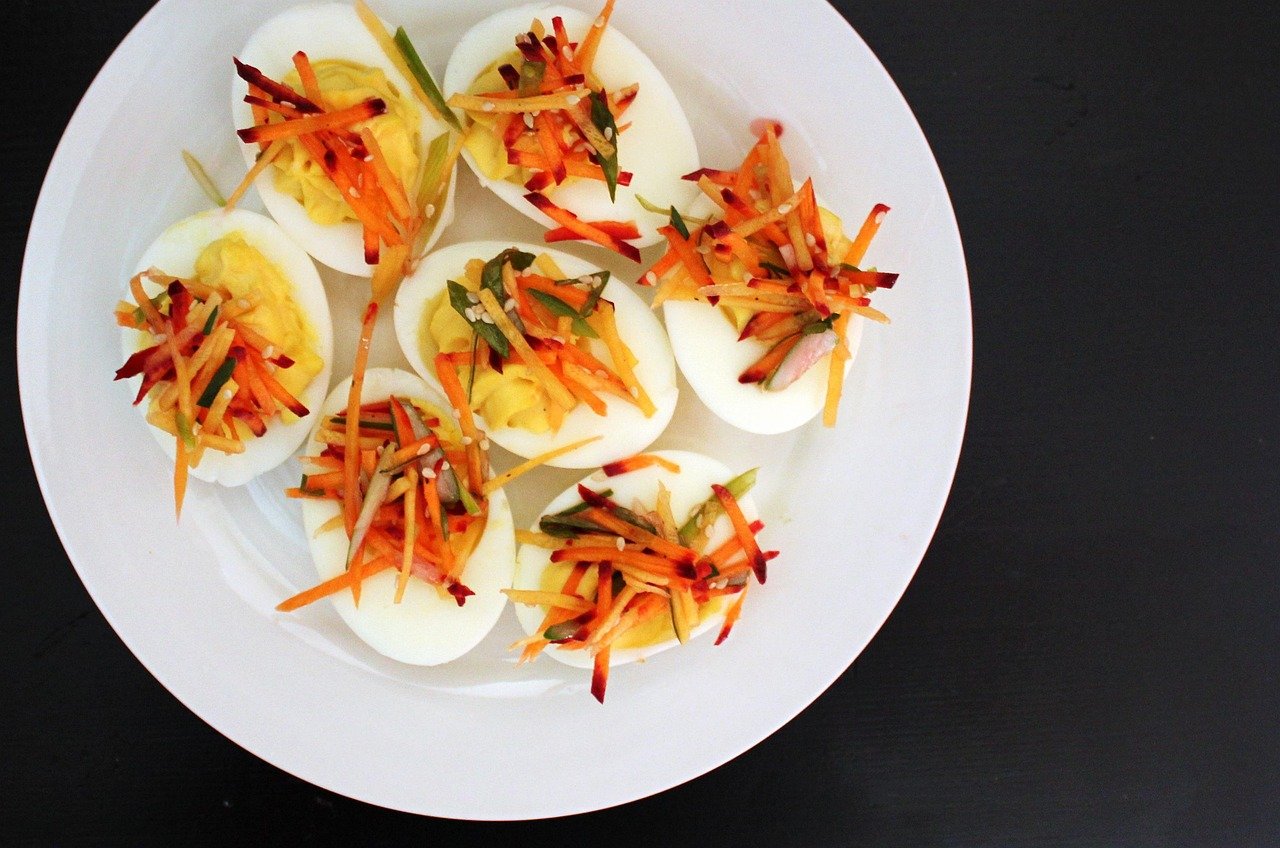
This makes 12 deviled eggs (6 whole eggs, halved). It’s a classic formula: yolk, mayonnaise, acid, mustard, and salt, with paprika to finish.
Ingredients
| Component | Amount | Notes |
|---|---|---|
| Large eggs | 6 | A week or so old peels best |
| Mayonnaise | 3 to 4 tablespoons | Full-fat for best texture |
| Dijon mustard | 1 teaspoon | Yellow mustard works too |
| Acid | 1 to 2 teaspoons | Vinegar, lemon juice, or pickle brine |
| Salt | Pinch, to taste | Add gradually |
| Paprika | Sprinkle | Sweet or smoked, for garnish |
| Optional add-ins | See variations below | Relish, horseradish, bacon, chives |
Step-by-Step Method
- Start with older eggs. Eggs that are seven to ten days past packing peel more cleanly than fresh ones. As eggs age, the pH rises and the inner membrane clings less tightly to the white. This is widely repeated practical advice from extension services and food-science writers, and it holds up in real kitchens.
- Lower eggs into boiling water, then simmer. Bring a pot of water to a rolling boil, gently add the eggs with a spoon, and reduce to a steady simmer for about 10 to 11 minutes. Starting in hot water makes the white set faster and can make peeling easier.
- Shock them in ice water. Transfer the eggs to a bowl of ice water for at least five minutes. This stops the cooking and firms the white so it doesn’t tear.
- Peel under running water. Tap each egg all over, then peel starting at the wide end where the air pocket sits. A stream of water helps the shell and membrane lift away.
- Halve and separate. Cut each egg lengthwise and pop the yolks into a bowl. Arrange the whites on a platter.
- Mash the yolks smooth. Use a fork or press them through a fine sieve. Lumps here become lumps in the finished filling.
- Mix the filling. Add mayonnaise, mustard, acid, and a pinch of salt. Stir until smooth and taste. Adjust acid and salt before piping.
- Pipe or spoon into the whites. A zip-top bag with the corner snipped makes quick work of this.
- Chill and garnish. Refrigerate until serving, then dust with paprika just before they hit the table.
Why the Filling Turns Out Dry, Gluey, or Bland
Most deviled egg disappointments come from three fixable problems.
Dry filling usually means too little fat or over-mashed yolks that have absorbed too much air. Add mayonnaise one tablespoon at a time until the mixture holds together but still looks glossy. A teaspoon of sour cream or a little reserved yolk cooking water can loosen a stiff filling.
Gluey texture comes from overmixing or from using a food processor. Yolks turn pasty fast when whipped. A fork and a light hand beat a machine every time.
Flat flavor is the most common complaint. Deviled eggs need more acid and salt than most cooks expect, because chilling mutes both. Taste the filling at room temperature, then chill. If it tastes perfect cold, it was probably under-seasoned warm.
One more practical note: don’t skip the acid. Mayonnaise is rich, mustard is sharp, but acid is what makes the whole thing taste bright instead of heavy. Vinegar, lemon juice, and pickle brine all work, and each brings a slightly different character. If you already keep a jar of brine around for other recipes, the same instinct applies to building a balanced chili seasoning recipe that actually tastes balanced, where acid and salt do quiet but essential work.
Variations Worth Trying
The classic is a starting point, not a rule. There’s no official standard for deviled eggs, which means “best” is a matter of taste. Here are versions that earn their place on a platter.
| Style | What to add | Why it works |
|---|---|---|
| Southern classic | Sweet pickle relish, a dash of yellow mustard | Sweet-sour crunch balances the rich yolk |
| Smoky bacon | Crumbled bacon, smoked paprika, a little cheddar | Salty, savory, and crowd-pleasing |
| Horseradish | Prepared horseradish, chives | Sharp heat cuts through the fat |
| Dill pickle | Chopped dill pickle, pickle brine instead of vinegar | Briny and fresh |
| Curry | Curry powder bloomed in a little butter | Warm spice, unexpected and memorable |
A word on add-ins: keep them fine. Chunky relish or bacon bits that are too large clog a piping bag and make the filling fall apart. Chop small, fold gently, and taste again after adding anything salty.
Food Safety for a Party Dish
Deviled eggs are a cold, mayonnaise-based dish that often sits out at room temperature for hours, which makes them a genuine food-safety concern rather than a hypothetical one. Public-health guidance on perishable foods, commonly called the two-hour rule, applies here. Keep deviled eggs refrigerated until serving, and don’t let them sit out longer than about two hours. On a hot day, or outdoors, shorten that window. (Glow recipe toner pads they do who should skip them)
A few habits make a real difference in practice:
- Transport the platter cold and set it out only when guests arrive.
- Nest the serving plate in a bowl of ice if the party runs long.
- Keep a backup batch in the fridge and swap platters rather than refilling a warm one.
- Discard anything that has been out past the safe window. It isn’t worth the risk.
The same careful handling applies to any mayo-heavy dish, and it’s the kind of detail that separates a confident host from a nervous one.
Peeling Problems and How to Fix Them
Even experienced cooks get a batch of eggs that fights back. Here’s what actually helps, ranked by how much difference it makes.
- Use older eggs. This is the single biggest factor. If you know you’re making deviled eggs on the weekend, buy the eggs a week ahead.
- Ice bath immediately. Prompt cooling prevents the white from sticking to the membrane.
- Peel while warm, not cold. Eggs that have sat in the fridge for a day are harder to peel than eggs peeled right after cooling.
- Start at the fat end. The air pocket there gives you a place to get under the membrane.
- Use water. A running tap or a bowl of water flushes the shell loose.
If a white tears, don’t panic. A torn white still tastes fine, and once the filling is piped in, most guests won’t notice. Save the ugliest ones for the kitchen crew.
A Note on the Eggs Themselves
Eggs are a source of high-quality protein and contain choline, a nutrient many people don’t get enough of. That doesn’t make deviled eggs a health food, since mayonnaise and add-ins carry their own calories, but it’s a fair reason not to treat them as pure indulgence. The dish is also inexpensive and scales easily, which is why it shows up at potlucks, holidays, and church suppers across the country.
If you’re building a spread, deviled eggs pair naturally with other make-ahead dishes. A creamy, buttery side like a jiffy corn casserole recipe creamy buttery side dish that everyone asks for rounds out a plate nicely, and something crisp and fried, such as a crispy fried pickles recipe southern crunch every bite, gives the platter contrast. For drinks, a well-made cocktail earns its place too, and the story behind the vesper martini real recipe its history it tastes different is a good one to have ready when someone asks what they’re drinking.
Presentation That Looks Effortless
Deviled eggs are simple food, but a little care in plating makes them look like you tried.
- Pipe, don’t spoon. A zip-top bag produces a neat swirl in seconds.
- Garnish at the last minute. Paprika dulls and chives wilt if applied too early.
- Use a deviled egg plate if you have one. The dimples keep the eggs from sliding.
- Vary the garnish to signal different flavors: dill for the pickle version, bacon for the smoky one, a tiny flag of chive for the classic.
None of this is required. A plain plate of well-made deviled eggs beats a fussy one with dry filling every time.
Conclusion
The best deviled egg recipe isn’t the one with the longest ingredient list. It’s the one built on a few reliable habits: older eggs, a hot start and an ice bath, yolks mashed smooth, and a filling seasoned boldly enough to survive chilling. Add acid with confidence, taste before you pipe, and keep the platter cold. Get those basics right and the variations take care of themselves, whether you lean Southern with relish or go sharp with horseradish. The dish has been a party staple for a century for a simple reason. Done well, it’s hard to stop eating.
Frequently Asked Questions
Why do my deviled eggs taste bland?
Chilling mutes salt and acid, so a filling that tastes right at room temperature often tastes flat once cold. Season a little more aggressively than feels comfortable, taste again after chilling, and adjust. A squeeze of lemon or a splash of pickle brine can rescue a bland batch without adding more salt.
How far ahead can I make deviled eggs?
You can make the filling and boil the eggs up to two days ahead, storing them separately in the fridge. Assembled deviled eggs are best within 24 hours, since the whites can weep and the paprika fades. Keep them covered and cold until serving.
Do I have to use mayonnaise?
No. Greek yogurt, sour cream, or a mix of mayonnaise and yogurt all work, though the texture and richness change. Mayonnaise gives the creamiest result and the most traditional flavor. If you swap, add a little extra acid to compensate.
Why are my egg whites tearing when I peel them?
Fresh eggs are the usual culprit. Their membranes cling tightly to the white. Use eggs that are at least a week old, cool them quickly in ice water, and peel them while still slightly warm, starting at the wide end.
Is paprika required on deviled eggs?
It isn’t required by any rule, but it’s a long-standing American presentation habit and adds a mild flavor. Sweet, smoked, and hot paprika each bring something different. Chives, dill, or a dusting of cayenne are equally good finishes.
Can I make deviled eggs without a piping bag?
Yes. A zip-top bag with a corner snipped off works just as well, and a small spoon does the job too. For the neatest look, press the filling into the corner of the bag, twist the top, and pipe with steady pressure.











