
Everyday earrings are the pair you reach for without thinking. They go on in the morning, stay comfortable through a long day, and still look right at dinner. The problem is not finding earrings you like. It is finding a pair that stays comfortable for twelve hours, does not irritate your ears, does not catch on scarves and jumpers, and does not look tired after a month of daily wear.
That is why this guide is organised by how earrings actually behave on a normal day, not just by how they look in a photograph. A heavy drop earring can be beautiful and still be the wrong choice for a day at a desk. A tiny stud can be perfectly comfortable and still feel unfinished with an evening outfit. Weight, post thickness, clasp security and metal quality matter far more than sparkle when a pair is worn every day.
Below are nine earrings worth considering in 2027, from a classic gold vermeil stud to a slim silver hoop and a freshwater pearl. Each one is described by what it is good at, what to watch for, and who it suits best, so you can choose a pair you will actually wear, not one that sits in a box.
Key takeaways
- Everyday earrings should be light, secure and comfortable for a full day, not just pretty for an hour.
- Gold vermeil, sterling silver, platinum and titanium all work well for daily wear, but plating thickness and post quality decide how long they last.
- Studs and small huggies are the easiest everyday shapes; drops and threaders need a lighter hand and a calmer day.
- Clean earrings regularly and store them in pairs, because most everyday damage comes from tangles, lost backs and tarnish, not from wearing them.
- No earring suits every ear, and a pair that irritates, pulls or constantly needs adjusting is the wrong pair, however good it looks.
What everyday earrings actually need to do
An everyday earring has a harder job than an occasion earring. It has to survive a commute, a phone call, a jumper pulled over the head, a workout, a shower of rain and a long evening, all without hurting, slipping or snagging. That means weight comes first. As a rough guide, a pair that feels noticeable in the first ten minutes will feel heavy by mid-afternoon, and a pair that tugs at the lobe will stretch a piercing over months.
Comfort also depends on the post and the back. A thin, smooth post slides in easily and sits straight. A rough or bent post irritates the piercing and makes the earring sit at an angle. A secure back matters just as much, because losing one earring from a favourite pair is the most common way everyday earrings end up unworn. Screw backs and large butterfly backs hold better than small push backs, and they are worth the small extra cost on a pair you wear daily.
Metal choice is the third thing that decides whether a pair lasts. Hypoallergenic metals such as titanium and platinum suit sensitive ears, while sterling silver and gold vermeil suit most people if the quality is good. Thin plating wears through quickly on a daily pair, so a vermeil piece should have a thick gold layer over sterling silver, and silver should be properly hallmarked.
How we chose these earrings and what to look for
Look first at weight and size. For daily wear, small to medium shapes win: studs under 8 millimetres, hoops under 25 millimetres, and drops that sit close to the ear rather than swinging freely. A pair should feel almost weightless when you put it on.
Look next at the clasp and the post. A secure back, a smooth post and a shape that does not catch on hair or clothing are the practical signs of a good everyday pair. Screw backs are the most secure for studs. Hinged huggies close with a click and stay put. Lever backs suit drops that need to stay in place through a long day. Our guide to silver earrings for everyday wear covers the same checks in more detail, because the metal matters as much as the shape when a pair is worn daily.
Finally, look at how the pair fits your routine. If you wear headphones, a low-profile stud or huggie sits better than a hoop. If you wear your hair up, a slightly larger shape shows better. If you sleep in your earrings, a smooth ball stud or a small huggie is far kinder than a drop with a dangling charm. The right everyday pair is the one that disappears into your day, not the one you keep noticing.
The 9 best earrings for everyday 2027
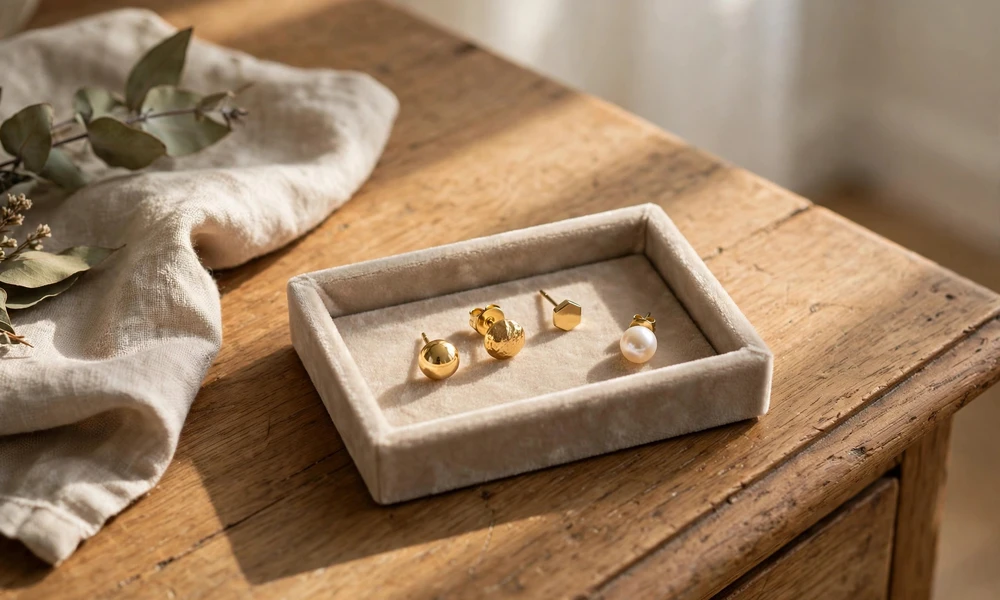
The Classic Gold Vermeil Stud
What we like: A small, warm gold ball stud that suits every skin tone, sits flat against the ear, and works with office clothes, denim and evening dresses alike.
What to consider: Vermeil needs a thick gold layer to survive daily wear, and thin plating will wear through at the post first. Best for: First pairs, workdays, and anyone who wants one pair for everything. Material: Gold vermeil over sterling silver. Price range: Mid-range. Standout feature: A polished ball that catches light without any stones to clean.
This is the pair to buy first if you own nothing else. It is quiet, comfortable and almost impossible to wear wrong, and it sets the standard every other everyday earring is judged against.
The Slim Sterling Silver Hoop
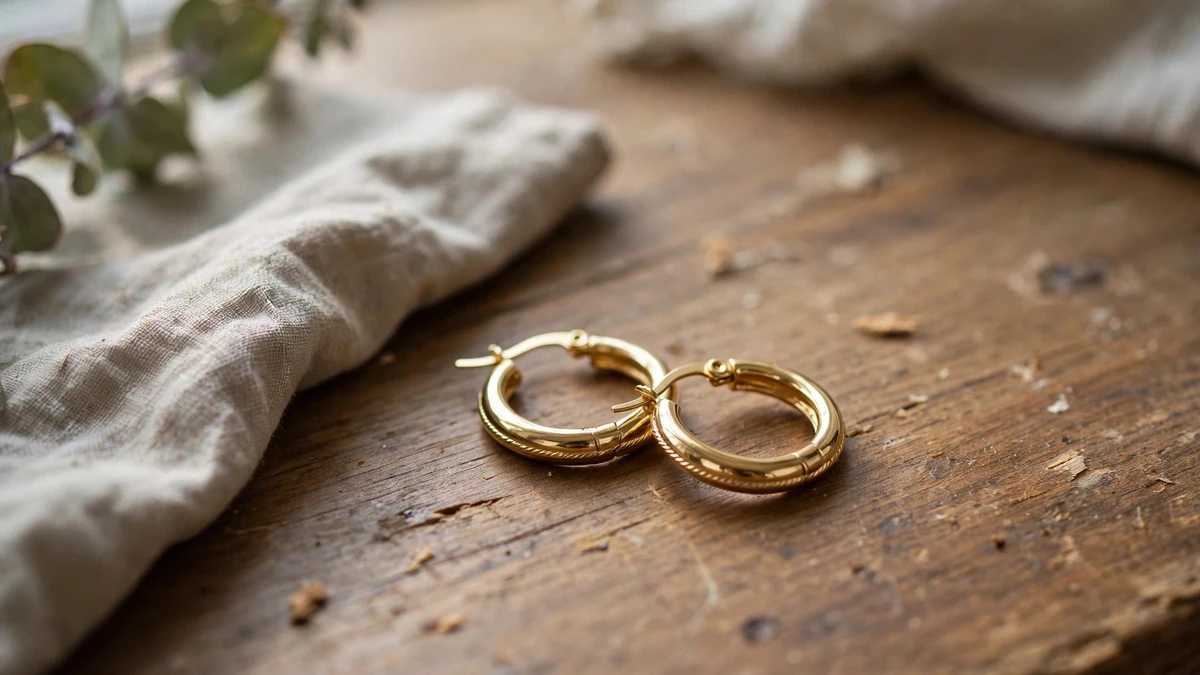
What we like: A slim, lightweight hoop that adds shape without weight, with a hinged close that clicks shut and stays secure all day.
What to consider: Silver tarnishes with air and moisture, so it needs a quick polish every few weeks. Best for: Everyday polish, casual outfits, and people who prefer cool-toned metal. Material: Sterling silver. Price range: Affordable to mid-range. Standout feature: A clean, slim profile that reads as modern rather than flashy.
The Freshwater Pearl Stud
What we like: A smooth freshwater pearl with a soft lustre that brightens the face, light enough to wear all day and smart enough for formal occasions.
What to consider: Pearls scratch and dull if they meet perfume, hairspray or rough storage. Best for: Work, weddings, and anyone who wants a classic pair. Material: Freshwater pearl on a sterling silver post. Price range: Mid-range. Standout feature: A natural lustre that no imitation pearl quite matches.
Pearl studs have been an everyday classic for decades for a simple reason: they suit every age, every outfit and every occasion without ever trying too hard.
The Small Gold Vermeil Huggie
What we like: A tiny hoop that hugs the lobe, stays put through headphones and hair, and layers neatly with a stud in a second piercing.
What to consider: The hinge is the weak point, so check it clicks firmly and does not gap. Best for: Active days, layered ears, and people who lose push-back studs. Material: Gold vermeil over sterling silver. Price range: Mid-range. Standout feature: A secure hinged close with no separate back to lose.
Huggies solve the two most common everyday earring problems at once: they do not fall out, and they do not catch on anything. That alone makes them worth owning.
The Titanium Ball Stud
What we like: An exceptionally light, hypoallergenic ball stud that suits sensitive ears and stays comfortable even when worn around the clock.
What to consider: Titanium has a cooler, greyer tone than silver, which some people find less warm. Best for: Sensitive ears, new piercings, and sleeping in earrings. Material: Implant-grade titanium. Price range: Affordable. Standout feature: One of the lightest and kindest metals for daily wear.
If your ears react to most earrings, start here. Titanium is the metal piercers reach for first, and it is the safest way back to wearing earrings every day.
The Platinum Bar Stud
What we like: A slim platinum bar that sits neatly along the lobe, with a cool white shine and a weight that feels substantial without pulling.
What to consider: Platinum costs more than silver or vermeil, and the design is deliberately minimal. Best for: Minimal wardrobes, formal workplaces, and long-term daily wear. Material: Platinum. Price range: Premium. Standout feature: A metal that barely tarnishes and holds its finish for years.
A platinum bar is a quiet luxury: it does not shout, it does not tarnish, and it will still look the same in five years as it does on the day you buy it.
The Gold Vermeil Drop Earring
What we like: A short, close-fitting drop with gentle movement, light enough for a full day and elegant enough to carry an evening outfit.
What to consider: Drops catch on scarves and high collars, so they suit calmer days better than busy ones. Best for: Evenings, lunches, and days when you want a little more presence. Material: Gold vermeil over sterling silver. Price range: Mid-range. Standout feature: A short drop that moves without swinging or pulling.
The Sterling Silver Threader
What we like: A fine silver thread that slips through the piercing and hangs in a soft line, giving the look of a drop with almost no weight.
What to consider: Threaders can slip out if the chain is too fine, and they tangle easily in storage. Best for: Evenings, fine jewellery lovers, and second piercings. Material: Sterling silver. Price range: Affordable to mid-range. Standout feature: A delicate line of silver that weighs almost nothing.
Threaders are the lightest way to wear a drop. They suit people who love the look of a dangling earring but cannot tolerate the weight of one.
The Pearl and Gold Bead Huggie
What we like: A small huggie with a single pearl and a row of tiny gold beads, combining the warmth of gold with the softness of pearl in one easy pair.
What to consider: The pearl needs the same care as any pearl, kept away from perfume and stored separately. Best for: Everyday elegance, gifts, and people who want one pair that does everything. Material: Freshwater pearl and gold vermeil over sterling silver. Price range: Mid-range. Standout feature: Two classic materials in a single secure hoop.
This pair is the best of both worlds: the security of a huggie, the warmth of gold, and the soft glow of a pearl, all in a shape you can wear from morning to night.
Which everyday earring is right for you
Sensitive ears should start with titanium or platinum, and avoid plated metals until the piercing is fully settled. A titanium ball stud is the safest daily choice, and platinum is the premium step up when you want a metal that will never irritate. If your ears tolerate most metals, gold vermeil and sterling silver open up far more shapes and styles. Our guide to pearl earrings for everyday wear is a useful next step if you are drawn to pearls, because pearl care is different from metal care and worth knowing before you buy.
Your routine matters as much as your ears. Headphone wearers and people who pull jumpers over their heads should favour studs and huggies. People who wear their hair up can carry a slightly larger hoop or a short drop. Sleepers should choose smooth shapes with no dangling parts. And if you have more than one piercing, a small huggie in the second hole with a stud in the first is the easiest layered look there is.
Budget is best spent on metal quality rather than size. One well-made pair in vermeil, silver or titanium will outlast three cheap pairs, and it will be kinder to your ears while it does. Buy the best metal you can afford in a shape you will wear daily, and add a second pair later rather than buying two average pairs at once.
The caveats that matter
Everyday earrings fail in predictable ways, and most of them are avoidable. Thin plating wears through, cheap posts irritate, loose backs lose earrings, and pearls dull when they meet perfume. The table below is the honest summary: what to expect from each choice, and what to watch for before you buy.
| Detail | What is known |
|---|---|
| Best shape for daily wear | Studs and small huggies: light, secure, and least likely to catch |
| Best metal for sensitive ears | Titanium first, then platinum; both are hypoallergenic and durable |
| How long vermeil lasts | Months to years of daily wear, depending on plating thickness and care |
| What tarnishes fastest | Thin-plated fashion jewellery, then sterling silver if left in air |
| How to clean them | Warm water, mild soap and a soft cloth; dry fully before storing |
| When to remove them | Before swimming, heavy exercise, and applying perfume or hairspray |
| What causes most losses | Loose push backs and worn hinges, not the earring itself |
| What they do not do | No earring suits every ear, and no plated pair lasts forever with daily wear |
If your ears become sore, red or itchy, stop wearing the pair and let the piercing settle before trying a different metal. A reaction is not a reason to give up earrings, but it is a reason to switch to titanium and to check the post and back for rough edges. A guide to cleaning pearl earrings is worth reading before you clean any pearl pair, because pearls need a gentler touch than metal and the wrong cleaner can dull them permanently.
Checklist: choosing everyday earrings honestly
Use these checks before you buy, and again after a week of daily wear.
- Check the weight: hold the pair in your palm, then try it on; it should feel almost weightless.
- Check the post: it should be smooth, straight and free of rough edges or burrs.
- Check the back: it should fit firmly, and a screw back or large butterfly back is worth it for daily pairs.
- Check the metal: hallmarked silver, thick vermeil, titanium or platinum, not thin flash plating.
- Check the catch test: run a scarf or collar past it; a pair that snags will annoy you every day.
- Check after a week: no soreness, no slipping, no tarnish, and no urge to take them off by mid-afternoon.
Frequently asked questions
What earrings can I wear every day without irritation?
Titanium and platinum are the safest choices for sensitive ears, followed by well-made sterling silver and thick gold vermeil. Avoid thin-plated fashion jewellery for daily wear, and remove earrings before swimming or heavy sweating.
Are hoops suitable for everyday wear?
Yes, if they are small and light. Slim hoops under 25 millimetres and huggies that sit close to the lobe are comfortable all day. Large, heavy hoops pull at the piercing and catch on hair, so save those for occasions.
Can I sleep in my everyday earrings?
Small, smooth studs and huggies are usually fine to sleep in, especially titanium ones. Drops, threaders and anything with a dangling part should come out at night, because they catch on bedding and can bend or pull.
How often should I clean everyday earrings?
Once a week is enough for most pairs: warm water, mild soap and a soft cloth, dried fully before storing. Pearls need only a soft, dry cloth. Clean the posts as well as the fronts, because build-up on the post is what irritates piercings.
Why do my earrings tarnish so quickly?
Air, moisture, perfume and sweat all speed up tarnish, and thin plating wears through faster than solid metal. Store earrings in a closed box or pouch, keep them dry, and polish silver regularly to slow it down.
How do I stop losing earring backs?
Use screw backs or large butterfly backs, check the fit each morning, and replace backs when they loosen. A small dish by the bed for the pair at night also helps, because most backs are lost during rushed mornings, not during the day.
The bottom line
The best everyday earrings in 2027 are not the most expensive or the most eye-catching. They are the lightest, the most secure, and the kindest to your ears, in a metal that lasts. For most people, that means a small gold vermeil stud, a slim silver hoop, or a titanium ball stud, chosen for weight and comfort first and style second.
Buy one good pair, wear it for a week, and judge it on how your ears feel at the end of the day, not on how it looks in the box. The pair you forget you are wearing is the pair you will reach for every morning, and that is the whole point of an everyday earring.