

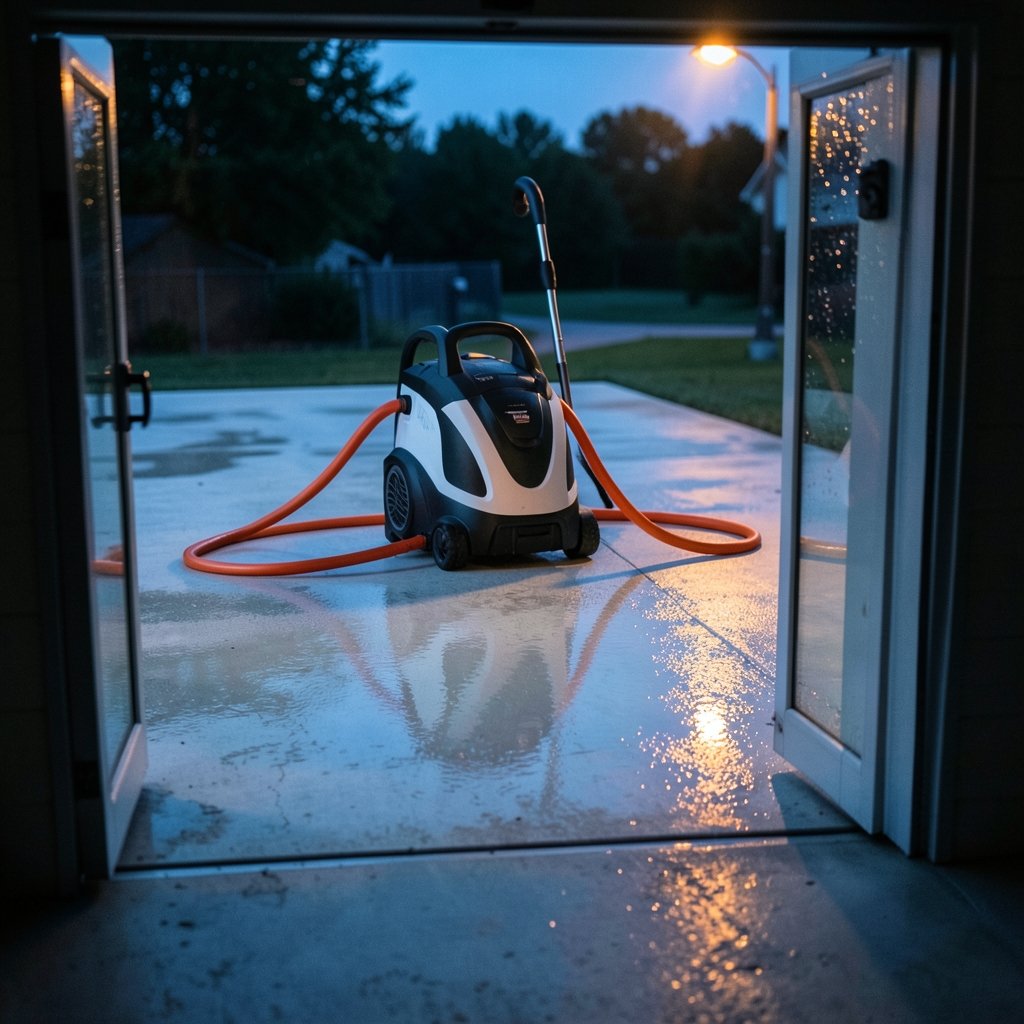
What if the pressure washer with the biggest number on the box is not the one that cleans your driveway fastest? That happens more often than you would think. Electric pressure washers are sold on a single headline figure, usually PSI or bar, and shoppers tend to grab the highest one they can afford. Then they get it home and discover that a high-pressure, low-flow machine sputters through mud while a balanced unit two models down the shelf rinses it away in one pass.
This guide explains how electric pressure washers really perform, where the marketing numbers mislead, which specs matter for which jobs, and how to avoid the mistakes that ruin machines, surfaces, and weekends.
Pressure and flow: the two numbers that decide everything
An electric pressure washer is defined by two measurements working together. Pressure (PSI in the US, bar in Europe) is the force of the water stream. Flow (GPM or litres per minute) is how much water arrives per minute. Cleaning power comes from the combination, not from either number alone.
Think of it this way: a narrow, hard jet at high pressure blasts loose grit off concrete, but it struggles to flush a wide area of soapy film because so little water is moving. A softer, high-flow stream rinses faster and covers more ground. A machine with strong pressure and weak flow feels impressive against a fence post and disappointing across a whole patio.
This is why comparing boxes in a store is risky. Manufacturer pressure figures are often measured right at the nozzle, and test methods vary between brands. A 2,000 PSI claim from one company and a 2,000 PSI claim from another may describe very different machines. There is a voluntary industry standard for measuring pressure, flow, and cleaning performance in the US, developed historically through the Pressure Washer Manufacturers’ Association and carried into ANSI consensus standards, but it is not applied universally and its current edition is worth confirming with the standards body rather than trusting a sticker.
The practical takeaway: look for a balanced machine in the middle of the range rather than the highest PSI on the shelf. For most home jobs, a unit delivering roughly 1,800 to 2,300 PSI with flow in the 1.2 to 1.5 GPM range handles cars, siding, decks, and patios comfortably.
How much pressure do you actually need?

Matching the machine to the job prevents both disappointment and damage. Here is a rough map of what different duty levels suit:
| Job | Pressure range | Flow range | Notes |
|---|---|---|---|
| Bicycles, garden furniture, patio cushions | 1,000–1,400 PSI | 1.0–1.2 GPM | Low risk, forgiving on fabrics |
| Cars, motorcycles, wheelie bins | 1,300–1,800 PSI | 1.2–1.4 GPM | Pair with a wide nozzle and car-specific detergent |
| Decking, fences, siding, steps | 1,800–2,300 PSI | 1.2–1.5 GPM | The residential sweet spot |
| Concrete paths, driveways, brick | 2,300–3,000 PSI | 1.4–1.6 GPM | Slow, overlapping passes; watch for etching |
| Heavy or repeated use, small commercial | 3,000 PSI+ | 1.5 GPM+ | Consider gas or a premium electric unit |
Two honest warnings sit inside that table. First, pressure washers are not surface cleaners by default. A spinning surface cleaner attachment does far better on flat concrete than a wand, because it keeps the nozzle at a consistent distance and stops the striping that freehand wand work leaves behind. Second, more pressure is not a shortcut. Blasting a wooden deck at full power gouges the grain, and stripping paint off siding with a narrow nozzle is a classic first-week mistake.
Electric versus gas: the honest comparison
Electric units plug into standard household current, 120 volts in the US and 230 volts in Europe, and are generally built for lighter residential duty. Gas machines deliver more pressure and flow for heavy or commercial work. That line has blurred as high-end electric models close the gap, so treat it as a trend rather than a rule.
| Factor | Electric | Gas |
|---|---|---|
| Setup | Plug in, connect hose, go | Fuel, oil, choke, pull cord |
| Noise | Quieter, though ratings vary | Noticeably louder |
| Maintenance | Minimal | Engine servicing, fuel storage |
| Exhaust | None | Fumes; never run indoors |
| Best for | Homeowners, cars, patios, occasional deep cleans | Large properties, long sessions, pro use |
For a household that washes a car every few weeks and tackles the patio twice a year, electric wins on convenience alone. The maintenance and fuel routine of a gas unit is a real cost in time, and many owners use gas machines far less than they expected.
Features worth paying for, and features that just add cost
Nozzle tips and colour coding
Nozzle tips are commonly colour-coded by spray angle, typically 0°, 15°, 25°, 40°, and a soap nozzle, with narrower angles concentrating the jet. This colour-to-angle mapping is a convention, not a formal standard, so check the manual rather than assuming red means the same thing on every brand. In practice, the 25° and 40° tips do most of the work, the 15° handles stubborn concrete, and the 0° tip is best left in the box unless you genuinely need to drill out a narrow gap. It is the tip most likely to damage paint, wood, and skin.
Detergent tanks and siphon tubes
A built-in detergent tank is genuinely useful; a siphon tube that dangles into a bucket is workable but fiddly. Either way, manufacturers specify which nozzles and detergents suit which surfaces, and those instructions are brand-specific. Never treat one brand’s guidance as universal. Soap nozzles spray at low pressure by design, so applying detergent and rinsing are separate passes.
Hose length and reel
A short high-pressure hose forces you to drag the whole machine around the car. Six metres is workable; ten metres is comfortable. An onboard reel is a small luxury that saves real annoyance at the end of every job.
Total Stop System and duty cycle
A Total Stop System cuts the motor when the trigger is released, which reduces wear and noise. Consumer electric units are generally rated for intermittent rather than continuous use, and duty cycles and warranty terms vary by model, so do not generalize from one brand’s spec sheet to another. If you plan long sessions, check the manual’s run-time guidance.
Safety: the part nobody reads until something goes wrong
High-pressure jets can cause serious injection injuries. Never point a pressure washer at people or animals, and wear eye protection when rinsing anything that can throw debris back at you. Closed wounds from pressure injection are medical emergencies, not scrapes.
Outdoor use also means water plus electricity. Reputable guidance calls for GFCI or RCD protection on the circuit and a careful check of cords and plugs before every use. Specific code requirements vary by country, so follow local electrical-safety advice rather than a forum post. Keep the plug connection off the ground and out of puddles, and never run an electric unit in standing water.
The mistakes that shorten a machine’s life
Most electric pressure washer failures are self-inflicted, and they follow a predictable pattern.
- Leaving water in the pump over winter. Residual water freezes, expands, and cracks the pump housing. Flush with antifreeze or store the unit indoors in freezing months.
- Running without water flow. Even a few seconds of dry running damages the pump. Always connect and turn on the supply before pulling the trigger.
- Ignoring the inlet filter. A clogged filter starves the pump and drops pressure. Rinse it regularly, especially if your outdoor tap is fed by a tank.
- Using the wrong nozzle on the wrong surface. The 0° tip on car paint or decking is a fast route to permanent marks.
- Skipping the pressure test on a hidden patch. Always test an inconspicuous area first, particularly on render, old masonry, and painted wood.
Water, noise, and the efficiency story
Electric pressure washers typically use far less water per minute than a garden hose, which is a genuine efficiency benefit for anyone on a meter or a tank. Exact comparisons depend on the hose and the unit, so treat the savings as directional rather than a precise figure. Electric units are also generally quieter than gas, but decibel ratings vary widely and are measured differently, so comparative noise claims deserve caution.
There is an unexpected parallel in other areas of home equipment: small measurement and fit details change outcomes more than headline specs suggest. A blood pressure cuff that is the wrong size skews readings no matter how good the monitor is, as explained in this look at how sphyg cuff sizing wrong fit skews blood pressure readings. Pressure washers work the same way: nozzle choice, distance, and flow matter as much as the PSI badge.
Matching the machine to real households
A few practical profiles make the choice clearer.
The car-care household. Prioritise flow and control over raw pressure. A unit around 1,600–1,800 PSI with a foam cannon attachment and a 25° or 40° tip cleans paint safely. Pair it with a two-bucket wash and the pressure washer becomes a rinse tool, not a scrubbing tool.
The patio-and-driveway owner. This is where a surface cleaner attachment earns its keep, and where a balanced 2,000–2,300 PSI unit with 1.4 GPM flow pays off. Budget for the attachment; it changes results more than an extra 300 PSI ever will.
The everything-occasional user. A compact unit with a small footprint, a decent hose, and a Total Stop System covers bins, bikes, garden furniture, and steps without taking over the garage.
For readers who enjoy comparing how manufacturers position whole product ranges, the same discipline applies across other categories, from the Honda SUV lineup explained: CR-V, HR-V, ZR-V, electric e:Ny1 to the way electric luxury cars are specced. The lesson is consistent: read the spec sheet for what a machine will actually do, not for the biggest number it can print.
Conclusion
The best electric pressure washer is not the one with the highest PSI. It is the one whose pressure and flow match your actual jobs, whose nozzle set lets you control the jet, and whose duty cycle and warranty fit how often you will really use it. Buy in the balanced middle of the range, add a surface cleaner if you have concrete, respect the 0° tip, drain the pump before winter, and test every surface in a hidden corner first. Do that, and an electric unit will handle nearly everything a typical home throws at it, without the fuel, fumes, and fuss of gas.
Frequently asked questions
What PSI do I need for a home electric pressure washer?
For most household jobs, 1,800 to 2,300 PSI with flow around 1.2 to 1.5 GPM covers cars, siding, decks, and patios. Lower pressure suits bikes and garden furniture; higher pressure suits concrete and brick. Flow matters as much as pressure, so compare both numbers.
Are electric pressure washers strong enough to clean a driveway?
Yes, if the unit is in the balanced residential range and you use a surface cleaner attachment. Wand work on concrete leaves stripes and takes far longer. Very stubborn staining may need a dedicated cleaner or a stronger machine, but routine dirt lifts easily.
Can I use a pressure washer on my car?
Yes, with care. Use a wide nozzle, keep the wand moving, and stay back from the paint. Avoid the narrow 0° tip entirely, and never spray directly at tyres, seals, or badges at close range. A foam cannon plus a gentle rinse is the safe routine.
Why does my pressure washer lose pressure?
Common causes are a clogged inlet filter, air in the line, a worn nozzle, or a kinked hose. Check the filter first, then the water supply, then the nozzle. Pump damage from dry running is the worst-case explanation and usually follows running the unit without water.
Do electric pressure washers use a lot of water?
They typically use far less water per minute than a garden hose, which is a real benefit on a meter or a tank. Exact savings depend on the hose and unit, so treat comparisons as directional. The efficiency gain comes from concentrating a small flow at high velocity.
How should I store an electric pressure washer in winter?
Drain the pump and hose completely, flush with antifreeze if the manual recommends it, and store the unit indoors or somewhere frost-free. Residual water freezing inside the pump is one of the most common causes of cracked housings and dead machines come spring.














