


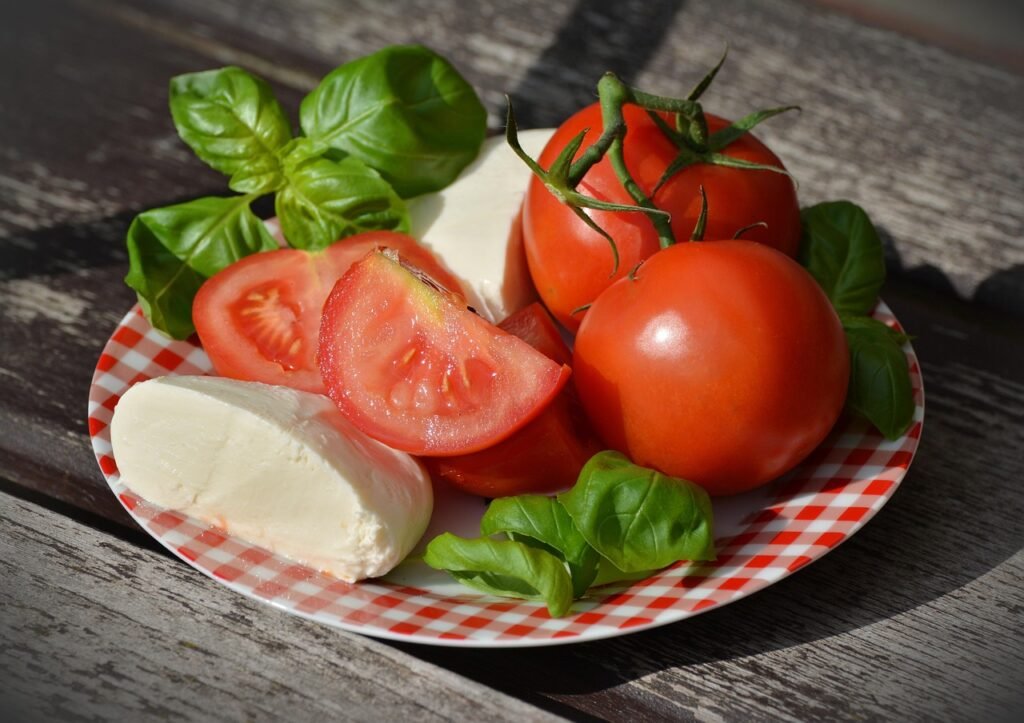
What makes a caprese salad worth ordering in Argentina, and why does the search “best ensalada caprese argentina near me” so often end in disappointment? The dish looks simple on paper: tomato, fresh mozzarella, basil, olive oil, salt. Yet the gap between a good version and a soggy, cold, tasteless one is enormous. The tomatoes may be pale and refrigerated. The mozzarella may be rubbery. The basil may be black at the edges. And the whole thing may arrive drowned in balsamic vinegar that was never part of the original idea.
This guide is for anyone standing on a sidewalk, phone in hand, trying to decide where to eat. It explains what a caprese really is, how Argentine food culture shapes it, what to look for on a menu, how to judge quality in the first thirty seconds, and how to search efficiently instead of scrolling forever. It also covers the practical stuff people rarely think about: seasonality in the Southern Hemisphere, food safety with fresh cheese, and the mistakes that make a simple salad fail.
What an ensalada caprese actually is, and what it is not
A classic caprese is a layered or composed salad of ripe tomato, fresh mozzarella, fresh basil, olive oil and salt. It is associated with the island of Capri in Italy and is usually served at room temperature, not ice cold. That last detail matters more than most people realize. Cold mutes the aroma of tomato and firms up the cheese in an unpleasant way.
What a caprese is not: a Greek salad with cucumber, onion and feta. It is not a plate of tomato and shredded pizza cheese. It is not a balsamic reduction dessert. And it is not, strictly speaking, an Argentine invention, even though the phrase ensalada caprese argentina shows up in menus, recipe blogs and search bars.
That phrase is best understood as a search term and a menu label rather than a documented regional tradition. Argentina has a deep Italian heritage, and mozzarella is genuinely part of everyday eating, but there is no widely recognized separate “Argentine caprese” school of the dish. Treat the term as a practical shorthand for “caprese as served in Argentina,” and you will get much better results.
Why caprese shows up so often on Argentine menus

Argentina received large numbers of Italian immigrants from the late nineteenth century into the mid-twentieth, and that influence runs through the whole food culture. Mozzarella, locally called muzza, is a staple. Milanesas, pizzas, pasta and fresh cheeses are everywhere. Tomato and cheese on a plate is not an exotic combination in Buenos Aires or Córdoba; it is a natural extension of what people already eat.
That is good news for anyone craving a caprese. It means the dish is common, often inexpensive relative to other starters, and usually made with decent ingredients. It also means the quality varies enormously, because a dish that is cheap to make and easy to assemble tends to get treated casually.
There is a second reason the dish appears so widely: it fits the way Argentines often eat. A light starter before a large grilled main course makes sense. So does a shared plate with bread and a glass of something cold. Caprese occupies a useful slot on the menu, which is why you will find it in everything from neighborhood bistros to hotel restaurants.
The Argentine variations you may actually encounter
Menus in Argentina often put a local spin on the classic. None of these variations is wrong, but knowing them helps you order what you actually want.
| Variation | What changes | What to expect |
|---|---|---|
| Classic caprese | Tomato, mozzarella, basil, oil, salt | Closest to the Italian original |
| Caprese with oregano | Dried or fresh oregano added | More herbal, slightly sharper |
| Caprese with provenzal | Garlic and parsley oil | Punchier, more savory |
| Caprese with olives | Green or black olives added | Brinier, more texture |
| Caprese with balsamic | Balsamic vinegar or reduction | Sweeter, more acidic, can overwhelm |
The provenzal version deserves a note. Provenzal is a garlic-and-parsley mixture used widely in Argentine cooking, and it can work beautifully on tomato and cheese. The balsamic version is the one to be careful with. A light drizzle can be pleasant; a thick reduction poured over the plate usually signals that the kitchen is covering for weak tomatoes.
If you want the classic experience, ask. Most kitchens will leave the balsamic off, and a good server will not be offended by the request.
Seasonality: the single biggest factor in Argentina
Here is the detail that changes everything and that almost nobody factors in. Argentina is in the Southern Hemisphere, so the seasons are inverted relative to Europe and North America. November is late spring. Tomato season is just beginning. January and February are peak summer. June, July and August are winter.
A caprese is fundamentally a tomato dish. When tomatoes are out of season, they are mealy, pale and low in sugar, and no amount of good olive oil rescues them. This means the same restaurant can serve a superb caprese in February and a mediocre one in July. Your search results, reviews and photos may all be from the wrong month.
Practical rule: if you are eating caprese in the Argentine winter, lower your expectations and consider ordering something cooked. If you are eating it in summer, order with confidence and ask what tomatoes they are using. A server who knows the answer is a good sign.
How to search “near me” without wasting twenty minutes
Location-based searching is only as good as the terms you feed it. Most people type the dish name and stop, then get a list of places that may not even serve it well.
A better approach is to combine the dish with signals of quality and context. Try variations such as “ensalada caprese” plus your neighborhood, plus “menu,” plus “reseñas,” or plus the name of a specific area. Searching in Spanish will surface far more local results than searching in English, even if you then read the reviews through translation.
It also helps to search by category rather than by dish. Italian restaurants, trattorias, pizzerias with a sit-down section, and neighborhood bistros are the most likely to make a proper caprese. Hotel restaurants are hit or miss. Places with enormous menus covering five cuisines are usually a bad bet for a dish that depends on three fresh ingredients.
If you are also trying to solve a different local-search problem, the same logic applies: specificity beats vagueness. The approach in this guide to finding a Chinese restaurant near you quickly works the same way here: narrow by neighborhood, check recent reviews, and look at photos before committing. (Laser Hair Removal Near Me: How to Choose a Clinic)
Reading a menu like someone who cooks
A menu tells you a lot before the food arrives. Look for these signals.
Good signs. The dish is listed as a starter or “entrada” with few ingredients named. The tomatoes are described by type or origin. The mozzarella is named as fresh, or as muzza, or as burrata if that is what it is. Olive oil is mentioned. The price is not suspiciously low.
Warning signs. The description includes balsamic reduction as a headline element. The dish is listed under “healthy options” alongside six other things. The photo shows shredded cheese. The tomatoes look uniformly pink and refrigerated. The price is the lowest on the menu and the portion is enormous.
One more signal worth watching: how many other dishes on the menu use fresh tomato. If the kitchen is already making bruschetta, pizza and a tomato sauce, the tomatoes are moving fast and are more likely to be ripe. If caprese is the only tomato dish on a long menu, the tomatoes may have been sitting.
Judging the plate in the first thirty seconds
You can assess a caprese almost instantly. Here is what to check, in order.
- Temperature. The plate should be cool at most, never ice cold. Cold tomato tastes like nothing.
- Tomato color and moisture. Deep red, glossy, and slightly wet at the cut. Pale and dry means out of season or refrigerated.
- Cheese texture. Fresh mozzarella should be soft, milky and slightly yielding. If it squeaks like a rubber band, it is either low-moisture mozzarella or old.
- Basil condition. Green and unbruised. Black edges mean it was cut hours ago or stored cold.
- Oil and salt. There should be a visible sheen and enough salt to make the tomato taste sweeter. Undersalted caprese is the most common failure.
- Restraint. No puddle of vinegar, no mountain of dried oregano, no garnish that was not asked for.
If the plate passes those six checks, you have found a kitchen that pays attention. That is worth remembering, because a place that gets caprese right usually gets other simple things right too.
The mistakes people make when ordering caprese
Several recurring errors make people conclude they do not like caprese, when in fact they have never had a good one.
Ordering it out of season. The most common mistake by far. Winter tomatoes are simply not the same product.
Ordering it as a main course and being hungry an hour later. Caprese is light. Pair it with bread, or treat it as a starter.
Letting the balsamic stay. If you prefer it without, say so when ordering rather than picking at the plate.
Assuming “caprese” means the same thing everywhere. In Argentina it may arrive with oregano, olives or provenzal. Ask what comes on it.
Ignoring the bread. Good bread and olive oil turn a light starter into a satisfying meal. A restaurant that serves stale bread is telling you something.
Not checking whether the mozzarella is fresh or low-moisture. The difference is dramatic. Fresh mozzarella is soft and milky; the low-moisture kind used for pizza is firm and salty. Both have their place, but only one belongs on a caprese.
Food safety and storage: the part nobody thinks about
Caprese contains fresh, unaged cheese and raw tomato, which makes it a perishable dish. Fresh mozzarella is a high-moisture cheese and should be kept refrigerated until it is served. If you are buying ingredients to make caprese at home, keep the cheese cold, use it within its stated window, and do not leave a dressed salad sitting out in warm weather for hours.
The same care applies to handling. Wash tomatoes and basil, keep raw and ready-to-eat items separate from raw meat, and refrigerate leftovers promptly. These are ordinary kitchen habits, but they matter more with fresh cheese than with a cooked dish. The principles of safe handling for fresh and prepared foods are the same ones that apply to other perishable kitchen items, and they are worth reviewing if you are preparing a wooden salad bowl for safe everyday use or storing dressed salads ahead of time.
One practical tip: dress caprese at the last moment. Salt draws water out of tomatoes quickly, and a plate assembled an hour in advance will be sitting in a puddle by the time it reaches the table. If you are making it at home for guests, salt just before serving.
Making a better caprese at home than most restaurants
If the local search keeps failing, the honest answer is that caprese is one of the easiest dishes to make well yourself. The method is short.
- Buy the ripest tomatoes available, ideally in season, and never refrigerate them.
- Buy fresh mozzarella, ideally the kind packed in water or brine, and let it come to room temperature for fifteen minutes before serving.
- Slice thick. Thin slices lose texture and release too much water.
- Layer tomato and cheese, then scatter basil leaves whole or torn, not chopped.
- Salt generously, add good olive oil, and stop there.
- Serve immediately, with bread.
That is the whole recipe. The quality ceiling is set by the tomatoes and the cheese, not by technique. This is also why restaurant versions fail so often: there is nowhere to hide.
Conclusion
Finding the best ensalada caprese in Argentina near you is less about luck and more about knowing what you are looking for. The dish is Italian in origin, widely available in Argentina thanks to a long Italian culinary influence, and highly sensitive to season, ingredient quality and restraint. Search in Spanish, narrow by neighborhood, read recent reviews, look at photos, and check the calendar before you go. In summer, order with confidence. In winter, order something cooked. When the plate arrives, judge it in the first thirty seconds: temperature, tomato, cheese, basil, oil, salt. If it passes, you have found a kitchen worth returning to. If it fails, you now know exactly why, and you can make a better one at home with three ingredients and five minutes.
Frequently Asked Questions
What is the difference between caprese and ensalada caprese argentina?
A classic caprese is tomato, fresh mozzarella, basil, olive oil and salt, associated with the Italian island of Capri. The phrase ensalada caprese argentina is mostly a menu and search label rather than a separate documented tradition. In practice, Argentine versions may add oregano, olives or a garlic-and-parsley provenzal dressing, and sometimes balsamic vinegar.
When is the best time of year to order caprese in Argentina?
Summer, which in Argentina means roughly December through February, with late spring in November also good as tomato season begins. Winter tomatoes are typically pale, mealy and low in sugar, and no amount of good olive oil fixes that. The same restaurant can serve a very different plate in February and in July.
How can I tell if a caprese is good before I order it?
Look at the menu description and any photos. Good signs include few named ingredients, fresh mozzarella specified, olive oil mentioned, and the dish listed simply as a starter. Warning signs include balsamic reduction as a headline element, shredded cheese in photos, and a suspiciously low price with an enormous portion.
Why does my caprese always taste bland?
The usual culprits are out-of-season or refrigerated tomatoes, insufficient salt, and cheese that is low-moisture rather than fresh. Cold mutes tomato aroma, so a plate straight from the fridge will taste flat. Salt just before serving, use ripe room-temperature tomatoes, and choose soft fresh mozzarella.
Is it rude to ask for a caprese without balsamic vinegar?
No. Asking for a dish without one ingredient is a normal request, and most kitchens will accommodate it without complaint. If you want the classic experience, order it plainly and mention that you prefer olive oil and salt only. A server who pushes back hard is telling you something about how the dish is made.
Can I make caprese ahead of time for a gathering?
Assemble the components ahead, but dress and salt at the last moment. Salt draws water out of tomatoes within minutes, so a pre-dressed plate will be sitting in liquid by the time guests arrive. Keep the mozzarella refrigerated until shortly before serving, then let it come to room temperature for about fifteen minutes before plating.














