Espadrilles are the rare shoe that manages to be both relaxed and polished at the same time. They come from the Mediterranean, where rope soles and canvas uppers were made for warm weather and long days on foot, and they have stayed in style for decades because they solve a real problem: what to wear when it is too hot for a closed shoe and too smart for a sandal.
The problem is not finding espadrilles. It is finding a pair that actually fits, lasts more than one summer, and suits the way you dress. Expensive pairs are not automatically comfortable, and a wedge that looks elegant in a photograph can be miserable after an hour on cobblestones.
Below are nine espadrilles worth considering in 2027, from the classic Spanish wedge to affordable canvas flats and a few luxury pairs. Each one is described by what it is good at, what to watch for, and who it suits best, so you can choose with your feet in mind, not just a photograph.
Key takeaways
- Espadrilles suit warm weather and smart-casual dressing, but rope soles and canvas uppers are not made for rain, mud, or long wet days.
- Fit is the deciding factor: canvas stretches slightly with wear, so a snug fit at first is usually right, but a tight heel will rub and blister.
- A low wedge or a flat espadrille is the most practical choice for walking, while a high wedge suits evenings and occasions where you sit more than you walk.
- Look for a stitched rope sole, a lined canvas upper, and a cushioned insole, which are the signs of a pair that will last more than one summer.
- No espadrille is a hiking shoe or a waterproof shoe, and a pair that causes pain, blisters, or slipping should be returned rather than broken in.
What espadrilles actually are and why they work
An espadrille is a shoe with a sole made from jute rope, stitched or glued to a canvas or fabric upper. The style comes from the Pyrenees region of Spain and France, where farmers and fishermen wore them for centuries because they were light, breathable, and easy to make. The rope sole flexes with the foot, the canvas lets air through, and the whole shoe weighs very little, which is why espadrilles feel comfortable in heat in a way that leather shoes rarely do.
That simplicity is also their limit. Jute absorbs water, so espadrilles are at their worst in rain. Canvas stains and scuffs, and a rope sole wears down faster than rubber on rough pavements.
The style has stayed in fashion because it adapts so easily. A flat canvas espadrille works with linen trousers, denim, and summer dresses. A wedge espadrille dresses up a midi dress or wide-leg trousers for an evening out. A leather espadrille looks smarter still, and suits occasions where canvas would feel too casual.
How we chose these espadrilles and what to look for
Look first at the sole. A stitched jute sole with a thin rubber layer underneath is the sign of a well-made espadrille, because it grips better, lasts longer, and protects the rope from damp pavements. A sole that is glued only, with no stitching and no rubber, is more likely to come apart and to slip on smooth floors.
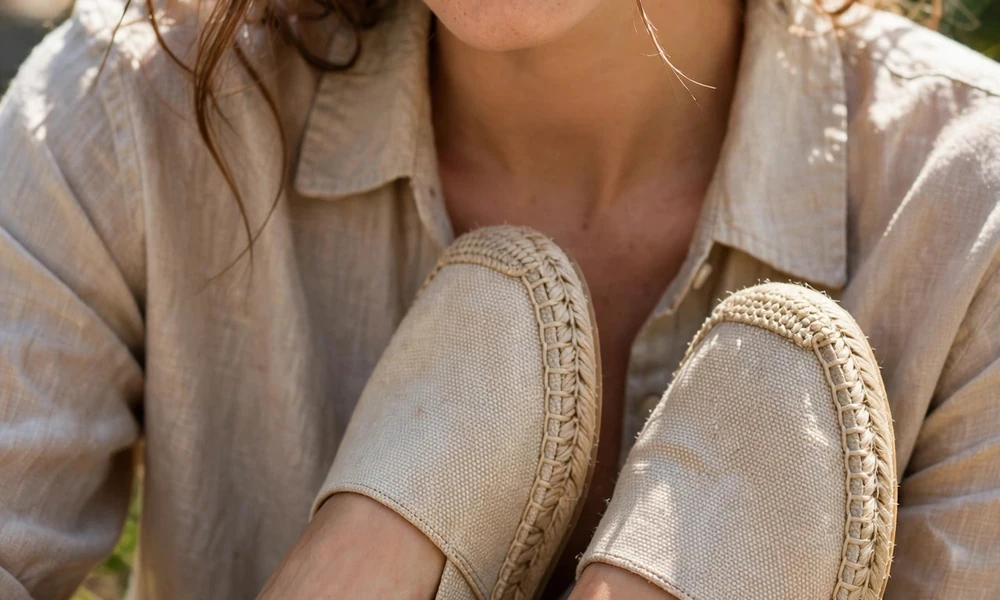
Look next at the upper and the fit. Canvas should feel firm but not stiff, with a lining that stops it rubbing your toes and heel. Leather espadrilles soften with wear and look smarter, but they need breaking in. Canvas stretches a little, usually about half a size, so a pair that feels snug in the shop is often right, while a pair that pinches at the heel will not improve. If your feet are wide, look for brands that offer a wide fit or a round toe, rather than a narrow, pointed shape. Our guide to the best white sneakers for women is a useful comparison here, because sneakers and espadrilles solve the same warm-weather problem in different ways, and many people keep both.
Finally, look at the height and the occasion. A flat espadrille is the most versatile and the easiest to walk in all day. A low wedge of around five centimetres adds height without making walking hard. A high wedge of eight centimetres or more looks striking but is best kept for evenings, dinners, and occasions where you are mostly sitting.
The 9 best espadrilles of 2027
Castañer Carina Canvas Wedge Espadrille
What we like: The classic Spanish wedge, handmade with a stitched jute sole, a soft canvas upper, and an ankle tie that keeps the shoe secure, in a height that flatters without being hard to walk in. What to consider: The ankle tie needs adjusting, and the canvas can mark in rain, so keep them for dry days. Best for: Summer dresses, linen trousers, and evening occasions. Fabric: Cotton canvas, jute sole. Price range: Around $130 to $160. Standout feature: The original wedge espadrille, made in Spain since the 1970s.
This is the espadrille other wedges are measured against: comfortable, well made, and versatile enough for almost any summer outfit.
Chanel Lambskin Espadrilles
What we like: A luxury take on the classic espadrille, with soft lambskin, a quilted toe cap, and the interlocking CC logo, in a flat shape that is easy to walk in and instantly recognisable. What to consider: Premium price, and the pale lambskin marks easily, so they need care and dry weather. Best for: Smart-casual dressing and occasions where the shoe is part of the outfit. Fabric: Lambskin, jute sole. Price range: Around $850 to $950. Standout feature: The quilted cap toe and the house logo, which make them unmistakably Chanel.
For people who want the most polished espadrille available, this is it: beautifully made, and a pair that holds its value well.
Soludos Original Espadrille
What we like: An affordable, lightweight canvas espadrille with a cushioned insole, a classic slip-on shape, and a wide range of colours, that is easy to wear all day. What to consider: The sole is thinner than a handmade Spanish pair, so it wears faster on rough ground, and the canvas can stretch with heavy use. Best for: Everyday summer wear, holidays, and casual outfits. Fabric: Cotton canvas, jute and rubber sole. Price range: Around $65 to $85. Standout feature: A comfortable, well-priced classic that works as a first pair.
This is the sensible first espadrille: comfortable from the first wear, easy to match, and cheap enough to try the style without committing to luxury.
TOMS Alpargata
What we like: A simple, comfortable slip-on with a canvas upper, a cushioned insole, and a lightweight feel, that is easy to pack for travel and easy to wear for long days on foot. What to consider: The sole is thinner and flatter than a traditional espadrille, so it offers less support on uneven ground. Best for: Travel, casual days, and anyone who wants an easy slip-on shoe. Fabric: Cotton canvas, textile lining. Price range: Around $55 to $75. Standout feature: The lightest, most packable espadrille in this list.
A practical, everyday shoe that happens to be an espadrille, and the one you will reach for most often.
Manebi Yucatán Espadrilles
What we like: A handmade Spanish espadrille with a soft cotton upper, a flexible jute sole, and a relaxed, slightly bohemian feel, in colours that suit summer dressing. What to consider: Sizing runs small, so many people go up half a size, and the sole is best kept dry. Best for: Holidays, beach towns, and relaxed summer outfits. Fabric: Cotton canvas, jute sole. Price range: Around $90 to $120. Standout feature: Handmade in Spain, with a soft, broken-in feel from the first wear.
For people who want an authentic, handmade espadrille without a luxury price, Manebi is a strong choice, with a relaxed fit and lovely colours.
Viscata Barcelona Canvas Espadrille
What we like: A well-made, affordable Spanish espadrille with a stitched jute sole, a lined canvas upper, and a comfortable fit, that is made in small batches in the brand’s own workshop. What to consider: The range is smaller than bigger brands, and some colours sell out quickly in summer. Best for: Everyday summer wear and anyone who values handmade shoes. Fabric: Cotton canvas, jute sole. Price range: Around $60 to $90. Standout feature: Handmade in Spain, with a stitched sole and a fair price.
A quiet favourite among people who know espadrilles well, with quality a step above the price and a reliable fit.
Saint Laurent Monogram Espadrille
What we like: A sleek, luxury espadrille in black canvas with a leather monogram detail, a slim shape, and a low profile that works with tailored summer outfits as well as dresses. What to consider: Premium price, and the slim shape runs narrow, so wide feet should try them on first. Best for: Smart summer dressing and evening occasions. Fabric: Canvas, leather trim, jute sole. Price range: Around $450 to $550. Standout feature: The understated monogram and the slim, tailored shape.
For people who want an espadrille that looks at home with tailored trousers and a blazer, this is the pair: the most formal in this list.
Castañer Pablo Leather Espadrille
What we like: A flat leather espadrille from the same Spanish maker as the Carina wedge, with a soft leather upper, a stitched jute sole, and a clean, minimal shape that suits smarter outfits. What to consider: Leather needs a short break-in period, and it can feel warm on the hottest days compared with canvas. Best for: Smart-casual dressing, work in warm weather, and evenings. Fabric: Leather, jute sole. Price range: Around $140 to $170. Standout feature: A leather espadrille that bridges casual and smart dressing.
This is the espadrille to choose if canvas feels too casual for your wardrobe: the leather elevates the shoe, and the fit is reliable.
Sea Star Beachcomber Espadrille
What we like: A water-friendly espadrille with a quick-drying canvas upper, a flexible rubber sole, and a slip-on shape, designed for beach days and wet surfaces where a traditional rope sole would suffer. What to consider: It is a beach shoe rather than a dress shoe, so it suits holidays and casual days more than smart occasions. Best for: Beach holidays, poolside days, and wet weather. Fabric: Quick-dry canvas, rubber sole. Price range: Around $75 to $95. Standout feature: The only espadrille in this list designed to get wet.
For anyone whose summers involve sand, sea, and sudden rain, this is the practical answer: it looks like an espadrille, dries fast, and does not fall apart when wet.
Which espadrille is right for you
Start with how you will actually wear them. If you walk a lot, choose a flat or low-wedge espadrille with a cushioned insole and a rubber layer under the sole. For evenings, try a wedge on a hard floor first and walk for a few minutes before deciding. If your feet are wide, look for a round toe and a brand that offers a wide fit, rather than forcing your feet into a narrow, pointed shape.
Think about your wardrobe too. A neutral canvas espadrille in black, navy, or natural goes with almost everything, and is the right first pair. A leather espadrille suits smarter outfits and cooler evenings, while a canvas pair suits daytime and holidays. Our guide to the best summer dresses is a useful companion here, because the right espadrille depends on the dresses and trousers you actually wear.
Climate matters as well. In a dry, hot summer, a traditional jute espadrille is perfect. In a humid or rainy climate, a water-friendly pair such as the Sea Star, or a pair with a full rubber sole, is the more practical choice.
The caveats that matter
Espadrilles are comfortable, but they are not all-day walking shoes for everyone. A flat espadrille with a thin sole offers little arch support, so if you have flat feet, plantar fasciitis, or any foot condition, you may need an insole, or a shoe with more support. Do not try to break in a pair that hurts.
| Detail | What is known |
|---|---|
| Best weather for espadrilles | Dry, warm days; rope soles and canvas suffer in rain and mud |
| How they should fit | Snug at first, because canvas stretches about half a size with wear |
| Best sole to look for | Stitched jute with a thin rubber layer underneath for grip and durability |
| Best height for walking | Flat or a low wedge of around five centimetres |
| Who should add support | Flat feet or plantar fasciitis; add a cushioned insole or choose a supportive shoe |
| How to care for canvas | Brush off dirt, spot-clean with mild soap, and let them dry naturally away from heat |
| What to avoid | Soaking them, machine washing them, or wearing them in heavy rain |
| When to replace them | When the rope sole frays, the stitching comes loose, or the sole no longer grips |
If you have a foot condition, or you are on your feet all day for work, speak to a clinician or a podiatrist before choosing a flat shoe with little support. That is not a formality. The wrong shoe can turn a small problem into a painful one, and a simple check can save weeks of discomfort.
Checklist: choosing espadrilles honestly
Use these checks before you buy, and again after a day of wearing them.
- Check the sole: stitched jute with a rubber layer underneath, that flexes at the ball of the foot.
- Check the fit: snug but not tight, with no pinching at the heel or squeezing at the toes.
- Check the lining: a lined canvas upper that does not chafe bare feet.
- Check the height: flat or a low wedge for walking, a high wedge only for evenings and occasions.
- Walk in them first: try them on a hard floor for a few minutes before deciding, not just standing still.
- Keep them dry: avoid rain and puddles, and let them dry naturally away from heat if they do get wet.
Frequently asked questions
Are espadrilles comfortable for walking all day?
Flat and low-wedge espadrilles with a cushioned insole can be comfortable for a full day, but they offer little arch support. If you walk a lot, add a cushioned insole and break them in gradually over a few short wears.
Do espadrilles stretch?
Yes, canvas stretches a little, usually about half a size, as it softens with wear. That is why a snug fit at first is usually right. Leather stretches less, and jute soles do not stretch at all, so the fit of the upper is what changes.
Can I wear espadrilles in the rain?
It is best not to. Jute absorbs water, canvas stains, and a wet rope sole can come apart and become slippery. If you are caught in rain, let them dry naturally away from heat before wearing them again.
Are espadrilles smart enough for work?
A leather espadrille or a neat canvas wedge can work in a smart-casual office, but a flat canvas pair is usually too casual for a formal workplace. Check your office dress code first.
How do I clean canvas espadrilles?
Brush off dry dirt first, then spot-clean with a soft brush, mild soap, and cold water. Do not machine wash them and do not soak them, because that can loosen the stitching and damage the jute sole. Our guide to the best gladiator sandals includes similar care advice for summer shoes.
How long should espadrilles last?
A well-made pair worn in dry weather should last two to three summers with regular use. A cheap pair with a glued sole may last one summer. Replace them when the rope frays, the stitching loosens, or the sole no longer grips.
The bottom line
The best espadrille in 2027 is not the most expensive or the most fashionable. It is the one that fits your feet, suits the way you dress, and that you will actually wear on warm days. For most people, a classic canvas flat or a low wedge from a Spanish maker is the right first pair, and a leather or luxury pair is a good second step once you know the style works for you.
Choose one pair, wear it for a few short days before a long day out, and judge it on how your feet feel by evening, not on how it looks in the box. That is the honest way to find an espadrille you will reach for all summer, without the blisters, the sore feet, or the pair that falls apart after a month.