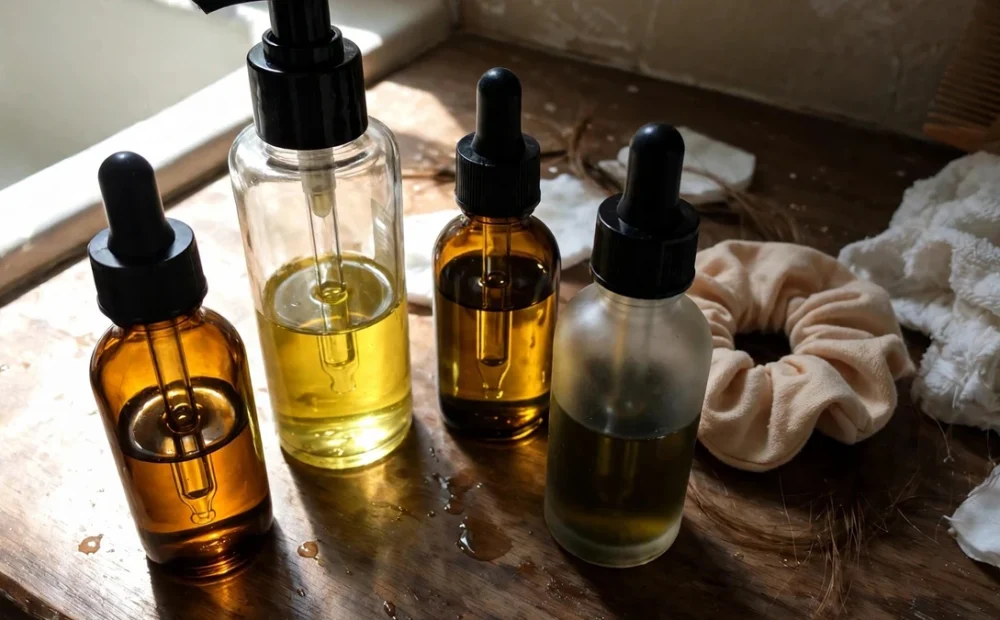
Space buns are two high buns worn on either side of the head, and they ask more of a hair oil than most styles do. The hair is pulled up, twisted tight, and pinned in place, which means any oil you use has to hold flyaways down without making the roots look greasy, and it has to keep the ends smooth while the buns sit high and exposed all day. The right one keeps the parting clean, the buns neat, and the hair soft when you take them down at night.
The trick is that space buns need two different things from one product. At the roots and along the parting, you want almost nothing: a light touch that smooths without weight. Through the lengths and ends, you want enough slip and moisture that the hair twists without snapping and the coil holds its shape. A heavy oil does the second job and ruins the first. The best oils for space buns sit in the middle, or they are light enough to layer: one drop for the crown, a little more for the lengths.
Below are nine hair oils worth considering for space buns in 2027, from a light shine oil that barely registers on fine hair to richer scalp oils that suit thick, textured hair.
Key takeaways
- Space buns need a light hand at the roots and a little more oil through the lengths, so a lightweight or layerable oil works best for most hair.
- One to three drops is usually enough for the whole style; warm the oil between your palms first so it spreads evenly instead of sitting in one spot.
- Fine and straight hair suits the lightest oils, while thick, curly or coily hair can handle richer oils without looking greasy.
- Oil the gathered length before you twist, and smooth the parting with oiled fingertips after the buns are pinned, not before.
- No oil will hold space buns up on its own, and too much oil at the crown will make the buns slide and the roots look flat by midday.
What hair oil actually does for space buns
Hair oil works on space buns in three ways. First, it smooths the cuticle, which is the outer layer of each hair strand, so the hair reflects light and looks shiny rather than dull or rough. Second, it reduces friction between strands, which means the hair twists into a coil without catching, snagging or snapping, and the finished bun holds its shape instead of springing loose.
What oil does not do is hold the style. That job belongs to the twist, the pins and the hair tie. Oil can help the bun stay neat by keeping flyaways down, but if you use too much, it does the opposite: the hair becomes slippery, the pins lose their grip, and the buns slide down or sideways. That is the most common mistake with space buns, and it is why the amount matters more than the brand.
The other thing oil does for space buns is protect the hair from the style itself. Two tight buns pull the hair in two directions, and the ends are folded and pinned in a small, tight coil. That is a lot of stress on a small section of hair, especially if you wear the style often. A light coating of oil through the lengths gives the hair slip, so the strands move against each other instead of pulling and breaking.
How we chose these oils and what to look for
Look first at the weight. For space buns, a lightweight oil is usually the right starting point, because the style is worn high and the roots are on show. If your hair is thick or textured, you can choose a richer oil, but still use less at the roots than on the lengths.
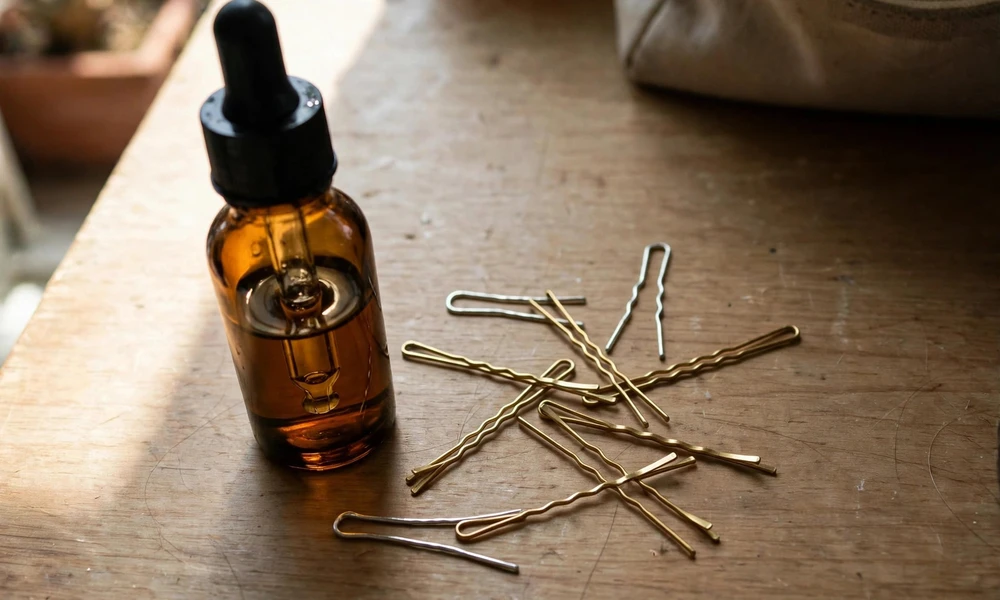
Look next at the ingredients. Argan, jojoba, camellia and squalane are all light and well tolerated. Coconut and olive oils are richer and better suited to thick or dry hair. Tea tree and rosemary oils are useful if your scalp is itchy or flaky, but they should be diluted in a carrier oil, not used neat, and they should stay on the scalp rather than the lengths. Our guide to hair oils for top knots covers the same weight question, because a top knot is a single high bun and it asks the same thing of an oil: hold without weight.
Finally, look at the bottle and the price. A dropper bottle gives you control over how much you use, which matters when the difference between enough and too much is a single drop. A pump bottle is fine if it gives a small, measured amount. Some of the best oils for space buns are inexpensive, and some of the most expensive are too heavy for the style.
The 9 best hair oils for space buns of 2027
Sol de Janeiro Brazilian Glossy Nourishing Hair Oil
What we like: A light, fast-absorbing oil with a soft, warm scent, designed to add shine without weight, and easy to layer a second drop on the ends. What to consider: The scent is noticeable, so skip it if you prefer fragrance-free products. Best for: Fine to medium hair that needs shine without heaviness. Material: Patauá oil and pequi oil blend. Price range: Mid-range, around $30 to $40. Standout feature: A dry finish that does not leave the crown looking oily.
Rōz Santa Lucia Styling Oil
What we like: A very light styling oil that smooths flyaways and adds a soft sheen, with a clean, understated scent and a dropper that gives good control. What to consider: It is a light oil, so very thick or dry hair may need a second product on the ends. Best for: Straight and wavy hair that needs smoothing, not moisture. Material: Plant oils with a lightweight silicone-free finish. Price range: Premium, around $45 to $55. Standout feature: Flyaway control that lasts through the day without reapplication.
Hask Argan Oil Repairing Shine Oil
What we like: An affordable argan oil that adds shine and softness, widely available, and light enough for daily use on most hair types. What to consider: The bottle has no dropper, so pour a small amount into your palm rather than straight onto the hair. Best for: Dry or dull hair that needs shine on a budget. Material: Argan oil. Price range: Budget, around $5 to $10. Standout feature: The best shine per pound in this list.
Cantu Shea Butter Tea Tree & Jojoba Hair & Scalp Oil
What we like: A rich oil that soothes an itchy scalp and softens thick hair, with tea tree for the scalp and jojoba for the lengths. What to consider: It is heavy, so use it only on the lengths and ends for space buns, not on the parting. Best for: Thick, coily or textured hair and itchy scalps. Material: Shea butter, tea tree oil, jojoba oil. Price range: Budget, around $5 to $10. Standout feature: Scalp care and length care in one bottle.
Alikay Naturals Essential 17 Hair Growth Oil
What we like: A blend of 17 natural oils that feels rich without being sticky, designed to support the scalp and soften the lengths at the same time. What to consider: The scent is herbal and strong, and the oil is best used in small amounts. Best for: Textured hair that needs moisture and scalp care together. Material: A blend of 17 oils including peppermint, rosemary and castor. Price range: Mid-range, around $15 to $25. Standout feature: A multi-oil blend that covers scalp and lengths in one step.
Aunt Jackie’s Elixir Essentials Nourish My Hair
What we like: A light, pleasant oil that softens the hair and adds shine, with a nozzle that makes it easy to place a small amount exactly where you want it. What to consider: It is lighter than it looks, so very dry hair may need a richer oil underneath. Best for: Curly and coily hair that needs light, even moisture. Material: A blend of natural oils with a lightweight finish. Price range: Budget, around $8 to $12. Standout feature: Precise application from the nozzle, with no waste.
Eden BodyWorks JojOba Monoi Hair Oil
What we like: A light jojoba and monoi oil that absorbs quickly, leaves a soft shine, and smells gently of flowers without being overpowering. What to consider: It is a light oil, so it will not tame very thick or frizzy hair on its own. Best for: Fine to medium hair that needs a light, quick-absorbing oil. Material: Jojoba oil and monoi oil. Price range: Budget, around $8 to $12. Standout feature: Absorbs fast, so the buns stay neat and the hair does not look wet.
Jane Carter Solution Nourish & Shine
What we like: A rich but not greasy oil that softens textured hair and adds a healthy shine, with a simple ingredient list and a pump that gives a measured amount. What to consider: It is richer than the lightest oils, so use less on fine hair. Best for: Thick, curly or coily hair that needs lasting moisture. Material: A blend of natural oils including jojoba and shea. Price range: Mid-range, around $15 to $20. Standout feature: Long-lasting softness that survives a full day in buns.
Curls Blueberry Bliss Hair Growth Oil
What we like: A light, blueberry-scented oil that softens the hair and supports the scalp, with a pleasant scent that is noticeable without being strong. What to consider: The scent is sweet, so skip it if you prefer unscented products. Best for: Curly hair that needs light moisture and scalp care. Material: A blend of natural oils with blueberry extract. Price range: Budget, around $10 to $15. Standout feature: A light oil that still feels nourishing on curly hair.
Which hair oil suits your hair type
Fine hair needs the lightest oils on this list, and the smallest amount. Sol de Janeiro, Rōz Santa Lucia and Eden BodyWorks JojOba Monoi are the best starting points, because they add shine without weight and they wash out easily. Use one drop for the whole style, warmed between your palms, and smooth it through the lengths first.
Medium and wavy hair has more choice. Hask Argan Oil and Jane Carter Solution both work well, and you can use a little more through the lengths than fine hair can. The key is still to keep the parting light. Oil the gathered length before you twist, and smooth the parting with whatever is left on your fingertips, rather than adding a fresh drop to the crown. Our guide to hair oils for chignons makes the same point for a low bun, because the parting is where oil shows first in any updo.
Thick, curly and coily hair can use the richer oils, and often needs them. Cantu, Alikay Naturals, Aunt Jackie’s, Jane Carter Solution and Curls Blueberry Bliss all suit textured hair, because they give enough moisture to keep the twists smooth and the ends soft. Rich oil on the scalp will make the parting look greasy and the buns slide, whatever your hair type. Use the oil where the hair needs it, which is the lengths and the ends, and let the crown stay nearly bare.
The caveats that matter
Hair oil is a styling aid, not a treatment that fixes damage, and it will not make space buns stay up on its own. It can smooth the hair and protect the ends, but the hold comes from the twist and the pins. If your buns keep falling, the problem is usually the twist, the pins or the amount of oil, not the oil itself.
| Detail | What is known |
|---|---|
| How much to use | One to three drops for the whole style, warmed between your palms first |
| Where to put it | Lengths and ends first, then the parting with whatever is left on your fingertips |
| Best weight for fine hair | Lightweight or dry oils, such as Sol de Janeiro, Rōz or Eden BodyWorks |
| Best weight for thick hair | Richer oils, such as Cantu, Alikay Naturals or Jane Carter Solution |
| Who should start gently | Fine, straight or easily weighed-down hair; start with one drop only |
| What to avoid pairing at first | Heavy oil at the roots plus a tight twist, which makes the buns slide |
| When to wash it out | At the end of the day, or the next morning; do not leave heavy oil in for days |
| What it does not do | It does not hold the buns up, repair split ends, or replace a good pin |
If you have a sensitive scalp, patch-test a new oil on a small area first, and avoid essential oils used neat on the skin. Tea tree and rosemary oils should always be diluted in a carrier oil. If your scalp becomes red, itchy or sore, stop using the oil and wash your hair with a gentle shampoo.
Checklist: getting space buns right with hair oil
Use these checks before you start, and again after an hour of wearing the style.
- Choose a light oil if your hair is fine, and a richer one only if your hair is thick or textured.
- Warm one to three drops between your palms before you touch your hair, so the oil spreads evenly.
- Oil the gathered length first, and smooth the parting with what is left on your fingertips.
- Check the roots in the mirror after ten minutes; if they look wet, you used too much.
- Carry two extra pins, because oiled hair can slip and a bun may need re-pinning during the day.
- Wash the oil out at the end of the day, and brush the hair gently before you sleep.
Frequently asked questions
Which hair oil is best for space buns?
It depends on your hair type. Fine hair suits a light oil such as Sol de Janeiro or Rōz Santa Lucia. Thick or textured hair suits a richer oil such as Cantu or Jane Carter Solution.
How much oil should I use before making space buns?
One to three drops for the whole style is usually enough. Warm the oil between your palms first, smooth it through the gathered lengths, and use whatever is left on your fingertips for the parting. Add a second drop only if the ends still feel dry.
Will oil make space buns look greasy?
It will if you use too much, especially at the roots. The parting and the crown show oil first, so keep them nearly bare and put the oil on the lengths instead.
Can I use hair oil on space buns if my scalp is oily?
Yes, but keep the oil off your scalp. Oil the lengths and ends only, and smooth the parting with clean fingertips rather than oiled ones. A light oil, such as Eden BodyWorks JojOba Monoi, is a safer choice than a heavy one.
Do space buns work on curly hair with oil?
Yes, and oil often helps. Curly hair twists into a bun more easily when the lengths are smooth and moisturised, and oil reduces frizz around the parting. Our guide to hair oils for milkmaid braids covers a similar question for another crown style, because braided crown styles ask the same thing of an oil: smoothness without weight at the roots.
How do I stop flyaways around space buns?
Smooth one drop of a light oil over the parting and hairline with your fingertips after the buns are pinned, and use a clean mascara brush or a soft toothbrush to press down any stray hairs. Avoid adding more oil once the style is set, because it will sit on the surface and look greasy.
The bottom line
The best hair oil for space buns in 2027 is not the most expensive or the richest. It is the one that suits your hair type, that you can use in a small amount, and that keeps the lengths smooth without making the roots look oily. For thick or textured hair, a richer oil such as Cantu or Jane Carter Solution will do the job better, and it will still leave the crown clean if you keep the amount small.
That is the honest way to get the shine and the smoothness that space buns need, without the grease and the sliding that make people give up on the style.