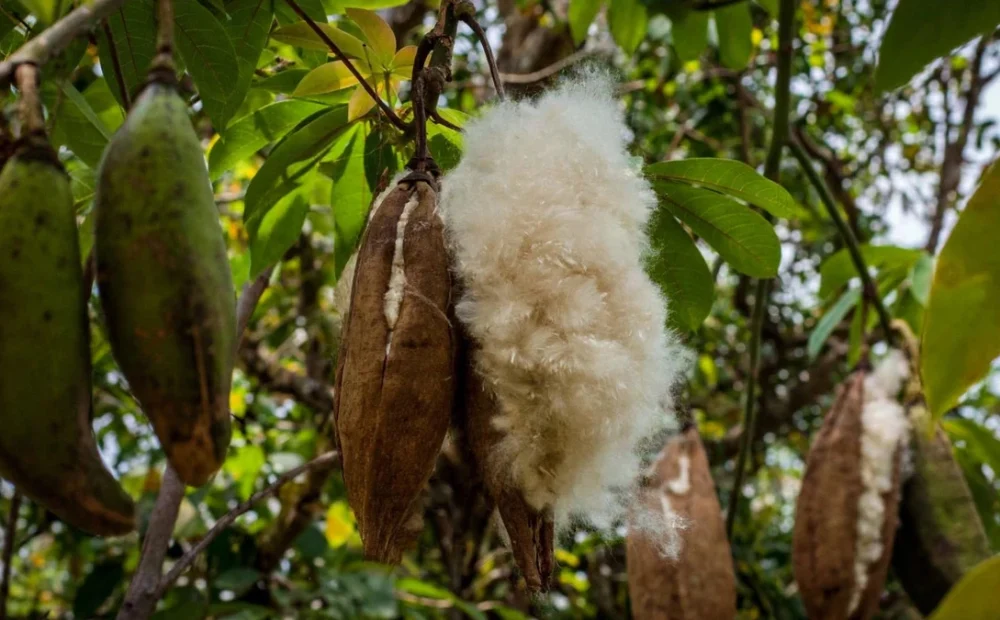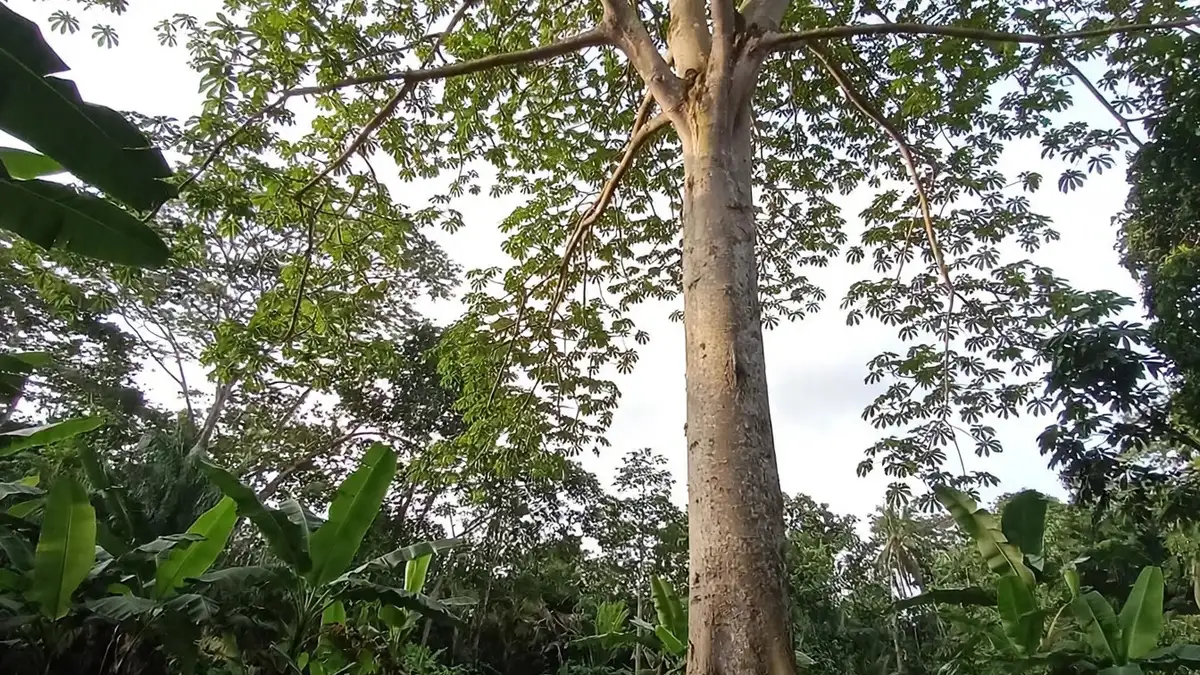

Kapok is the lightest natural fibre most travellers have never heard of, and the trees it comes from are among the tallest in the tropics. A kapok farm retreat is a stay built around those trees: the ceiba, also called the silk-cotton tree, whose pods burst open in the dry season and release a soft, silk-like fluff that floats on the wind. The retreats in this guide sit on working kapok farms and in villages where the fibre is still gathered by hand, dried in the sun, and turned into pillows, stuffing, and cloth.
The appeal is not luxury in the marble-and-champagne sense. It is the chance to sleep under a canopy that can be forty metres high, to watch a harvest that depends on the wind and the season rather than a schedule, and to stay in places where the farm work is the main event, not a side activity.
Below are nine kapok farm retreats worth considering in 2027, from a family farm in Kerala to a coastal grove in Ecuador. Each one is described by what it does well, what to watch for, and who it suits best, so you can choose a region and a pace that fit the way you travel.
Key takeaways
- Kapok is a silk-like fibre from the pods of the ceiba tree, gathered by hand in the dry season and used for pillows, stuffing, and cloth.
- The best kapok retreats are working farms or village stays, not resorts with a kapok theme, and the harvest season sets the dates.
- Choose your region by the climate and the farm work you want to see, from pod gathering in Kerala to fibre separating in Ghana.
- Pack for tropical heat, sudden rain, and soft ground, and bring a light layer for cool evenings under the canopy.
- Kapok fibre is very light and can irritate sensitive skin and lungs, so try a kapok pillow for one night before you buy one to take home.
What a kapok farm retreat actually is
A kapok farm retreat is a stay on or beside a farm that grows ceiba trees for their fibre. The trees are enormous, with wide buttress roots and a canopy that can shade a whole yard, and they fruit once a year. When the pods ripen they split open on the branch, and the fibre inside drifts out like pale silk.
The fibre itself is remarkable. It is hollow, which makes it one of the lightest natural fibres in the world, and it does not absorb water easily, which is why it has long been used to fill life jackets, pillows, and mattresses in the tropics. On the farms in this guide you will see it used as stuffing, mixed with cotton for cloth, and pressed into insulation panels for cool, quiet rooms.
A retreat stay usually means a room in a farmhouse or a small guesthouse on the farm, meals cooked from what the farm and the village grow, and a daily programme built around the harvest. You might gather pods in the morning, watch the fibre being separated after lunch, and sleep on a kapok-filled pillow that night. Some farms also keep bees, grow fruit, or weave, and those sidelines are often the best part of the stay. The best luxury ramie farm retreats follow a similar pattern, and if you have enjoyed a fibre farm stay before, a kapok farm will feel familiar in its rhythm, even though the tree and the work are entirely different.
How we chose these retreats and what to look for
Look first at whether the farm actually grows kapok. A genuine kapok retreat has mature ceiba trees on the land, a harvest season, and a place where the fibre is dried and stored. If a stay only mentions kapok in its name or its bedding and has no trees of its own, it is a themed hotel, not a farm retreat, and the experience will be thinner for it.
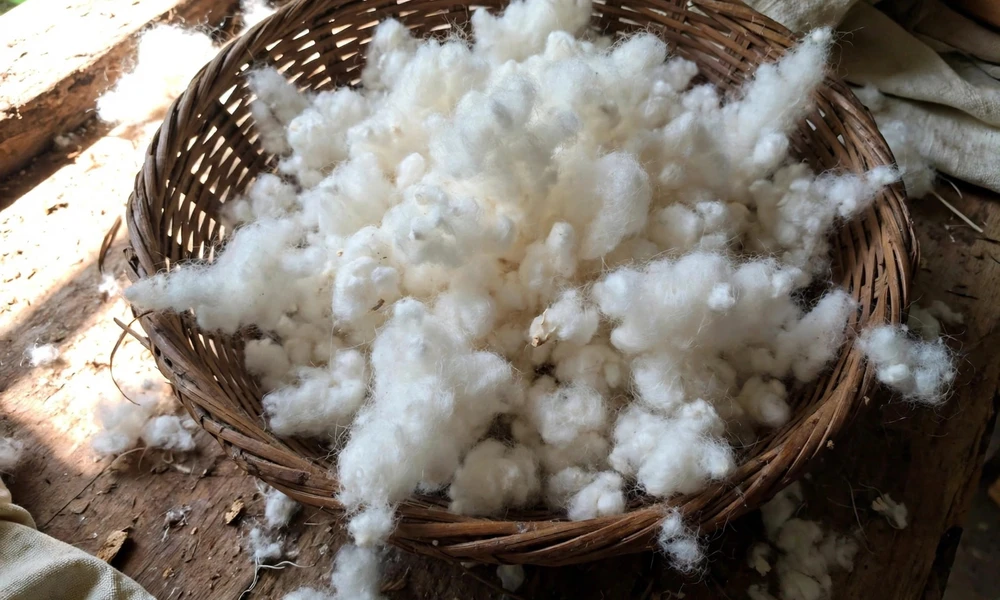
Look next at the stay itself. The best kapok retreats keep their rooms simple and cool, with thick walls, shaded verandas, and natural ventilation, because the climate is hot and humid for much of the year. A kapok-filled pillow and a kapok mattress topper are a good sign, since they show the farm uses its own fibre. Check whether meals are included and whether the farm can cater for dietary needs, because the nearest restaurant may be a long drive away.
Finally, look at the programme. A good farm offers a clear daily plan: a morning in the grove, a demonstration of pod splitting and fibre separating, time with the weavers or the pillow makers, and an afternoon free to walk or rest. The farm should be honest about what guests can and cannot do. Climbing a ceiba is not a guest activity, and anyone who offers it is not running a safe farm.
The 9 best luxury kapok farm retreats of 2027
Kapok Groves of Kerala, India
What we like: Old ceiba groves shaded by coconut palms, a long pod season, and farm stays where guests gather pods in the morning and watch fibre separating after lunch. What to consider: The heat is intense from March to May, and the monsoon can close the groves for days at a time.
Best for: First-time kapok visitors who want a gentle introduction and warm, easy hospitality. Material: Kapok fibre, handwoven cotton, teak. Price range: About £70 to £140 a night, usually with meals. Standout feature: A grove of ceiba trees over a century old, with a shaded veranda for afternoon rest.
Kapok Farms of Chiang Mai, Thailand
What we like: Cool-season visits in the northern hills, a strong craft tradition, and farms that pair kapok gathering with weaving and natural dyeing. What to consider: The pod season is short, and the best farms book up early for the cool months.
Best for: Travellers who want to combine a farm stay with craft workshops and mountain walks. Material: Kapok fibre, indigo-dyed cotton, bamboo. Price range: About £80 to £160 a night, usually with meals. Standout feature: A weaving shed where kapok and cotton are blended on wooden looms.
Kapok Plantations of Sri Lanka’s Low Country
What we like: Huge roadside ceiba trees, a long tradition of kapok pillows, and stays that combine the grove with a coastal village. What to consider: The low country is hot and humid year-round, and afternoon rain is common even in the dry season.
Best for: Travellers who want a farm stay close to the coast, with swimming and village markets nearby. Material: Kapok fibre, coir, handloom cotton. Price range: About £60 to £120 a night, usually with meals. Standout feature: Pillow-making workshops where you fill and stitch your own kapok pillow.
Kapok Estates of the Ashanti Region, Ghana
What we like: Tall ceiba trees in village groves, a strong tradition of kapok stuffing for mattresses and cushions, and warm, direct hospitality. What to consider: The roads are rough, the heat is steady, and the harvest season is short.
Best for: Travellers who want an African kapok tradition and do not mind a long, slow journey to reach it. Material: Kapok fibre, kente cloth, shea butter. Price range: About £50 to £110 a night, usually with meals. Standout feature: A village grove where the oldest ceiba is treated as a meeting place and a landmark.
Kapok Groves of the Yucatán Peninsula, Mexico
What we like: Sacred ceiba trees in Maya tradition, a dry-season harvest, and stays that combine the grove with cenotes and colonial towns. What to consider: The dry season is hot and dusty, and the best groves are a drive from the coast.
Best for: Travellers who want culture and nature together, and who like their farm stay with a cenote swim at the end of the day. Material: Kapok fibre, henequen, limestone. Price range: About £70 to £150 a night, usually with meals. Standout feature: A ceiba grove beside a cenote, where the trees and the water sit side by side.
Kapok Groves of Bahia, Brazil
What we like: Vast ceiba trees in the Atlantic forest edge, a long harvest, and farms that pair kapok with cacao and fruit. What to consider: The distances are large, the roads are slow, and English is less common outside the main towns.
Best for: Travellers who want a big-landscape kapok stay and are happy to travel slowly through the countryside. Material: Kapok fibre, cacao, woven palm. Price range: About £60 to £130 a night, usually with meals. Standout feature: A farm trail that runs from the ceiba grove through cacao trees to a river beach.
Kapok Plantations of Penang, Malaysia
What we like: Well-organised farm stays near George Town, a strong food culture, and kapok work that sits alongside fruit orchards and spice gardens. What to consider: The humidity is high all year, and the pod season can shift by several weeks.
Best for: Travellers who want a comfortable first kapok stay with excellent food and easy transport. Material: Kapok fibre, batik cotton, rattan. Price range: About £75 to £150 a night, usually with meals. Standout feature: A farm kitchen that cooks with the orchard fruit and the spice garden next door.
Kapok Farms of Siem Reap, Cambodia
What we like: Ceiba trees growing beside temple ruins, a dry-season harvest, and farm stays that combine the grove with village life. What to consider: The dry season is very hot, and the temples draw crowds that can spill into the countryside.
Best for: Travellers who want to pair a kapok stay with the temples and are happy to rise early to beat the heat. Material: Kapok fibre, silk, palm sugar. Price range: About £55 to £120 a night, usually with meals. Standout feature: A farm track that runs from the ceiba grove to a quiet temple ruin.
Kapok Groves of the Guayas Coast, Ecuador
What we like: Towering ceiba trees on the coastal plain, a short sharp harvest, and stays that pair the grove with the Pacific shore. What to consider: The harvest window is narrow, and the coastal roads can flood in heavy rain.
Best for: Travellers who want a short, intense kapok visit and a beach at the end of the day. Material: Kapok fibre, toquilla straw, balsa wood. Price range: About £65 to £140 a night, usually with meals. Standout feature: A ceiba so tall it can be seen from the road for miles, with a viewing platform at its base.
Which kapok region suits you best
If this is your first kapok trip, start with Kerala or Penang. Both are comfortable, well organised, and forgiving of a flexible date, and both pair the farm work with good food and easy transport. Either one will give you a true sense of what kapok is and how it is worked.
If you want craft and culture, choose Chiang Mai, Sri Lanka, or the Yucatán. Chiang Mai is best for weaving, Sri Lanka is best for pillow-making, and the Yucatán is best for the cultural weight of the ceiba itself. The best luxury sisal farm retreats offer a similar craft-heavy rhythm, and if you enjoyed the fibre work there, the weaving and pillow-making on a kapok farm will feel like a natural next step.
If you want scale and drama, choose Bahia or the Guayas coast. Both have enormous trees, wide landscapes, and a harvest that feels like a real event rather than a demonstration. Ghana and Siem Reap sit in the middle: genuine, welcoming, and a little less polished, which is exactly what some travellers prefer.
The caveats that matter
Kapok is a natural fibre, but it is not for everyone. The fibre is very fine and light, and it can drift in the air during separating and stuffing. People with asthma, dust sensitivity, or sensitive skin should ask the farm how the work is done and whether there is a viewing area away from the fibre dust.
| Detail | What is known |
|---|---|
| Best time to visit | The dry season, when the pods ripen and split; the exact weeks vary by region |
| How long to stay | Three to five nights is enough for the harvest work and a rest day |
| Who should take care | People with asthma, dust sensitivity, or sensitive skin; ask about fibre dust first |
| What the fibre is used for | Pillows, mattress stuffing, life jackets, insulation, and cloth blended with cotton |
| What to pack | Light clothes, a rain layer, closed shoes for the grove, and sun protection |
| Language | English is common at the larger farms; village farms may need a guide or translator |
| Getting there | Most farms need a drive from the nearest town; arrange the transfer with the farm |
| What it does not do | It does not offer resort luxury; rooms are simple, and the farm work sets the schedule |
If you are travelling with children, check the farm’s age policy before you book. A farm that welcomes children will say so plainly and will have a shaded area where younger children can watch without joining the work. The best luxury jute farm retreats have similar age guidance, and the same rule applies here: ask the farm directly, and do not assume a working farm is a family attraction.
Checklist: planning a kapok farm retreat honestly
Use these checks before you book, and again before you travel.
- Check the farm grows kapok: ask how many ceiba trees it keeps and when the pods ripen.
- Check the harvest dates: confirm the pod season for your region before you pay a deposit.
- Check what is included: meals, transfers, and the farm programme should be clear in writing.
- Check the room: ask whether the pillow and mattress use the farm’s own kapok fibre.
- Check your health: if you have asthma or sensitive skin, ask about fibre dust and viewing areas.
- Check the transfer: arrange the drive from town with the farm, and confirm the return journey too.
Frequently asked questions
What is kapok, and is it really a fibre?
Yes. Kapok is the soft fibre that surrounds the seeds inside the pods of the ceiba tree. It is one of the lightest natural fibres in the world, and it has been used for centuries to fill pillows, mattresses, and life jackets, and more recently for insulation and for cloth blended with cotton.
When is the best time to visit a kapok farm?
The dry season, when the pods ripen and split open. The exact weeks vary by region: roughly February to April in Kerala and Thailand, December to March in the Yucatán, and a shorter window on the Guayas coast. Ask the farm for its expected harvest dates before you book.
Is kapok as soft as cotton?
It is softer and lighter than cotton, but it is also shorter and more slippery, which is why it is rarely spun into yarn on its own. A kapok pillow feels lighter than a cotton one and keeps its shape well.
Can children visit a kapok farm retreat?
Older children usually can, and many farms welcome them for the pod gathering and the pillow workshop. Younger children should stay in the shaded viewing area during the fibre work, because the fibre dust can irritate eyes and lungs. Check the farm’s age policy when you book.
What should I buy at a kapok farm?
A kapok pillow is the classic purchase, and it travels well if it is vacuum-packed by the farm. Buy on your last day, after you have slept on a kapok pillow for at least one night.
Do I need a guide for a kapok farm retreat?
At the larger farms, no: the farm staff run the programme and speak enough English to explain the work. At village farms, a guide or translator is useful, especially for the harvest days, and the farm can usually arrange one. Ask when you book, rather than assuming one will be there.
The bottom line
The best kapok farm retreat in 2027 is not the most remote or the most luxurious. It is the one with mature ceiba trees, a real harvest season, and a farm that is honest about what guests can do and what they can only watch.
Choose one region, confirm the harvest dates before you pay, pack for heat and sudden rain, and give yourself three to five nights. That is the honest way to enjoy a fibre most travellers have never heard of, in the shade of a tree that can outlive everyone on the farm.