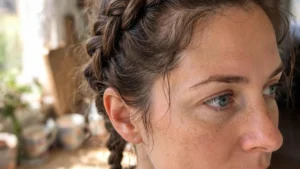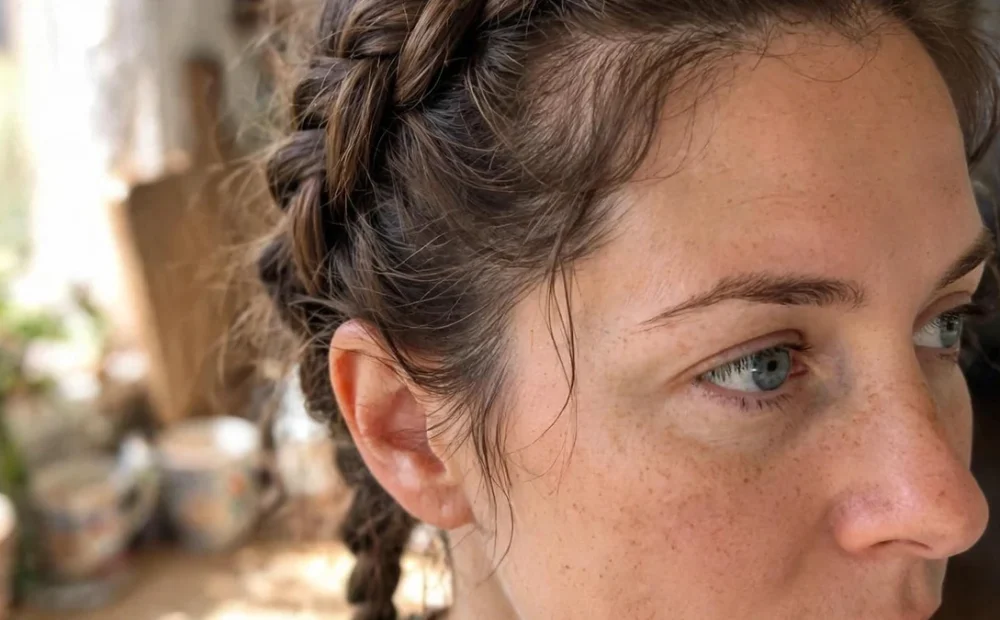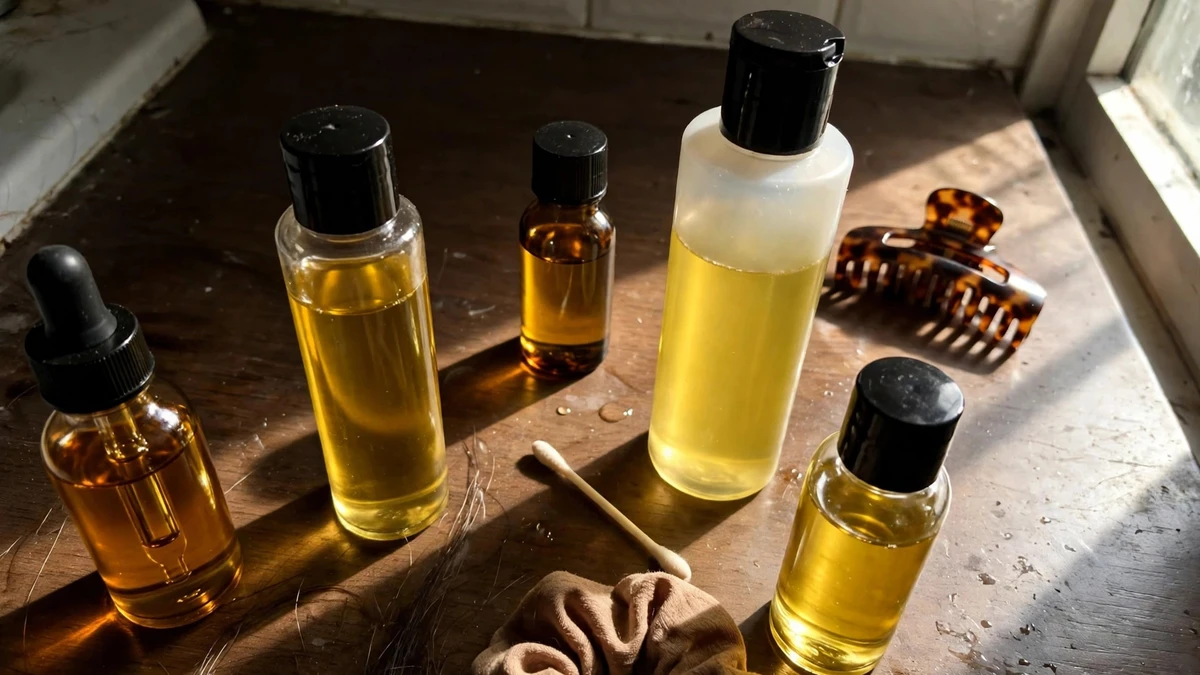
Milkmaid braids are two ordinary braids worn in an unusual place. Instead of hanging down the back, each braid is lifted over the crown and pinned behind the opposite ear, so the hair forms a band across the top of the head. What makes it tricky is not the braiding. It is keeping the braids neat, glossy and in place for a whole day, and that is where hair oil earns its place.
A milkmaid braid shows every dry end and every flyaway. The braids sit right at the front of the head, in full view, so dull lengths and frizzy edges are impossible to hide. A light oil smooths the surface of each braid, adds shine, and gives the hair a little grip, which helps the braids stay put. The wrong oil does the opposite. A heavy oil at the parting makes the braids slide forward, and too much oil anywhere turns a romantic style into a greasy one.
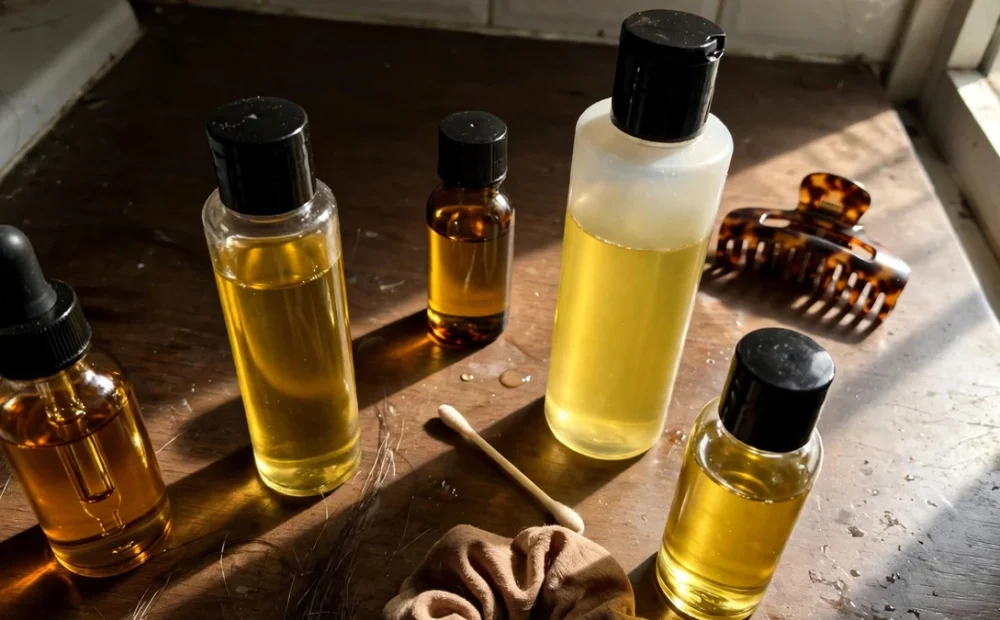
Below are nine hair oils worth considering for milkmaid braids in 2027, from light, fast-absorbing formulas for fine hair to richer blends for thick, dry lengths. Each one is described by what it does well, what to watch for, and who it suits best, so you can choose with your hair in mind, not just a bestseller list.
Key takeaways
- Milkmaid braids are two side braids crossed over the crown and pinned behind the opposite ears, and they show every dry end and flyaway.
- A light oil adds shine and grip to the braids, but it belongs on the lengths and ends, not on the centre parting.
- One to two drops per braid is enough for most hair; warm the oil between your palms before you braid.
- Braids hold best on second-day hair with a little texture, and pins — not oil — do the real holding.
- No oil will hold a milkmaid braid on freshly washed, slippery hair on its own, and too much oil at the roots makes the style slide forward.
What milkmaid braids are and why oil helps them
A milkmaid braid, sometimes called a Heidi braid, starts as two three-strand braids, one on each side of the head. Each braid begins behind the ear, runs down past the shoulder, and is then lifted up and across the crown. The left braid is pinned behind the right ear, the right braid behind the left ear, and the tails are tucked under the opposite braid so the ends disappear. Done well, the result looks like a woven headband made from your own hair, with no band in sight.
The style works on most hair, but it is honest about condition. Because the braids sit at the front of the head, dry, rough ends poke out of the braid instead of hiding inside it, and the hairline shows every short, broken strand. Smoothed through the lengths before braiding, it seals the cuticle, softens the ends, and gives the braid a smooth, glossy surface that photographs well and stays neat for hours.
Oil also helps with grip, which is the part people underestimate. Very clean, freshly washed hair is slippery, and a milkmaid braid made from it tends to loosen and slide forward by lunchtime. A small amount of oil adds just enough texture for the strands to hold each other, especially on fine or straight hair. The trick is placement. Oil on the braid lengths helps. Oil on the centre parting and the roots at the crown hurts, because that is where the braids need friction against the head to stay put.
How we chose these oils and what to look for
We looked first at weight. A milkmaid braid needs an oil that absorbs quickly and leaves the hair smooth, not coated. Heavy oils and butters, such as pure castor oil or thick balms, can work on very thick or coarse hair, but on most hair they make the braids look flat and feel sticky.

We looked next at the finish. A good braid oil should add shine without a wet look, and it should not leave a residue on the hands or the pillow. Fragrance matters too, because the braids sit close to the face all day. Most of the oils here are lightly scented or unscented, and the few with a stronger scent are noted so you can choose accordingly. Our guide to hair oils for braids covers the same ground for ordinary braids, and the same rule applies here: light first, add more only if the ends still look dry.
Finally, we looked at price and size honestly. A hair oil for braids is used in drops, not handfuls, so even a small bottle lasts months. That makes a premium oil a reasonable buy if it suits your hair, and it makes a budget oil a poor buy if it leaves your hair greasy. Prices below are approximate, based on the standard bottle size at the time of writing, and they are given as ranges rather than exact figures, because prices change.
The 9 best hair oils for milkmaid braids of 2027
Fable & Mane HoliRoots Hair Oil
What we like: A light, pre-wash oil with ashwagandha and amla that smooths the lengths without weighing them down, with a warm, herbal scent that fades quickly once the hair is braided.
What to consider: It is marketed as a pre-wash treatment, so use only one drop as a braid oil, and it can feel too rich on very fine hair. Best For: Dry, medium to thick hair. Material: Ashwagandha, amla and castor oil blend. Price Range: Mid-range, around $35 to $40. Standout Feature: Adds grip as well as shine, which helps braids hold.
Ranavat Mighty Majesty Fortifying Hair Serum
What we like: A jasmine-scented, oil-based serum that leaves braids glossy and soft, with a texture that absorbs fast and does not transfer to clothes or pillows.
What to consider: Premium price, and the jasmine scent is noticeable up close, which some people love and others do not. Best For: Normal to thick hair that wants shine. Material: Jasmine, sunflower and amla oils. Price Range: Premium, around $85 to $95. Standout Feature: A dry, glossy finish with no greasy feel.
Nécessaire Hair Oil
What we like: A fragrance-free, silicone-free oil that is genuinely light, absorbs in a minute, and works on every hair type without leaving a film.
What to consider: It is so light that very dry, coarse ends may need a second drop, and the bottle has no dropper, so pour carefully. Best For: Fine hair and sensitive scalps. Material: A blend of five light plant oils. Price Range: Mid-range, around $30 to $35. Standout Feature: Fragrance-free and genuinely weightless.
Living Proof No Frizz Vanishing Oil
What we like: A fast-absorbing oil that tames frizz at the hairline, which is exactly where milkmaid braids show it, and it keeps working in humidity.
What to consider: It is designed for frizz, not nourishment, so it will not repair very dry ends on its own. Best For: Frizzy hair and humid days. Material: A lightweight oil blend with a frizz-fighting molecule. Price Range: Mid-range, around $30 to $35. Standout Feature: Best hairline frizz control in this list.
Sachajuan Hair Oil
What we like: A Scandinavian-style oil that is light, clean-smelling and easy to dose, with a smooth finish that makes braids look polished rather than oiled.
What to consider: The bottle is small for the price, and it is best for smoothing rather than deep nourishment. Best For: Straight and wavy hair that needs polish. Material: Sea buckthorn and argan oils. Price Range: Mid-range, around $35 to $40. Standout Feature: A clean, polished finish with no residue.
Leonor Greyl Huile de Magnolia
What we like: A rich, magnolia-scented oil that softens coarse, dry lengths beautifully, with a little going a long way, which suits braids that need real smoothing.
What to consider: It is one of the richer oils here, so fine hair should use half a drop, and the floral scent is strong. Best For: Thick, coarse or very dry hair. Material: Magnolia, jojoba and mongongo oils. Price Range: Premium, around $65 to $75. Standout Feature: The most softening oil in this list for coarse hair.
Christophe Robin Regenerating Hair Oil
What we like: A prickly pear seed oil that adds slip and shine to the braid without a heavy feel, and it works well on colour-treated hair that has gone dry at the ends.
What to consider: The dropper dispenses generously, so dispense onto the palm first, and it is premium-priced for the bottle size. Best For: Colour-treated and dry ends. Material: Prickly pear seed and jojoba oils. Price Range: Premium, around $55 to $65. Standout Feature: Excellent slip for braiding without stickiness.
Playa Ritual Hair Oil
What we like: A lightweight, beachy oil that smooths braids and adds a soft, natural shine, with a clean scent that suits warm weather and outdoor days.
What to consider: It is light, so very thick hair may need two drops per braid, and it offers shine rather than deep repair. Best For: Wavy hair and warm-weather braids. Material: A light blend of plant oils with a coastal scent. Price Range: Mid-range, around $35 to $40. Standout Feature: A natural, beachy shine that never looks greasy.
Virtue Healing Oil
What we like: A keratin-based oil that smooths damaged, broken lengths and helps braids look neat instead of frayed, with a light texture for a treatment oil.
What to consider: It is a treatment oil, so it works best on damaged hair and may be more than fine, healthy hair needs. Best For: Damaged, heat-styled or broken hair. Material: Alpha keratin and baobab oil. Price Range: Mid-range, around $40 to $45. Standout Feature: Best smoothing for damaged, frayed braid lengths.
Which oil suits your hair type
Fine hair needs the lightest touch. Choose a weightless oil, such as the Nécessaire or Sachajuan options above, and use a single drop for both braids, warmed between your palms and smoothed over the lengths only. If your hair is fine and straight, skip oil at the roots entirely, because even a little extra at the crown will make the braids slide forward by midday. A dry shampoo or a pinch of texture powder at the roots, used before braiding, will do more for hold than any oil.
Thick, coarse or curly hair can take more. A richer oil, such as the Leonor Greyl or Christophe Robin options, softens the lengths and makes the braids easier to handle, and two to three drops per braid is reasonable. Curly hair in particular benefits from oil before braiding, because it smooths the curl pattern into a neat braid instead of letting it puff out at the edges. Our guide to hair oils for chignons uses the same logic for a low bun, and the same light-versus-rich split applies here.
The caveats that matter
Milkmaid braids are forgiving in some ways and strict in others. They suit almost every face shape and hair type, but they punish the wrong prep. Oil in the wrong place, braids made on hair that is too clean, and pins placed where they show are the three mistakes that turn a pretty style into a frustrating one. The table below is the short version of what matters, and the checklist that follows it is the practical version to run through before you braid.
| Detail | What is known |
|---|---|
| Best place to apply oil | Lengths and ends, not the centre parting or the roots at the crown |
| How much to use | One to two drops per braid, warmed between the palms first |
| When to oil | Before braiding, on second-day hair or hair with a little texture |
| Who should go light | Fine, straight, easily weighed-down hair; use half a drop if in doubt |
| What to avoid at the crown | Heavy oils and butters at the parting, which make the braids slide forward |
| Flyaways at the hairline | One drop smoothed over the finished braids with the fingertips |
| Sleeping in milkmaid braids | Take them down at night; re-braid loosely or sleep with the hair loose |
| What oil does not do | It does not hold a braid on its own; pins, texture and a light hold do that |
If your scalp is sensitive, itchy, or broken, be careful with any new oil, and keep it off the scalp itself. A milkmaid braid pulls the hair up and back, which can irritate a tender scalp, and oil trapped under a tight braid can make itching worse.
Checklist: choosing a hair oil for milkmaid braids honestly
Use these checks before you buy, and again before you braid.
- Check the weight: light and fast-absorbing for fine hair, richer only for thick, dry lengths.
- Check the scent: the braids sit close to your face all day, so choose a scent you are happy to wear.
- Check the dose: one to two drops per braid is enough; if the hair looks wet, you used too much.
- Check the placement: oil on the lengths and ends, never on the centre parting.
- Check the hold: pins behind the opposite ear, tails tucked under the opposite braid, and a light mist to set.
- Check the takedown: unpin from the outside in, then brush the oil through the ends before washing.
Frequently asked questions
How much hair oil should I use for milkmaid braids?
One to two drops per braid is enough for most hair. Warm the oil between your palms, smooth it through the lengths and ends, and keep it away from the centre parting. Fine hair may need only one drop for both braids, while thick, dry hair can take two drops per side.
Do I oil my hair before I braid, or after the braids are pinned up?
Oil before you braid, on the lengths and ends, because that is when it smooths the hair and adds grip. After the braids are pinned up, use only one more drop, smoothed over the hairline and the finished braids with your fingertips, to tame flyaways.
Will hair oil make my milkmaid braids slide out?
It can, if the oil reaches the roots or the centre parting. Oil on the lengths helps the braids hold, but oil at the crown removes the friction the braids need to stay put. Keep the parting clean, pin behind the opposite ear, and use a light hold to set the style.
Can I do milkmaid braids on short hair with oil?
It depends on length. You need roughly shoulder-length hair for the braids to reach across the crown and pin behind the opposite ear. Shorter hair can work with a half milkmaid style, where only the front sections are braided and pinned, and oil helps the short ends stay smooth.
How do I keep the braids from going flat at the crown?
Do not pull the braids too tight, and do not oil the crown. Gently pull a few strands out of each braid after pinning to add volume, and use a light texture spray or dry shampoo at the roots before you braid. A flat crown usually means the braids are too tight or too oily at the top.
Can I wear milkmaid braids to a wedding with oil in them?
Yes, and they are a popular wedding choice because they stay neat for hours. Use a light, fast-absorbing oil, keep the braids loose and romantic rather than tight, and ask someone to check the back before the ceremony. Our guide to using hair oil on a French braid covers the same prep for a simpler braid, and the same rules apply.
The bottom line
The best hair oil for milkmaid braids in 2027 is not the richest or the most expensive. It is the lightest one that still smooths your ends, used in drops on the lengths, with the centre parting kept clean. For fine hair, a weightless, fragrance-free oil is the right start. For thick, dry hair, a richer blend used sparingly on the lengths will make braiding easier and the finished braids glossier.
Braid on second-day hair, pin behind the opposite ear, tuck the tails under, and judge the style on how it looks at the end of the day, not how it looks in the mirror at the start. That is the honest way to get the benefit of oil in milkmaid braids, without the slide and grease that make people give up on the style.