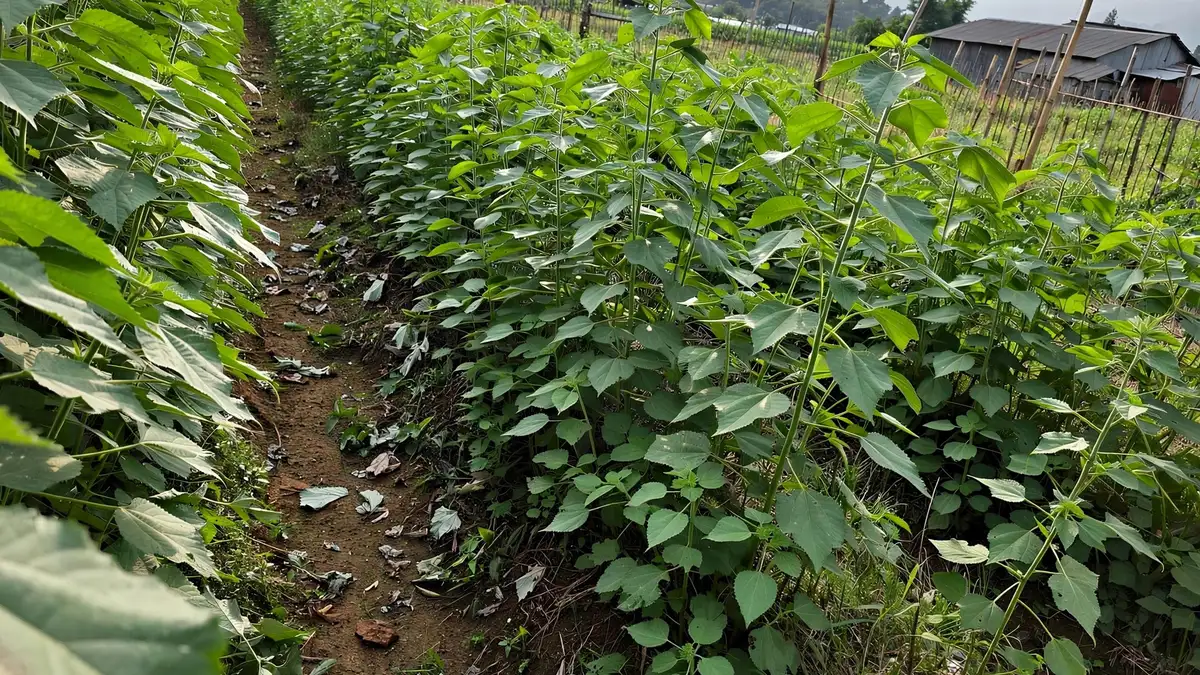

A ramie farm escape is a working holiday built around a nettle. The plant is Boehmeria nivea, grown in tall green stands across Asia, and the trip is organised around its harvest: the cutting, the stripping, the degumming and the weaving. You sleep in a farmhouse or a weaving village inn, walk the nettle rows in the morning, and spend the afternoons at the decorticator, the degumming vat or the loom. It is not a spa break, and it is not a sightseeing tour. It is a chance to see a fibre become cloth, step by step, in a single place.
The reason to plan carefully is that a ramie farm is seasonal, rural and small. The cutting happens two or three times a year, the work stops when the stems are in, and the farms are often an hour or more from the nearest town. A trip booked without checking the cutting calendar can land you in a quiet field with nothing running, while a trip booked around the second cutting puts you in the middle of the busiest week of the farm year.
Below is a plan for getting it right: how to pick a region, when to go, what to sort before you book, and the nine steps that make the difference between a ramie farm escape and a long drive to a closed field.
Key takeaways
- Ramie is a nettle fibre, also called China grass, and a farm escape is organised around its harvest, not around sightseeing.
- Time the trip to the second cutting, usually in early summer, when the stems are tallest and the decortication work is running.
- Choose a farm that grows, strips and degums its own fibre, and check that guests can try the work, not just watch it.
- Book the farm stay before the flights, sort the last leg from the nearest town, and pack for humid heat, stinging leaves and mud.
- A ramie farm is not a spa break, and the living plant stings, so go expecting field work and honest, simple rooms.
What a ramie farm escape actually involves
A ramie farm escape is built on the harvest cycle. The farm stay is organised around that cycle, so your days follow the work rather than a fixed sightseeing schedule.
A typical day starts early, with a walk through the nettle rows while the air is still cool. Some farms add a weaving village visit, a market trip, or a hot spring. Others keep it simple, with the farm, the fields and the loom.
The stays themselves vary. A farmhouse lodge in Hunan is comfortable and close to the fields. A weaving village inn in Luzon is simpler, with shared tables and family cooking. Booking early is not a suggestion. It is the difference between a room and a waiting list.
How to plan it, and what to sort first
Start with the cutting calendar, not the flight calendar. The stems are at their tallest, the decortication sheds are running, and the weaving villages are busy.
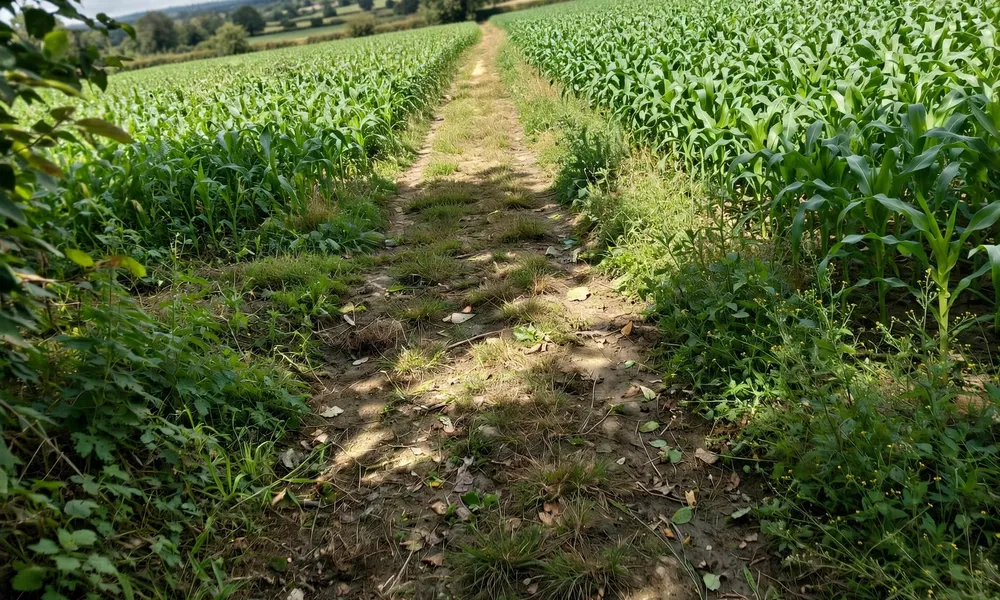
Next, sort the stay before the transport. The farms are rural, and the best rooms go first. Book the farmhouse or the village inn, then work out how to reach it, rather than booking a flight and hoping the farm has a room. Ask the farm what work will be running while you are there, and ask what guests can actually join. A farm that answers clearly is a farm worth visiting. One that cannot say is a farm to avoid. Our guide to planning a sisal farm escape makes the same point, because a fibre farm is only worth the trip when the fibre work is actually happening.
Finally, plan the last leg. The nearest town is often an hour or more from the farm, and rural roads are slow. A ramie farm escape works best when it is not packed tight, because the farm sets the pace, not your itinerary.
The 9 steps that make the trip work
Learn white ramie from green ramie before you choose a region
What to do: Read up on the two main types before you book. White ramie, Boehmeria nivea, is the fibre crop, grown for its long, strong strands. Green ramie, Boehmeria nivea var. tenacissima, is tougher and more tropical, and it is grown in warmer regions for a coarser fibre. What to avoid: Do not assume every ramie farm grows the same plant, or that the cloth will feel the same everywhere. Best For: Anyone choosing between China, the Philippines and Vietnam. Time Needed: An evening of reading before you book. Standout Tip: If you want fine cloth, look for white ramie regions such as Hunan and Nara. If you want to see the toughest, most tropical form, look for green ramie in Luzon.
Time your visit to the second cutting, when the stems are tallest
What to do: Ask the farm for its cutting dates, and aim for the second cutting, usually in early summer. The stems are at their tallest then, the decortication work is running, and the weaving villages are at their busiest. What to avoid: Do not book for the weeks between cuttings, when the fields are short and the sheds are quiet. Best For: First-time visitors who want to see the full process. Time Needed: A week of flexibility around the cutting date. Standout Tip: The cutting date moves with the weather, so confirm it a month before you travel, and again a week before.
Choose a farm that still decorticates by hand, not one that ships raw stems away
What to do: Ask the farm whether it strips its own stems on site, or whether it sends them to a mill. A farm that decorticates by hand, or with its own small machine, can show you the whole process in one place. What to avoid: Do not book a farm that only grows the crop and ships it away, because you will see a field and nothing else. Best For: Travellers who want to see stem become fibre. Time Needed: One email to the farm before you book. Standout Tip: A farm with a stripping bench on the porch is a good sign. It means the work happens where the guests are, not behind a fence.
Watch the decorticator strip the bark, then feel the gum that stays behind
What to do: Stand beside the decorticator during a working session, watch the stems go in and the fibre come out, then ask to feel the fibre before it is degummed. It will be stiff and slightly sticky, with a natural gum that holds the strands together. What to avoid: Do not touch the machine while it is running, and do not put your hands near the rollers. Best For: Anyone who wants to understand why ramie cloth feels the way it does. Time Needed: An hour in the decortication shed. Standout Tip: The gum is the reason ramie needs degumming, and feeling it before and after the vat is the clearest lesson the farm can teach.
Try the degumming vat yourself, and see why ramie cloth feels so cool
What to do: Ask to try the degumming vat, where the fibre is soaked and washed to remove the gum. Stir the strands, lift them out, and feel how they soften and loosen as the gum washes away. What to avoid: Do not put your hands in a vat that is running hot, and do not try it without the farm worker beside you. Best For: Travellers who learn by doing rather than by watching. Time Needed: Half a morning at the vat and the drying racks. Standout Tip: The cool feel of ramie cloth comes from the clean, hollow fibre, and you can feel that change in your hands as the gum leaves.
Walk the nettle rows and learn to read a stem by its colour
What to do: Walk the rows with a farm worker in the morning, and learn to read the stems. A young stem is bright green and soft. A ready stem is taller, paler at the base, and firm to the touch. An old stem is woody and dark, and it is past its best for fibre. What to avoid: Do not brush against the leaves with bare arms, and do not pick stems without asking. Best For: Early risers who like a quiet walk before the work starts. Time Needed: An hour in the field at dawn. Standout Tip: The colour at the base of the stem is the best guide. Pale and firm means ready. Dark and woody means too late.
Sleep in the weaving village and let the looms set your mornings
What to do: Choose a stay in the weaving village itself, rather than in the nearest town, so you wake to the sound of the looms and can walk to the workshop before breakfast. What to avoid: Do not stay in a town hotel and drive in for the day, because you will miss the early weaving and the village rhythm. Best For: Travellers who want the craft, not just the crop. Time Needed: Two or three nights in the village. Standout Tip: The looms start early, and the best weaving happens before the heat. Be there at eight, not at eleven.
Pack for humid heat, stinging leaves, and muddy paths
What to do: Pack long sleeves, closed shoes, gloves, a hat, and clothes you can wash easily. Bring insect repellent, sunscreen, and a small first-aid kit for stings and blisters. What to avoid: Do not wear shorts or sandals in the nettle rows, and do not bring clothes you mind getting muddy. Best For: Anyone visiting in summer, when the heat and the humidity are at their worst. Time Needed: An evening of packing before you leave. Standout Tip: A light, long-sleeved shirt is worth more than a heavy jacket. It keeps the sun and the nettles off without making you hotter.
Buy ramie cloth and yarn on your last morning, not the first
What to do: Wait until your last morning to buy, so you have seen the whole process and know what you are looking at. Buy cloth from the farm or the weaving village, and ask the weaver what the cloth is best used for. What to avoid: Do not buy on the first day, before you know the difference between fine and coarse cloth, or between natural and chemical dye. Best For: Anyone who wants a souvenir that is actually useful. Time Needed: An hour in the village shop on the last morning. Standout Tip: A length of undyed cloth is the most useful buy, because it can be made into clothing or used at home, and it shows the fibre at its plainest.
Which ramie region suits your trip
If this is your first ramie trip, choose Hunan or Java. Hunan shows you the crop at its biggest, with the most field work to watch, while Java gives you the clearest guided tour from stem to cloth. Both are forgiving for first-time visitors, with proper rooms and guides who explain the process without assuming you already know it. The luxury ramie farm retreats roundup compares the two in detail, and A jute farm escape follows the same rhythm of cutting, retting and weaving, so it is a useful rehearsal if you are unsure a fibre farm will hold your interest for a whole week.
If you care most about the cloth, choose Jeju or Nara. The fields are smaller, but the weaving and dyeing are the point, and the cloth you see is among the finest ramie made anywhere.
If you are combining ramie with something else, pick the region that fits the rest of your trip. Zhejiang pairs with tea and bamboo, Assam pairs with tea estates, Taiwan pairs with food and hot springs, and the Mekong Delta pairs with river travel and markets.
The caveats that matter
Ramie is a nettle, and that matters more than most farm stays admit. The leaves can sting, the field paths are muddy, and the work is done in heat and humidity.
The other caveat is the season. Check the cutting calendar before you book, and ask the farm directly what work will be running while you are there. A farm that answers clearly is a farm worth visiting. One that cannot say is a farm to avoid.
| Detail | What is known |
|---|---|
| What ramie is | A nettle fibre, also called China grass, woven into a cool, crisp cloth with a soft sheen |
| Best time to visit | Around the second cutting, usually early summer, when stems are tallest and decortication is running |
| Who should go | Travellers who enjoy working farms, crafts and slow days, and who do not mind heat and mud |
| Who should skip it | Anyone expecting a spa break, or anyone with a nettle allergy who cannot be near the living plant |
| What to wear in the fields | Long sleeves, closed shoes, gloves if offered, and a hat for the sun |
| How long to stay | Three to four nights is enough for one farm; a week if you are visiting two regions |
| What to buy | Ramie cloth and yarn from the farm or the weaving village, bought on the last morning |
| What it does not offer | It does not offer soft, fluffy fibre, luxury spa facilities, or a farm that runs all year round |
If you have a nettle allergy, a skin condition, or you are travelling with small children, check with the farm before you book. A simple email to the farm will tell you what is safe and what is not.
Checklist: planning a ramie farm escape honestly
Use these checks before you book, and again a week before you travel.
- Check the farm grows ramie: ask whether it grows, strips and degums its own fibre, or only buys cloth.
- Check the cutting calendar: book for the second cutting, when the stems are tallest and the work is running.
- Check what guests can do: look for hands-on work at the stripping bench and the degumming vat, not just watching.
- Check the rooms and the food: make sure the stay suits how you actually travel, not just how it photographs.
- Pack for the fields: long sleeves, closed shoes, gloves, a hat, insect repellent and clothes you can wash easily.
- Plan the last leg: confirm the transfer from the nearest town before you pay, because rural roads are slow.
Frequently asked questions
What is ramie, and is it really a nettle?
Yes. Ramie comes from Boehmeria nivea, a nettle plant grown in Asia for thousands of years. The living plant can sting, but the fibre is stripped, degummed and washed, so the finished cloth is smooth, cool and comfortable to wear.
When is the best time to visit a ramie farm?
Around the second cutting, usually in early summer, when the stems are at their tallest and the decortication work is running. The first cutting is in late spring and the third in late summer, but the second is usually the busiest and the most rewarding to watch.
What is degumming, and why does it matter?
Degumming is the washing out of the natural gum that holds ramie fibre together. The raw fibre is stiff and sticky because of the gum, and the clean fibre is soft, cool and ready to spin.
Can children try the fibre work on a ramie farm?
Often yes, but with care. They should stay out of the uncut nettle rows and away from the degumming vats. Ask the farm what children can join before you book.
Is a ramie farm escape suitable for people with sensitive skin?
It can be, with care. The finished cloth is smooth and comfortable, but the living plant stings, and the field work involves dust, sun and humidity.
What should I buy at a ramie farm?
Ramie cloth and yarn, bought from the farm or the weaving village on your last morning.
The bottom line
A ramie farm escape works when you plan it around the harvest, not around a holiday calendar. The reward is a craft you can watch from stem to cloth in a single place, and a length of cloth you bought from the people who made it.
Book the farm before the flights, confirm the transfer from the nearest town, and buy your cloth on the last morning. That is the honest way to plan a ramie farm escape, without expecting a spa break from a working nettle farm.