

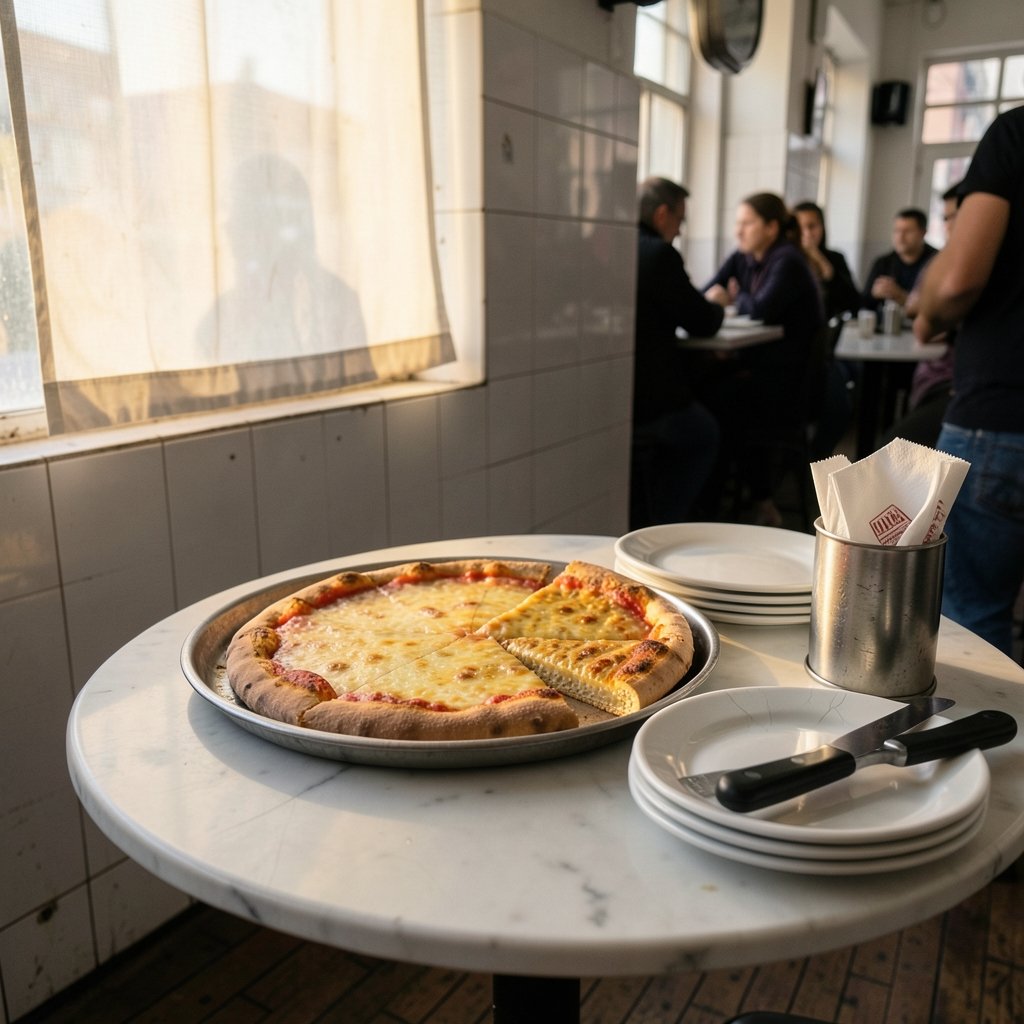
What if the secret to a better pizza night isn’t more cheese, but a humble chickpea flatbread most people walk right past on the menu? That flatbread is faina (often written fainá), and in Buenos Aires and Montevideo it’s not a novelty. It’s a ritual. Ordering “pizza con fainá” is as normal as ordering a coffee, and once you understand why, the search for the best faina with pizza near you starts to make a lot more sense.
This guide explains what faina actually is, why it works so well with pizza, how to judge a good one, and how to find it in your own city. It also covers the mistakes that lead people to a disappointing plate, plus the questions everyone asks before their first bite.
What Faina Actually Is, and Why It Belongs Next to Pizza
Faina is a thin, savory flatbread made from chickpea flour, water, olive oil, and salt. It’s baked in a wide, shallow round pan, then cut into wedges like a pie. No yeast, no wheat flour, no rising time in the traditional version. The batter is thin, the bake is hot, and the result is a crisp-edged, custardy-centered slab with a faint nutty flavor.
Its family tree runs back to Genoa, where the same dish is called farinata. In Nice it’s socca. Ligurian immigrants carried the recipe to the Río de la Plata region in the late 19th and early 20th centuries, and it took root in the pizzerias of Argentina and Uruguay, where it never left. That history matters when you’re searching, because it tells you where to look: faina shows up in Argentine and Uruguayan spots, and in cities with deep Italian-descended communities.
Why pair it with pizza? The contrast does the work. Pizza is rich, salty, and heavy on cheese. Faina is light, earthy, and slightly crisp. Some people lay a wedge directly on top of their slice and eat both together; others keep it on the side. Both are correct. Neither is subtle.
The Search Problem: Why “Near Me” Is Trickier Than It Looks

Here’s the honest part. “Near me” searches are location-dependent by nature, and faina is not evenly distributed. If you live in a city without a strong Argentine or Uruguayan food scene, the closest thing you’ll find may be a Ligurian farinata at an Italian bakery, which is a fine substitute but a different experience.
A few practical realities shape the search:
- Menu naming is inconsistent. You’ll see faina, fainá, fainá de garbanzo, farinata, and sometimes “chickpea pizza crust.” Searching only one spelling will miss options.
- It’s often a side, not a headline. Many pizzerias list faina in small print under “extras” or “entradas,” so it never appears in the main photo grid.
- Availability is unpredictable. Traditional faina bakes in large pans and gets cut to order, so it can sell out on a busy night.
- Rankings are opinions. Any “best of” list reflects one publication’s taste on one date. Treat it as a starting point, not a verdict.
That last point is worth sitting with. There is no objective, current ranking of the best faina-with-pizza anywhere, and any article claiming otherwise is selling you something. What you can do is learn to evaluate a plate yourself, which is more useful anyway.
How to Judge a Good Faina in Person
You don’t need a culinary degree. You need to look at four things.
The edge. A well-made faina has a rim that’s darker, crisp, and slightly lifted from the pan. If the whole surface is uniform and pale, it was likely baked at too low a temperature or pulled early.
The center. It should be set but tender, with a slight wobble rather than a rubbery bounce. A center that’s dry and cracker-like means it sat too long under heat.
The oil. Olive oil should read as a background note, not a slick. If your fingers shine after one bite, the ratio is off.
The seasoning. Salt is the whole game with chickpea flour, which is bland on its own. Under-salted faina tastes like nothing. Properly salted faina tastes like more.
There’s also a freshness test that regulars use: ask whether the faina came out recently. A wedge cut from a pan that’s been sitting for an hour tastes very different from one cut minutes after baking. It’s not a rude question, and most staff will tell you straight.
Faina vs. Its Cousins: A Quick Comparison
Knowing the family helps you order intelligently, especially when a restaurant uses the names loosely.
| Dish | Region | Flour | Texture | Typical Serving |
|---|---|---|---|---|
| Faina (fainá) | Argentina, Uruguay | Chickpea | Thin, custardy center, crisp rim | Wedge alongside or atop pizza |
| Farinata | Liguria, Italy | Chickpea | Slightly thicker, more olive oil | Large slice, eaten alone or as a starter |
| Socca | Nice, France | Chickpea | Rustic, peppery, cooked on a griddle | Street food, folded or torn |
| Standard pizza crust | Global | Wheat | Chewy, airy, yeasted | The base of the pizza itself |
The through-line is chickpea flour. The differences are pan, heat, and how it’s served. If a menu offers “farinata” and you’re chasing the Argentine experience, order it anyway, then ask for a pizza alongside. You’ll get 80 percent of the way there.
How to Find Faina Near You Without Wasting an Evening
Start with the neighborhoods, not the search bar. Areas with established Italian, Argentine, or Uruguayan communities almost always have at least one pizzeria that carries it. Then work through these steps.
- Search multiple spellings. Try faina, fainá, fainá de garbanzo, and farinata in the same map app. Compare the results.
- Check the pizza style first. If a place advertises pizza a la piedra or media masa, the odds of faina on the menu jump sharply. Those are the Argentine styles that traditionally come with it.
- Call before you go. Ask two questions: do you serve faina tonight, and roughly what time does it come out of the oven? Two minutes on the phone saves a wasted trip.
- Read reviews for the word itself. Search the review text for “faina,” instead of judging only by the star rating. A four-star place with six faina mentions beats a five-star place with none.
- Look at the photos for the pan. A wide round metal pan in the background of a photo is a strong signal that faina is made in-house rather than bought in.
- Ask about the bake schedule. Some kitchens bake faina in batches at set times. Knowing the schedule means you arrive when it’s fresh.
If you’re also weighing which pizzeria deserves your night out, the same instinct applies as when you’re choosing among other local food options: look for a place that does one thing well rather than everything adequately. A guide to choosing a laser hair removal clinic near you makes the same point in a completely different industry: local searches reward specificity, verified reviews, and a phone call; a map pin by itself is not enough. The comparison holds: vague searches produce vague results.
Common Mistakes People Make With Faina
Most disappointing faina experiences trace back to a handful of avoidable errors.
Treating it as a gluten-free guarantee. The core ingredients contain no wheat, so faina is naturally gluten-free in theory. In practice, it’s baked in shared kitchens alongside wheat dough, often on the same surfaces. Anyone with coeliac disease or a serious sensitivity should ask directly about separate prep areas and pans rather than assuming. Ingredient lists and safe handling are not the same thing.
Ordering it as a main. A single wedge is a side, not a meal. Two people sharing a pizza and one faina is a sensible order. One person ordering only faina will leave hungry.
Eating it cold. Faina loses its texture fast. If it arrives lukewarm, send it back. This is a dish that lives and dies by the oven.
Ignoring the topping question. Some places top faina with cheese or onion, which turns it into something closer to a pizza itself. That’s delicious, but it’s a different dish. If you want the classic pairing, ask for it plain.
Skipping the condiment conversation. In Argentina, faina often arrives with a small dish of something sharp, and a shake of chili or a drizzle of good olive oil changes the whole bite. Ask what the kitchen recommends.
Building the Perfect Pizza-and-Faina Order
Once you’ve found a spot, the order itself matters. A balanced table usually looks like this: one pizza a la piedra or media masa, one plain faina cut into wedges for the table, and something acidic to cut the richness, whether that’s a simple salad or a glass of something crisp.
For a group of four, two pizzas and one faina is a comfortable starting point. For two, one pizza and one faina, with room to add a second faina if the first disappears quickly, which it will.
If you’re comparing pizzerias in a new neighborhood and want a broader sense of how local dining searches work, the same logic that applies to finding a good Chinese restaurant fast holds here: narrow by dish, check recent reviews, and confirm by phone. Dish-specific searches beat cuisine-wide ones almost every time.
There’s also a case for reading up on how a place builds its menu before you commit an evening to it. A close look at what diners should know before visiting a neighborhood pizza joint shows how much you can learn from menu structure, portion signals, and review patterns. Apply that lens to faina and you’ll spot the places that make it properly before you sit down.
And if you’re the type who likes tracing a dish back to its roots, the way toppings travel across cultures is its own rabbit hole. The story of where supreme pizza toppings came from and how they compare across regions is a good reminder that menu items are never accidental. Faina on a pizza menu is a fingerprint of immigration, and reading it that way makes the meal more interesting.
What to Expect When You Finally Order It
The first bite usually surprises people. Faina is softer than it looks and earthier than expected, closer to a savory custard than to bread. The second bite is where it clicks, especially if you’ve layered it on top of a cheese-heavy slice. The salt and acid of the pizza cut through the mild chickpea base, and the texture contrast does the rest.
A few practical notes for the first visit. Faina is best eaten with your hands, folded or stacked. It’s fine to ask for it cut into more wedges if you’re sharing. And if the kitchen offers a version with rosemary or onion, that’s a legitimate variation worth trying on a return trip, not a compromise.
One more thing: don’t judge the whole restaurant by the faina alone. Some excellent pizzerias make a merely decent faina, and some modest spots make a spectacular one. Order both, then decide.
Conclusion
Finding the best faina with pizza near you isn’t about chasing a ranking. It’s about knowing what the dish is, recognizing the neighborhoods and menu signals that point to it, and being willing to make a two-minute phone call. Faina is a chickpea flatbread with Genoese roots and a South American home, and it earns its place next to a hot slice because it does something pizza can’t do alone: it lightens the whole meal.
Start with the pizza style, search more than one spelling, confirm the bake schedule, and judge the plate by its crisp rim and tender center. Do that, and the search stops being a gamble. It becomes a habit.
Frequently Asked Questions
What exactly is faina made of?
Traditional faina uses chickpea flour, water, olive oil, and salt. That’s it. There’s no yeast and no wheat flour in the classic version, which is why it bakes into a thin, custardy slab rather than a risen bread. Some kitchens add rosemary, onion, or a dusting of cheese, but those are variations rather than the baseline.
Is faina the same thing as farinata or socca?
They’re close relatives, not identical twins. Farinata is the Ligurian original, usually a bit thicker and more generous with olive oil. Socca is the Niçoise version, cooked on a griddle and often served as street food. Faina is the Argentine and Uruguayan adaptation, baked in wide round pans and cut into wedges to serve alongside pizza. Same chickpea base, different pan and different context.
Is faina gluten-free and safe for people with coeliac disease?
The core ingredients contain no wheat, so faina is naturally gluten-free as a recipe. The catch is the kitchen. Most pizzerias bake faina in the same space as wheat dough, using shared surfaces, pans, and utensils, which creates real cross-contamination risk. Anyone with coeliac disease should ask specifically about separate prep areas rather than relying on the ingredient list.
Why do people put faina on top of their pizza?
It’s a texture and richness play. Pizza is heavy with cheese and salt; faina is light, earthy, and slightly crisp. Stacking a wedge on a slice gives you contrast in every bite and stretches a single slice further. Plenty of people keep it on the side instead, and both approaches are traditional.
How do I find a pizzeria near me that serves faina?
Search several spellings, including faina, fainá, and farinata. Prioritize places advertising pizza a la piedra or media masa, since those Argentine styles traditionally come with it. Read reviews for the word faina itself, look at photos for a wide round baking pan, and call ahead to confirm it’s available and to ask when it comes out of the oven.
Does faina sell out, and when should I go?
It can, especially on weekend evenings when pans empty fast. Traditional faina is baked in batches and cut to order, so availability depends on the kitchen’s schedule rather than a steady supply. Arriving earlier in service or calling to ask about bake times gives you the best shot at a fresh wedge rather than the last one from an old pan.














