Best Gold Nose Cuffs 2027
A gold nose cuff is the easiest way to wear gold at the nose without a piercing. It clips gently onto the nostril, sits where a ring would, and comes off at the end of the day. There is no needle, no healing time, and no commitment, which is exactly why so many people try one before deciding whether they want a real piercing at all.
The problem is not finding a gold nose cuff. It is finding one that stays put, looks like real gold rather than shiny plastic, and does not pinch or slip off by lunchtime. A good one is light, well shaped, and made from solid gold, gold-filled, or vermeil over a sensible base.
Below are nine gold nose cuffs worth considering in 2027, from a plain 14k band to a diamond-accented piece for evenings. Each one is described by what it does well, what to watch for, and who it suits best, so you can choose with your nose and your budget in mind, not just a bestseller list.
Key takeaways
- A gold nose cuff clips onto the nostril without a piercing, so it suits anyone who wants the look without the commitment.
- Solid 14k gold, gold-filled, and vermeil are the safest choices; thin plating over brass wears through quickly and can irritate skin.
- Fit matters more than price: a cuff should grip gently without pinching, and an adjustable open design is the most forgiving.
- Start with a simple band in your usual gold tone, then add a stone or a textured finish once you know the fit works.
- No cuff is truly one-size-fits-all, and a cuff that slips, pinches, or turns skin green should be returned, not endured.
What gold nose cuffs actually are
A nose cuff is a small piece of jewellery shaped to hug the nostril. Most gold nose cuffs are open bands or thin hoops with a gap that slides over the edge of the nostril, held in place by gentle spring tension. Some have a tiny disc or stone on the outside and a small pad on the inside, which spreads the pressure and keeps the cuff from sliding.
Gold is the most popular finish because it suits warm and neutral skin tones, resists tarnish better than silver, and reads as jewellery rather than costume. Solid 14k gold is the most durable and the most expensive. Gold-filled has a thick layer of gold bonded to a brass core and lasts for years with care. Vermeil is sterling silver coated in gold, which is lighter and cheaper but needs gentler handling. Thin gold plating, often called gold-tone, is the cheapest and the least durable.
The difference shows in daily wear. A solid gold cuff can be worn every day for years and polished when it dulls. A gold-filled cuff is nearly as good for a fraction of the price. A plated cuff can look lovely for a few weeks and then fade at the edges, which is fine for a special occasion but disappointing as an everyday piece.
How we chose these gold nose cuffs and what to look for
Look first at the metal and how it is made. A cuff described as solid 14k gold, gold-filled, or vermeil tells you something real about what you are buying. A cuff described only as gold-tone or gold-coloured tells you almost nothing, and is usually thin plating over an unknown base. If your skin reacts to cheap jewellery, that distinction matters more than any design detail.
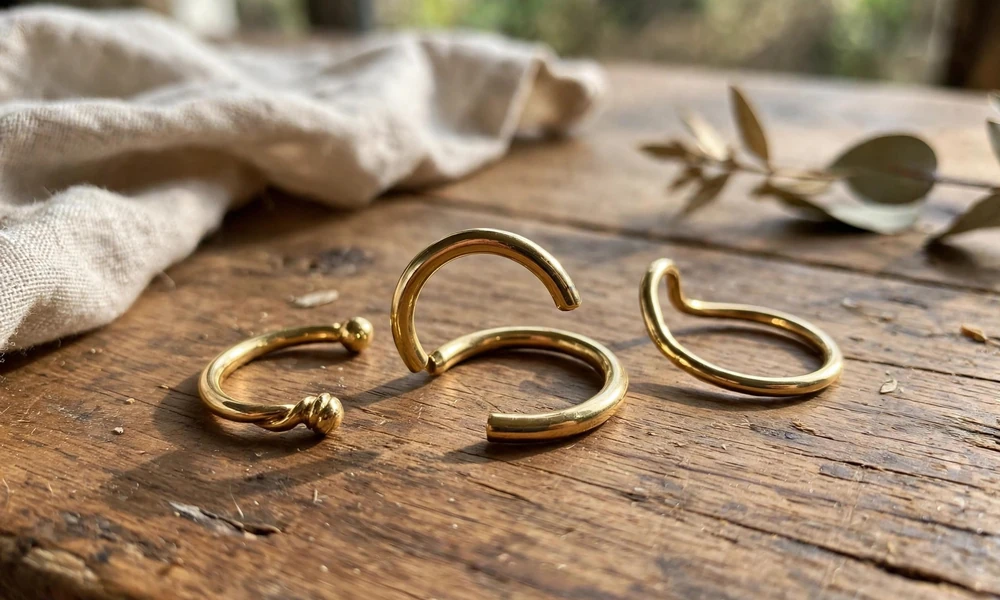
Look next at the fit. A nose cuff needs enough tension to stay in place and little enough to be comfortable for hours. An adjustable open design lets you widen or narrow the gap slightly, which is why it is the safest first buy. Fixed cuffs fit beautifully if your nostril matches the size, and badly if it does not, so check whether the seller lists an inner diameter or a size range. Our guide to gold jewellery for everyday wear explains how to judge gold quality across pieces, because the same rules that apply to a gold necklace apply here, just on a smaller scale.
Finally, look at the weight and the finish. A cuff should feel almost weightless on the nose. Anything over a gram or two of metal will tug and slide.
The 9 best gold nose cuffs of 2027
The Classic 14k Gold Band
What we like: Solid 14k gold in a plain, slim band that sits close to the nostril and goes with everything. What to consider: The highest price in this guide, and the plain design may feel too simple if you want sparkle. Best for: Everyday wear and first-time cuff buyers who want one piece that lasts. Material: Solid 14k gold. Price range: Premium. Standout feature: A timeless band that never dates.
This is the cuff to buy if you only want one. It is light, it does not tarnish, and it looks equally right with jeans or an evening dress.
The Thin Gold Nose Cuff
What we like: A fine, wire-thin band that looks delicate and barely-there, ideal for people who want a subtle first cuff. What to consider: Thin wire can bend if handled roughly, so it needs a gentle touch when putting it on. Best for: Minimal looks and small nostrils. Material: 14k gold wire. Price range: Mid to premium. Standout feature: The lightest cuff in this guide.
A thin cuff suits faces where a chunky band would overwhelm the nose. It is also the best choice if you wear glasses, because it does not compete with frames.
The Gold Bezel-Set Diamond Accent Cuff
What we like: A small diamond set in a smooth gold bezel, giving a single point of sparkle without looking like a full ring. What to consider: The stone adds weight, so the fit must be right or the cuff can slowly rotate. Best for: Evenings, weddings, and special occasions. Material: 14k gold with a small diamond. Price range: Premium. Standout feature: A bezel setting that protects the stone.
The bezel is the practical choice for a stone cuff. Unlike a prong setting, it has no claws to catch on fabric or snag a scarf, and the stone sits low against the nose. It reads as understated luxury rather than costume sparkle.
The Adjustable Gold Nose Cuff
What we like: An open design you can widen or narrow slightly, so it fits a range of nostril shapes and thicknesses. What to consider: Adjusting it too often can weaken the metal over time, so find your fit and leave it alone. Best for: First-time buyers and anyone between sizes. Material: Gold-filled. Price range: Mid. Standout feature: A forgiving fit that suits most noses.
If you have never worn a nose cuff, start here. The adjustable gap removes the guesswork of sizing, and gold-filled metal gives you real gold on the surface at a sensible price.
The Gold Open Cuff
What we like: A clean open band with two small rounded ends, easy to slide on and off and comfortable for long wear. What to consider: The open ends can catch on a towel or a jumper if you are not careful when dressing. Best for: Daily wear and people who take their cuff on and off often. Material: 14k gold. Price range: Mid to premium. Standout feature: Rounded ends that sit flat against the skin.
An open cuff is the most practical shape for everyday use. It goes on in seconds, it does not need a mirror, and the rounded ends mean nothing sharp presses against the nostril. It is the workhorse of the nine.
The Hammered Gold Nose Cuff
What we like: A hand-hammered texture that catches the light differently from every angle, giving a plain band real character. What to consider: The texture makes the cuff slightly thicker, so it suits medium nostrils better than very small ones. Best for: People who want texture without a stone. Material: 14k gold. Price range: Premium. Standout feature: A hammered finish that hides small scratches.
Hammered gold is forgiving in a way polished gold is not. Small marks blend into the texture, so the cuff looks good for longer between polishes. It is also a good choice if you like jewellery with a handmade feel rather than a machine-perfect shine.
The Gold-Filled Everyday Nose Cuff
What we like: Gold-filled metal at a mid price, with a thick gold layer that stands up to daily wear and the occasional splash of water. What to consider: It is not solid gold, so it will eventually show wear at the edges after years of use. Best for: Everyday wear on a sensible budget. Material: Gold-filled brass. Price range: Mid. Standout feature: The best value per year of wear in this guide.
Gold-filled is the sweet spot for most buyers. The gold layer is far thicker than plating, so it does not flake or fade in weeks, and the price stays well below solid gold. If you wear a cuff every day, this is the sensible default.
The Vintage-Style Gold Nose Cuff
What we like: A filigree-inspired design with fine scrollwork, giving an old-world feel that suits romantic and bohemian styling. What to consider: The fine detail needs gentle cleaning, and it is a statement piece rather than an everyday basic. Best for: Vintage looks, festivals, and photographs. Material: Gold vermeil over sterling silver. Price range: Mid. Standout feature: Delicate scrollwork you can see up close.
This cuff is jewellery first and a nose accessory second. The scrollwork is the point, so pair it with simple earrings and let it carry the look. Vermeil keeps it light, but keep it away from perfume and hairspray to protect the coating.
The Tiny Gold Nose Cuff
What we like: A very small, slim cuff that sits discreetly on the nostril, ideal for petite features and for workplaces where jewellery should stay quiet. What to consider: It is easy to lose, so keep it in a small dish or pouch rather than loose in a bag. Best for: Petite noses and subtle styling. Material: 14k gold. Price range: Mid. Standout feature: The smallest, most discreet cuff here.
A tiny cuff is the best test of whether you like wearing one at all. It is barely noticeable to others, it does not interfere with glasses or masks, and it is light enough to forget you are wearing it, which is exactly what a good everyday cuff should be.
Which gold nose cuff is right for you
Start with your skin. Warm gold suits most skin tones, but yellow gold reads warmest, while a paler gold is softer on very fair skin. If your other jewellery is yellow gold, a matching cuff looks deliberate. If you usually wear silver, a gold cuff can still work, but choose a plain band so the mix looks intentional rather than accidental.
Then think about how often you will wear it. A daily cuff should be solid gold or gold-filled, light, and smooth-edged, because it will spend hours against your skin. An occasional cuff can be vermeil or even plated, since it will not be tested by daily wear. The best nose cuffs for women cover the wider range of styles, and comparing them side by side is a useful way to see whether gold is really your metal or whether you would be happier in silver.
Finally, be honest about your nostril. A thick nostril needs a cuff with a wider gap and a stronger spring, while a thin nostril suits a slim, light cuff. An adjustable design covers both, which is why it is the safest first purchase.
The caveats that matter
Gold nose cuffs are generally safe, but a few things are worth knowing before you buy. The most common problem is irritation from the base metal hiding under thin plating. If a cuff turns your skin green or itchy, stop wearing it. The cause is usually nickel or cheap brass, not the gold itself, and a solid gold or gold-filled replacement solves it.
| Detail | What is known |
|---|---|
| Best metal for daily wear | Solid 14k gold or gold-filled, for durability and skin safety |
| Most forgiving fit | An adjustable open design, widened or narrowed to suit your nostril |
| Weight to aim for | Light, under a gram or two, so the cuff does not slide or tug |
| Who should avoid plated cuffs | Anyone with sensitive skin or a nickel allergy |
| How to clean it | Warm water, mild soap, and a soft cloth; dry before storing |
| What to avoid | Perfume, hairspray, and harsh cleaners on vermeil and plated cuffs |
| When to replace it | If the gold wears through, the spring weakens, or a stone loosens |
| What it does not do | It does not pierce the nose, and it cannot replace a piercing for a snug, permanent fit |
Fit is the other caveat. A cuff that pinches will leave a mark and make you take it off within the hour. A cuff that is too loose will slide and need constant adjusting, which draws attention to it. The right fit feels like nothing at all after five minutes,
Checklist: buying a gold nose cuff honestly
Use these checks before you buy, and again when the cuff arrives.
- Check the metal: solid 14k gold, gold-filled, or vermeil, not just gold-tone or gold-coloured.
- Check the gap: an adjustable open design is the safest first buy if you do not know your size.
- Check the weight: it should feel almost weightless; a heavy cuff will slide and tug.
- Check the inner edge: it should be smooth and polished, with no rough seam against the skin.
- Try it for an hour at home: if it pinches, slips, or leaves a mark, return it rather than enduring it.
- Check the stone setting: if it carries a diamond or crystal, the setting should be smooth with no loose prongs.
Frequently asked questions
Do gold nose cuffs hurt?
They should not. A well-fitted cuff feels snug for a few minutes and then fades into the background. If it hurts after an hour, the gap is too narrow for your nostril, and you need a wider size or an adjustable design.
Can I wear a gold nose cuff every day?
Yes, if it is solid gold or gold-filled and fits well. Take it off to sleep, swim, or exercise, and clean it weekly with warm water and mild soap. Plated cuffs are better kept for occasional wear, since daily use wears the coating through.
Will a gold nose cuff turn my skin green?
Solid gold and gold-filled cuffs should not. Green marks usually come from copper in a cheap base metal showing through worn plating. If it happens, stop wearing the cuff and replace it with solid gold or gold-filled.
How do I keep a gold nose cuff from falling off?
Choose a cuff with the right gap for your nostril and, if it is adjustable, squeeze it gently until it grips without pinching. A cuff that slides usually needs a slightly narrower gap, not glue or tape, which can irritate skin.
Is a gold nose cuff a good way to test a piercing?
Yes. It shows you the look and the feel without any healing time, and you can try different positions and sizes before committing. Our guide to diamond nose cuffs is a good next step if you decide you want a little sparkle with the test.
Can I wear a gold nose cuff with glasses?
Yes. A slim cuff sits low on the nostril and does not interfere with frames. A bulky or heavily decorated cuff can catch on a mask strap or a scarf, so choose a slim band if you wear glasses daily.
The bottom line
The best gold nose cuff in 2027 is the one that fits your nostril, suits your skin, and is made from metal you can trust. For most people that means a solid 14k gold or gold-filled band, light enough to forget and smooth enough to wear all day. Start simple, learn your size, and add a stone or a texture once you know the fit works.
Choose one cuff, wear it for a week, and judge it on comfort rather than first impressions. A cuff that stays put, does not pinch, and still looks like gold after a month of wear is the right one, whatever it cost.