Platinum nose hoops are the quiet luxury of nose jewellery. The metal is dense, naturally white, and famously hard-wearing, so a platinum hoop keeps its colour and its shape for years without plating, polishing, or fuss. It does not tarnish, it rarely causes reactions, and it has a cool, understated shine that looks expensive without trying to look expensive.
The problem is the price, and the confusion that comes with it. Platinum is significantly more expensive than silver or gold, so a cheap platinum hoop is almost certainly not platinum at all. White gold is often sold as a cheaper lookalike, and silver is sometimes described in ways that blur the line. Knowing what you are actually buying matters more with platinum than with any other nose jewellery metal.
Below are nine platinum nose hoops worth considering in 2027, from a classic seamless ring to diamond-set and brushed designs. Each one is described by what it is good at, what to watch for, and who it suits best, so you can choose with your piercing and your budget in mind, not just a bestseller list.
Key takeaways
- Real platinum jewellery is usually 950 platinum, meaning 95 percent pure platinum, and it should be stamped Pt950 or 950 Plat.
- Platinum does not tarnish and rarely causes skin reactions, which makes it a strong choice for sensitive skin and daily wear.
- Gauge and diameter matter more than design: 20 gauge suits most healed nostril piercings, and the hoop should sit close without pulling.
- Platinum is denser and heavier than silver or gold, so a platinum hoop feels more substantial on the nose.
- No hoop suits a fresh or irritated piercing, and platinum’s price means it is worth buying from a seller who states the alloy and the stamp plainly.
What platinum nose hoops actually are
A nose hoop is a circular ring worn through a nostril piercing. Platinum hoops are made from platinum, a dense, naturally white metal that is rarer than gold and considerably harder. Most platinum jewellery is 950 platinum, which is 95 percent pure platinum alloyed with small amounts of other platinum-group metals. That high purity is why platinum rarely irritates skin, and why it holds its colour without any plating.
Hoops come in several closures. A seamless hoop is a plain ring with a tiny gap that you twist open and closed. A hinged hoop has a small segment that clicks open and shut, which is easier to handle. A captive bead ring holds a small ball in place with tension. Each closure feels different to wear, and each suits a different level of confidence with changing jewellery.
Size is measured in two ways: gauge, which is the thickness of the wire, and diameter, which is the width of the circle. Most healed nostril piercings take 20 gauge, with 18 gauge for a slightly bolder look. Diameter is usually 6 to 10 millimetres. Too small and the hoop pinches; too large and it droops or catches on clothing. The weight of platinum makes diameter matter even more, because a large platinum hoop is noticeably heavier than the same hoop in silver.
How we chose these platinum nose hoops and what to look for
Look first at the metal and the stamp. A genuine platinum hoop should be stamped Pt950 or 950 Plat, and the seller should state the alloy plainly. Be wary of anything described only as platinum-coloured, platinum-plated, or platinum-tone, because none of those is solid platinum. White gold is the most common lookalike: it is lighter, cheaper, and needs rhodium plating to stay white, which platinum does not.
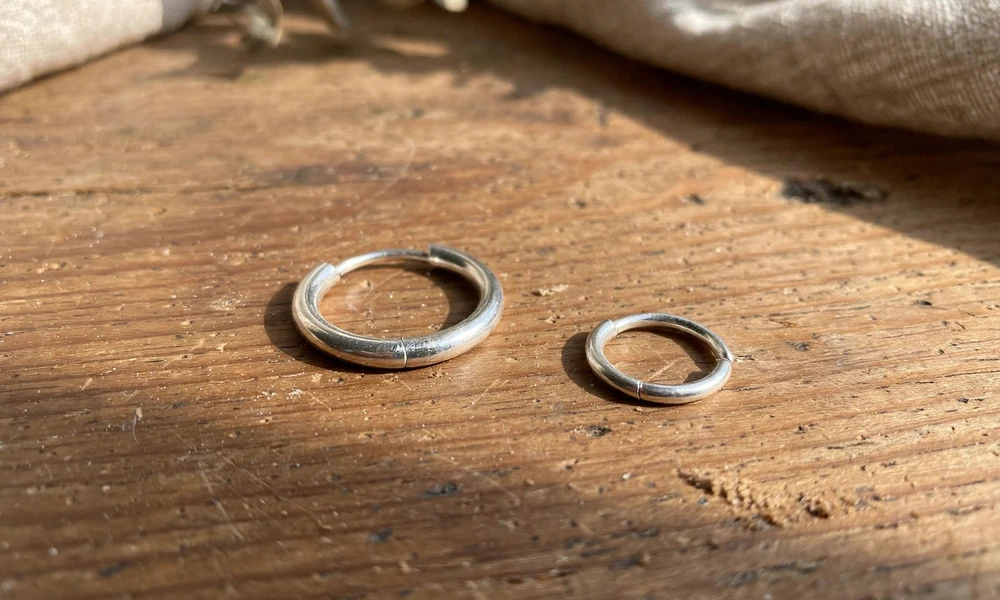
Look next at the closure and the finish. A seamless hoop should close with no visible step where the ends meet, and a hinged hoop should click shut cleanly without a gap. The wire should be smooth all the way round, with no rough spots or sharp edges, because anything rough will irritate the skin inside the nostril. A polished finish looks bright and dressy; a brushed finish looks softer and more modern.
Finally, look at the gauge and diameter against your own piercing. If you are unsure, measure the hoop you already wear, or ask your piercer. Platinum’s weight means a hoop that is too large will feel heavier and move more than the same size in silver, so a close fit matters. The same care applies across nose jewellery: our guide to the best nose rings for women covers sizing and metal choice in the same plain terms, and it is a useful second read before you buy.
The 9 best platinum nose hoops of 2027
The Classic Seamless Platinum Hoop
What we like: A plain, polished 950 platinum ring with a clean seamless closure, naturally white, and heavy enough to feel substantial. What to consider: The twist-open closure takes a little practice the first few times, and the price is premium. Best for: Everyday wear and a first platinum hoop. Material: 950 platinum. Price range: Premium. Standout feature: A naturally white metal that never needs plating.
This is the hoop to buy if you want one piece that lasts for years and goes with everything. It suits a healed piercing, sits close to the nostril, and looks as good with a white shirt as it does with evening jewellery.
The Platinum Hoop with a Tiny Diamond
What we like: A single small diamond set into the hoop, adding a point of sparkle to a metal that is already quietly luxurious. What to consider: The stone setting needs an occasional check to make sure it is still secure, and the price reflects both the metal and the stone. Best for: Evenings, occasions, and milestone gifts. Material: 950 platinum, diamond. Price range: Luxury. Standout feature: One bright diamond set into solid platinum.
The Hinged Platinum Hoop
What we like: A click-to-close hinge that makes changing the hoop quick and fiddly-free, with a secure fit once closed. What to consider: The hinge adds a tiny bit of weight and a small visible joint. Best for: Anyone who changes jewellery often or struggles with seamless rings. Material: 950 platinum. Price range: Premium. Standout feature: A hinged segment that clicks open and shut.
This is the most user-friendly hoop in the list. If you have ever dropped a seamless ring down a sink while trying to twist it open, the hinge will feel like a small luxury, and in platinum it will last for years.
The Brushed Platinum Hoop
What we like: A soft matte brushed finish that does not show fingerprints or fine scratches the way a mirror polish does. What to consider: The matte look is quieter, so it suits casual styling more than formal occasions. Best for: Low-maintenance wearers and matte jewellery lovers. Material: 950 platinum, brushed finish. Price range: Premium. Standout feature: A soft matte finish that hides wear.
The Thin Platinum Stacking Hoop
What we like: A very fine 22 gauge ring that looks delicate and understated, ideal for a second piercing or a minimal look. What to consider: Fine wire needs gentle handling, and platinum’s price makes a lost hoop a costly mistake. Best for: Minimal styling and double nostril piercings. Material: 950 platinum. Price range: Premium. Standout feature: An extra-fine wire that almost disappears.
Delicate hoops suit small features and quiet outfits. This one is for the days when you want the piercing to whisper rather than speak, and it layers well with a second hoop or a tiny stud.
The Platinum Hoop with a Pearl Accent
What we like: A small pearl set into the hoop, pairing platinum’s cool white with the soft glow of a pearl. What to consider: Pearls are softer than metal and need gentle care, so avoid harsh cleaners and chemicals. Best for: Bridal looks, occasions, and soft, romantic styling. Material: 950 platinum, freshwater pearl. Price range: Luxury. Standout feature: A single pearl set into solid platinum.
The Platinum Captive Bead Hoop
What we like: A small platinum bead held in place by the tension of the ring, giving a classic, balanced look. What to consider: The bead can come loose if the ring is bent, so handle it carefully when changing it. Best for: A classic, symmetrical hoop look. Material: 950 platinum. Price range: Premium. Standout feature: A captive bead held by the ring’s own tension.
The captive bead ring is the traditional hoop shape, and in platinum it feels especially solid. The bead gives the hoop a focal point without adding a stone, which suits people who prefer all-metal jewellery.
The Platinum and Diamond Pavé Hoop
What we like: A row of tiny pavé-set diamonds along the front of the hoop, for maximum sparkle in a small piece. What to consider: Pavé settings need professional cleaning now and then, and this is the most expensive hoop in the list. Best for: Evenings, celebrations, and anyone who wants real sparkle. Material: 950 platinum, pavé diamonds. Price range: Luxury. Standout feature: A full row of tiny diamonds set into the hoop.
The Tiny Platinum Hoop
What we like: A small 6 millimetre ring that hugs the nostril closely for a neat, snug fit. What to consider: The small size makes it harder to put in, so it suits confident wearers or a piercer’s help. Best for: A close, snug fit and petite features. Material: 950 platinum. Price range: Premium. Standout feature: A snug 6 millimetre diameter that sits tight to the nose.
A tiny hoop is the most discreet option here. It reads almost like a stud from a distance, then reveals itself as a fine platinum circle up close, which is exactly the effect many wearers want.
Which platinum nose hoop is right for you
Start with your piercing. If it is fully healed and you change jewellery rarely, a seamless hoop is the cleanest choice. If you swap pieces often, a hinged hoop will save you time and frustration. If your piercing is new, wait until it is fully healed before switching to any hoop, and ask your piercer before you change anything.
Then think about your budget and your style. A plain seamless hoop is the best value in platinum, because you pay for the metal and nothing else. A diamond or pavé hoop costs considerably more, but it is also a piece you are likely to keep for years. The diameter matters too: a close-fitting 6 or 7 millimetre hoop looks neat and feels lighter, while an 8 or 9 millimetre hoop makes more of a statement.
Sensitive skin is one of platinum’s strongest arguments. Because 950 platinum is 95 percent pure, it rarely causes reactions, even for people who struggle with silver or gold alloys. If your piercing has ever reacted to other metals, platinum is worth the price. For styling help once you have chosen, our guide on how to wear a nose hoop covers fit, placement, and pairing a hoop with the rest of your jewellery.
The caveats that matter
Platinum is an excellent metal, but it is not perfect. It is expensive, and that price makes fakes and mislabelled pieces a real risk. It is also denser than other jewellery metals, so a large hoop feels heavier, and it can develop a soft patina over time as the surface picks up tiny scratches. That patina is normal and many wearers like it, but it is worth knowing about before you buy.
| Detail | What is known |
|---|---|
| What platinum jewellery is | Usually 950 platinum, 95 percent pure platinum; stamped Pt950 or 950 Plat |
| Best gauge for most piercings | 20 gauge; 18 gauge for a bolder look, 22 gauge for a very fine hoop |
| Best diameter | 6 to 8 millimetres for a close fit; 9 to 10 millimetres for a looser look |
| When to wear it | Only in a fully healed piercing, never a fresh or irritated one |
| Tarnish | Platinum does not tarnish; it may develop a soft patina that a jeweller can polish away |
| Who should be careful | Anyone buying on price alone, because cheap platinum is usually not platinum |
| What to avoid | Unmarked or platinum-tone hoops, rough finishes, and hoops that pinch or pull |
| What it does not do | It does not stay mirror-bright on its own, and it is not a budget metal |
If your piercing becomes red, sore, or swollen after changing to a new hoop, take the hoop out, clean the piercing as your piercer advised, and go back to the jewellery you wore before. Do not force a hoop through a piercing that resists it, and do not wear a hoop in a piercing that has not finished healing.
Checklist: buying a platinum nose hoop honestly
Use these checks before you buy, and again when the hoop arrives.
- Check the stamp: look for Pt950 or 950 Plat on the hoop, and get the alloy stated in writing on the receipt.
- Check the gauge and diameter: match them to the hoop you already wear, or ask your piercer to measure your piercing.
- Check the closure: a seamless hoop should close with no step, and a hinged hoop should click shut cleanly.
- Check the finish: run a finger around the wire and look for rough spots, burrs, or sharp edges.
- Check the weight: platinum is noticeably heavier than silver or gold, so a hoop that feels feather-light is a warning sign.
- Check the seller: buy from a jeweller who states the alloy plainly and offers a return if the stamp does not match.
Frequently asked questions
Is platinum safe for a nose piercing?
Yes, in a fully healed piercing, for almost everyone. Platinum at 950 purity is one of the least reactive jewellery metals, which is why it is often recommended for sensitive skin. It does not tarnish and it does not contain nickel in its usual alloys.
What gauge nose hoop should I buy?
Most healed nostril piercings take 20 gauge. If your current hoop is 20 gauge and fits well, buy the same. 18 gauge is slightly thicker and bolder, and 22 gauge is very fine and delicate. When in doubt, ask your piercer to check your piercing.
Why is platinum more expensive than gold or silver?
Platinum is rarer than gold, denser, and used at higher purity in jewellery, so more of the precious metal goes into each piece. It also needs more skill to work with. A platinum hoop costs more up front, but it does not need re-plating and it keeps its colour for years.
Does platinum tarnish like silver?
No. Platinum does not tarnish. It can develop a soft, matte patina over time as the surface picks up tiny scratches, which many wearers like. A jeweller can polish it back to a mirror shine if you prefer the bright finish.
How is platinum different from white gold?
Platinum is naturally white and stays white without plating, while white gold is yellow gold mixed with white metals and coated in rhodium to look white. The rhodium wears off and needs re-plating, while platinum does not. Platinum is also denser and heavier than white gold. Platinum toe rings show the same contrast, and they are a useful comparison if you are deciding between the two metals.
How do I put in a platinum nose hoop?
Wash your hands, twist a seamless hoop open slightly, guide one end through the piercing from inside the nostril, then twist it closed so the ends meet. For a hinged hoop, open the hinge, pass the hoop through, and click it shut. If it resists, stop and ask your piercer rather than forcing it.
The bottom line
The best platinum nose hoop in 2027 is not the most decorative or the most expensive. It is the one that is genuinely 950 platinum, the right gauge and diameter for your piercing, and comfortable enough to forget you are wearing it. A classic seamless hoop does that job for most people, while a hinged or diamond-set hoop solves the two most common complaints: fiddly changes and a plain look.
Buy one hoop that fits well, keep the receipt with the alloy in writing, and judge it on how it feels after a week of daily wear, not on how it looks in the box. That is the honest way to get the quiet, lasting shine platinum is known for, without paying a luxury price for a metal that is not what it claims to be.