

Stainless Steel Nose Hoops 2027: 9 Picks Worth Wearing
A stainless steel nose hoop is the dependable choice. It is strong, affordable, easy to clean, and it holds a shine for years without tarnishing. For many people it is the first hoop they ever buy, and for just as many it is the one they keep coming back to, because it simply works.
The key is knowing which stainless steel you are buying. Surgical stainless steel, usually 316L, is the grade used in body jewellery, because it is stable, smooth, and rarely causes a reaction.
Below are nine stainless steel nose hoops worth considering in 2027, from a classic polished ring to a blackened steel hoop and a surgical steel hypoallergenic piece. Each one is described by what it does well, what to watch for, and who it suits best, so you can choose with confidence rather than guesswork.
Key takeaways
- Surgical stainless steel (316L) is the grade to look for: smooth, stable, and the standard for body jewellery.
- Gauge and diameter matter more than style: a hoop that is too tight pinches, one that is too loose catches, and either one irritates a piercing.
- Seamless and hinged hoops are the easiest to wear daily, while captive bead rings suit people who like a visible, secure closure.
- Stainless steel does not tarnish, so a polished hoop keeps its shine with only basic cleaning.
- No hoop suits a fresh or irritated piercing, and a hoop that hurts, smells, or will not sit straight should be removed and checked, not pushed through.
What stainless steel nose hoops actually are
A stainless steel nose hoop is a circular ring made from stainless steel, worn through a nostril piercing. Stainless steel is an alloy of iron, chromium and nickel, and the chromium is what gives it its resistance to rust and tarnish. The grade used in body jewellery is 316L, also called surgical steel, because it has a low carbon content and a smooth, stable surface that the body tolerates well.
Steel is heavier than titanium, but in a nose hoop the difference is small, and many people prefer the solid feel. It is also one of the hardest common jewellery metals, so a steel hoop keeps its shape, resists scratches, and does not bend out of shape in a bag or a pocket. That durability is why steel is the default for everyday jewellery in many piercing studios, and why it is often the cheapest way to get a well-made hoop.
The main thing to understand is the nickel question. Stainless steel does contain nickel, but in 316L the nickel is bound tightly into the alloy, so very little of it reaches the skin. Most people with mild metal sensitivity wear 316L without any problem. People with a severe nickel allergy, however, should choose implant-grade titanium instead, because even a small amount of nickel can be too much for them.
How we chose these stainless steel nose hoops and what to look for
Look first at the grade and the gauge. Surgical stainless steel, 316L, is the standard to look for on the label, and a gauge of 20 or 18 is the usual range for a nostril piercing. If you do not know your gauge, check with your piercer before ordering, because a hoop in the wrong gauge will either slip through too loosely or refuse to sit properly. Diameter matters just as much: measure the distance from your piercing to the edge of your nostril, and add a millimetre or two for comfort.
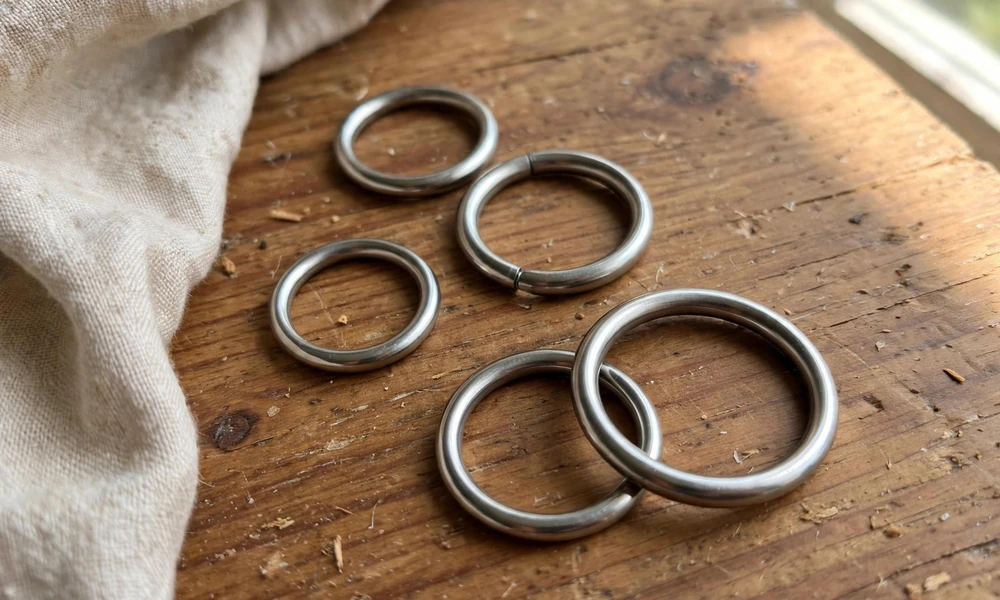
Look next at the closure. A seamless hoop has no visible join and slides through the piercing with nothing to catch. A hinged hoop opens and closes on a small hinge, which makes it easy to put in and take out without tools. A captive bead ring holds a small bead in place with tension, which looks decorative but can be fiddly to open. For daily wear, a seamless or hinged closure is usually the easiest to live with. A guide to the best nose hoops for women covers the same fitting questions in more detail, because the right diameter matters more than the right design.
Finally, look at the finish. A mirror polish is smooth against skin, easy to clean, and shows off the shine that makes steel attractive. A brushed finish hides scratches better but can feel slightly rougher on a healing piercing. Blackened steel is a coating, unlike anodised titanium, so check that it is evenly applied and buy from a maker you trust. Check that the seller names the grade, the gauge, and the diameter in plain numbers before you buy.
The 9 best stainless steel nose hoops of 2027
The Classic Polished Steel Hoop
What we like: A mirror-polished seamless hoop in surgical steel, smooth, strong, and easy to wear every day. What to consider: The plain finish shows every fingerprint and scratch, and it can look plainer than a decorative hoop. Best for: Everyday wear and first-time hoop buyers. Material: Surgical stainless steel, 316L. Price range: £8 to £20. Standout feature: A flawless mirror polish that never tarnishes.
This is the hoop to buy first if you are new to nose hoops. It does nothing flashy, and that is the point. It sits quietly, it does not irritate, and it goes with everything.
The Brushed Steel Hoop
What we like: A soft brushed finish that hides scratches and gives the hoop a calm, modern look. What to consider: The matte surface can feel slightly less smooth than a mirror polish on a sensitive piercing. Best for: People who want a subtle, understated hoop. Material: Surgical stainless steel, 316L. Price range: £10 to £22. Standout feature: A brushed finish that stays looking new for longer.
The brushed finish is a practical choice rather than a decorative one. It does not catch the light as much, which suits people who prefer jewellery that whispers rather than shouts.
The Steel and Crystal Accent Hoop
What we like: A small crystal set into the front of the hoop, adding a point of sparkle without adding weight. What to consider: The stone setting needs occasional cleaning, and a prong setting can catch on fabric. Best for: Evenings and occasions when you want a little shine. Material: Surgical stainless steel with a crystal. Price range: £15 to £35. Standout feature: A single sparkling crystal set flush into the hoop.
One small stone is enough. It catches the light when you turn your head, and the steel keeps the whole piece strong enough to hold its shape.
The Blackened Steel Hoop
What we like: A deep black finish that looks sharp against every skin tone and adds drama to a simple outfit. What to consider: The black is a coating, so it can wear thin over time, especially at the closure. Best for: A bold, modern look. Material: Blackened surgical stainless steel. Price range: £12 to £30. Standout feature: A rich black finish at an affordable price.
Blackened steel is the budget way into a dark hoop. It looks striking when new, and if the coating eventually wears, the hoop underneath is still solid steel and easy to replace.
The Steel Adjustable Hoop
What we like: A slightly open hoop that can be gently adjusted for fit, useful if you are between sizes or your piercing sits at an awkward angle. What to consider: It needs careful handling to avoid bending, and it is not the best choice for a fresh piercing. Best for: People who struggle with standard diameters. Material: Surgical stainless steel, 316L. Price range: £10 to £25. Standout feature: A flexible fit that adapts to your nostril shape.
Adjustable does not mean flimsy. Steel is strong, so a well-made adjustable hoop holds its shape once set, and it is a forgiving option if you are unsure of your exact diameter.
The Surgical Steel Hypoallergenic Hoop
What we like: A hoop made from certified 316L surgical steel, polished to a high shine, designed for people whose skin reacts to lesser metals. What to consider: It still contains a small amount of nickel, so it is not suitable for a severe nickel allergy. Best for: Sensitive skin that tolerates surgical steel. Material: Certified surgical stainless steel, 316L. Price range: £12 to £28. Standout feature: A certified grade with a documented low nickel release.
This is the hoop to choose when you want the reassurance of a named, certified grade. It is the closest steel gets to a guarantee, and for most sensitive skin it is enough.
The Slim Steel Hoop
What we like: A fine, delicate hoop in a thin gauge that looks light and elegant on the nose. What to consider: Thin hoops can be tricky to put in without a tool, and the closure needs a gentle touch. Best for: A minimal, barely-there look. Material: Surgical stainless steel, 316L. Price range: £8 to £20. Standout feature: A fine profile that reads as jewellery, not hardware.
The slim hoop is the one to choose when you want the piercing to be the point, not the metal. It is quiet, it is light, and it works with almost any outfit.
The Steel and Rose Gold Two-Tone Hoop
What we like: A steel hoop with a rose gold plated section, giving a warm two-tone look at a steel price. What to consider: The rose gold is a plating, so it will wear over time, especially where the hoop passes through the piercing. Best for: People who love rose gold but want steel strength. Material: Surgical stainless steel with rose gold plating. Price range: £15 to £35. Standout feature: A warm rose gold accent on a strong steel base.
Two-tone hoops are a good way to soften steel’s cool shine. The rose gold adds warmth, and the steel underneath keeps the hoop strong and affordable.
The Tiny Steel Hoop
What we like: A small-diameter hoop that hugs the nostril closely for a neat, tidy look. What to consider: A tight fit leaves little room for swelling, so it suits fully healed piercings only. Best for: A close, discreet fit. Material: Surgical stainless steel, 316L. Price range: £8 to £20. Standout feature: A snug fit that sits flush against the nostril.
The tiny hoop rewards patience. Once your piercing is fully healed, it sits so close that it almost disappears, leaving just a clean circle of metal.
Which stainless steel nose hoop is right for you
Start with your piercing, not the style. If your piercing is fully healed and you know your gauge and diameter, a seamless hoop in a mirror polish is the safest first buy. If your skin is sensitive, look for certified 316L surgical steel, and avoid anything that does not name its grade. A guide to the best diamond nose hoops covers the same fitting questions in more detail, because the right diameter matters more than the right design.
Then think about how you will wear it. For daily wear, a plain polished or brushed hoop is the easiest to live with, because it does not catch on scarves, masks, or pillowcases. For evenings, a crystal accent or a blackened hoop adds interest without changing the fit. For a softer look, a rose gold two-tone hoop warms up steel’s cool shine without the price of solid gold.
Finally, be honest about your patience. A slim or tiny hoop looks beautiful but needs a steady hand to put in. A hinged hoop is far more forgiving. If you change your jewellery often, choose a closure you can manage without tools and without a struggle.
The caveats that matter
Stainless steel is one of the most reliable metals for nose jewellery, but it is not perfect for everyone. A hoop in the wrong gauge can irritate a piercing just as badly as a cheap alloy, and a hoop that is too tight can put pressure on the tissue and cause a bump. Fit matters more than metal, and a good piercer is worth consulting if you are unsure of your size.
| Detail | What is known |
|---|---|
| Best grade to look for | Surgical stainless steel, 316L, with the grade named on the listing |
| Usual gauge for nostrils | 20 or 18 gauge; check with your piercer if unsure |
| Why it suits most skin | Stable alloy with low nickel release, smooth and non-reactive for most people |
| Tarnish | Does not tarnish; a polished hoop keeps its shine with basic cleaning |
| Weight | Heavier than titanium but still light in a nose hoop; feels solid |
| Who should avoid it | Anyone with a severe nickel allergy, or a fresh, irritated or infected piercing |
| Cleaning | Warm water and mild soap, or a saline rinse; dry before storing |
| What it does not do | It does not heal a piercing, and it cannot fix a wrong gauge or diameter |
If you are pregnant, breastfeeding, or taking medication that affects healing, check with your clinician or piercer before changing jewellery. A hoop is a small piece of metal, but it sits in living tissue, and a quick professional check is cheaper than weeks of irritation.
Checklist: buying a stainless steel nose hoop honestly
Use these checks before you buy, and again when the hoop arrives.
- Check the grade: look for 316L surgical steel on the listing, not just the words stainless steel.
- Check the gauge: confirm 20 or 18 gauge matches your piercing, or ask your piercer first.
- Check the diameter: measure from your piercing to the edge of your nostril and add a millimetre or two.
- Check the closure: choose seamless or hinged for daily wear, and avoid closures you cannot open and close yourself.
- Check the finish: a smooth polish is kindest to skin; plated colour should be even, with no patchy spots.
- Check the return policy: buy from a seller who accepts returns, so a wrong size is a swap, not a loss.
Frequently asked questions
Is stainless steel safe for a nose piercing?
Yes, for most people. Surgical stainless steel, 316L, is the standard grade for body jewellery, and reactions are uncommon. People with a severe nickel allergy should choose implant-grade titanium instead.
What gauge should I choose for a stainless steel nose hoop?
Most nostril piercings are 20 or 18 gauge. If you do not know yours, ask your piercer or check the jewellery you already wear. A hoop in the wrong gauge will not sit properly, however good the metal is.
Can I wear a stainless steel nose hoop in a fresh piercing?
Only if your piercer fits it. A hoop can move more than a stud, which can slow healing, so many piercers prefer a stud at first and switch to a hoop once the piercing is settled. Do not swap jewellery in a fresh piercing without professional advice.
Does stainless steel tarnish?
No. Stainless steel resists rust and tarnish, which is why a polished hoop keeps its shine for years. It can pick up fingerprints and surface marks, but a quick wash restores it.
How do I clean a stainless steel nose hoop?
Warm water and mild soap, rinsed well, is enough for daily care. A saline rinse is useful after swimming or sweating. Avoid harsh chemicals and abrasive cloths, which can dull a polished finish.
How do I put a stainless steel nose hoop in?
Open the hoop gently, pass one end through the piercing, and close it so the ends meet neatly. A hinged hoop is the easiest to manage on your own. Our guide on how to wear a nose hoop walks through the steps in more detail, and a piercer can show you in person if you are unsure.
The bottom line
The best stainless steel nose hoop in 2027 is the one that fits your piercing, names its grade, and suits how you actually live. For most people, that is a seamless hoop in 316L surgical steel, in the right gauge and diameter, with a mirror polish or a soft brushed finish. It is strong, it is affordable, and it does not demand attention.
Choose one hoop, wear it for a few weeks, and judge it on comfort, not on how it looks in a photo. If it sits quietly, does not irritate, and still looks good after a month of daily wear, you have found the right one. That is the honest test for any piece of nose jewellery.